
AI Agents & Automation
Browsing page 11 of AI tools for General-Purpose Agents in AI Agents & Automation. Sorted by confidence score — our independent quality rating.

ChatIE
ChatIE is an open-source tool designed for zero-shot information extraction (IE) by leveraging ChatGPT. It transforms IE tasks into multi-turn question-answering problems, allowing users to extract structured information from raw sentences without extensive human intervention or pre-annotated data. The tool supports key IE functions including entity-relation joint extraction, named entity recognition (NER), and event extraction across both Chinese and English languages. ChatIE is particularly valuable for researchers and developers in natural language processing (NLP) who aim to build IE systems with limited resources. While an online version is temporarily unavailable, users can clone and run the tool locally, utilizing their own OpenAI API keys for optimal performance and speed.

CodeWell
CodeWell AI is a platform designed for creating digital employees, specifically tailored for the banking industry. It enables the deployment of AI agents capable of high-precision, human-like conversations, with easy setup and the ability to learn custom procedures. The platform acts as a controlled ChatGPT, giving users full governance over the knowledge base. CodeWell aims to reduce long wait times and customer churn by providing instant, 24/7 service across multiple channels and languages. It also helps slash call volumes, enhance employee productivity by handling first-line support, and offers rapid setup with organized knowledge for standardized customer service.
h2o-llmstudio
H2O LLM Studio is a comprehensive framework and no-code graphical user interface (GUI) designed for fine-tuning state-of-the-art large language models (LLMs). It empowers users to customize and train LLMs effectively, even without extensive coding experience. The tool supports a wide variety of hyperparameters and incorporates recent fine-tuning techniques such as Low-Rank Adaptation (LoRA) and 8-bit model training for reduced memory footprint. Users can leverage Reinforcement Learning (RL) for model fine-tuning (experimental), utilize advanced evaluation metrics, and visually track and compare model performance. Integration with Neptune and W&B is available, and models can be easily exported to the Hugging Face Hub for sharing. It also offers a command-line interface (CLI) for advanced users and supports distributed training on multiple GPUs.
LightRAG
LightRAG is an open-source Retrieval-Augmented Generation (RAG) system designed for simplicity and speed, particularly for large-scale datasets. It supports comprehensive multimodal data handling through RAG-Anything integration, processing text, images, tables, and equations. Key features include integrated RAGAS for evaluation, Langfuse for tracing, and the ability to return retrieved contexts for enhanced precision metrics. LightRAG offers a WebUI for intuitive document indexing, knowledge graph exploration, and RAG querying, with support for various storage backends like OpenSearch, MongoDB, PostgreSQL, and Neo4J. It also provides an Ollama-compatible interface, allowing AI chatbots to easily access LightRAG as a chat model.
MetaScreener
MetaScreener is an AI-powered tool designed to streamline the abstract and PDF screening phases of systematic reviews. It leverages an ensemble of 4+ open-source large language models (LLMs) to process search results from platforms like PubMed or Scopus. The tool aggregates LLM outputs through a calibrated confidence pipeline, offering transparent and reproducible decisions with quantified uncertainty. Users can define review criteria (PICO/PEO/SPIDER), upload search results, and receive include/exclude decisions with confidence scores. Uncertain cases are flagged for human review, and the system supports active learning by recalibrating model weights based on human feedback. It is cost-effective, with processing costs as low as $0.003 per paper.

MyShell.ai
MyShell.ai is a pioneering AI consumer layer that empowers individuals to build, share, and own AI Agents. The platform bridges AI and Blockchain through an Agentic Framework, open-source models, and a vibrant AI creator community. Users can leverage state-of-the-art AI models to transform ideas into AI Agents in seconds, utilizing a wide array of widgets for tasks like video transcription, text-to-speech, image generation, and large language models. MyShell commercializes high-quality AI Agents as investable assets, benefiting both creators and investors. With over 200K AI Agents deployed and 5M+ users, MyShell provides an accessible ecosystem for AI creation and ownership, fostering a new era of AI-powered entertainment and utility.

Neya Systems
Neya Systems specializes in groundbreaking autonomous systems for complex, off-road environments, serving sectors from defense to mining and construction. Their offerings include full-stack autonomy solutions covering localization, control, perception, and planning. The N-Drive Autonomy software and Neya Nomad are key products. They also provide advanced mission planning software, enabling a single user to manage complex tasks for fleets of unmanned air, land, and surface vehicles. Furthermore, Neya Systems integrates robust cybersecurity measures, utilizing the Department of Defense’s Zero Trust architecture to protect autonomous ground vehicles from cyber threats. Their solutions are designed to augment workforces and streamline manual operations in challenging outdoor settings.
agent-search
AgentSearch is a robust framework designed to empower search agents by integrating Large Language Model (LLM) technologies from diverse providers with various search engines. This integration facilitates Retrieval-Augmented Generation (RAG), enabling search agents to perform a wide array of functions, including summarizing search results, generating new queries, and retrieving detailed downstream results. Key features include effortless search agent building by connecting search-specialized LLMs (like Sensei-7B) with supported search engines, customizable local search using the AgentSearch dataset, and seamless API endpoint integration with hosted providers such as Bing, SERP API, and AgentSearch itself. It also supports LLMs from SciPhi, HuggingFace, OpenAI, and Anthropic, offering flexibility and ease of use for developers.
agents
Inkeep Agents provides a platform for building AI agents with a unique dual approach: a no-code visual builder and a TypeScript SDK. This innovative design ensures full two-way synchronization, allowing both technical developers and non-technical team members to create, edit, and manage AI agents seamlessly within a single platform. It's ideal for shipping AI assistants, such as customer experience agents or internal copilots, and for automating AI workflows like updating knowledge bases or triaging helpdesk tickets. The platform includes a multi-agent architecture, MCP Tools for credential management, a UI component library for dynamic chat experiences, and observability via a Traces UI. It supports easy deployment via Vercel or Docker and is licensed under the Elastic License 2.0.
AutoGroq
AutoGroq is a groundbreaking tool designed to revolutionize how users interact with Autogen™ and other AI assistants. It dynamically generates tailored teams of AI agents based on specific project requirements, removing the need for manual configuration. This allows users to efficiently tackle any question, problem, or project. Key features include dynamic expert agent generation, dynamic workflow generation for custom teams, natural conversation flow, and intelligent code snippet extraction into a 'Whiteboard' section. AutoGroq also offers flexible agent management, advanced prompt rephrasing, bulk file upload to Autogen, and support for multiple LLMs like Groq, ChatGPT, and Ollama, with the option to integrate custom provider models. Skill integration allows users to extend agent capabilities by simply adding skill files.
ART
ART (Agent Reinforcement Trainer) is an open-source framework designed to improve agent reliability by enabling Large Language Models (LLMs) to learn from experience. It provides an ergonomic harness for integrating GRPO (Generalized Reinforcement Policy Optimization) into any Python application, allowing users to train multi-step agents for real-world tasks. ART features a serverless RL training service that manages infrastructure automatically, promising lower costs and faster training cycles. It supports a wide range of vLLM/HuggingFace-transformers compatible causal language models, including Qwen3.5, GPT-OSS, and Llama. The tool offers flexible observability and simplified debugging through integrations with platforms like W&B, Langfuse, and OpenPipe, and is customizable with intelligent defaults for training parameters and inference engine configurations.

Furhat Robotics
Furhat Robotics specializes in humanoid social robots equipped with advanced conversational AI and social skills. Their flagship product, Furhat, is designed for research and education, backed by extensive human-robot interaction (HRI) research. The platform includes a Realtime API for live-streaming data and integrating custom AI models, along with an SDK for desktop development. The FurhatAI Creator allows users to prototype cases and projects quickly using Large Language Models, enabling customization of personality, expressivity, and integration of knowledge sources. Furhat supports multi-party interactions through real-time face tracking and offers a customizable 3D face engine and voice synthesis for diverse appearances and languages. Comprehensive tutorials and documentation are available to support users in developing and deploying applications.
XTrace
XTrace acts as a unified memory infrastructure, connecting various AI tools like ChatGPT, Claude, and Gemini, along with native syncs for platforms such as Notion, Slack, Granola, Drive, and GitHub. It synthesizes information into a shared brain that reasons, detects conflicts, unifies identities, and versions facts. This allows both human teammates and AI agents to draw from the same living, current, and cited context. XTrace aims to help companies capture more value from their AI tool usage by providing persistent context, reducing repetition, and improving the accuracy of AI responses. It offers a Chrome extension and an API for developers to integrate its memory engine, XMem, into their own AI agents.
Standard Bots
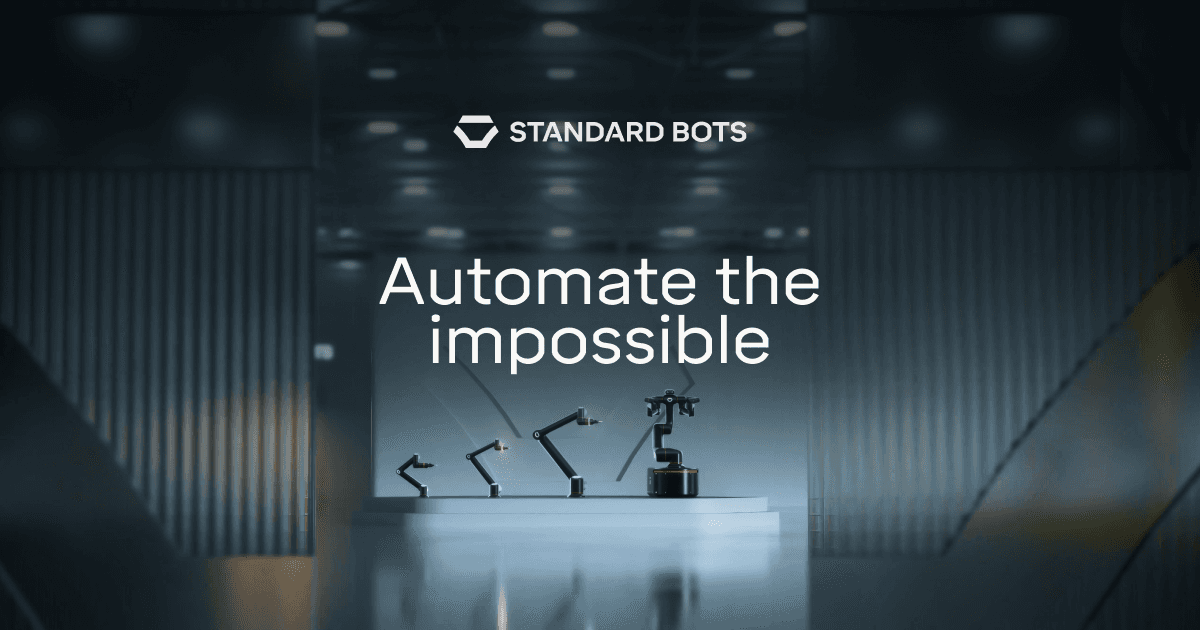
Standard Bots provides an integrated solution for industrial automation, featuring AI-native robots designed and assembled in the USA. Their product line includes Spark, Core, Thor, and DROID Bolt robots, catering to tasks from light-duty automation to heavy lifting and welding. The platform boasts no-code software, allowing factory workers to operate robots with minimal training, and an easy-to-program routine editor. A key differentiator is its physical AI platform, enabling robots to learn tasks through demonstration, capture human skill via onboard vision, and train models in the cloud for speed and accuracy. This self-correcting AI adapts to changes, making complex automation accessible and efficient for various manufacturing applications.
ChatGPT-Telegram-Bot
ChatGPT-Telegram-Bot, also known as TeleChat, is a powerful Telegram bot designed for efficient conversations and information searches. It supports OpenAI-compatible large language model APIs, including GPT-5, DALL·E, Groq, Gemini 2.5 Pro/Flash, and Claude 4.1. The bot offers multimodal question answering for voice, audio, images, and various document types, allowing users to upload files directly. Key features include a model grouping system for intuitive selection, a rich plugin system for web search, URL summarization, ArXiv paper summarization, and a code interpreter. It supports group chat topic mode, asynchronous message processing, and multi-user dialogue isolation. The bot also handles long text messages by splitting responses and offers question prediction, multi-language interfaces, and flexible deployment options like Zeabur, fly.io, and Replit.
Lecca.io
Lecca.io is a no-code AI agent and automation platform designed for businesses to build and deploy AI operators without complex workflows. The platform emphasizes ease of use, allowing users to create and manage AI agents efficiently. It offers broad compatibility by supporting integration with any Large Language Model (LLM) provider, giving users flexibility in their AI choices. Deployment options are versatile, enabling users to integrate their AI operators into Slack for team collaboration, embed them directly onto websites for customer interaction, or access them via an API for custom applications. This makes Lecca.io suitable for various business needs, from automating customer service to streamlining internal operations.
Aino
Aino is an AI-powered site analysis and feasibility study tool designed for real estate professionals. It streamlines the process of evaluating, comparing, and justifying site decisions by combining and analyzing real-world data. Users can instantly evaluate any location, gaining a complete view from demographics to infrastructure and market signals. The tool allows for side-by-side comparison of multiple sites, highlighting strengths, risks, and trade-offs within a consistent framework. Aino generates structured, decision-ready reports, including interactive maps, dashboards, and detailed insights. It integrates thousands of datasets, supports custom data inputs, and offers CAD & GIS ready outputs, making it a comprehensive solution for portfolio-level analysis without requiring specialized GIS skills.
FlashLearn
FlashLearn is an open-source tool designed to integrate Large Language Models (LLMs) into existing workflows and ETL pipelines with ease. It offers a simple interface and orchestration capabilities, supporting up to 1000 calls per minute for tasks like data transformations, classifications, summarizations, rewriting, and custom multi-step processes. The tool leverages a compact JSON definition for each step and task, ensuring pipelines are easy to understand and maintain. FlashLearn supports various LLM providers including LiteLLM, Ollama, OpenAI, DeepSeek, and other OpenAI-compatible clients, making it highly flexible. It operates on a 'fit/predict' pattern, allowing users to define and run custom 'skills' for structured outputs, and provides cost estimation for tasks.
Foundation-Models-Framework-Example
Foundation-Models-Framework-Example is an open-source project offering example applications for Apple's Foundation Models Framework, designed for iOS 26 and macOS 26. It serves as a practical guide, featuring playground examples organized by chapters to facilitate learning the framework's capabilities. The project is part of the 'Exploring Foundation Models' book and includes a variety of functionalities such as multi-turn conversations with context management, real-time response streaming, and structured data generation. Developers can explore tool calling for system integrations like weather, web search, contacts, and health data, along with voice interfaces for speech-to-text and text-to-speech. The framework also supports dynamic schemas, multilingual features, and RAG (Retrieval Augmented Generation) chat with document indexing.

Tribefii
Tribefii is an innovative platform that leverages AI to create a "Digital Clone"—an AI-powered version of the user, trained with their unique knowledge, expertise, and personality. These AI Sidekicks are designed to execute a wide range of tasks, from content creation and audience engagement to business automation. The platform aims to transform ideas into execution-ready businesses by handling content, funnels, products, and automations. Tribefii helps users define their market positioning, connects various digital tools in one place, and scales growth with AI-powered Sidekicks. It enables the rapid creation of digital assets such as courses, lead magnets, ebooks, webinars, and social media content, significantly reducing the need for manual effort or a tech team.
BaseAI
BaseAI is the first web AI framework designed for building and deploying serverless autonomous AI agents with memory. It emphasizes simplicity and composability, allowing developers to start building local-first with agentic pipes, tools, and memory. The framework integrates seamlessly with Langbase, a composable serverless AI cloud, enabling one-command deployment. BaseAI provides a straightforward API for creating and deploying various AI agents and features, supporting RAG (Retrieval Augmented Generation) for memory. It's an ideal solution for developers looking to streamline the creation and deployment of intelligent AI applications.

ChatGPT Deutsch
ChatGPT Deutsch offers a free and anonymous way for German speakers to utilize ChatGPT directly in their browser. The platform emphasizes ease of access, allowing users to start an AI chat without the need for registration or login. Beyond the direct chat functionality, it provides resources for comparing different ChatGPT models, understanding their applications, and accessing guides and FAQs. The site is designed to be a clear entry point for users seeking "chatgpt deutsch," "chatgpt kostenlos," or "chatgpt ohne anmeldung," focusing on immediate usability and clear information architecture. It also covers related topics like ChatGPT Plus, Pro, API, and alternatives, catering to both casual and more intensive users.
rails-mcp-server
The rails-mcp-server is a Ruby gem that provides a Model Context Protocol (MCP) server specifically designed for Rails projects. This server enables Large Language Models (LLMs) to seamlessly interact with Rails applications, offering capabilities for in-depth code analysis, project exploration, and development assistance. Key features include managing multiple Rails projects, browsing project files, viewing Rails routes, inspecting model information, and analyzing controller-view relationships. It also provides access to database schema information, environment configurations, and comprehensive documentation for Rails, Turbo, Stimulus, and Kamal. The server supports both STDIO and HTTP modes for communication and integrates with tools like Claude Desktop and GitHub Copilot Agent, making it a versatile solution for AI-powered Rails development.
Beyond Imagination, Inc.
Beyond Imagination, Inc. is actively developing an advanced AI brain with the ambitious goal of learning and executing complex physical labor tasks. This innovative AI is engineered to progressively master individual tasks and eventually entire professions, mimicking human learning capabilities. The technology is intended to power humanoid robots and various other robotic systems, enabling them to perform a wide range of physical activities. The core concept revolves around an AI that learns and adapts much like a human brain, allowing for versatile and evolving robotic applications in diverse industries.