
AI Agents & Automation
Browsing page 83 of AI Agents & Automation. Sorted by confidence score — our independent quality rating.

langchain4j
LangChain4j is an idiomatic, open-source Java library designed to streamline the integration of Large Language Models (LLMs) into Java applications running on the JVM. It offers a unified API that abstracts away the complexities of various LLM providers (like OpenAI, Google Vertex AI) and embedding stores (such as Pinecone, Milvus), allowing developers to easily switch between them without extensive code changes. The library provides a comprehensive toolbox for common LLM patterns and techniques, including low-level prompt templating, chat memory management, function calling, and high-level patterns like Agents and Retrieval Augmented Generation (RAG). LangChain4j is built with Java conventions in mind, emphasizing type safety, POJOs, annotations, and seamless integration with enterprise Java frameworks like Quarkus and Spring Boot. It aims to provide a robust and developer-friendly solution for creating sophisticated LLM-powered applications in Java.
BlueTweak
BlueTweak is an AI-driven omnichannel customer support platform designed to unify every conversation, customer record, and automation into a single workspace. It empowers agents with AI assistance to resolve issues faster, reduce operational costs, and maintain control over customer interactions. The platform integrates various communication channels like email, voice, chat, and social media, along with Workforce Management, a Knowledge Base, Survey platform, and Analytics. BlueTweak aims to replace fragmented systems with a comprehensive ecosystem, offering features like AI-proposed replies, interaction automation, and smart knowledge base management. It supports over 100 languages with built-in AI translation, making it suitable for multi-market operations.
Calldesk
Calldesk provides advanced AI voice agents designed to automate and optimize customer service operations for large enterprises. The platform handles millions of inbound calls, ensuring 24/7 availability and eliminating wait times. Its AI agents are multilingual, understanding 80 nuances across 29 languages, and speak like humans. Calldesk integrates seamlessly with existing CRM and telephony systems like Salesforce and Zendesk, allowing for rapid deployment without code. It offers features such as call qualification, identification, FAQ handling, and ticket/email transfer, freeing up human agents for more complex tasks. The tool also provides visual workflow management and robust security, with a proven reliability of 99.9% over nearly a decade.
luke
LUKE (Language Understanding with Knowledge-based Embeddings) is a cutting-edge pretrained contextualized representation model for words and entities, built upon a transformer architecture. It incorporates entity-aware self-attention to achieve state-of-the-art performance across various NLP benchmarks, including SQuAD v1.1 for extractive question answering, CoNLL-2003 for named entity recognition, ReCoRD for cloze-style question answering, TACRED for relation classification, and Open Entity for entity typing. The repository provides source code for both pretraining the model and fine-tuning it for downstream tasks. LUKE models, including Japanese versions and lite versions with reduced memory footprint, are readily available on the Hugging Face Model Hub, making them accessible for researchers and developers.
markdown-site
Markdown-site is an open-source publishing framework designed for AI agents and developers to create and publish websites, documentation, or blogs. It allows users to write content in markdown and sync it directly from the terminal, making it instantly available to browsers, Large Language Models (LLMs), and other AI agents. Built on Convex and Netlify, it offers real-time data synchronization, ensuring that all connected browsers update automatically without requiring a rebuild or redeploy. Key features include four theme options, full-text search, an analytics dashboard, an MCP server for AI tools, newsletter integration, and comprehensive SEO optimization with RSS feeds, sitemaps, and structured data. The framework also provides extensive documentation optimized for AI coding assistants, including specific instructions for Claude Code CLI and general AI agent guidelines.
Logical
Logical is a proactive AI copilot designed to enhance your productivity by anticipating your needs and suggesting relevant actions. Unlike traditional AI assistants, Logical operates directly on your computer, prioritizing maximum privacy for its users. It aims to provide a seamless and intelligent experience by offering helpful suggestions without requiring explicit prompts. This desktop-based approach ensures that your data remains secure and under your control, making it an ideal solution for individuals seeking an effective and private AI assistant experience.
mcphost
mcphost is an open-source command-line interface (CLI) host application designed to enable Large Language Models (LLMs) to interact with external tools via the Model Context Protocol (MCP). It supports a range of popular LLMs, including Anthropic Claude, OpenAI, Google Gemini, and Ollama-compatible models. The tool acts as a host in the MCP client-server architecture, managing connections and interactions, allowing LLMs to access external tools and data sources, maintain consistent context, and execute commands securely. Key features include interactive and non-interactive modes, script mode for YAML-based automation, support for multiple concurrent MCP servers, dynamic tool discovery, and configurable message history. It also offers a Go SDK for programmatic access, ensuring identical behavior to the CLI for developers building custom applications.
mem0-chrome-extension
The mem0-chrome-extension, also known as OpenMemory Chrome Extension, offers a universal memory layer for popular AI assistants such as ChatGPT, Claude, Perplexity, and Grok. This tool is designed to provide long-term memory capabilities, allowing AI interactions to be more personalized and efficient by sharing context seamlessly across different platforms. It features smart context detection to automatically capture relevant information from conversations and intelligent memory retrieval to surface pertinent memories at the right time. Users can also sync with existing ChatGPT memories and manage all memories through a dedicated dashboard. The extension is free to use, with no usage limits or ads, and includes all features.
miyagi
Miyagi is a comprehensive sample project designed to help developers envision and build intelligent applications using Microsoft's Copilot stack. It offers an experiential approach to developing AI-infused product experiences, covering both generative and traditional machine learning use cases. The project introduces traditional software engineers to emerging design patterns in prompt engineering, such as chain-of-thought and retrieval-augmentation, alongside techniques like vectorization for long-term memory, fine-tuning of open-source models, agent-like orchestration, and plugins for augmenting and grounding LLMs. It includes examples utilizing Semantic Kernel, Promptflow, LlamaIndex, LangChain, and various vector stores, making it ideal for modernizing applications with AI.
Milvus
Milvus is a high-performance, cloud-native vector database designed for scalable Approximate Nearest Neighbor (ANN) search. Written in Go and C++, it leverages hardware acceleration for CPU/GPU to achieve best-in-class vector search performance. Its fully-distributed and K8s-native architecture allows horizontal scaling to handle tens of thousands of search queries on billions of vectors, with real-time streaming updates. Milvus supports various vector index types, including HNSW, IVF, FLAT, SCANN, and DiskANN, and offers advanced features like metadata filtering and range search. It also supports sparse vectors for full-text search and hybrid search, combining semantic and full-text capabilities. Milvus ensures data security through user authentication, TLS encryption, and Role-Based Access Control (RBAC), making it suitable for enterprise applications.
mini-agi
MiniAGI is a simple yet powerful autonomous AI agent designed for general-purpose tasks, leveraging the OpenAI API. It is compatible with both GPT-3.5-Turbo and GPT-4, offering flexibility in its application. The agent is built with a robust prompt engineering approach, integrated with a minimal set of essential tools, and employs chain-of-thought processing for complex problem-solving. It also features short-term memory with summarization capabilities, allowing it to maintain context over longer interactions. A notable differentiator is its capacity for inner monologue and self-criticism, which can enhance accuracy, though at the cost of additional API requests when enabled. MiniAGI is ideal for developers and technical users looking to automate a wide range of tasks through an AI agent.
mindnlp
MindNLP bridges the gap between HuggingFace's extensive model ecosystem and MindSpore's hardware acceleration capabilities. By simply importing `mindnlp`, users can run over 200,000 HuggingFace models, including Transformers and Diffusers, on Ascend NPU, NVIDIA GPU, or CPU without requiring any code modifications. The tool offers full HuggingFace compatibility, supporting various model architectures and advanced features like mixed precision (FP16/BF16), quantization (INT8/INT4), distributed training, and PEFT/LoRA for parameter-efficient fine-tuning. MindNLP also provides a PyTorch-compatible API via mindtorch, safetensors support, and model hub mirrors for faster downloads, making it an efficient solution for AI developers and researchers.
notesGPT
notesGPT is an AI-powered tool designed to streamline note-taking and task management by leveraging voice input. Users can record voice notes, which are then automatically transcribed, summarized, and processed to generate actionable tasks. The tool is built with a modern tech stack including Convex for the database and cloud functions, Next.js App Router for the framework, Together Inference for LLM (Mixtral) and Whisper transcriptions, and Clerk for user authentication. It aims to convert spoken thoughts into organized, actionable items efficiently, making it ideal for quickly capturing ideas and ensuring follow-through.

AISOMA AG - The AI & Data Analytics Experts | Frankfurt
AISOMA AG offers vendor-independent AI and data analytics consulting and development services, prioritizing 100% data protection. They deliver individual software solutions for mid-sized companies across various domains, including Artificial Intelligence, Data Analysis, Conversational AI, Large Language Models, Edge Computing, Computer Vision, and Data Visualization. Their approach emphasizes independence from global cloud providers, ensuring AI solutions remain the client's property, and promoting data sovereignty by bringing AI to the data rather than vice versa. AISOMA AG also champions open-source innovation, building AI systems without recurring per-user license costs to foster technological and economic autonomy for their clients.
AI Operator
AI Operator helps founders and organizations turn fragmented AI efforts into tangible business outcomes through its proprietary ADOPT Method™. This method encompasses a 5-phase framework from alignment to governance, ensuring lasting behavior change and operational efficiency. They offer various programs, including a 12-week Accelerator for team certification, a 6-12 month Transformation engagement for enterprise-level integration, and an Audit & Roadmapping service to assess AI readiness and define strategic plans. AI Operator also provides custom AI agent development and workflow automation, focusing on practical application and measurable ROI rather than just theoretical training. Their approach emphasizes habit tracking and real-world solution deployment, with proven results across diverse industries.
Orthogonal
Orthogonal is a platform that offers trusted skills and APIs designed as building blocks for AI agents. It integrates with various AI models like OpenClaw, Claude Code, and Codex, allowing agents to access a wide range of functionalities. The platform operates on a simple, transparent pay-per-request pricing model, eliminating subscriptions and hidden fees. Users can add credits as needed, with new users receiving $10 free credits to start. Orthogonal provides access to all public APIs and includes features like auto top-up beta and detailed analytics to track API usage and spending. It caters to both individual builders and API providers, with enterprise options available for high-volume agent workloads.
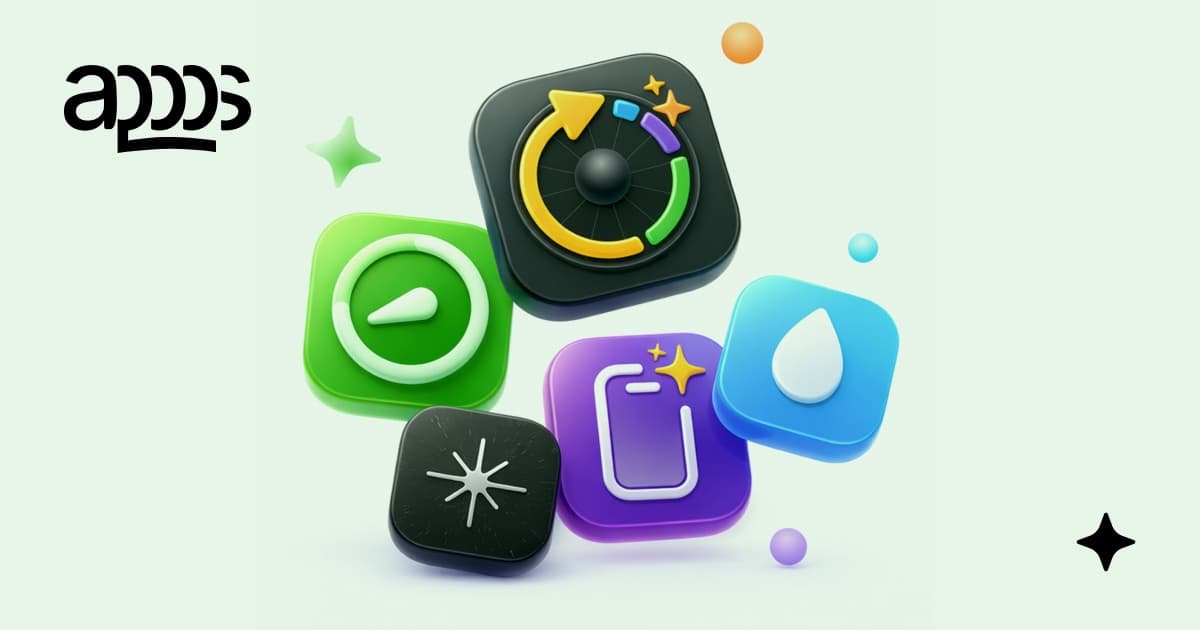
Appps
Appps is a small team of developers and designers who leverage AI to create innovative software products for everyday use on Mac and iPhone. Their current offerings include Subscription Day, a calendar to track paid subscriptions and analyze statistics, and DeskMinder, for quick desktop reminders and tasks. They also have several upcoming tools like AwesomePost for creating demo videos, Spely AI, a personal voice AI agent and assistant, and SpaceProstir for enhanced productivity. Appps emphasizes creativity and cutting-edge design in their applications.
Paper2Code
Paper2Code is an innovative tool designed to automate the generation of code from scientific papers, specifically in the field of machine learning. At its core is PaperCoder, a sophisticated multi-agent LLM system that streamlines the process of converting research papers into functional code repositories. This system operates through a meticulously structured three-stage pipeline: planning, analysis, and code generation, with each stage handled by specialized AI agents. Paper2Code aims to significantly reduce the manual effort and time typically required to implement research findings, offering a robust solution for developers and researchers. It supports both OpenAI API and open-source models like DeepSeek-Coder-V2-Lite-Instruct, providing flexibility in deployment and cost management. The tool also includes comprehensive benchmark datasets and a model-based evaluation system for assessing the quality of generated repositories.
open-agent
Open-agent offers an open-source alternative to proprietary agentic AI systems like Claude Agent SDK, ChatGPT Agents, and Manus. It enables users to deploy and modify an agentic AI that can operate computers, browsers, and phones to perform real-world tasks. The platform integrates with cutting-edge models such as OpenAI, Claude, and Gemini, allowing them to collaborate within a multi-agent framework. Users can self-host the system, providing full control and customization. It emphasizes structured planning and decision-making for agents, giving users control over final calls, and is designed for easy deployment via Docker Compose.
paperless-gpt
paperless-gpt enhances document digitalization by integrating Large Language Models (LLMs) and LLM Vision (OCR) with paperless-ngx. This tool automates the generation of document titles, tags, and correspondents, significantly reducing manual sorting time. It offers advanced OCR capabilities, leveraging models like OpenAI's GPT-4o or Ollama's qwen3:8b, to accurately extract text from even messy or low-quality scans. Key features include automatic custom field generation, searchable and selectable PDF creation, and extensive customization options for AI prompts. It supports various OCR providers including LLM-based OCR, Google Document AI, Azure Document Intelligence, and Docling Server, making it a versatile solution for efficient document organization.

Artificial Analysis
Artificial Analysis provides independent comparison and analysis of AI models and API hosting providers. The platform offers detailed benchmarks across critical performance metrics including intelligence, speed, and cost. Users can explore leaderboards for various AI capabilities like language models, image generation, video generation, and speech. It features an 'Intelligence Index' to evaluate model quality, 'Output Tokens per Second' for speed, and 'USD per 1M Tokens' for price. The tool also offers personalized model recommendations based on user priorities and insights into API provider performance, helping users make informed decisions for their AI deployments.

Bitte Protocol
Bitte Protocol empowers developers to launch cutting-edge Web3 experiences by leveraging AI agents. The platform provides a no-code agent builder with extensibility, allowing users to create powerful agents without writing code, utilizing over 50 pre-built tools or adding their own. Developers can easily embed these custom agents into their projects using a whitelabel chat widget to enhance user engagement and streamline workflows. Bitte also offers a comprehensive analytics suite to gain full visibility into agent performance and user behavior, including conversation-to-transaction conversions. It supports various blockchain networks like Near, Ethereum, Base, BNB, Polygon, Gnosis, Arbitrum, Optimism, Avalanche, Sui, Cardano, and Solana, making it a versatile tool for the Web3 ecosystem.

Ambyint
Ambyint offers an AI-powered production optimization platform specifically designed for the upstream oil and gas industry. It helps production operators, optimizers, and engineers manage extensive well portfolios by providing enhanced visibility and efficient problem-solving at scale. The platform optimizes production across various well types, delivering measurable improvements in output, reducing workloads, and preventing unnecessary well damage. Key features include advanced surveillance and analytics, anomaly detection with predictive maintenance, and autonomous setpoint management. Ambyint integrates seamlessly with existing SCADA and production accounting platforms, ensuring secure data transport and storage.
Callsure AI
Callsure AI is a platform designed to transform customer interactions through AI-driven voice technology, enabling businesses to automate and optimize their customer conversations. It deploys intelligent AI agents capable of understanding context, detecting emotion, and delivering natural, human-like conversations. The platform ensures 24/7 availability, multi-language support across 50+ languages, and real-time analytics for tracking call performance and sentiment. Callsure AI integrates seamlessly with existing CRM, ERP, and helpdesk systems, offering features like live agent handoff, self-learning AI, and enterprise-grade security. It's built to reduce operational costs, improve response times, and enhance customer satisfaction across various industries.