
Data & Analytics
Browsing page 13 of AI tools for Data Pipelines & Integration in Data & Analytics. Sorted by confidence score — our independent quality rating.
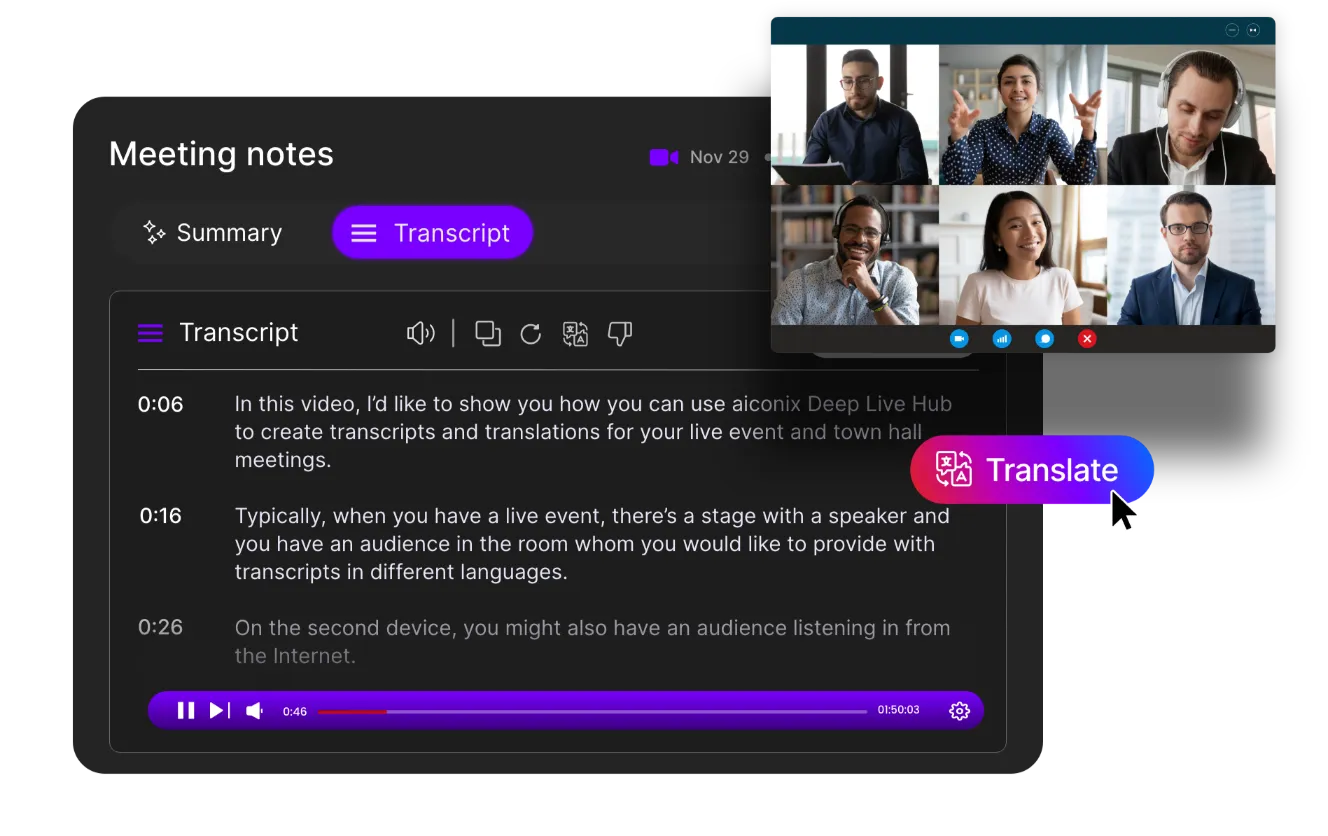
DeepVA
DeepVA is a composite AI platform designed for media companies to extract various types of information from images, videos, and live streams. It automates complex AI processes such as tagging, indexing, and searching, significantly enhancing content management, accessibility, and workflow efficiency. The platform supports both cloud and on-premises deployments, ensuring data sovereignty and compliance with regulations like GDPR and the AI Act. DeepVA allows users to train and utilize AI datasets with existing staff, offering a user-centric approach to custom model creation. It integrates seamlessly with existing workflows and third-party applications via an API-centric design, providing a future-proof solution with cutting-edge technology and a shorter time to market.

Falkor
Falkor is an AI-powered hub designed to accelerate and enhance investigations across multiple sectors. It provides a centralized platform for analysts to effortlessly discover, analyze, and report crucial insights from vast quantities of data. The software addresses challenges such as inconsistent data gathering and the difficulty of identifying relevant facts in large datasets. Falkor offers both an 'Air' version for fast deployment and an 'Enterprise' solution for scalable, customizable investigations with extensive data and source control. It is tailored for law enforcement, financial investigations, cyber threat intelligence, and trust and safety applications, enabling teams to make smarter, faster decisions.

SynapseML
SynapseML (previously known as MMLSpark) is an open-source library designed to simplify the creation of massively scalable machine learning (ML) pipelines. It offers simple, composable, and distributed APIs for a wide variety of ML tasks, including text analytics, computer vision, anomaly detection, and deep learning. Built on the Apache Spark distributed computing framework, SynapseML shares the same API as the SparkML/MLLib library, allowing seamless integration into existing Apache Spark workflows. It supports training and evaluating models on single-node, multi-node, and elastically resizable clusters, and is usable across Python, R, Scala, Java, and .NET. Its API abstracts over various databases, file systems, and cloud data stores, simplifying experiments regardless of data location.
Icybit
Icybit is a scientific research, experimental development, and innovation company with expertise in artificial intelligence, distributed computing, and big data analytics. They are dedicated to creating advanced solutions in these fields, leveraging their deep knowledge to drive innovation. While the website provides a high-level overview of their capabilities, it emphasizes their role as experts in cutting-edge technologies. Their focus on research and development suggests they provide sophisticated, data-driven solutions for various industries, likely catering to complex analytical needs and large-scale data processing challenges.
PVML
PVML offers secure, AI-ready virtual databases designed for enterprise IT, allowing organizations to operationalize GenAI on their existing infrastructure. The platform eliminates the need for data movement or duplication, providing unlimited virtual databases with built-in security and AI readiness. Key features include infrastructure-layer security with dynamic user-level permissions, deterministic guardrails to prevent unauthorized data access, and resource cost control to manage unpredictable loads. PVML also provides unified visibility and auditability for consistent governance and operational simplicity. It connects live to any database, applies differential privacy security, and auto-generates AI-ready protocols for integration with tools like ChatGPT and Claude.
Ocient
Ocient offers a next-generation hyperscale data warehouse designed for real-time analysis of complex, large datasets. It reimagines data warehouse design to deliver peak performance for always-on, compute-intensive workloads, allowing users to streamline data and analytics on a single powerful platform. Key features include query optimization, semi-structured data handling, geospatial analytics (OcientGeo®), and machine learning capabilities (OcientML®). Ocient aims to consolidate multiple systems and workloads, accelerate data science, and optimize energy efficiency. It provides flexible deployment options, including OcientCloud®, public cloud, and on-premises, with various pricing models to suit different business needs.

OCTOTRONIC
OCTOTRONIC's OctoCore platform is a unified data intelligence solution designed to empower shopfloors and scale manufacturing excellence. It brings all production data into a single foundation, offering intuitive tools for connectivity, data transformation, analytics, visualization, and AI assistance. OctoCore connects various data sources, from sensors and PLCs to cameras and ERP systems, transforming fragmented inputs into a clean, contextual data layer. This enables real-time monitoring, process optimization, and predictive operations, helping manufacturers identify root causes, reduce downtime, and prevent quality issues. The platform supports scalable industrial use cases and is built for complex manufacturing environments, including automotive, food & beverage, pharmaceuticals, electronics, plastics, and machine builders.
Splore (acquired by Model ML)
Model ML is an AI-native workspace designed for investment banks, asset managers, and consulting firms. It automates time-consuming financial workflows, including CRM, document analysis, meeting summaries, and deal origination. The platform aims to improve data-driven insights and accelerate documentation, enabling better decision-making. Model ML emphasizes secure infrastructure and compliance, making it suitable for strongly regulated environments. It provides bespoke analysis and tailored insights, freeing teams to focus on strategic outcomes for clients.

Ascend.io
Ascend.io is an agentic data engineering platform designed to build, manage, and optimize data pipelines with the assistance of AI agents. It helps data engineers and leaders ship data products faster by combining a metadata foundation, event-driven automation, and AI agents. The platform enables users to build pipelines 10x faster, automate orchestration with rich metadata and event-driven triggers, and observe with confidence through real-time insights. Key features include AI agents like Otto for code generation and troubleshooting, unified metadata collection, and a DataAware Automation Engine that optimizes compute and reduces costs by eliminating unnecessary reprocessing. It supports both SQL and Python in a single workspace with version control and offers robust governance features.
Catomize
Catomize is a Swiss-engineered e-commerce catalog optimization solution designed to enhance catalog management, elevate conversion rates, and streamline inventory synchronization. It transforms backend chaos into sales by ensuring real-time data synchronization across ERP, warehouse, online and offline stores, and other sales channels. This results in maximized revenue, a slick customer experience, and up-to-the-second data for purchasing decisions. Catomize helps businesses avoid missed sales by providing instant updates across platforms, ensuring every product variation is ready for purchase. It also prepares businesses for traffic spikes and promotions by preventing broken product data and system outages. The platform connects to existing infrastructure via a flexible API, processing up to 50,000 product updates per second, and runs in parallel for risk-free deployment.
WolkAbout
WolkAbout delivers Industrial AI solutions by transforming fragmented operational data into a unified, contextualized foundation for AI. Its core product, AIrport, acts as a complete industrial data management and AI enablement suite, sitting between machines and decision-makers to convert raw data into trusted data products. WolkAbout AIrport integrates with existing systems like SCADA, historians, OPC, ERP, CMMS, and SCM, preparing data for LLMs and AI agents. It supports real-time automation, predictive maintenance, and operational intelligence, enabling operators to ask questions in plain language and receive AI-driven insights and recommendations. The platform is designed for flexibility, offering middleware or end-to-end solutions, and boasts lower TCO and rapid deployment, ensuring data control and no vendor lock-in.
Pipedream
Pipedream is a versatile integration platform designed to help developers connect APIs, AI tools, and databases to build powerful applications and automate workflows. It offers a flexible environment with both code-level control for complex tasks and no-code options for simpler integrations. The platform features an AI Agent Builder for prompting, running, and deploying AI agents in seconds, alongside a Workflow Builder to automate processes connecting various APIs. With over 3,000 integrated apps and 10,000+ tools, Pipedream provides a comprehensive SDK for adding integrations quickly. It emphasizes security with SOC 2 Type II, HIPAA, and GDPR compliance, making it suitable for handling sensitive data.
Unwrap AI
Unwrap AI is a leading customer intelligence platform designed to help businesses gain deeper insights into their audience by proactively analyzing customer feedback. It transforms unstructured data from various sources like surveys, support tickets, calls, and reviews into actionable insights, eliminating the need for manual tagging and extensive dashboard creation. The platform automatically surfaces trends and issues, allowing teams to understand customer needs without extensive searching. Key features include an Auto Tagger for categorizing feedback, Dashboards for democratized data, an Assistant for natural language querying, Alerts for emerging insights, and a Responder for engaging with customers. Unwrap AI is built for enterprise-grade security and compliance, trusted by Fortune 100 leaders, and offers flexible pricing based on feedback volume.
Purgo AI
Purgo AI is an advanced platform designed to automate the entire data engineering process for building ETL/ELT pipelines within cloud data warehouses. Leveraging agentic AI, it handles the design, development, testing, and deployment of data applications, from English language requirements in Jira to production-ready code in Python, PySpark, and SQL. The platform supports various industries, offering solutions for Sales & Marketing, Supply Chain, Finance & Risks, and R&D, including GxP validation for compliant operations. It integrates with enterprise contexts like GitHub and data catalogs, provides automated quality testing, and allows human developers to review and make changes, significantly reducing costs and accelerating time to delivery.

MaxisIT Inc.
MaxisIT Inc. provides comprehensive AI-driven clinical data management and analytics solutions specifically designed for life sciences organizations. Their platform, Maxis AI, automates data management and analytics processes, ensuring higher-quality data and faster insights for clinical trials. Key products include the Clinical Trials Oversight System for real-time visibility, Data Management Workbench for seamless integrations, and Statistical Computing Environment for accelerated research. The platform also features a Clinical Data Repository, Risk-based Quality Management, Smart Optimizer for AI-enabled analytics, and a Metadata Repository. MaxisIT aims to accelerate drug development timelines and revolutionize clinical data management by offering a single source of truth for clinical study information, supporting roles from clinical operations to executive management.
Kriterion
Kriterion is an AI-enabled decision support system that leverages Generative AI and innovative Deep Digital Twins to revolutionize operations for physical assets. The platform, featuring cloud-based solutions like Cerberus and Hyperion, ensures the healthy operation of over 15,000 assets in sectors such as distributed power, telecommunications, and mobile plant industries. Kriterion translates vast operational data into clear service instructions, enabling maintenance teams to shift from reactive to proactive mindsets with weeks of lead time. It supports the efficient operation of significant generating capacity, reducing fossil fuel consumption and CO₂ emissions, and optimizes cooling, heating, and energy storage systems to maximize reliability and longevity.

EmbedAPI
EmbedAPI serves as a comprehensive AI integration platform designed to simplify the process of connecting to various AI models. It offers a unified API that allows developers to integrate leading AI models such as OpenAI, Anthropic, and Vertex AI quickly and efficiently. The platform aims to streamline AI development by providing a single point of access, reducing the complexity typically associated with managing multiple AI service providers. This enables faster deployment of AI capabilities into applications and services, making it an essential tool for developers looking to leverage diverse AI technologies without extensive setup.

Pintel
Pintel is an AI assistant designed for RevOps and Growth teams to streamline and enhance their sales and marketing efforts. It automates the ingestion of raw leads from various channels, including cold account lists, website visitors, event attendees, and LinkedIn audiences. The platform then filters and segments this data using ICP qualification, custom signals, data enrichment, and cleaning processes. Pintel performs in-depth account and person research by leveraging LinkedIn profiles, annual reports, recent news, and company websites. A key feature is its ability to personalize outreach at scale, offering over 25 message personalization hooks and integrating with email sending tools to deliver highly personalized email sequences. It combines publicly available data with contextual internal data from over 150 sources like Salesforce, LinkedIn, and HubSpot to provide robust insights.
Uncover
Uncover is an AI-powered platform designed to optimize marketing investments and accelerate business growth through state-of-the-art data integration and predictive modeling. It offers solutions like ROI 360 to measure the return on all marketing efforts, Media Optimizer to find optimal media allocation, Metrics Manager for real-time business indicators, and Forecasting to set goals and improve response times. The platform helps businesses save up to 25% on media spending and achieve a 30% ROAS increase within the first six months. Uncover's proprietary AI helps refocus attention on essential insights, moving beyond traditional static Marketing Mix Models to provide dynamic and actionable recommendations.
mcp-clickhouse
mcp-clickhouse is an open-source server designed to connect ClickHouse databases to AI assistants, facilitating seamless data interaction. It allows users to execute SQL queries on their ClickHouse clusters, list databases, and paginate through tables with optional filtering and detailed column information. The tool also integrates with chDB for embedded ClickHouse engine queries, enabling direct data querying from various sources without ETL. Security is a key focus, offering static bearer token, OAuth/OIDC, and development mode authentication for HTTP/SSE transports. It enforces read-only queries by default, with optional write access and a two-tier protection system for destructive operations, ensuring data integrity during AI exploration.
Lucid Labs
Lucid Labs specializes in developing productive AI agents for mid-market companies, aiming to resolve operational bottlenecks, save time, and deliver measurable ROI. Their approach goes beyond strategy, offering workshops as an entry point and delivering functional AI agents within approximately six weeks. These agents are seamlessly integrated into existing systems, providing solutions for issues like staff shortages, manual processes, and knowledge loss. Lucid Labs emphasizes quantifiable results, tracking time and cost savings, automation progress, and performance through their Control Center. They offer various service packages, from quick prototypes to dedicated AI teams, ensuring tailored solutions for different business needs.
Vana
Vana is an open protocol designed to empower users with ownership and control over their personal data in the age of AI. It facilitates the portability and programmability of user data across various applications, moving away from traditional data extraction models. Users can connect their existing accounts, manage permissions, and control how their data is utilized within the Vana network. The platform allows developers to build applications that leverage real user context from day one, with over 1 million users already connected. Vana aims to liberate data from 'walled gardens' by providing open infrastructure for secure, user-permissioned data movement between applications, fostering a new era of data capital.
sqlite-vec
sqlite-vec is an extremely small, yet powerful, vector search SQLite extension designed for broad compatibility. It allows users to store and query various vector types, including float, int8, and binary, within vec0 virtual tables. Developed in pure C with no external dependencies, sqlite-vec boasts exceptional portability, running seamlessly across diverse environments such as Linux, MacOS, Windows, in-browser with WASM, and on Raspberry Pis. It supports storing non-vector data in metadata, auxiliary, or partition key columns, making it a versatile solution for integrating vector search capabilities directly into SQLite databases.
TonY
TonY is an open-source framework designed to natively execute deep learning frameworks such as TensorFlow, PyTorch, MXNet, and Horovod on Apache Hadoop. It enables users to run both single-node and distributed training jobs as a Hadoop application, providing a robust and flexible environment for machine learning workflows. Key features include compatibility with Hadoop 2.6.0+ (CDH5.11.0+) and support for GPU isolation with newer Hadoop versions. Users can launch deep learning jobs either by utilizing a zipped Python virtual environment or by leveraging Docker containers within their Hadoop cluster. TonY offers extensive configuration options via XML files or command-line arguments, allowing for fine-grained control over job parameters like worker instances, memory, and GPU allocation. It also includes examples for distributed MNIST with various frameworks and integration with Google Cloud Platform and Azkaban.