
Research & Education
Browsing page 17 of AI tools for Academic Research in Research & Education. Sorted by confidence score — our independent quality rating.

Pi School
Pi School is an AI center of excellence headquartered in Rome, focusing on bridging machine intelligence with human creativity. The school helps organizations turn AI into real business impact through applied research and practical training. They offer an 8-week School of AI program where companies can sponsor a challenge to develop a fully functional AI prototype. Beyond prototyping, Pi School also assists with AI deployment and integration into existing IT infrastructures. They have a strong focus on applied research, evidenced by case studies like accelerating code refactoring with AI and developing AI-powered operations manuals. Pi School also maintains a library of resources including case studies, webinars, and tech talks, and actively seeks talent to contribute to their AI initiatives.
moara.io
moara.io is an AI-powered research platform designed to significantly enhance productivity for literature reviews. It integrates trusted scholarly databases with advanced AI-assisted workflows, enabling researchers to efficiently search, organize, screen, extract, and synthesize evidence within a single workspace. The platform supports both systematic and narrative reviews, ensuring outputs are grounded in the underlying papers. Moara is built for serious researchers, including academics, graduate students, librarians, and research administrators, who require structured, transparent, and consistent methods for evidence-based work. It offers features like paper summarization, theme identification, gap analysis, and comparative findings.
DATAi2i
DATAi2i is a deep tech AI engineering company focused on delivering production-grade AI systems for enterprise teams. They specialize in designing, building, and operating advanced AI solutions, including agentic workflows and Retrieval Augmented Generation (RAG) pipelines. DATAi2i also offers managed engineering teams to support businesses in their AI initiatives. Their expertise helps enterprises integrate sophisticated AI capabilities to optimize operations, enhance decision-making, and transform complex data into actionable, real-time intelligence. This service-oriented approach ensures that businesses can leverage cutting-edge AI without needing extensive in-house development resources.
EssaySloth
EssaySloth is an AI academic writing assistant designed to streamline the academic writing process for researchers and students. It automates reference finding and outline generation, allowing users to focus on innovative thinking rather than tedious tasks. The tool can generate essays up to 10,000 words, provide comprehensive literature reviews and abstracts, and perform similarity checks to ensure originality. By offering different academic levels, from Associate/Bachelor's to Journal articles, EssaySloth aims to boost research efficiency and quality, serving as a powerful aid in academic creation.
AcademicIdeas
AcademicIdeas (学境思源) is an AI-powered platform designed to support academic writing across multiple high-frequency scenarios. It offers comprehensive assistance from generating thesis proposals and outlines to drafting initial papers, performing in-depth revisions, and optimizing for plagiarism reduction and AIGC detection. The tool also helps with modifying paper formats, organizing literature reviews, and preparing presentation materials for thesis defenses. AcademicIdeas focuses on enhancing academic logic and formatting, providing a one-stop AI academic aid for students and researchers. It ensures data privacy with AES-256 isolation storage, meaning drafts and ideas are private and not used for model training. The platform also supports the export of editable PPTX files for local modification.
BEKhealth
BEKhealth is an AI-powered platform designed to revolutionize clinical trial recruitment and real-world data generation. It leverages AI to read both structured and unstructured Electronic Health Record (EHR) data, enabling faster feasibility assessments, more precise site selection, and highly accurate patient matching. The platform helps sponsors, CROs, and research sites connect with a vast network of patients and trials, significantly reducing enrollment times and improving the quality of real-world evidence. By turning everyday clinical care into research breakthroughs, BEKhealth offers a unified solution for better trials and deeper evidence, supporting regulatory submissions and post-market research with longitudinal EHR datasets.
CollegeVine
CollegeVine offers an AI operating system specifically designed for universities, aiming to unify institutional data, model operations, and deploy AI across every department on campus. The platform provides an Operational Intelligence Platform to power institutions, enabling the deployment of AI agents, applications, and machine learning models on top of a unified ontology. Key functionalities include automated data ingestion from all campus systems, robust security with deterministic permissions, and the ability to launch transformational AI initiatives rapidly. It supports diverse departments such as enrollment management, financial aid, advancement, student affairs, and academic operations, facilitating tasks from recruiting and application review to budget modeling and compliance monitoring. The system is built with zero-trust security principles, SOC 2 Type II compliance, and FERPA adherence, ensuring data protection and operational integrity.
Clinakos Inc.
Clinakos Inc. offers a comprehensive platform that combines curated patient data with advanced AI tools, specifically designed for rare disease and oncology analytics. With over 13 years of expertise, Clinakos provides Medically Smart AI™ agents for intelligent answers, Clarion™ for self-service data exploration, Acceleron™ for AI-powered diagnosis verification and patient identification, and Confirmis™ for integrated patient data. The platform links fragmented primary sources like EMR, claims, and labs with patient-generated information to create comprehensive, de-identified patient profiles. Clinakos serves life sciences and biotech companies, healthcare providers, and consulting firms, enabling them to build their own patient data networks and registries for strategic initiatives from discovery through commercialization.
AI Image Search Lens
AI Image Search Lens is a powerful Chrome extension designed to transform how users interact with images online. Leveraging advanced AI algorithms, it allows for seamless image searching directly from any webpage. Key functionalities include the ability to perform bulk downloads of images, access in-depth insights and metadata, and efficiently locate similar images or their original high-resolution sources. This tool is ideal for analyzing visual content, recognizing patterns, and obtaining accurate search results with just one click, significantly enhancing research and content creation workflows.
Flow Trials
Flow Trials is an AI-powered platform designed to bridge the gap between patients and clinical trials, while also supporting researchers in their endeavors. The platform aims to simplify the often complex and time-consuming process of identifying appropriate clinical trials for patients. By leveraging artificial intelligence, Flow Trials helps match patients with trials that align with their specific medical conditions and criteria. Concurrently, it provides tools and resources for researchers, facilitating their work in managing and conducting clinical studies. This dual focus ensures that both patients seeking treatment options and researchers advancing medical science can benefit from a more efficient and targeted approach to clinical trial participation and management.
jupyter-ai
Jupyter AI is an open-source extension designed to integrate AI agents directly into JupyterLab computational notebooks. It offers a native chat user interface, allowing users to collaborate with various frontier AI agents such as Claude, Codex, GitHub Copilot, Gemini, and Mistral Vibe, all connected via the Agent Client Protocol (ACP). Agents are automatically detected upon installation of their dependencies, simplifying the setup process. This tool enables agents to perform actions like reading and writing files, executing terminal commands, and interacting with notebooks through a built-in Jupyter MCP server. A robust permission system ensures user control over agent actions, requiring approval for file writes or command executions. Jupyter AI supports multiple concurrent chats, drag-and-drop context from files or notebook cells, and real-time collaboration. Its flexible and extensible architecture allows for custom MCP servers and AI personas, avoiding vendor lock-in and promoting an open ecosystem.
LLaDA
LLaDA (Large Language Diffusion with Masking) offers the official PyTorch implementation for Large Language Diffusion Models, providing a robust framework for developing and training diffusion models for natural language processing tasks. This open-source tool introduces an unprecedented 8B scale diffusion model, trained from scratch, demonstrating performance comparable to LLaMA3 8B. Key features include support for conditional likelihood evaluation and conditional generation, with pre-trained models available on Huggingface. LLaDA also offers guidelines for pre-training and Supervised Fine-Tuning, making it adaptable for researchers and developers. It explores a theoretically complete language modeling approach, distinguishing itself from BERT by using a varying masking ratio and serving as a generative model capable of in-context learning and instruction-following.
machine-learning-list
The machine-learning-list is a curated curriculum hosted on GitHub, designed to educate individuals on foundation models, with a particular emphasis on language models. It offers a balanced approach, covering both techniques relevant for deploying machine learning in production and strategies for long-term scalability. The curriculum is structured into tiers, allowing users to progress from fundamental concepts like neural networks and gradient descent to advanced topics such as world models, causality, and AI safety. Key areas include Transformers, various foundation model architectures (GPT-2, GPT-3, LLaMA), training and finetuning methods, reasoning and runtime strategies (Chain of Thought, Tree of Thoughts), and applications in science, forecasting, and search. It also delves into practical aspects like production deployment, benchmarks, and datasets, making it a valuable resource for anyone looking to deepen their understanding of modern AI.
MMaDA
MMaDA is an open-sourced family of multimodal diffusion foundation models designed for superior performance across diverse domains including textual reasoning, multimodal understanding, and text-to-image generation. It introduces a unified diffusion architecture with a shared probabilistic formulation and modality-agnostic design, eliminating the need for modality-specific components. MMaDA also features a mixed long chain-of-thought (CoT) fine-tuning strategy for a unified CoT format across modalities, and a unified policy-gradient-based RL algorithm called UniGRPO for consistent performance improvements in both reasoning and generation tasks. The project provides various checkpoints like MMaDA-8B-Base and MMaDA-8B-MixCoT, supporting capabilities from basic text and image generation to complex textual and multimodal reasoning.
ml-diffucoder
ml-diffucoder is an open-source research project accompanying the paper "DiffuCoder: Understanding and Improving Masked Diffusion Models for Code Generation." It explores how diffusion LLMs (dLLMs) differ from autoregressive models in code generation, investigates data modality differences (code vs. math), and examines diversity and post-training strategies for dLLMs. The project introduces Coupled-GRPO, a novel post-training method designed to enhance DiffuCoder's performance by improving the efficiency and accuracy of log-probability computations during training. The repository provides the implementation of Coupled-GRPO, built upon open-r1, along with scripts for training, data preparation, and inference. It also offers pre-trained DiffuCoder models (Base, Instruct, and cpGRPO) on HuggingFace, complete with usage examples for both base code completion and chat-based instruction following.
DTU - Intelligent Transportation Systems
DTU - Intelligent Transportation Systems is a research and education initiative from Danmarks Tekniske Universitet (DTU) dedicated to advancing the field of transportation through artificial intelligence and machine learning. The program focuses on developing novel ML methodologies applicable to mobility and various other domains, aiming to create intelligent solutions for complex transportation challenges. By integrating expertise in simulation and optimization, DTU's researchers work towards predictive optimization in transportation systems. This involves exploring how AI can enhance efficiency, sustainability, and safety within urban and national transport networks. The university's broader mission is to develop and utilize natural and technical sciences for the benefit of society, with a strong emphasis on sustainable solutions.
NLPBook
NLPBook is a comprehensive open-source resource focused on neural networks and large language models within the field of Natural Language Processing. Authored by Tong Xiao and Jingbo Zhu, this book is designed for anyone interested in NLP and deep learning. It integrates content from previously published articles with significant new material, covering foundational concepts in machine learning and neural networks, basic NLP models like word vectors, recurrent and convolutional sequence models, and transformers. The book also delves into advanced topics such as pre-training, generative models, prompting, alignment, and inference for large language models. All chapters are available in PDF format, and the book has been translated into multiple languages using LLMs.
Tech AI Magazine
Tech AI Magazine is a leading publication dedicated to artificial intelligence journalism, offering comprehensive insights into the rapidly evolving AI landscape. It covers a wide range of topics, including AI 2.0 breakthroughs, top AI gadgets for 2025, and smart tools revolutionizing productivity. The magazine features articles on AI basics, advanced courses, artificial general intelligence (AGI), and foundation models. It also provides global AI news, top AI tool rankings, and guides on building AI models without coding. With a focus on balancing autonomy, security, and ethical risks, Tech AI Magazine aims to bridge the gap between AI innovation and practical implementation for a diverse audience.
DL4NLP
DL4NLP is a comprehensive GitHub repository dedicated to Deep Learning for Natural Language Processing (NLP). It serves as a valuable resource hub, offering state-of-the-art materials for various NLP sequence modeling tasks such as machine translation, image captioning, and dialog systems. The repository includes detailed notes on fundamental concepts like neural networks, RNNs, and LSTMs. It also curates links to prominent academic courses, including Stanford CS 224D and Oxford Deep Learning for NLP, complete with syllabi, slides, and lecture videos. Additionally, it provides access to seminal papers, code, and tutorials on key NLP topics like word vectors, sentiment analysis, neural machine translation, and conversation modeling, making it an essential reference for anyone studying or working in the field.

Afforai
Logically is an AI-powered workspace designed to streamline academic research and writing. It offers citation-backed research capabilities, allowing users to manage references efficiently and conduct comprehensive literature reviews. The platform supports annotating PDFs directly within the system and aids in writing academic papers. Logically aims to simplify complex research tasks, providing a robust environment for students, professors, and researchers to organize their work, ensure proper citation, and enhance their writing process with AI assistance. It is designed to be user-friendly, offering a free tier to get started without requiring a credit card.
FollowYourPose
FollowYourPose is an open-source implementation of the "Follow-Your-Pose: Pose-Guided Text-to-Video Generation using Pose-Free Videos" research paper from AAAI 2024. This tool allows users to generate character videos by combining pose information with text descriptions, leveraging pre-trained text-to-image models like Stable Diffusion. It features a two-stage training scheme that uses image-pose pairs and pose-free videos to achieve continuously pose-controllable character videos while retaining the editing and concept composition abilities of the underlying text-to-image model. The project provides code, configurations, and checkpoints, along with a local Gradio demo for easy experimentation, requiring an A100/3090 GPU.
Ovis
Ovis (Open VISion) is an innovative Multimodal Large Language Model (MLLM) architecture available as an open-source project on GitHub. It is specifically designed to structurally align visual and textual embeddings, enabling advanced multimodal understanding and generation. Key features include native-resolution visual perception, enhanced reflective reasoning (thinking mode), and leading performance across STEM, chart analysis, grounding, and video understanding. Ovis supports various model sizes, from 2B to 34B parameters, and offers quantized versions for optimized deployment. It provides comprehensive installation and inference instructions, including examples for both transformers and vLLM, and supports fine-tuning with in-repo code or ms-swift.
Failed-ML
Failed-ML is a comprehensive compilation of high-profile, real-world examples of machine learning projects that have failed. This GitHub repository serves as an invaluable resource for anyone looking to understand the challenges, biases, and pitfalls inherent in AI implementation. It categorizes failures across various domains including Classic Machine Learning, Computer Vision, Forecasting, Image Generation, Natural Language Processing, and Recommendation Systems. Each entry provides a title and description of the failure, offering concrete lessons from incidents like Amazon's biased AI recruitment system, Google Photos' mislabeling, and various predictive models that proved inaccurate or harmful. The repository aims to educate practitioners and researchers on potential failure points, fostering a deeper understanding beyond the typical success stories of applied machine learning.
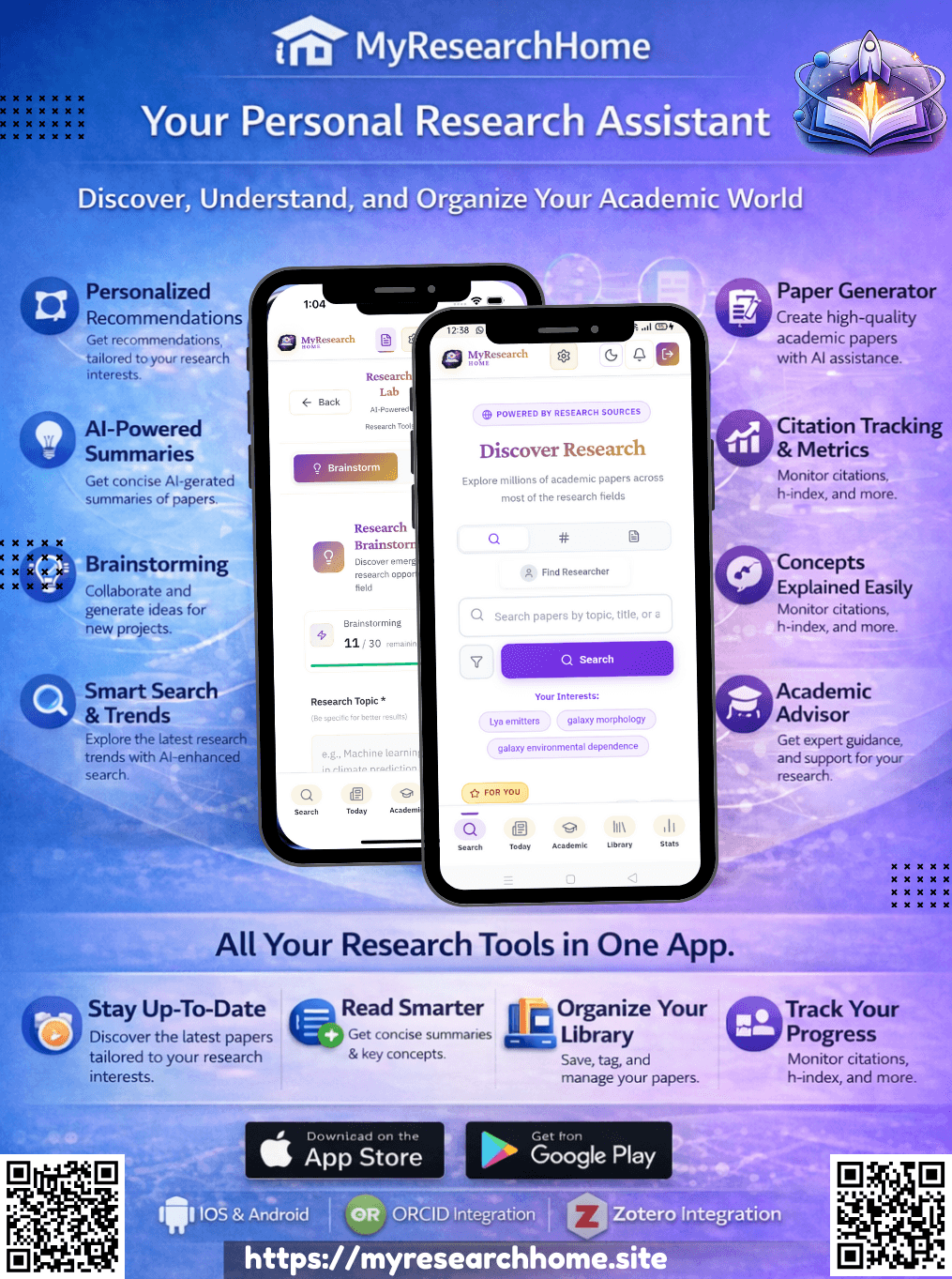
MyResearchHome
MyResearchHome is a comprehensive academic research platform designed for researchers worldwide, offering a complete workspace for their research workflow. It provides smart discovery across millions of academic papers, AI-powered insights for concise summaries, and a personalized 'Today Feed' for daily recommendations. Users can organize papers with a smart library, integrate their ORCID profile for automatic publication sync, and track citations and collaboration networks. The platform also includes a Research Lab for literature reviews and an Academic Advisor for career guidance. Available as a free iOS app, with a web version offering core features, MyResearchHome aims to streamline the entire research process.