
Research & Education
Browsing page 364 of AI tools for Research & Education. Sorted by confidence score — our independent quality rating.

Swiss AI Summit
The Swiss AI Summit is a premier AI conference and ecosystem based in Zurich, designed to connect global AI leaders, industry professionals, and policymakers. The summit focuses on driving real-world AI use cases, fostering innovation, and promoting responsible AI development. Key industries covered include Finance & Insurance, Government, Geopolitics & Defense, Industry & Manufacturing, Cybersecurity, Quantum Computing, and Life Science & Healthcare. Beyond the annual summit, the Swiss AI Summit offers a year-round community with events, an AI Magazine, and a podcast. Attendees can expect keynote speeches, workshops, panel discussions, and demonstrations on cutting-edge AI technologies and applications, providing cross-disciplinary insights and networking opportunities.

Google Gemma
Google Gemma is an AI model hosted on Hugging Face Spaces, providing a platform for users to interact with and explore the functionalities of the Gemma model. This tool is designed to allow developers and researchers to experiment with the model's capabilities in a readily accessible environment. While the current status indicates a runtime error, the intention is to offer a space for community engagement and machine learning application discovery. It is offered without charge, making it an accessible resource for those interested in working with AI models.
Deep-RL-Notes
Deep-RL-Notes offers a comprehensive collection of notes on Deep Reinforcement Learning, specifically tailored for UC Berkeley's CS 285 (formerly CS 294-112) course, taught by Professor Sergey Levine. This resource serves as a textbook, covering foundational concepts like Markov decision processes and value functions, as well as advanced techniques such as Deep Q-Networks (DQN) and Proximal Policy Optimization (PPO). It integrates deep learning with reinforcement learning, discussing function approximation and representation learning. Users can compile the LaTeX source code into a PDF locally or edit it online via Overleaf, as the repository is regularly updated. The notes aim to balance theoretical clarity with practical relevance, providing examples, case studies, and programming exercises for hands-on experience.
Machine_Learning_Journey
Machine_Learning_Journey offers a comprehensive curriculum for individuals looking to delve into machine learning, based on Siraj Raval's YouTube series. The program is structured into weekly modules, starting with foundational topics like portfolio design and social media for engineers, then progressing to core mathematics behind machine learning, including backpropagation and loss functions. It also incorporates practical applications such as stock price prediction using reinforcement learning and building machine learning APIs. The curriculum further explores modern research topics like Neural Arithmetic Logic Units and OpenAI Five, alongside studying practices and advanced concepts like Quantum Machine Learning. This resource is ideal for beginners seeking a guided learning path in AI.
Tutoria: AI Language Tutor
Tutoria: AI Language Tutor is a mobile application designed to facilitate language acquisition through engaging and personalized AI interactions. The platform offers AI-powered conversations and interactive role-play scenarios, allowing users to practice real-life situations in a supportive environment. It provides personalized feedback, grammar corrections, and adapts to individual learning levels, fostering confidence in speaking. Users can track their progress and connect with other learners through a social community feature, making the language acquisition process both effective and engaging. The tool aims to help users achieve fluency in multiple languages.
sonata
Sonata is the official project repository for "Sonata: Self-Supervised Learning of Reliable Point Representations," a CVPR'25 Highlight paper. This open-source tool provides self-supervised pre-trained Point Transformer V3 models specifically designed for various 3D point cloud downstream tasks. Users can leverage Sonata for quick inference and visualization, with easy-to-use installation options for both standalone and package modes. The repository includes pre-trained models, inference code, and visualization demos, making it accessible for researchers and developers. It supports custom data integration and offers a flexible data transformation pipeline, along with options for loading models from Huggingface or local paths, even accommodating environments without FlashAttention.
Glaucoma Detection
Glaucoma Detection is an AI-powered tool designed to assist in the automated screening and diagnosis of glaucoma. Users can upload a retinal fundus image, which the system then processes to identify and segment the optic disc and optic cup. A key feature is the calculation of the vertical cup-to-disc ratio, a critical metric in glaucoma assessment. Based on these analyses, the tool provides a diagnosis indicating potential glaucoma risk. This makes it a valuable resource for healthcare professionals and medical researchers in ophthalmology, offering an efficient method for initial screening and diagnostic support.

Ada Lovelace Institute
The Ada Lovelace Institute is an independent research institute dedicated to ensuring that data and AI technologies benefit people and society. Funded by the Nuffield Foundation, its core belief is that the advantages of data and AI should be justly and equitably distributed, enhancing individual and social well-being. The institute conducts in-depth research, publishes reports and policy briefings, and hosts events to foster public understanding and debate around AI's impact. It actively collaborates with various stakeholders, including those involved in creating, implementing, governing, and regulating technologies, as well as individuals affected by them, to achieve a positive vision for AI's future.
HF Tips & Tricks
HF Tips & Tricks is a Hugging Face Space designed to serve as a valuable resource for individuals interested in AI and the Hugging Face ecosystem. This tool presents blog post previews, allowing users to quickly browse and select articles of interest. Upon clicking, users gain access to detailed content, offering insights into various tips and tricks for effectively utilizing Hugging Face. The platform also includes information on how to automate tasks within the Hugging Face environment, making it a practical guide for both beginners and those looking to optimize their AI workflows. Additionally, it provides a template for hosting a blog directly on Hugging Face, fostering a community of knowledge sharing.
Texygen
Texygen is an open-source benchmarking platform designed to support research in open-domain text generation models. It offers a comprehensive suite of implemented text generation models, alongside a diverse set of metrics for evaluating the diversity, quality, and consistency of generated texts. The platform aims to standardize research in the field of text generation, fostering reproducibility and reliability in future work. By facilitating the sharing of fine-tuned open-source implementations among researchers, Texygen helps advance the development and understanding of text generation technologies. It supports Python 3.6+ and popular libraries like TensorFlow, Numpy, Scipy, and NLTK.
Supernova AI: Spoken English
Supernova AI: Spoken English is a mobile application designed to help individuals improve their English speaking skills through AI-powered interactive lessons. The app offers 24/7 practice with an AI tutor named Nova, providing instant feedback on pronunciation and grammar. Users receive daily personalized lessons, typically 20 minutes long, and can track their progress. A unique feature is the support for native languages, including Tamil-to-English translation, making it particularly useful for learners in India. The app focuses on building confidence, improving sentence formation, and reducing hesitation through a structured learning method that includes rule learning, translation practice, controlled AI chats, and free-form speaking exercises with spaced repetition.
machine-learning-roadmap
The machine-learning-roadmap is a valuable resource for anyone looking to understand and master machine learning. It meticulously connects many of the most important concepts in the field, detailing how to learn them and the essential tools required for implementation. The roadmap covers key areas such as identifying machine learning problems, understanding the machine learning process, selecting appropriate tools for solutions, and delving into the underlying mathematics. It also provides a curated list of resources for further learning, making it an excellent guide for aspiring machine learning professionals and students alike. The roadmap is presented as a GitHub repository, offering an interactive version and a video walkthrough.
awesome-gpt4
awesome-gpt4 is an open-source GitHub repository offering a comprehensive, curated list of resources centered around the GPT-4 language model. It serves as a valuable hub for researchers, developers, and enthusiasts looking to delve deeper into GPT-4's applications and advancements. The repository categorizes resources into several key areas, including impactful scientific papers, a diverse collection of open-source projects leveraging GPT-4, community-contributed demos showcasing its capabilities, and various product integrations that utilize the model. Additionally, it features a section dedicated to GPT-4 news and announcements, keeping users updated on the latest developments. A significant part of awesome-gpt4 is its collection of impressive prompts, demonstrating effective ways to interact with GPT-4 for various tasks, from acting as a pharmacologist or lawyer to a debugger or mobile app developer. This makes it an indispensable resource for understanding, experimenting with, and developing applications based on GPT-4.
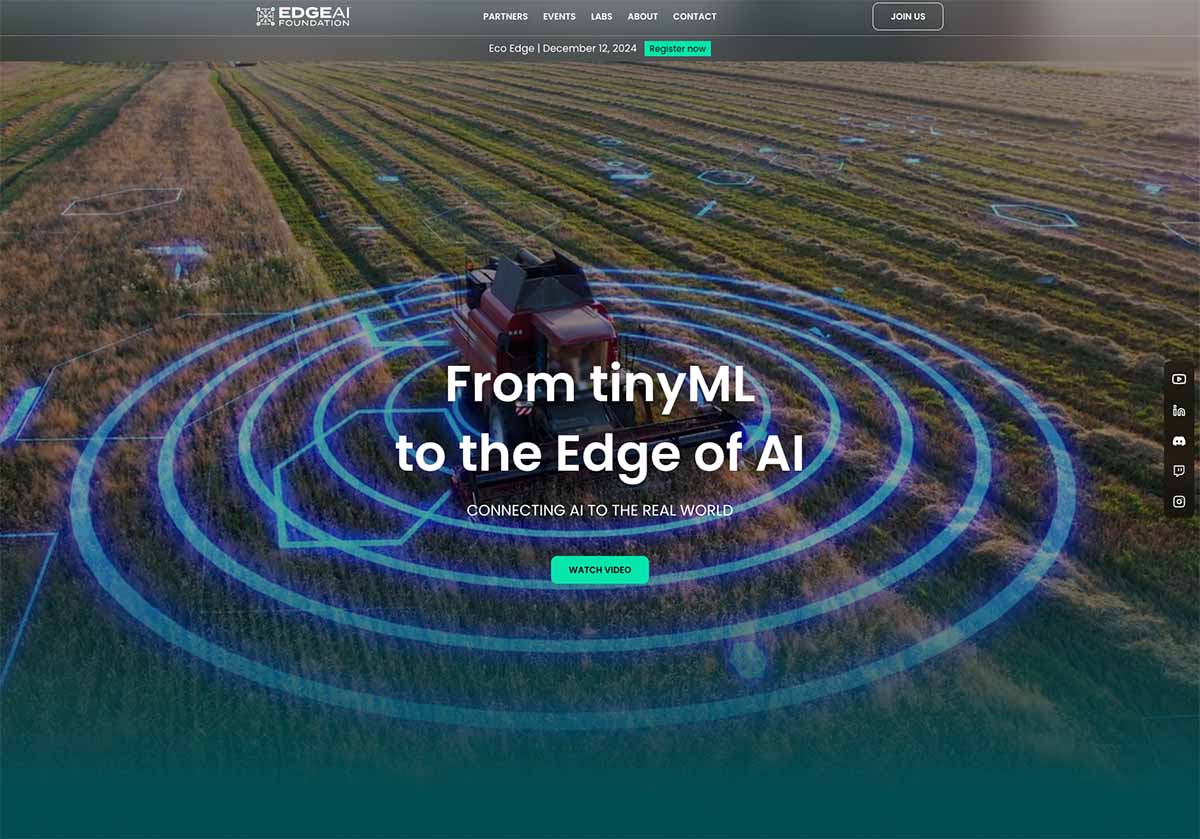
EDGE AI FOUNDATION
The EDGE AI FOUNDATION, formerly the tinyML Foundation, is a global non-profit organization dedicated to advancing Edge AI through innovation, collaboration, advocacy, and education. It connects researchers, developers, business leaders, and policymakers to foster breakthroughs in AI technologies at the edge. The foundation offers various resources, including an Edge AI Certification Catalog, events, livestreams, and publications like technology reports and articles. It actively partners with academia and industry through working groups to drive cross-industry initiatives and best practices, and promotes responsible AI development. The foundation also curates industry news, highlighting advancements and trends in Edge AI.
Entity
EntitySeg is an open-source toolbox designed for advanced image segmentation tasks, focusing on open-world and high-quality segmentation. It consolidates several cutting-edge algorithms developed by the qqlu group, including Open-World Entity Segmentation (TPAMI2022), High Quality Segmentation for Ultra High-resolution Images (CVPR2022), CA-SSL: Class-Agnostic Semi-Supervised Learning (ECCV2022), and High-Quality Entity Segmentation (ICCV2023 Oral). The toolbox is built using Python and PyTorch, making it accessible for researchers and developers in the computer vision domain. It aims to provide a unified platform for various image segmentation challenges, with future plans to merge all projects for enhanced interoperability and support.

Industrial Engineering & Innovation Sciences at TU/e
Eindhoven University of Technology (TU/e) is a leading research university dedicated to engineering science and technology. The Industrial Engineering & Innovation Sciences department focuses on effective and value-driven innovation, researching the responsible implementation of advanced technologies like AI and robotics. The program uniquely combines social sciences, humanities, and technical sciences to address complex challenges. Key research themes include the interaction between humans and technology, supply chain management, sustainability, and data-driven intelligence. TU/e offers bachelor's and master's programs, conducts extensive research, and fosters cooperation with industry, providing a comprehensive environment for academic and professional growth.

Radiance Fields (Gaussian Splatting and NeRFs)
Radiance Fields serves as a comprehensive resource for the latest news and information concerning 3D Gaussian Splatting (3DGS), Neural Radiance Fields (NeRFs), and other Radiance Field representations. The platform offers insights into new papers, tools, and applications, keeping professionals and enthusiasts updated on breakthroughs in computer vision and 3D reconstruction. It features articles, a job board, and a buyer's guide, making it a central hub for understanding and engaging with this advanced imaging technology. The site also clarifies common misconceptions about Radiance Fields, explaining how different methods like NeRFs and Gaussian Splatting contribute to the overarching representation.
timm Attention Visualization
timm Attention Visualization is an AI tool designed to help users understand how deep learning models, specifically those from the timm (PyTorch Image Models) library, process visual information. By uploading an image and selecting a timm model, users can generate detailed attention maps and rollout visualizations. These visualizations highlight the specific parts of an image that the model focuses on when making predictions, offering insights into its decision-making process. This tool is invaluable for researchers, developers, and data scientists working with computer vision models, aiding in debugging, improving model interpretability, and enhancing overall model performance. It is hosted on Hugging Face Spaces, making it easily accessible for experimentation.
W2NER
W2NER offers the source code for a novel approach to Unified Named Entity Recognition (NER), as presented in an AAAI 2022 paper. Unlike traditional methods that study flat, overlapped, and discontinuous NER individually, W2NER unifies these tasks by modeling them as word-word relation classification. The architecture effectively captures neighboring relations between entity words using Next-Neighboring-Word (NNW) and Tail-Head-Word-* (THW-*) relations. It employs a neural framework that treats unified NER as a 2D grid of word pairs, enhanced by multi-granularity 2D convolutions for refining grid representations. A co-predictor then reasons about word-word relations. The model has demonstrated state-of-the-art performance across 14 benchmark datasets, including both English and Chinese, for all three types of NER.
xplique
Xplique is a comprehensive Python toolkit designed to bring clarity to complex neural network models through state-of-the-art Explainable AI (XAI) techniques. Originally developed for TensorFlow models, it also offers partial compatibility with PyTorch. The library features modules for Attribution Methods, allowing users to compute explanations like Grad-CAM and Integrated Gradients across various tasks such as classification, regression, object detection, and semantic segmentation. It also includes Feature Visualization to understand how networks build their understanding, Concept Extraction to identify human concepts, and Metrics to evaluate the faithfulness and robustness of explanations. Xplique supports diverse data types including images, time series, and tabular data, making it a versatile tool for AI model analysis and debugging.
awesome-seml
Awesome-seml is a comprehensive, curated list of articles dedicated to software engineering best practices for developing machine learning applications. This resource goes beyond core ML algorithms, focusing instead on the crucial surrounding activities such as data ingestion, coding standards, rigorous testing, version control, seamless deployment, quality assurance, and effective team collaboration. It serves as an invaluable guide for ML engineers and software engineers aiming to build robust, reliable, and production-ready machine learning systems. The list is categorized into broad overviews, data management, model training, deployment and operation, social aspects, governance, and tooling, offering a structured approach to understanding and implementing best practices.
wer_are_we
wer_are_we is an open-source project dedicated to tracking the state-of-the-art and recent research results in speech recognition. It functions as a dynamic bibliography, compiling and presenting performance metrics (such as Word Error Rate or WER) for various models across different datasets like LibriSpeech, WSJ, Hub5'00, TED-LIUM, and CHiME. The project details the architectures, training methodologies, and published papers associated with each result, offering a valuable resource for researchers and practitioners to compare and understand advancements in the field. Users are encouraged to contribute corrections and updates, fostering a collaborative environment for maintaining an accurate and up-to-date overview of speech recognition progress.
EconML
EconML is a Python package developed by Microsoft Research as part of the ALICE (Automated Learning and Intelligence for Causation and Economics) project. It provides a toolkit for estimating heterogeneous treatment effects from observational data, integrating advanced machine learning techniques with econometrics. The package is designed to measure the causal effect of treatment variables on an outcome, controlling for various features, and how this effect varies. It supports methods like Double Machine Learning, Causal Forests, Orthogonal Random Forests, and Meta-Learners, offering flexibility in modeling effect heterogeneity while preserving causal interpretation and providing confidence intervals. EconML is built on standard Python packages for Machine Learning and Data Analysis, making it accessible for data scientists and researchers.
Fsrs4anki App
Fsrs4anki App is an AI-powered tool designed to enhance the effectiveness of Anki flashcards by optimizing review parameters with the Free Spaced Repetition Scheduler (FSRS) algorithm. Users can upload their Anki deck or CSV files, set their preferences, and receive personalized parameters to improve their learning and memory retention. The application aims to make spaced repetition more efficient and tailored to individual learning patterns. While the live website indicates the Space is currently paused, its core functionality is to provide data-driven optimization for Anki users seeking to maximize their study efforts.