What types of ECG abnormalities can PMcardio detect?
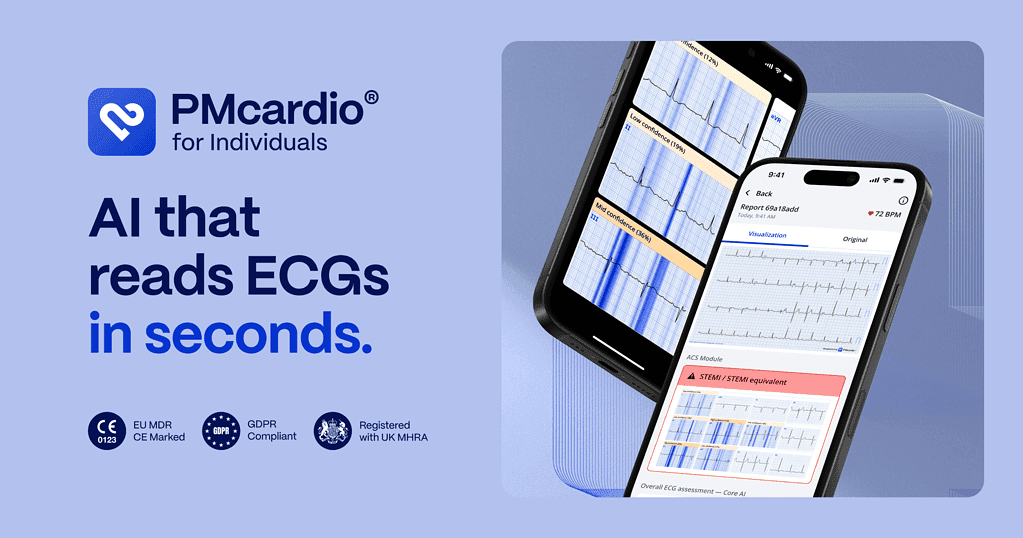
PMcardio's AI algorithms recognize 49 distinct patterns across rhythms & arrhythmias (e.g., atrial fibrillation, tachycardia), conduction disorders (e.g., bundle-branch block), ischaemia & infarction (e.g., acute STEMI), and ECG measurements (e.g., QTc, PR, QRS). This comprehensive detection aids in accurate diagnosis.
Is PMcardio a conversational AI like ChatGPT?
No, PMcardio is a deterministic, CE-certified Class IIb medical device specifically designed for ECG interpretation, not a conversational large language model. It guarantees the same diagnosis for the same ECG file, based on evidence-based training from millions of clinically labeled ECGs.
How does PMcardio compare to conventional ECG machine algorithms?
PMcardio has demonstrated significantly higher accuracy than conventional ECG algorithms used in standard machines (e.g., GE Marquette 12SL, Philips, Glasgow Algorithm). In six peer-reviewed studies, PMcardio showed up to 2x higher accuracy, providing more reliable interpretations for clinicians.
What ECG formats are supported by PMcardio?
PMcardio supports every commercially available 12-lead ECG, whether as a single-page image or a multi-page report. The ECG must be printed on standard electrocardiogram graph paper, with the entire ECG appearing on one continuous grid. Fewer-lead ECGs (1-lead, 3-lead, or 6-lead) are not currently supported.
Is PMcardio safe for patient data and clinically validated?
Yes, PMcardio is fully GDPR and HIPAA compliant, adhering to strict regulatory and security frameworks including SOC 2 and ISO 27001 certifications. It has been rigorously validated in over 15 independent, peer-reviewed clinical studies, demonstrating superior performance in detecting various cardiac conditions.