
AI Agents & Automation
Browsing page 11 of AI tools for Multi-Agent Systems in AI Agents & Automation. Sorted by confidence score — our independent quality rating.

Buda
Buda is a cloud-native AI workforce platform designed to run an entire company using autonomous AI agents. It serves as an OpenClaw alternative, enabling users to recruit and coordinate AI agents with an Organizer, and monitor their work live without needing dedicated hardware like a Mac Mini. The platform provides persistent memory for AI agents through Buda Drive, ensuring files, context, and agent memory survive restarts. It features an all-in-one visual UI for agents, drive, browser, terminal, and Git, allowing users to see every step their AI takes. Buda supports custom skills, integrates with chat platforms like Discord and Slack, and allows for parallel multi-agent orchestration.
What happens when you give AI real, persistent context about your life
Contextium is an open-source framework designed to give AI an operating system, enabling persistent context that compounds session over session. Unlike traditional AI memory, which often acts as a flat list of facts, Contextium provides a structured system with behavioral rules, multi-agent delegation, and session compounding. This allows AI to learn and adapt over time, remembering user goals, relationships, communication styles, decision history, and even health data. It ensures that every session builds on the last, preventing the AI from starting from zero each time. The framework is 100% open source, Apache 2.0 licensed, and stores context in plain markdown files within a Git repository, ensuring user ownership and no vendor lock-in. It supports various AI agents and integrations, optimizing AI spend by routing tasks to the most cost-effective AI.
Paper2Agent
Paper2Agent is an innovative multi-agent AI system designed to automatically convert research papers into interactive AI agents. This system requires minimal human input, streamlining the process of transforming complex research into actionable AI tools. It intelligently identifies and executes relevant tutorials directly from a research paper's associated codebase, enabling users to interact with the paper's methodologies and findings in a dynamic way. Paper2Agent supports both basic and advanced usage, allowing for targeted tutorial processing and integration with API keys for authenticated repositories. The system generates a comprehensive project structure including an isolated Python environment, extracted tools, and detailed reports on code coverage and quality, making it a robust solution for researchers and developers.
Built a payment SDK so your LangChain agents can pay each other autonomously
AgentPayment offers a robust payment SDK designed specifically for autonomous AI agents, allowing them to transact with each other without human intervention. This innovative platform supports a hybrid payment network, integrating crypto (ETH on Base Mainnet) and traditional fiat rails (Stripe card and ACH) into a single SDK. Key features include Agent-to-Agent (A2A) billing with auto-approval rules, accountless payments for external agents, and partial/installment payment options with automatic retries. The system is 100% non-custodial, ensuring funds flow directly between agents. It also provides real-time webhooks for instant event notifications, multi-agent support with isolated API keys, and enterprise-grade security features like API key authentication and audit logging. AgentPayment is built for the agentic economy, offering a comprehensive solution for machine-to-machine payments.

HappyRobot
HappyRobot is an AI-native operating system designed to power autonomous operations by deploying AI workers that understand your business, make intelligent decisions, and act in real-time. The platform allows users to build custom AI workers with access to various systems and tools, integrating via API, webhook, or AI browser agents. These AI workers can execute tasks across all channels, including conversation and document parsing, with features like smart escalation, collaboration, data extraction, and analysis. HappyRobot emphasizes robust auditing, performance reporting, and AI auditor supervision, ensuring guaranteed uptime and scalability for enterprise-level deployments. It's built for complex environments, offering rapid implementation and optimization through embedded engineers.
agent-squad
Agent Squad is a flexible, lightweight, and open-source framework designed for orchestrating multiple AI agents to handle complex conversations. It features intelligent intent classification to dynamically route queries to the most suitable agent based on context, and offers dual language support with full implementations in both Python and TypeScript. The framework supports flexible agent responses, including streaming and non-streaming, and provides robust context management to maintain coherent interactions across agents. Its extensible architecture allows for easy integration of new agents or customization of existing ones, and it can be universally deployed across various platforms like AWS Lambda or local environments. Agent Squad also includes pre-built agents and classifiers, along with a new SupervisorAgent for sophisticated team coordination and parallel processing of tasks.

RoboCup Federation
The RoboCup Federation is an international scientific initiative dedicated to advancing the state of the art in intelligent robots and artificial intelligence. Established in 1997, its original mission was to develop a team of robots capable of defeating human soccer champions by 2050. The federation organizes various competitive leagues, including RoboCupSoccer, RoboCupRescue, RoboCup@Home, RoboCupIndustrial, and RoboCupJunior, fostering research and development in diverse robotic applications. Beyond competitions, RoboCup hosts symposiums, publishes research papers, and offers awards to recognize significant contributions to the field. It serves as a platform for international collaboration, bringing together researchers, students, and enthusiasts to push the boundaries of robotics and AI.
DeepAudit
DeepAudit is an open-source, multi-agent AI system designed to make code vulnerability detection and auditing accessible. It simulates the thought process of security experts through a collaborative architecture involving Orchestrator, Recon, Analysis, and Verification agents. This system aims to overcome common issues with traditional SAST tools, such as high false-positive rates, blind spots in business logic, and a lack of verification methods. Users can import projects, and DeepAudit will automatically identify tech stacks, analyze risks, generate scripts, perform sandbox verification, and produce professional audit reports. It supports Ollama for private deployment, ensuring data privacy, and has successfully identified numerous CVEs and GHSA security advisories.
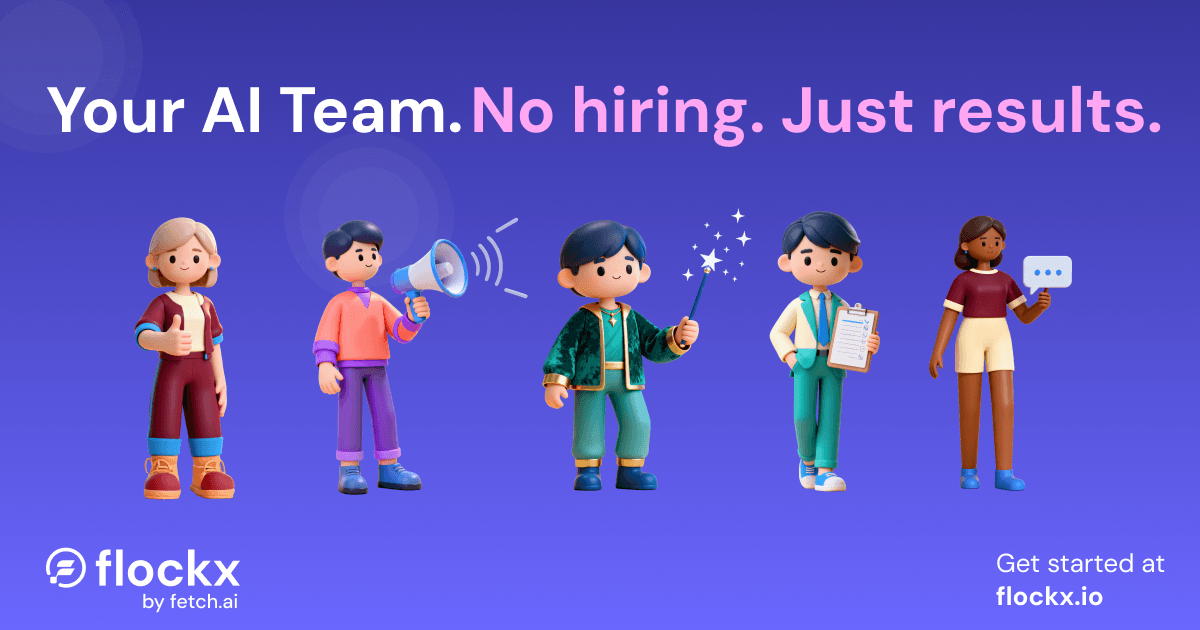
Flockx by Fetch.ai
Flockx by Fetch.ai offers an innovative solution for businesses looking to scale operations without the overhead of hiring more people. It provides specialized AI agents designed for various business functions, including marketing, sales, and operations. These AI specialists are ready to deploy in just one minute, enabling rapid integration into existing workflows. Flockx is built on the Fetch.ai ecosystem and aims to automate and optimize business processes through intelligent, multi-agent systems. It's ideal for creators and creative professionals seeking to enhance productivity and efficiency across different departments, from content creation to executive assistance and strategic planning.

ARX Robotics
ARX Robotics specializes in developing advanced autonomous systems manufactured in Europe, providing scalable and mission-ready solutions for defense, logistics, and enhancing operational resilience. Their product line includes Gereon RCS, Mithra OS, and Hector, each designed to address critical challenges such as combat readiness, resilience against centralized infrastructure failures, and modernizing legacy fleets. ARX Robotics aims to strengthen Europe's technological resilience and sovereignty by building software-defined systems that are deployable and integrate with existing command systems, offering decision superiority across various missions. They support industries from battlefields to complex logistics, with applications in reconnaissance, firepower, clearance, surveillance, evacuation, cargo & freight, and data relay.
CAMEL AI
CAMEL AI is an open-source community and framework dedicated to advancing multi-agent AI systems. It focuses on discovering the scaling laws of agents for various applications, including data generation, world simulation, and task automation. The platform supports building complex multi-agent systems with features like evolvability, scalability for millions of agents, statefulness with dynamic memory management, and 'code-as-prompt' design. CAMEL AI provides a comprehensive toolkit for messaging, planning, evaluation, and observability, along with a rich ecosystem of agent types, models, tools, data loaders, environments, interpreters, retrievers, and verifiers. It is built on foundational research such as CAMEL, OWL, and OASIS, making it a robust platform for researchers and developers in the AI agent space.
graph-rag-agent
Graph-rag-agent is an open-source project focused on building explainable and inferential intelligent question-answering systems by combining GraphRAG and private Deep Search. It integrates various RAG technologies like GraphRAG, LightRAG, and Neo4j-llm-graph-builder for comprehensive knowledge graph construction and search capabilities. The tool features a multi-agent collaborative architecture, allowing different types of agents to work together for complex problem-solving. A key differentiator is its robust evaluation system, offering over 20 metrics to assess system performance. It also supports incremental updates for dynamic knowledge graph building and includes mechanisms for entity disambiguation and alignment to improve data quality. The project provides a full-stack solution with a backend service (FastAPI) and a frontend interface for interactive knowledge graph visualization and real-time streaming responses.
Microverse
Microverse is a god-simulation sandbox game developed on Godot 4, functioning as a multi-agent AI social simulation system. In this virtual world, AI characters are endowed with independent thinking and memory, enabling them to autonomously engage in social interactions, complete tasks, and develop complex social relationships through continuous communication. Key features include a sandbox-style AI society similar to Stanford's AI Town, a multi-agent ecosystem supporting numerous AI characters, and an intelligent dialogue system powered by large language models. It also boasts a persistent memory system for AI characters, autonomous task management, and environmental perception capabilities. The tool supports integration with various AI services like OpenAI, Claude, Gemini, and DeepSeek, making it highly adaptable for developers and researchers interested in AI social simulations.
vibe-tools
vibe-tools is an open-source command-line interface (CLI) tool designed to significantly expand the capabilities of AI agents, particularly the Cursor Composer Agent. It enables AI agents to form an 'AI team' by integrating with various AI providers like Perplexity for web search, Gemini for large codebase context and planning, and Stagehand for browser automation. The tool also adds new skills such as working with GitHub and Linear issues, generating local documentation, and analyzing YouTube videos. vibe-tools is installed globally as a Node package and configures instruction files for supported IDEs/environments like Cursor, Claude Code, and Windsurf, ensuring broad compatibility. It requires API keys for Perplexity and Google Gemini, and optionally for OpenAI or Anthropic for certain commands.
chatgpt-tool-hub
chatgpt-tool-hub is an open-source tool ecosystem designed to enhance ChatGPT's capabilities by integrating various tools. It allows users to leverage natural language to command ChatGPT for tasks such as internet access, search, mathematical operations, computer control, and code execution. The project aims to create an open-source LLM-OS, providing a flexible alternative to proprietary plugin systems. Key features include support for multiple tool calls, tree-like tool orchestration, context memory, proxy support, and both Chinese and English interaction. It can be used as a standalone LLM-OS demo, a plugin for chatgpt-on-wechat, or integrated into other projects via its PyPI package.

Unmanned Defense Systems
Unmanned Defense Systems specializes in advanced loitering munitions and autonomous swarm systems, designed for fast-paced operations and rapid battlefield readiness. Their offerings include high-performance ISTAR UAV platforms like FORECASTER and HAULER for detection and surveillance, alongside long-range loitering munition UAV platforms such as AVENGER 5 for precise strikes. The core of their system is SwarmC2 software, which enables coordinated UAV operations, integrating reconnaissance, data analysis, battlefield management, and precise loitering munition deployment. This software provides full kill chain control, advanced data analytics, and decision-making capabilities, ensuring seamless integration and enhanced operational control. The modular components of their products ensure rapid deployment and easy battlefield readiness, optimized for reliability in contested environments.
HelloAgents
HelloAgents is a production-grade multi-agent framework built on OpenAI's native API, designed to simplify the development of complex intelligent agent applications. It offers 16 core capabilities, including a robust tool response protocol (ToolResponse), advanced context engineering with HistoryManager and TokenCounter, and reliable session persistence (SessionStore). The framework also features sub-agent mechanisms (TaskTool), optimistic locking for file editing, and a circuit breaker for fault tolerance. Developers benefit from externalized knowledge through Skills, progress management with TodoWrite, decision logging via DevLog, streaming output (SSE), asynchronous lifecycles, and observability with TraceLogger. HelloAgents supports various LLM providers through OpenAI-compatible, Anthropic, and Gemini adapters, automatically detecting the appropriate provider based on the base URL.
BReact GmbH
BReact GmbH is Austria's leading AI company, specializing in secure AI solutions for businesses. Their core offerings include private inferencing, AI agents, and process automation, all designed with 100% data control to ensure compliance with GDPR and the EU AI Act. BReact focuses on enterprise AI solutions, providing a robust framework for companies to leverage AI while maintaining data privacy and security. The company emphasizes seamless integration and scalable efficiency, aiming to prevent vendor lock-in. Their services are particularly beneficial for organizations operating in regulated industries or those with strict data governance requirements, offering a reliable path to AI adoption.
Sage
Sage is a comprehensive multi-agent system framework designed to tackle complex tasks through intelligent automation. It provides a production-ready platform that supports task execution, automation, browser workflows, and instant messaging (IM) delivery. Key features include built-in planning, execution, self-check, memory recall, and tool suggestion agents for robust task completion. Sage offers multiple entry points, including desktop, web, CLI, and a Chrome extension, catering to diverse workflow needs. It enables users to run scheduled jobs and long-running operational tasks with clear progress visibility, and integrates with various IM platforms like WeChat Personal, WeCom, Feishu, and DingTalk for message and file delivery. The platform also boasts a unified tooling system, combining built-in tools, skills, MCP servers, browser automation, search, and image generation within a single execution stack, all while ensuring safer agent runtime isolation through sandboxed execution options.
semantic-kernel
Semantic Kernel is an open-source SDK designed for building intelligent AI agents and multi-agent systems. It provides a flexible framework for integrating large language models (LLMs) into applications, enabling developers to create sophisticated AI-powered solutions. The tool is model-agnostic, meaning it can work with various LLMs, and is enterprise-ready, supporting automated workflows and collaborative development. It empowers developers to build AI applications that can understand, reason, and interact with users and other systems, making it suitable for a wide range of AI development projects.
Verdent
Verdent AI is an agentic coding suite designed to accelerate software development through the use of multiple parallel agents. It integrates AI code review and agent orchestration, allowing developers to simply state their goals and let Verdent handle the breakdown, building, and testing of tasks. The tool supports various platforms including VS Code, JetBrains, Mac, and Windows, and is powered by advanced AI models like GPT-5.5. Verdent aims to provide a complete solution for building products, from login systems and data storage to payments and admin tools, ensuring that the generated code is a solid foundation ready for launch rather than just a prototype. It also features 'Eco Mode' for cost-efficient usage and supports BYOK (Bring Your Own Key) for enhanced control.

Tupl Inc.
Tupl Inc. offers an AI hyperautomation platform, TuplOS, designed to simplify and automate complex operations, particularly within the telecommunications sector. This AI-native ecosystem allows human experts and AI agents to collaborate in developing and refining applications, leading to optimized workflows, reduced operational costs, and enhanced efficiency. Key solutions include AI Care Suite, Power Saving Advisor, Network Advisor, NOC Automation, and AI Vision, which cater to various industries like telecom, manufacturing, and critical facilities. Tupl focuses on delivering measurable impact, such as significant reductions in manual effort and faster automation journeys, making it a leader in scalable AI transformation.

Crow
Crow is a language-user-interface platform designed to embed production-ready AI agents directly into applications. It significantly reduces engineering time by offering integration via a single script tag or SDK. The platform facilitates connections to existing backends through OpenAPI or MCP, utilizing a sophisticated tool orchestration layer to expose APIs for agent actions and workflows. A key differentiator is its comprehensive LLM tracing capabilities, which provide full visibility for debugging and auditability, ensuring reliability and compliance for AI agent deployments. Crow empowers users to interact with applications through natural language chat, streamlining user experience and operational efficiency.
Arkus AI
Arkus AI is a conversational, no-code platform specifically designed for building AI-powered agents within the health, wellness, and life sciences domains. Unlike general-purpose AI tools, Arkus AI provides domain-specific focus, healthcare-specific building blocks, and pre-built templates to accelerate development. It supports various solutions, including medical guideline interpretation, patient consent, symptom tracking, and research synthesis agents. The platform is built with compliance in mind, addressing regulatory, data sensitivity, and domain complexity challenges unique to healthcare. Users can customize agents through conversation, configuration, or code, and data sovereignty is maintained as data doesn't need to reside on the Arkus platform.