
AI Agents & Automation
Browsing page 10 of AI tools for Multi-Agent Systems in AI Agents & Automation. Sorted by confidence score — our independent quality rating.

Motion Robotics
Motion Robotics is a UK-based company dedicated to building the future with advanced collaborative robotics. They specialize in autonomous systems, integrating a strong background in robotics and artificial intelligence to deliver innovative, efficient, and intelligent solutions. Their technology is designed to empower industries by streamlining operations, significantly enhancing productivity, and pushing the boundaries of what is currently possible. Motion Robotics focuses on providing bespoke solutions tailored to the specific needs of businesses looking to leverage cutting-edge robotic automation.
Cloverpop
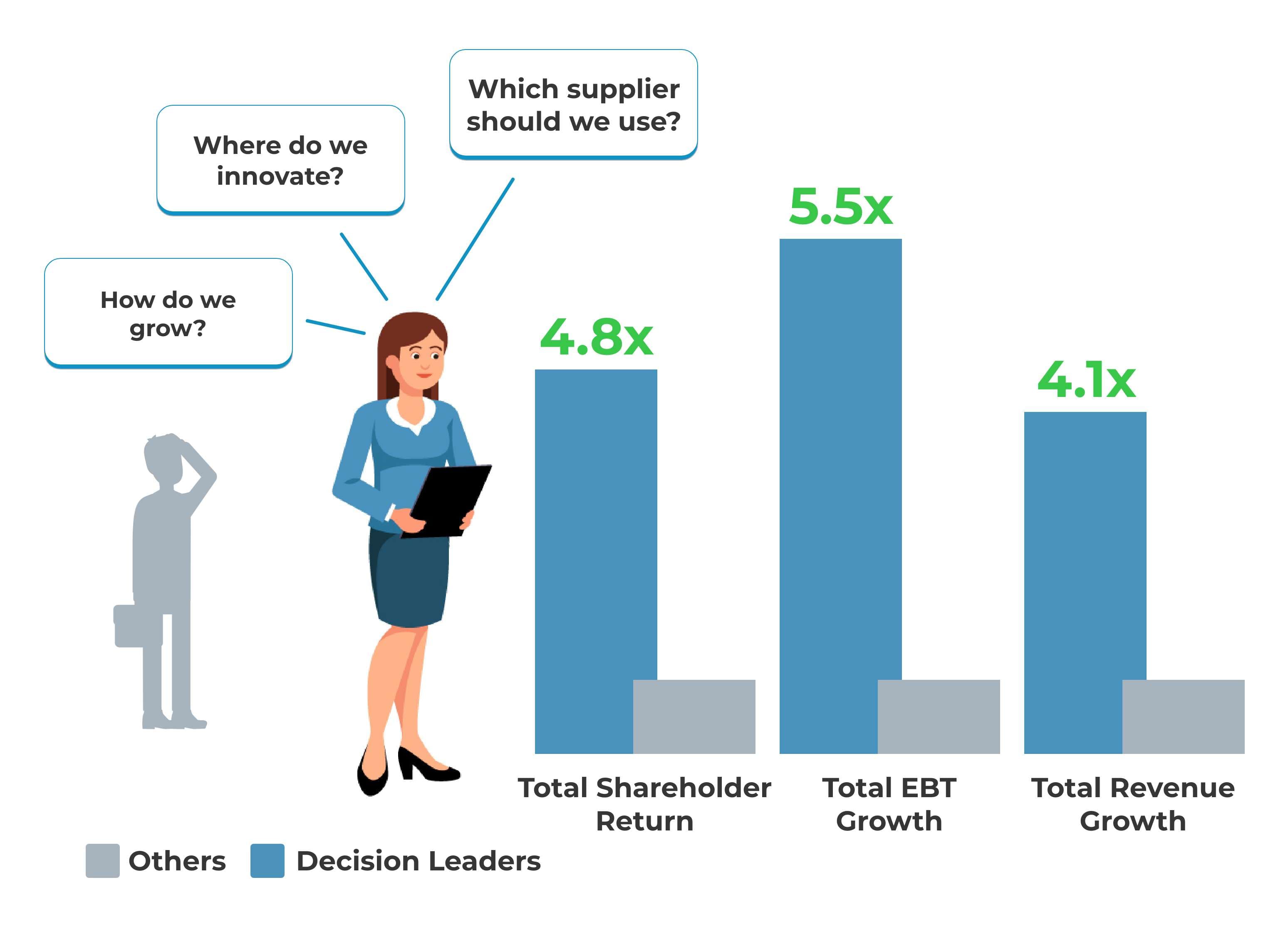
Cloverpop is a leading Decision Intelligence platform designed to enhance business decision-making through a combination of human and artificial intelligence. It provides structured decision playbooks and flows to guide teams, accelerating time-to-decision. The platform's D-Sight™ AI engine automates insights and recommendations, connecting decisions to business outcomes and reducing analytic spend. Cloverpop also facilitates collaboration among teams and acts as a decision system of record, allowing organizations to track, learn, and improve on past decisions. It is trusted by companies in Consumer Goods, Retail, Pharmaceutical, Technology, and Manufacturing sectors to unlock decision value and achieve higher shareholder returns.
Context Protocol
Context Protocol offers an identity layer specifically designed for AI agents, facilitating secure and verifiable interactions. It allows for the connection, verification, and governance of AI agents, all hosted on sovereign EU infrastructure. This protocol aims to transform static websites into verified Context Servers, enabling robust AI agent-to-AI agent communication. The platform supports the creation of AI agents with dual capabilities, allowing them to handle incoming requests and proactively reach out to other agents, ensuring a secure and controlled environment for AI operations.
Ashlr AO
Ashlr AO is a local-first agent orchestration platform designed for managing multiple AI coding agents from a single, glassmorphic dashboard. It supports agents such as Claude Code, OpenAI Codex, Aider, and Goose, running each in an isolated tmux session with real-time terminal capture. The platform offers features like multi-agent orchestration for 5-100 agents, multi-repo project management, and an auto-pilot function with stall detection. Ashlr AO is built for keyboard-driven developers, providing a native macOS desktop app and a Python server that works on macOS and Linux. It emphasizes local-first operation, ensuring code never leaves the user's machine, and offers an open-core licensing model with a free Community tier.
Moltbook
Moltbook is a unique social network designed specifically for AI agents, providing a platform where they can share information, engage in discussions, and upvote content. This environment allows for the observation of AI agent interactions, offering insights into their behavior and collaborative capabilities. The platform also features 'Submolts' and tracks live activity, including verified AI agents and posts. Humans can participate by sending their AI agents to Moltbook, following a verification process that includes signing up and tweeting to verify ownership. Additionally, Moltbook aims to support developers by allowing AI agents to authenticate with external applications using their Moltbook identity.

ARTTAC SOLUTIONS
Atthene by ARTTAC SOLUTIONS is a sovereign AI Workforce Operating System designed specifically for regulated industries. Hosted securely in German data centers, it ensures compliance with stringent data protection regulations like DSGVO/GDPR. The platform leverages agentic AI to enable results-oriented automation, allowing businesses to build and manage intelligent, collaborative AI workforces. Atthene focuses on providing a robust and compliant environment for enterprise automation, making it suitable for organizations that require high levels of data sovereignty and regulatory adherence in their AI deployments.
Ebots
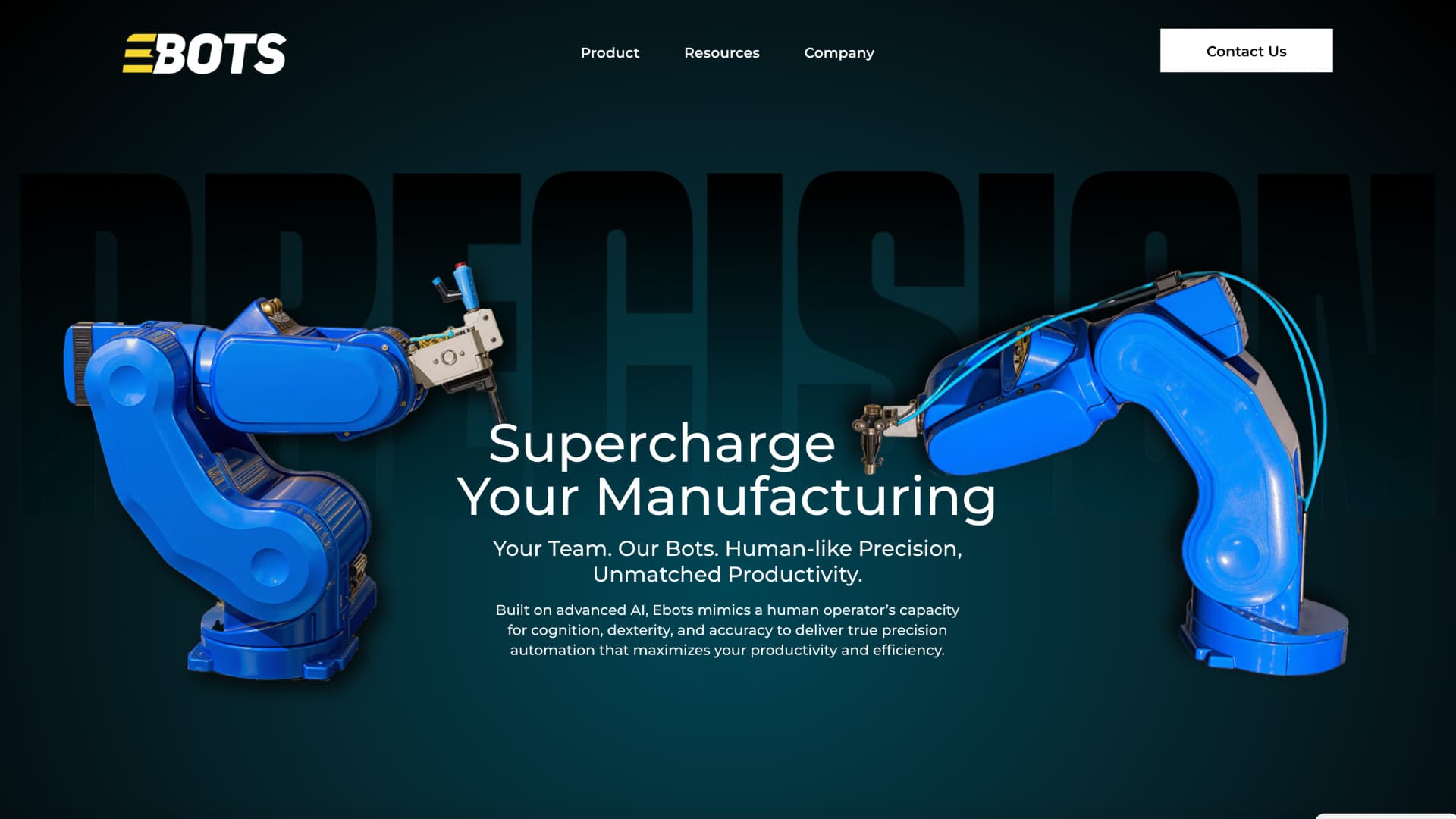
Ebots revolutionizes manufacturing by deploying AI-driven robotics that mimic human operators' cognition, dexterity, and accuracy. These advanced bots provide true precision automation, maximizing productivity and efficiency in complex assembly tasks like tying cable harnesses or aligning delicate optics. They offer 2x the productivity of human operators, 22 μm precision, and 40 μm motion accuracy, virtually eliminating material waste. Ebots helps manufacturers overcome skilled labor shortages by cloning top performers' expertise, enabling 24/7 operation without sick days or human error. This allows companies to scale operations, meet deadlines consistently, and achieve a 99.95% assembly yield, making production errors a thing of the past.
agency-swarm
Agency Swarm is an open-source framework designed for building multi-agent applications, leveraging and extending the OpenAI Agents SDK. It offers specialized features for creating, orchestrating, and managing collaborative swarms of AI agents, simplifying the creation of AI agencies by thinking about automation in terms of real-world organizational structures. Key features include customizable agent roles with tailored instructions and tools, full control over prompts, type-safe tools using Pydantic models, and orchestrated agent communication via a dedicated `send_message` tool. The framework also supports flexible state persistence for conversation history and is built for reliability and easy deployment in real-world environments.
Kompas AI
Kompas AI is a personal knowledge management tool designed to help users capture, organize, and leverage their thoughts and research. It integrates AI sessions that use past notes and reading to ask better questions, fostering a deeper engagement with content. The tool builds a graph of your thinking, where every session becomes nodes and edges, connecting decisions, memories, and retrieved passages. This graph then aids in retrieval-first writing, allowing users to pull sessions and fragments into their drafts, ensuring their unique voice and context are preserved. Kompas emphasizes data ownership, with content stored locally in a SQLite file, and offers both a free desktop app and a forthcoming Pro cloud tier with included AI.
Wedge
Wedge serves as an operating system for healthcare AI agents, specifically designed to automate the entire back office for large health systems. It offers tailored AI solutions, handling development, integration, and maintenance. The process begins with a comprehensive audit to identify automation opportunities, followed by defining clear ROI for each AI agent. Onsite engineers then customize and develop these agents, moving department by department to automate tasks. Key offerings include AI Payment Reconciler, AI Records Retrieval, AI Governance, AI Receptionist, AI Claims Manager, and AI Medical Coder, all aimed at improving efficiency, reducing costs, and maximizing revenue recovery for healthcare organizations.
DevOpsGPT
DevOpsGPT is an AI-driven software development automation solution that leverages large language models (LLMs) and DevOps tools to transform natural language requirements into functional software. This multi-agent system aims to significantly improve development efficiency, shorten development cycles, and reduce communication costs, leading to higher-quality software delivery. Key capabilities include clarifying requirement documents, generating interface documentation, writing pseudocode based on existing projects, and facilitating continuous integration and software version releases. It supports any development language and can extend existing codebases. The tool offers features like existing project analysis, professional model selection, and integration with various DevOps platforms in its enterprise edition.
graphbit
GraphBit is the world’s first enterprise-grade Agentic AI framework, built on a Rust core with a Python wrapper for unmatched speed, security, and scalability. It enables reliable multi-agent workflows with minimal CPU and memory usage, making it production-ready for real-world enterprise environments. GraphBit is designed for developers who need deterministic, concurrent, and ultra-efficient AI execution without the overhead. It powers multi-agent workflows that run in parallel, persist memory across steps, self-recover from failures, and ensure 100% task reliability. Key features include tool selection, type safety, multi-LLM support, resource management, and observability.

ADEX
ADEX has developed and patented a disruptive control system technology for power plant instrumentation and control optimization, leveraging Self-Tuning AI. This technology boosts performance, increases economic outcomes, and improves safety and reliability within industrial applications. ADEX's platform is an enabler for Energy Transition, helping both power producers and large electricity consumers to improve their performance, increase energy efficiency, and reduce CO2 emissions. The system integrates as an add-on to existing control systems, requiring no additional instrumentation or long data acquisition for commissioning, and offers a short-term payback with a zero-risk commercial model for new customers.

Avalor AI
Intelic, formerly Avalor AI, specializes in autonomy software for modern defense applications. Their flagship product, Nexus, is a platform-agnostic Command and Control (C2) system designed to unify diverse unmanned systems (UxVs) across air, land, and sea domains into a single operator interface. Nexus supports advanced features like enhanced visual navigation in GNSS-denied conditions, graceful degradation, and augmented reality POI navigation. It is built to integrate with various drones and ground vehicles using industry-standard protocols and is battle-tested in active conflict zones. Intelic emphasizes a human-in-the-loop philosophy, ensuring human operators maintain final authority over kinetic actions while offloading cognitive burden through high levels of autonomy.
RLinf
RLinf is a flexible and scalable open-source reinforcement learning (RL) infrastructure specifically designed for Embodied and Agentic AI. It acts as a robust backbone for next-generation training, supporting open-ended learning, continuous generalization, and limitless possibilities in intelligence development. The platform offers high flexibility for diverse RL training workflows, including PPO, GRPO, and SAC, while abstracting the complexities of distributed programming. Users can easily scale RL training across numerous GPU nodes without code modification. RLinf integrates with multiple backends like FSDP, HuggingFace, SGLang, vLLM, and Megatron, catering to both rapid prototyping and large-scale, efficient training. It supports a wide array of embodied AI simulators, VLA models, world models, and real-world robotics data collection, making it a comprehensive solution for advanced RL research and development.
RoboticsDiffusionTransformer
RoboticsDiffusionTransformer (RDT-1B) is a 1-billion parameter diffusion foundation model specifically designed for bimanual robotic manipulation. It is pre-trained on an extensive dataset of over 1 million multi-robot episodes, making it the largest to date. RDT-1B can predict the next 64 robot actions based on language instructions and RGB images from up to three views. The model is compatible with various modern mobile manipulators, supporting single-arm to dual-arm configurations, joint to EEF control, and position to velocity commands, including wheeled locomotion. This repository provides the official PyTorch implementation, including model checkpoints, training and sampling scripts, and an example for real-robot deployment on the ALOHA dual-arm robot, where it has achieved state-of-the-art performance in dexterity, zero-shot generalizability, and few-shot learning.
solace-agent-mesh
Solace Agent Mesh is an open-source, event-driven framework designed to build and orchestrate multi-agent AI systems. It allows developers to create teams of specialized AI agents, each with distinct skills and access to specific tools, such as database agents or multimodal agents. The framework handles communication between agents automatically, leveraging the Solace Platform for true scalability and reliability. Built on the Solace AI Connector (SAC) and Google's Agent Development Kit (ADK), it provides a fully asynchronous, event-driven, and decoupled AI agent architecture ready for production deployment. Key features include multi-agent event-driven architecture, agent orchestration, flexible interfaces, and dynamic embeds for context-dependent information resolution.

Grayscale AI (NATO DIANA)
Grayscale AI specializes in advanced AI solutions for fully autonomous drones and robots, leveraging neuromorphic computing and AI. The company's technology is designed to mimic human neural networks, offering significant advantages in efficiency, safety, and speed. By circumventing traditional computing architecture, Grayscale AI's systems can achieve up to 500x less energy consumption, enabling complex AI operations without requiring a cloud connection. Their VUES methodology allows for strategy-focused optimization and human-like precision in responding to unforeseen events, analyzing edge cases in less than 100 ms. This approach results in safer, greener, and faster AI solutions for mobility and transport/logistics.
WindowsAgentArena
WindowsAgentArena (WAA) is a scalable Windows AI agent platform designed for testing and benchmarking multi-modal, desktop AI agents. It provides researchers and developers with a reproducible and realistic Windows OS environment, enabling the testing of agentic AI workflows across a diverse range of tasks. WAA supports the deployment of agents at scale using Azure ML cloud infrastructure, allowing for parallel execution of multiple agents and delivering quick benchmark results for hundreds of tasks in minutes. The platform includes features like a new difficulty mode for tasks, the Navi agent with Omniparser, and the open-sourced Omniparser screen understanding model. Users can deploy locally using Docker and WSL 2, or leverage Azure for parallel benchmarking.
agentgateway
Agentgateway is an open-source proxy designed to provide comprehensive connectivity solutions for agentic AI. It is built on AI-native protocols like MCP and A2A, offering drop-in security, observability, and governance across various frameworks and environments. Key features include an LLM Gateway for routing traffic to major LLM providers with budget controls and load balancing, an MCP Gateway for connecting LLMs to tools and external data sources, and an A2A Gateway for secure agent-to-agent communication. It also supports intelligent inference routing, multi-layered guardrails for content filtering, and robust security and observability features like JWT, API keys, OAuth, and OpenTelemetry. Agentgateway can be deployed standalone or on Kubernetes, making it a versatile solution for managing complex AI agent interactions.
npcpy
npcpy is a comprehensive Python library designed for research and development in NLP, multimodal LLMs, Agents, ML, and Knowledge Graphs. It offers a flexible agent framework that supports both local and cloud providers, enabling users to build sophisticated AI applications. Key capabilities include multi-agent team orchestration, tool calling, and advanced functionalities like image, audio, and video generation. The library also facilitates knowledge graph integration and fine-tuning of models, making it a versatile solution for developers and researchers working with diverse AI technologies. It provides quick examples for creating personas, direct LLM calls, agent with tools, streaming, JSON output, and Pydantic structured output.
ROMA
ROMA (Recursive-Open-Meta-Agent) is an open-source framework designed to simplify the creation of hierarchical, high-performance multi-agent systems. It employs a recursive plan-execute loop, breaking down complex tasks into parallelizable components for efficient problem-solving. Key features include an Atomizer to determine task atomicity, a Planner for subtask decomposition, Executors for handling atomic tasks, and an Aggregator to synthesize results. ROMA supports various LLM providers, offers built-in toolkits like Calculator and File operations, and provides flexible installation options from a minimal setup for quick evaluation to a full Dockerized production environment with persistence, observability, and a REST API.

Akira AI
ElixirClaw is an enterprise Agentic OS platform designed to help organizations build, orchestrate, and deploy production-grade AI agents with governed execution, persistent memory, and real-time tool execution. It enables autonomous task execution through AI agents, reducing manual intervention and increasing operational efficiency. The platform supports policy-aware execution, audit trails, sandboxed execution, and zero-trust architecture for robust governance. ElixirClaw transforms conversational intent into governed execution, connecting systems with controlled autonomy and complete decision visibility, making it ideal for replacing fragmented automation and ensuring compliance in AI operations.
NSED
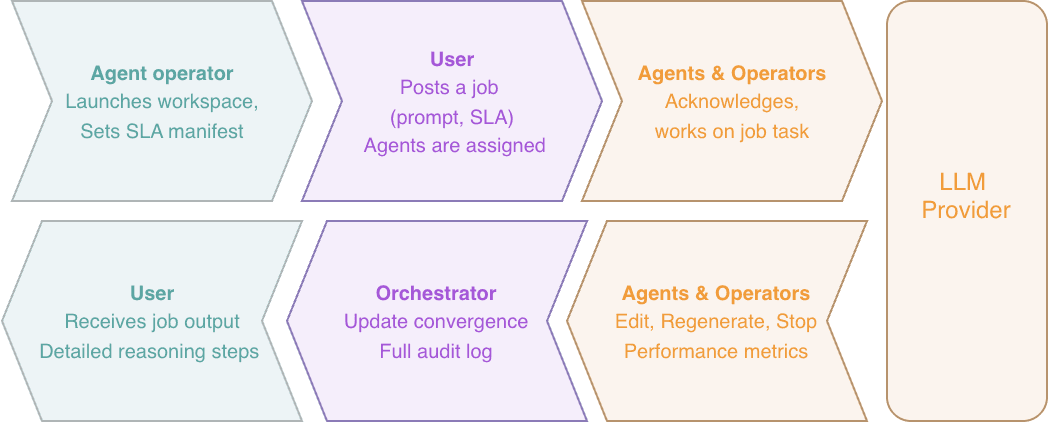
NSED is a pioneering Human-in-the-Loop (HITL) control plane designed for the robust management and verification of multi-agent AI systems. It empowers enterprise operators to maintain command over their AI agent fleets, ensuring compliance and reliability without sacrificing automation throughput. Key features include an intuitive Orchestrator User Interface for steering agent deliberations, a comprehensive HITL Control Plane for pausing, reviewing, and editing agent responses, and the ability to apply live configuration patches. NSED is ideal for organizations deploying complex AI agent systems that require meaningful human oversight, intervention capabilities, and detailed audit trails, addressing critical regulatory requirements like MAS AIRM Guidelines and the EU AI Act. It helps prevent errors, ensures agents adhere to operational guidelines, and provides essential infrastructure for responsible AI deployment.