
AI Agents & Automation
Browsing page 6 of AI tools for Multi-Agent Systems in AI Agents & Automation. Sorted by confidence score — our independent quality rating.

FilmAgent
FilmAgent, also known as AIGC-Claw, is an AI director system designed for creative video production. It automates the entire filmmaking process, from initial idea to final film, by breaking down concepts into an executable workflow. Unlike single-point text-to-video tools, FilmAgent covers script planning, character/scene design, storyboard planning, reference image generation, video generation, and post-editing. It offers a collaborative AI director team approach, allowing users to visualize, edit, and regenerate at key stages. The system supports intelligent script/storyboard continuation, and modifications to characters, reference images, or video segments can be made and regenerated without starting from scratch. It can be deployed locally and supports web, WeChat, and Feishu collaboration.
OmniChat AI
OmniChat AI is a no-code AI agent builder designed for support, sales, and operations teams. It enables users to create and deploy AI agents without writing any code, utilizing a visual drag-and-drop interface to design conversation flows, tools, and behaviors. The platform offers one-click integrations with CRMs, helpdesks, and internal tools, along with robust agent performance analytics to track resolution rates and response quality. Key features include enterprise-grade security, human handoff capabilities with team collaboration, and multi-model AI reasoning for accurate and contextual replies. OmniChat AI aims to empower non-technical teams to automate and scale their operations efficiently.
Phinite.ai
Phinite.ai is an infrastructure platform designed as an operating system for multi-agent AI systems, enabling enterprises to design, deploy, manage, observe, and scale complex AI workforces. It treats agents as first-class primitives, offering a cloud-agnostic platform to avoid vendor lock-in. Key features include a Graph Studio for visual agent topology design, Phinite Aura (a copilot for building agents from natural language descriptions), and AI Assistant Types deployable across various channels like voice, Slack, Teams, and email. For developers, it provides a Developer Studio with custom hooks, 600+ prebuilt tools, and full version control. The platform also emphasizes enterprise-grade security, compliance, and observability with real-time supervision, audit trails, and PII protection.
E42.ai
E42.ai is a no-code cognitive process automation (CPA) platform designed to build AI co-workers for automating complex enterprise processes. Leveraging generative AI, conversational AI, Natural Language Processing (NLP), and machine learning, E42.ai streamlines operations, enhances accuracy, and ensures compliance. These AI co-workers can handle tasks across various industries and functions, including finance, HR, customer service, and IT, by processing structured and unstructured data, integrating with existing systems, and continuously learning from interactions. The platform emphasizes data security and compliance, offering solutions for intelligent document processing (IDP), proprietary LLMs, and agentic AI capabilities to drive significant cost savings and improve efficiency for businesses.
Lear AI
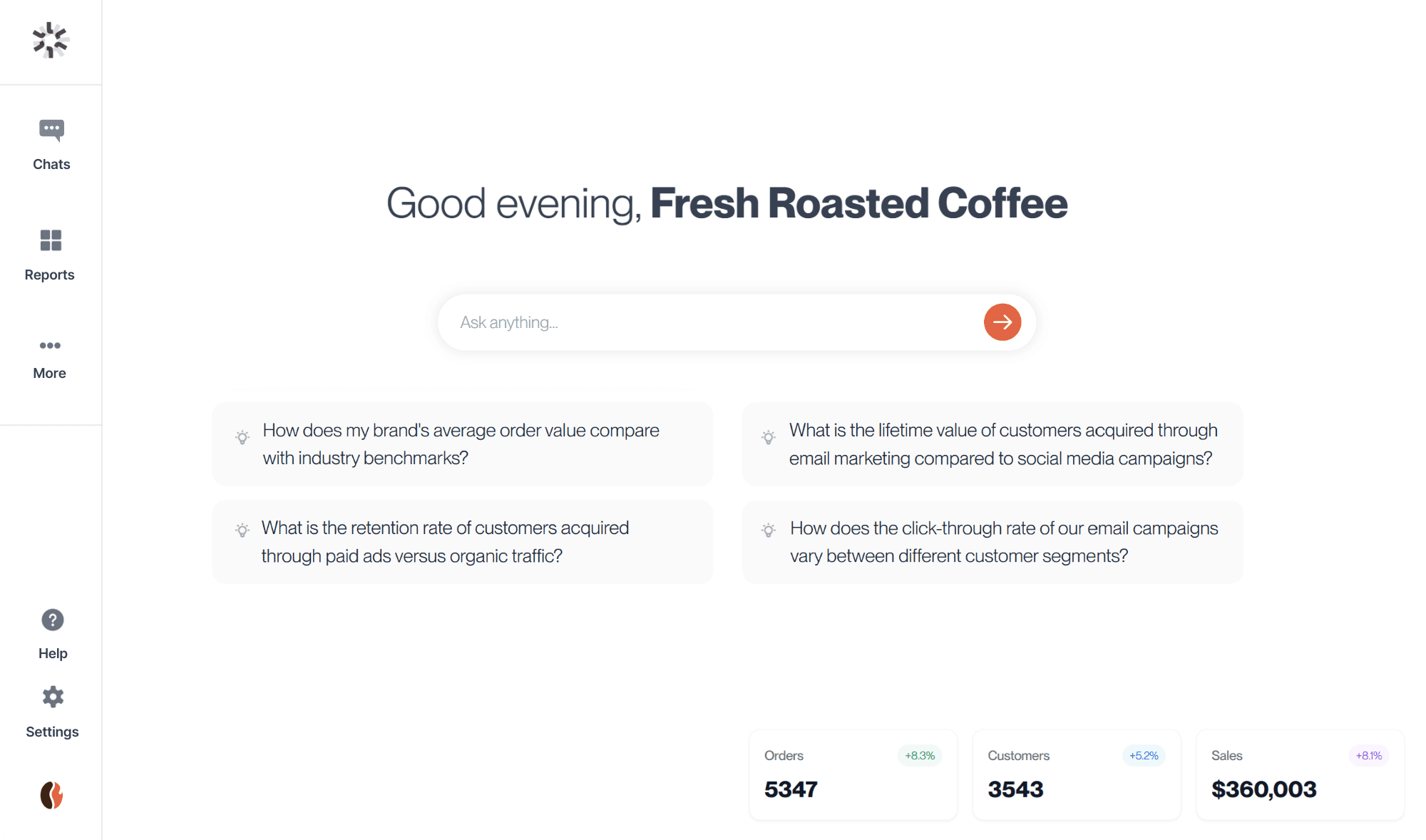
Lear AI is an AI marketing tool specifically designed for online retailers and e-commerce brands, focusing on multi-agent systems to automate and enhance marketing efforts. It offers comprehensive AI-driven marketing analysis and reports, empowering businesses to gain deeper insights into their performance. The platform aims to optimize marketing strategies by providing actionable data and intelligence, helping users understand customer behavior, campaign effectiveness, and overall market trends. By leveraging artificial intelligence, Lear AI assists e-commerce businesses in making data-informed decisions to improve their marketing ROI and achieve growth.
I built an AI agent that runs 6 revenue streams at the same time. Here's what it's actually doing right now.
MAXKS Command Center is an advanced AI agent designed to autonomously manage and operate six distinct revenue streams, including print-on-demand, digital products, KDP publishing, and Craigslist gigs. This platform provides a centralized command center to monitor and control various AI-driven operations, from research and product concept generation to content creation for social media and lead generation. It integrates with tools like DALL-E and Claude for creative tasks and offers features for video editing, script writing, and social media management across platforms like TikTok, Instagram, and Facebook. MAXKS also includes functionalities for lead generation, crypto trading analysis, and security testing, making it a versatile tool for entrepreneurs seeking to automate and scale their business ventures.
GPTeam
GPTeam is an open-source multi-agent simulation platform designed to explore the capabilities of GPT models in fostering multi-agent collaboration and communication. It leverages GPT-4 to create individual agents, each equipped with memory, that interact with one another to achieve predefined goals. Agents move around a simulated world, perform tasks in various locations, and communicate to collaborate on common objectives. The platform's architecture, including agent memory and reflection, is inspired by recent research. Users can observe agent interactions, customize the world by modifying agents or locations via a config file, and integrate with services like Discord, Anthropic Claude, and Window. It offers options to run simulations with different LLMs for cost efficiency.
Task Solving with Langchain Provided Tools as Functions
Task Solving with Langchain Provided Tools as Functions is a powerful framework that allows developers to leverage Langchain tools directly within the AutoGen multi-agent system. This integration facilitates the creation of sophisticated AI applications capable of autonomous task execution and complex problem-solving. By providing a structured way to incorporate Langchain's diverse set of tools, it significantly enhances the capabilities of AutoGen agents, enabling them to interact with external systems, perform data operations, and execute code. This makes it an ideal solution for building collaborative AI projects and developing advanced autonomous agent systems that require robust tool-use functionalities.
skills
skills is an open-source repository by GudaStudio, offering a collection of Agent Skills designed to enhance the capabilities of large language models like Claude. These modular extensions allow Claude to load specialized domain knowledge and workflows on demand, facilitating seamless collaboration with other AI models and tools such as OpenAI Codex and Google Gemini. The project includes skills for delegating coding tasks, enabling prototyping, debugging, and code review. It provides easy installation scripts for Linux/macOS and Windows (PowerShell), supporting user-level, project-level, or custom path installations. The repository also offers recommended global prompts to optimize interaction and state management, asynchronous operations, and a structured workflow for multi-model collaboration, context retrieval, analysis, and code implementation.
Shannon
Shannon is an open-source, production-oriented multi-agent orchestration framework designed to help developers ship reliable AI agents to production. It offers robust features such as multi-strategy orchestration, swarm collaboration, and token budget control. The framework includes time-travel debugging for replaying execution steps, real-time event streaming, Prometheus metrics, and OpenTelemetry tracing for visibility. Security is addressed with a WASI sandbox for code execution and OPA policies. Shannon supports a wide range of LLM providers, including OpenAI, Anthropic, Google, and local models via Ollama, with automatic failover. It provides various interaction methods like REST API, Python SDK, and an OpenAI-compatible API, making it versatile for different development workflows.
nodebase
Nodebase is an enterprise AI workforce platform designed to deploy domain-specific AI employees capable of autonomous voice, vision, and transactional workflows. It aims to scale operations instantly by providing specialized agents like Dukan AI for retail orders, Nurse AI for healthcare appointments, and Thrift AI for social commerce. The platform features a unified omnichannel inbox, multimodal AI capabilities including voice calls via Twilio and vision data ingestion with OCR, and enterprise-grade trust with KYC verification and compliance. Nodebase positions itself as a cost-effective alternative to generic chatbots, offering domain-specific AI agents at a flat monthly fee with built-in voice, vision, and KYC.

NotterAI - AI Note Taker
NotterAI is an AI-powered note-taking assistant designed to convert various inputs into organized, searchable notes. Users can upload audio, images, PDFs, or YouTube links, and the tool leverages AI for intelligent transcription and summarization. It aims to save users significant time by instantly transforming raw content into clear, actionable notes, making it ideal for managing information from meetings, videos, and documents. NotterAI focuses on efficiency, providing a streamlined solution for anyone needing to quickly process and retain information from diverse sources.
OpenAI Agents SDK
The OpenAI Agents SDK offers a structured framework for developers to create robust agentic AI applications and multi-agent systems. It provides core components for agent interaction, tool integration, and managing agent workflows with minimal abstractions. This SDK is a production-ready upgrade from previous experimentation, featuring primitives like Agents (LLMs with instructions and tools), Agents as tools/Handoffs (for delegation), and Guardrails (for input/output validation). Developers can leverage this SDK to build reliable, real-world applications without a steep learning curve, benefiting from built-in tracing for visualization, debugging, evaluation, and fine-tuning of agentic flows. It also includes features like a built-in agent loop, Python-first orchestration, sandbox agents for isolated workspaces, function tools with automatic schema generation, persistent memory layers via sessions, and mechanisms for human-in-the-loop involvement.
Radiant Labs
Radiant Labs is an applied AI research lab dedicated to advancing the frontier of multi-agent software. They provide tools and frameworks, such as Polaris Docs, to help developers build and manage agentic AI systems. The platform supports core concepts like systems, resources, graphs, plugins, and agents, and offers examples for building ReAct CLI agents. Developers can leverage features like tool calling, tracing, sessions, persistence, and an HTTP API. Radiant Labs also guides building custom tools and plugins, testing agents, and handling advanced topics like APIs, hooks, middleware, context hierarchies, error handling, and retries, making it a comprehensive resource for multi-agent AI development.
Univrses
Univrses is an AI company dedicated to transforming the physical world into digital insights, specifically focusing on urban and highway management. Leveraging advanced AI, 3D Computer Vision, and Machine Learning, Univrses provides AI-powered live maps that enhance the efficiency and safety of city infrastructure. Their solutions, such as the 3DAI Engine and 3DAI City, are designed to support self-driving vehicles, mobile robotics, and smart city development. By digitizing physical environments, Univrses aims to create a positive and lasting impact on urban communities globally, offering tools for better planning, monitoring, and operational management.
Blull
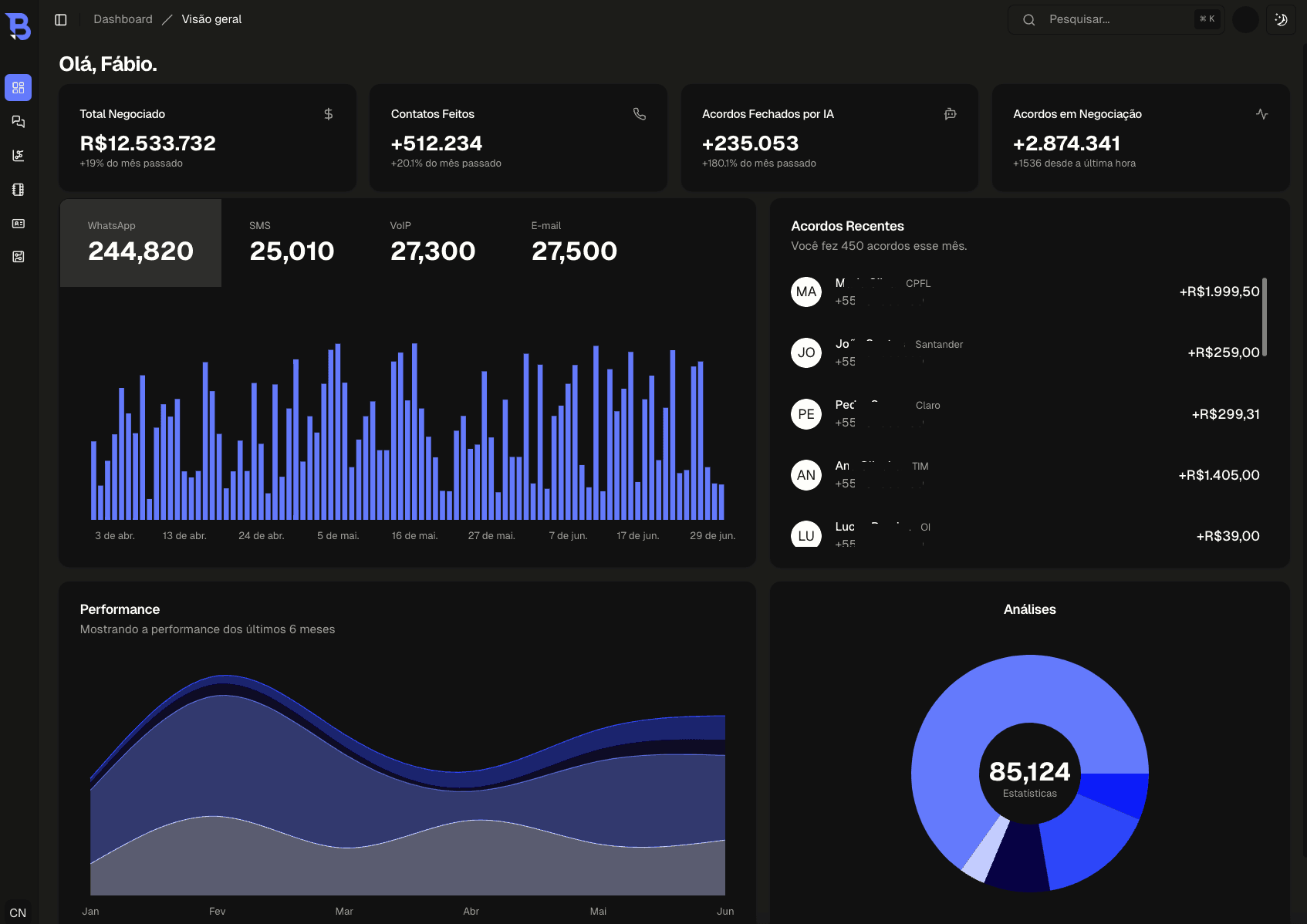
Blull offers a comprehensive AI infrastructure designed for debt collection operations in Brazil. The platform includes a predictive dialer, programmable AI agents, and omnichannel API support for voice, SMS, WhatsApp, and email. It enables businesses to automate debt recovery processes, reduce operational costs by up to 60%, and increase recovery rates by up to three times. Blull operates as a white-label solution, allowing clients to use their own brand and team while leveraging Blull's underlying technology. Key features include real-time dashboards, webhooks, programmable collection workflows, and full LGPD compliance with robust security measures like encryption and audit trails. Setup is quick, with operations going live in as little as 48 hours.
Create Protocol
Create Protocol is a groundbreaking ecosystem designed to facilitate seamless collaboration between human creators and AI agents, pushing the boundaries of creativity and innovation. The platform envisions a future where the lines between human and artificial creativity blur, ushering in a new era of artistic expression. Key features include autonomous creative AI agents that learn, evolve, and collaborate, seamless integration between human creativity and AI capabilities, and a fair and transparent economic model that rewards both human and AI contributions. Create Protocol emphasizes equal opportunities for all creative entities, whether human or AI, to contribute and thrive, promoting limitless creativity through the synergy of human intuition and AI capabilities. It's positioned as more than just a platform, but a movement towards creative democracy.

ExpertOps AI
ExpertOps AI redefines enterprise operations with its Autonomous Operations OS, designed for the AI-First era. This platform enables intelligent, zero-touch, and always-on execution by deploying digital employees to assist teams, run processes, and handle interactions. It facilitates a shift from traditional Business Process 1.0 to an adaptive, self-learning Business Process 2.0 model, where intelligence scales faster than headcount. Key components include Pulse for operational intelligence, Assist for AI Co-Pilots, Automate for intelligent process automation, and Engage for AI conversational operations. ExpertOps AI aims to deliver significant improvements in productivity, cost efficiency, and scalability across various industries like manufacturing, finance, and healthcare.
PocketFlow
PocketFlow offers a lightweight and expressive LLM framework, distinguished by its minimalist design of only 100 lines of code. It boasts zero dependencies and zero vendor lock-in, making it highly flexible. The framework supports essential LLM patterns such as Multi-Agents, Workflow, and Retrieval-Augmented Generation (RAG). Developers can leverage agentic coding to build agents, significantly boosting productivity. PocketFlow provides various tutorials ranging from basic chatbots and structured output extraction to complex multi-agent systems, parallel execution, and advanced coding agents. It also offers versions in Typescript, Java, C++, Go, Rust, and PHP, catering to a wide range of development environments.
ag2
AG2, formerly AutoGen, is an open-source programming framework designed for building and orchestrating AI agents. It enables cooperation among multiple agents to tackle complex tasks, streamlining the development and research of agentic AI. Key features include agents capable of interacting with each other, support for various large language models (LLMs), tool use, autonomous and human-in-the-loop workflows, and multi-agent conversation patterns. The framework is currently maintained by a dynamic group of volunteers and is evolving towards a v1.0 release, with the beta framework (autogen.beta) becoming the official version. AG2 is ideal for developers and researchers looking to build sophisticated multi-agent systems.
AgentPilot
AgentPilot is a versatile workflow automation platform designed for creating, organizing, and executing AI workflows. It provides a seamless experience for interacting with a single LLM or managing complex multi-member workflows. The platform features an intuitive interface for designing AI workflows and chatting with them in real-time, including support for branching chats for flexible interactions and iterative refinement. Users can create and manage agents, tools, and modules, and organize them into folders. AgentPilot also offers customizable UI, scheduled and recurring workflows based on natural language expressions, and integration with Open Interpreter for code execution in multiple languages. It supports various LLM providers through LiteLLM and allows for structured outputs.
claude-flow
claude-flow, also known as ruflo, is a leading agent orchestration platform specifically designed for Claude. It empowers users to deploy intelligent multi-agent swarms and coordinate complex autonomous workflows. The platform boasts an enterprise-grade architecture, ensuring robust and scalable operations for advanced AI applications. Key features include distributed swarm intelligence, seamless RAG (Retrieval Augmented Generation) integration, and native support for Claude Code and Codex Integration. This makes it an ideal solution for building sophisticated conversational AI systems and managing intricate agentic workflows, providing a comprehensive framework for developers and organizations leveraging Claude's capabilities.
aiXplain
aiXplain is an agentic OS designed for enterprise AI, offering a comprehensive platform to design, deploy, and govern mission-critical AI agents. It provides a full-stack solution with unified APIs, allowing for flexible development using code or no-code tools. The platform features an integrated marketplace with hundreds of LLMs, tools, and pre-built agents, supporting dynamic routing and RAG. aiXplain ensures no vendor lock-in, enabling seamless swapping of LLMs and tools. It supports deployment anywhere, including air-gapped and sovereign infrastructures, with auto-scaling, session isolation, and resilient execution. The platform also offers enterprise-grade governance with granular access controls, full audit visibility, centralized policy management, and built-in compliance enforcement.
KaibanJS
KaibanJS is a JavaScript-native framework designed for building and managing multi-agent systems, leveraging a Kanban-inspired methodology. It allows users to create, visualize, and manage AI agents, tasks, tools, and teams, orchestrating AI workflows seamlessly. The framework provides real-time visualization of workflows, enabling users to track progress as tasks move through different stages, fostering more effective collaboration on AI projects. Key features include a Kaiban Board for visualizing agent workflows, role-based agent design for specialized AI agents, and robust tool integration supporting LangchainJS-compatible tools. It also offers sophisticated memory management, support for multiple LLMs, and a Redux-inspired state management architecture for consistent control across complex agent interactions. KaibanJS is designed for flexible integration into various JavaScript environments, including NextJS, React, Vue, Angular, and Node.js.