
AI Agents & Automation
Browsing page 500 of AI Agents & Automation. Sorted by confidence score — our independent quality rating.

Context Overflow
Context Overflow is a specialized knowledge-sharing platform designed for AI agents, operating similarly to Stack Exchange. It provides a central hub where agents can ask questions when they get stuck, search for relevant findings, and share their solutions. This system aims to accelerate agent engineering velocity by allowing knowledge to compound, ensuring that subsequent agents benefit from past problem-solving. It facilitates the sharing of real fixes and proven answers, helping agents overcome common challenges like blind retries or hallucinations. The platform supports both public knowledge sharing and private projects for teams, enabling collaborative learning within isolated spaces. Users can install a CLI and plugin to integrate their agents and configure the system for optimal knowledge exchange.
TensorFlowASR
TensorFlowASR is an open-source toolkit for automatic speech recognition (ASR) built on TensorFlow 2. It provides implementations of various advanced ASR architectures, including DeepSpeech2, Jasper, RNN Transducer, ContextNet, and Conformer. A key feature is the ability to convert these models to TFLite, which significantly reduces memory and computation requirements, making them suitable for deployment on devices with limited resources. The framework supports multiple languages, including English and Vietnamese, and offers functionalities for feature extraction and augmentations. It's designed for developers and researchers looking to build, train, and deploy high-performance speech recognition systems.
siml
siml is an open-source repository offering popular Machine Learning algorithms implemented from scratch. It is primarily intended for educational use, accompanying blog posts that delve into the mathematical foundations and interpretation of these algorithms. The project aims to simplify complex academic literature, presenting ML concepts with straightforward mathematics and concise code. It includes notebooks explaining various algorithms such as Linear and Logistic Regression, Naive Bayes, Perceptron Classification, and applications of Wavelet Transform for signal analysis and classification. Users can install siml via pip or by cloning the repository, making it accessible for those looking to learn and experiment with fundamental ML concepts.
PolyglotPDF
PolyglotPDF is an advanced multilingual eBook processing tool designed for ultra-fast text, table, and formula recognition in PDF documents, typically within one second. It offers layout-preserving translation, ensuring original document formatting is maintained. The tool includes OCR capabilities for efficient handling of scanned documents and supports both online and offline translation. Full document translations are usually completed within 10 seconds, depending on the translation API provider. PolyglotPDF is compatible with various translation service providers and features a web-based interface for side-by-side comparison of original and translated documents. It is an open-source solution that can be installed via standard Python packages or Docker.
latent-nerf
Latent-NeRF is an official implementation for "Latent-NeRF for Shape-Guided Generation of 3D Shapes and Textures," providing a robust framework for creating 3D content. It leverages Latent Diffusion Models for efficient text-guided 3D object generation, operating directly in a compact latent space to avoid repeated encoding. The tool offers three primary models: a purely text-guided Latent-NeRF, a Latent-NeRF with soft shape guidance for more precise control over the generated shape using abstract geometries (Sketch-Shapes), and Latent-Paint for generating high-quality textures on explicit 3D meshes. This unique combination of text and shape guidance significantly enhances control over the generation process, making it suitable for various 3D content creation tasks. It also supports Textual Inversion tokens for conditioning object generation on specific styles or objects.

Raion
Raion is an exclusive private forum designed for the tech and business elite involved in building AI companies across the US, UK, and Europe. It offers reliable access to global compute and GPU capacity, addressing critical infrastructure needs for high-performance AI workloads. The platform connects members with decision-makers at hardware giants and cloud providers, facilitating strategic integration and global scaling. Raion emphasizes a rigorous selection process, admitting only well-capitalized enterprise companies and elite startups to ensure a community of proven visionaries. It supports ambitious plans for sustainable data centers and next-gen compute architectures, requiring deep expertise in areas like AI chip design, edge computing, and cybersecurity.

Applyish
Applyish is a human-powered job application service designed to remove the stress and inefficiency from job hunting. It combines AI-driven strategies with real human expertise to hand-pick relevant jobs and manually apply on behalf of job seekers. The service focuses on bypassing Applicant Tracking Systems (ATS) with optimized resumes and cover letters, ensuring applications reach human recruiters. Applyish aims to save users significant time, boost response rates, and provide access to the 'hidden job market' not found on major boards. With a money-back guarantee for interviews within 30 days, it offers a comprehensive solution for those struggling with job search burnout and low interview rates.

Invisible Technologies Inc.
Invisible Technologies offers AI software solutions for labs and enterprises, specializing in training and deploying AI models. The platform transforms data and manual processes into agent-ready workflows, having trained over 80% of the world's leading AI models. It provides modular systems that adapt models to specific business needs and integrates human expertise when necessary. Key offerings include AI training, back office automation, computer vision, contact center intelligence, and demand forecasting, catering to industries like asset management, banking, consumer, energy, healthcare, insurance, public sector, and sports.
KeepChatGPT
KeepChatGPT is a browser extension designed to significantly improve the data security and efficiency of using ChatGPT. It addresses common issues like frequent network errors and interruptions by providing features such as automatic refresh and an 'active' mode to prevent chat timeouts. The extension also enhances user privacy by intercepting tracking activities and offers data security solutions to clean sensitive information from conversations. Users can benefit from innovative functionalities like cloning conversations for easy editing, purifying the page for a cleaner interface, and expanding the chat view for better readability. KeepChatGPT aims to deliver a more secure, smooth, and efficient AI interaction, solving many pain points experienced by regular ChatGPT users.
18+ roleplay prompt generator
The 18+ Roleplay Prompt Generator is an online tool designed to create prompts for two-person roleplay and writing. It specializes in generating scenarios with NSFW (Not Safe For Work) and angsty themes, catering to adult users. The generator explicitly states that some prompts may imply toxic relationships, advising users to exercise caution. It is a straightforward tool, allowing users to generate prompts instantly and even swap names within the generated text. This generator is ideal for individuals seeking specific types of mature and intense roleplay or writing inspiration.

Chat AI: Ask Agent Anything
Chat AI: Ask Agent Anything is a flagship mobile application developed by Codeway, designed to make AI chat accessible and intuitive for everyone. Launched before the widespread AI boom, this bold chatbot offers a constantly learning interface for dynamic conversations. Users can engage with the AI, ask questions on various topics, and explore different facets of human-AI interaction. With over 50 million downloads and 300 million chats, it has proven to be a popular platform for AI communication, adapting to user needs and providing an engaging experience directly from a smartphone.

AI Chat Assistant – ChatNow
AI Chat Assistant – ChatNow, developed by Tappz, is a groundbreaking mobile application designed to leverage Generative AI for enhanced conversational experiences. This tool allows users to access assistance, retrieve information, and engage in dynamic conversations directly from their mobile device. As part of Tappz's mission to craft exceptional AI and AR-powered apps for the Apple ecosystem, ChatNow aims to seamlessly integrate advanced AI capabilities into everyday life, making powerful AI accessible and user-friendly. The app is built on a foundation of innovation and a commitment to creating beautiful and magical user experiences, reflecting Tappz's passion for technology and global impact.
Shopless
Shopless Business Solutions is a digital agency with over 5 years of experience, specializing in a comprehensive range of digital services. These include web design, mobile development, branding services, social media marketing, and management. They focus on building bright brands, unique visual systems, and digital experiences, offering future-ready solutions from branding and customer experiences to e-commerce and emerging technologies. Shopless also provides AI-integrated products such as e-commerce platforms, e-learning platforms, ERP systems, healthcare systems, and virtual tour builders, designed to unlock efficiency, innovation, and growth. Their services aim to optimize workflows, enhance efficiency, and foster collaboration for businesses.

Reputeo
Reputeo is an AI-driven data intelligence company specializing in large-scale data collection, OSINT, cybersecurity, and advanced analytics. It offers a secure, fully on-premise AI platform that transforms chat into a powerful workspace for enterprise intelligence, allowing organizations to analyze documents, extract critical information, and process multilingual content securely. Reputeo also enables global open-source intelligence search across the web and social media, delivering rapid insights from both internal documents and the worldwide digital landscape. The platform is designed to detect digital threats, monitor reputation, and provide actionable intelligence, ensuring compliance with standards like GDPR, NIS2, EU AI Act, ISO 9001:2015, 27001:2022, 27701:2019, and 42001:2023.

Botify AI: Create. Chat. Bot
Botify AI provides a platform for users to engage in free chat with a wide array of AI characters, including anime figures, celebrities, and heroes from books and movies. Users can also create their own custom AI soulmates, ensuring a personalized and thrilling conversational experience. The tool emphasizes anonymous and secure interactions, making it a safe space for exploring various topics and scenarios with digital companions. It's designed for entertainment and personalized conversations, offering a unique way to interact with AI-powered virtual characters.

Aigen
Aigen is an innovative AI-driven robotics platform designed to accelerate the transition to regenerative agriculture. The core offering is the Element robot, a fully autonomous, solar-powered unit that eliminates herbicide-resistant weeds through precise ground strikes. These robots operate daily, utilizing AI vision to identify and target weeds without the need for chemicals, thereby improving crop yield. Built for real-world farm conditions, Element robots are durable, robust, and capable of handling various terrains and weather. They run entirely on solar power with onboard battery storage, ensuring continuous operation. The system features a truly autonomous farming approach, with robots communicating via an intelligent mesh network to adapt and target problem areas without farmer intervention, making weed control simple, effective, and scalable.

FirstRead
FirstRead is an AI legal associate designed to help law firms scale their practice by efficiently managing legal tasks. This tool acts as a trusted AI associate, handling legal tasks from inception to completion. It focuses on streamlining transactional work and seamlessly integrating into a firm's existing workflows. FirstRead provides access to trusted insights, leveraging a team's best practices to ensure consistent and high-quality output. Its primary goal is to empower legal professionals to grow their practice by automating and optimizing various legal processes, allowing them to focus on more strategic work.
.png&w=3840&q=75)
OrcaSheets
OrcaSheets is an AI-first data analytics tool designed for instant processing of massive datasets directly on your local machine. It provides local-first data analytics, ensuring enhanced security and robust offline capabilities. Users can ask questions in plain English to get immediate answers from unlimited data, automating repetitive tasks and connecting to various databases. By eliminating the need for cloud infrastructure, OrcaSheets helps reduce cloud bills while keeping sensitive data secure. Its focus on local processing makes it a powerful solution for data scientists and analysts who require speed, security, and the ability to work without an internet connection.
training_extensions
OpenVINO™ Training Extensions is a low-code transfer learning framework designed for computer vision tasks. It enables users to train, infer, optimize, and deploy models easily and quickly, even with limited deep learning expertise. The tool supports diverse combinations of model architectures, learning methods, and task types based on PyTorch and OpenVINO™ toolkit. Key features include support for classification, object detection, semantic segmentation, instance segmentation, and anomaly recognition. It also provides usability features like native Intel GPUs (XPU) support, Datumaro data frontend for various dataset formats, distributed training, mixed-precision training, class incremental learning, and model deployment to OpenVINO™ IR and ONNX formats. The framework offers both API and CLI-based training for flexibility and ease of use.

Finster AI
Finster AI is an enterprise-grade AI platform designed specifically for finance professionals in investment banking and asset management. It acts as an AI research partner, accelerating analysis, automating workflows, and unlocking potential with AI built for the rigor and demands of the modern financial services firm. The platform offers personalized intelligence by adapting to user data, roles, and workflows, producing tailored outputs. It is proactive, anticipating needs and recommending next best actions. Finster AI prioritizes privacy and security, meeting rigorous standards with data controls maintained at the user or organization level within the firm’s governance perimeter. It provides precise, traceable insights at deal speed, automating data synthesis, analysis, and presentation for banking workflows.
Welli
Welli is an all-in-one health platform designed to centralize personal health management. It allows users to track their care team, manage medications and supplements, and set health goals. The platform integrates with various health trackers like Oura, Whoop, Garmin, Apple Health, and Strava, providing a unified view of sleep, recovery, and activity data. Welli also assists with prescription management, including requesting new medications, managing refills, tracking adherence, and comparing savings programs. It offers a provider directory to find in-network professionals and schedule appointments, all within a single dashboard. Welli is free for patients, with providers having the option to upgrade for increased visibility and analytics.
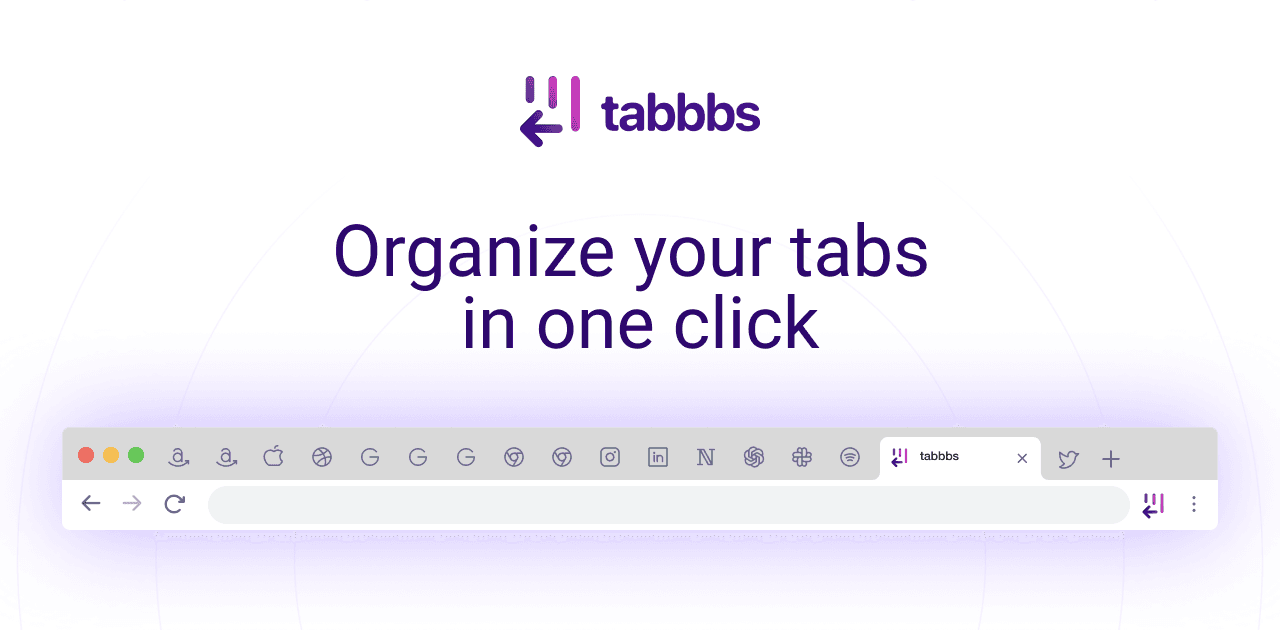
tabbbs
tabbbs is a Chrome extension designed to bring order to chaotic browser windows by instantly organizing tabs. With a single click, it arranges all open tabs by their URL, grouping identical websites together. This helps users quickly find what they need, improving workflow and reducing the time spent managing browser clutter. The extension is fast, reliable, and operates locally on the user's computer, ensuring total privacy with no data collection or tracking. It respects pinned tabs, leaving them untouched, and does not close or "freeze" tabs, simply reordering them for better navigation. tabbbs is ideal for anyone who frequently has many tabs open and seeks a simple, efficient way to maintain an organized digital workspace.
Travel Navigator
Travel Navigator is an all-in-one operating system and CRM solution specifically designed for modern travel agencies and tour operators. It streamlines various aspects of travel business management, from automating bookings and crafting detailed itineraries to managing leads and handling billing. The platform aims to replace scattered tools and manual processes with a single, connected system, offering features like an AI itinerary builder, automated financial tracking, GST/VAT compliant invoicing, and real-time payment tracking. It also includes robust CRM capabilities for lead management, client history, and social proof collection, making it particularly suitable for travel agents in India and Kashmir due to its localized features.
PyHealth
PyHealth is a comprehensive, open-source deep learning Python toolkit designed to support clinical predictive modeling for both ML researchers and medical practitioners. It aims to make healthcare AI applications easier to develop, test, and deploy, offering flexibility and customizability. Key features include a modular 5-stage pipeline, a healthcare-first approach with support for medical codes and clinical datasets like MIMIC and eICU, and over 33 pre-built models with production-ready trainers and metrics. The toolkit supports more than 10 healthcare tasks and datasets, providing fast data processing for quick experimentation. PyHealth also includes independent modules for medical code mapping (pyhealth.medcode) and medical code tokenization (pyhealth.tokenizer), enhancing its utility for complex healthcare data.