
Coding & Development
Browsing page 6 of AI tools for Backend & APIs in Coding & Development. Sorted by confidence score — our independent quality rating.

DeepClaude
DeepClaude, also known as DeepReasoning, is an open-source, high-performance LLM inference API and Chat UI designed to combine the strengths of DeepSeek R1 and Anthropic Claude models. It leverages DeepSeek R1's Chain of Thought (CoT) reasoning for deep problem-solving and Claude 3.5 Sonnet's creativity and code generation. The tool offers zero-latency responses, end-to-end security with local API key management, and extensive configurability. Users maintain complete control over their API keys and data, making it a private and secure solution for developers looking to enhance their AI-powered coding workflows.

Cult
Cult UI Pro offers a comprehensive collection of premium Shadcn Blocks, full-stack patterns, and ready-to-use templates designed to accelerate the development of AI SaaS applications. Built with Next.js 15, Tailwind CSS, and Supabase, it provides animated UI elements and production-ready components for marketing pages, SaaS starters, and AI patterns. The platform includes features like Better Auth for multi-tenant applications, a directory template with AI enrichment, and various AI SDK patterns for agentic workflows, image generation, and data analysis. Cult aims to simplify complex development tasks, allowing users to ship delicious apps faster.
KitchenAI
KitchenAI offers a prompt engineering studio designed for AI developers to build APIs and for app developers to seamlessly integrate AI functionalities into their applications. The platform aims to streamline the development and deployment of AI-powered solutions, providing the necessary tools and resources to facilitate the creation of robust and scalable AI applications. It focuses on enabling efficient prompt engineering, which is crucial for optimizing AI model performance and ensuring effective interaction with AI systems. This makes it a valuable resource for those looking to develop and deploy advanced AI capabilities.
ZOER
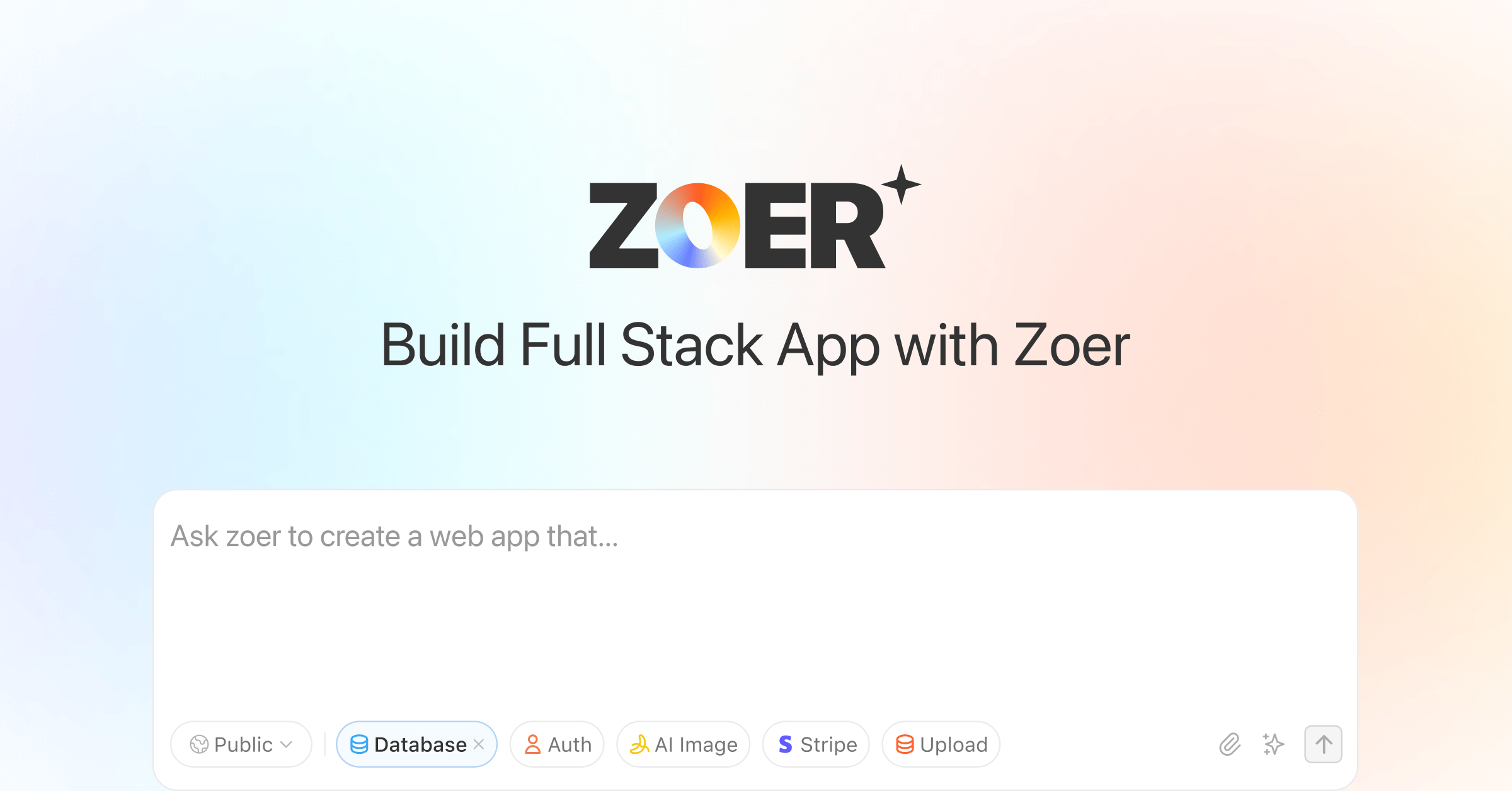
ZOER is an AI-powered app builder that transforms your ideas into complete, full-stack web applications. Users describe their app idea, and the AI generates the frontend, backend logic, and database, eliminating the need for coding. It includes features like user authentication, Stripe payment integration, and a built-in AI assistant for user interaction within the app. ZOER supports turning database schemas into web apps and offers options for private projects or publishing to a community. The platform is designed for entrepreneurs, small businesses, and creators who want to build powerful applications without technical skills, providing a comprehensive solution from idea to deployment.
MakeHub
MakeHub is an AI API load balancer designed to optimize the performance and cost-efficiency of AI model requests. It intelligently routes requests for various AI models, including GPT-4, Claude, and Llama, to the most suitable providers like OpenAI, Anthropic, and Together.ai in real-time. This dynamic routing ensures users get optimal performance while minimizing expenses. The platform offers an OpenAI-compatible endpoint for easy integration and provides detailed documentation for quick setup, including guides for Python, TypeScript, cURL, Langchain, and n8n. MakeHub also features real-time metrics, native tool calling support, and the ability to restrain routing to specific providers or select specific model versions.

SoftData24
SoftData24 provides comprehensive IT solutions, specializing in data services and advanced AI & Machine Learning development. Their offerings include custom application development, computer vision, and bespoke software design to help businesses transform and innovate. The company focuses on delivering high-quality software and data products, supporting clients with data-driven decision-making through their team of data scientists. SoftData24 aims to provide cutting-edge technology solutions that drive efficiency and growth for various business needs.
open-ai
open-ai is a comprehensive PHP SDK designed for seamless integration with OpenAI's powerful AI models, including GPT-3 and DALL-E. It offers robust support for various PHP frameworks such as Laravel, Symfony, Yii, and Cake PHP, making it highly versatile for PHP developers. A key feature is its ChatGPT-like streaming capability, enabling real-time interaction with AI models. The SDK is open-source, community-maintained, and provides free support through Discord and email. It also supports NVIDIA NIM integration, allowing developers to leverage models like MixtralAI. The package is highly downloaded, forked, and supported by a large community, ensuring continuous improvement and reliability for integrating advanced AI functionalities into PHP applications.
Genesis IT Lab
Genesis IT Lab is a blockchain software development company specializing in state-of-the-art software solutions for both startups and enterprises. Their expertise spans blockchain, cybersecurity, artificial intelligence, and metaverse development. They offer custom software development, MVP development, web app development, mobile app development, and staff augmentation. The company focuses on delivering reliable and optimized solutions for top blockchains, aiming to bring Web3.0 transformation through innovative techniques. Their portfolio includes projects like NFT ticketing platforms, SocialFi/GameFi platforms, NFT aggregators, fintech wallets, and AI-powered cryptocurrency trading websites. Genesis IT Lab emphasizes scalability and tailored solutions to meet specific business needs.

ITech Solutions | Mobile Apps | Web Development | Android, iOS App | Hybrid Apps | Generative AI
ITech Solutions is a technology catering company that provides top-tier website and app development services. They specialize in creating user-friendly mobile applications and web experiences, covering product design, UX research, prototyping, visual design, and front-end development. With 6 years of experience, iTech Solutions works closely with clients through a three-step process: concept creation, detailed design, and meticulous development. Their services extend to generative AI, LLM, e-commerce, and React Native, aiming to boost clients' digital presence with outstanding products and solutions. They are dedicated to integrating business acumen, marketing strategies, and UX/UI design to ensure customer satisfaction.
Wanile Technologies
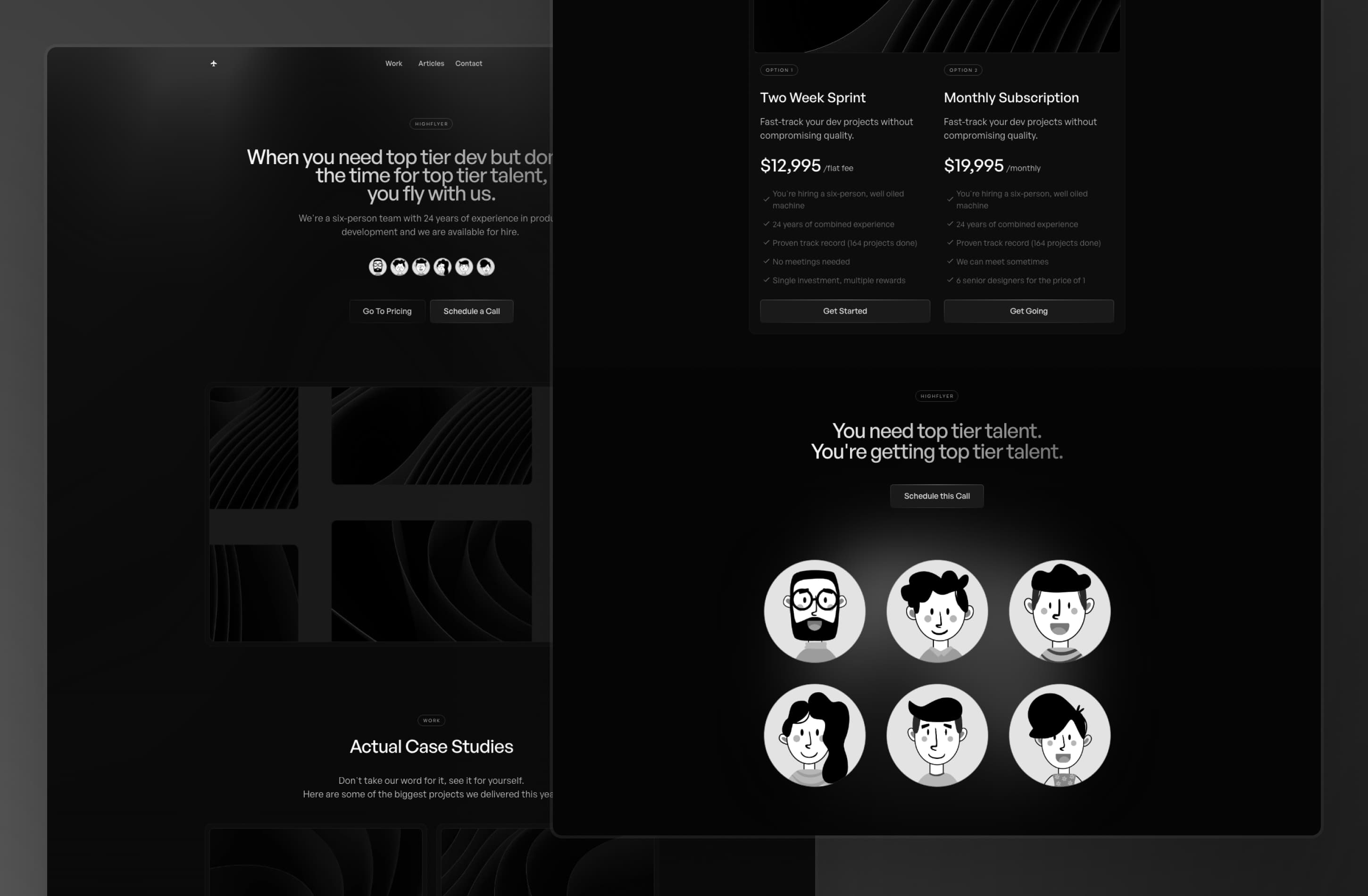
Wanile Technologies specializes in designing and building AI-powered products, focusing on exceptional user experience and scalable engineering. They offer a dedicated design and development team, available within 12 hours, specifically catering to non-technical founders. Their services encompass a range of solutions from AI agents to complete platforms, including web applications, landing pages, websites, and iOS applications. Wanile Technologies also provides QA testing and follows a structured five-phase process from initial inspection to project handover. They offer two main pricing models: a two-week sprint for $12,995 and a monthly subscription for $19,995, both leveraging a six-person team with extensive combined experience.
agents-js
agents-js is a Node.js distribution of the LiveKit Agents framework, designed for building realtime, programmable participants that run on servers. It allows developers to create conversational, multi-modal voice agents capable of seeing, hearing, and understanding. The framework offers flexible integrations with various STT, LLM, TTS, and Realtime APIs, and supports extensive WebRTC clients through LiveKit's open-source SDK ecosystem. Key features include semantic turn detection using a transformer model to reduce interruptions, and the ability to exchange data seamlessly with clients via RPCs and other Data APIs. It is fully open-source, allowing for self-hosting of the entire stack, including the LiveKit server. The framework also provides a comprehensive ecosystem of plugins for processing streaming input and generating output, such as those for OpenAI, Google, Deepgram, and ElevenLabs.
BaseAI
BaseAI is the first web AI framework designed for building and deploying serverless autonomous AI agents with memory. It emphasizes simplicity and composability, allowing developers to start building local-first with agentic pipes, tools, and memory. The framework integrates seamlessly with Langbase, a composable serverless AI cloud, enabling one-command deployment. BaseAI provides a straightforward API for creating and deploying various AI agents and features, supporting RAG (Retrieval Augmented Generation) for memory. It's an ideal solution for developers looking to streamline the creation and deployment of intelligent AI applications.
InsForge
InsForge is an open-source backend development platform specifically designed for AI coding agents and AI code editors. It simplifies full-stack application development by exposing backend primitives such as databases, authentication, storage, and functions through a semantic layer. This layer allows AI agents to understand, reason about, and operate these backend systems end-to-end. Key features include fetching backend context, configuring primitives directly, and inspecting backend state and logs via structured schemas. InsForge supports core products like user management, Postgres relational databases, S3 compatible file storage, an OpenAI compatible API across multiple LLM providers, serverless edge functions, and site deployment. It can be run locally via Docker Compose or deployed with one-click solutions like Railway, Zeabur, and Sealos.
korvus
Korvus is an all-in-one, open-source RAG (Retrieval-Augmented Generation) pipeline built specifically for Postgres. It integrates LLMs, vector memory, embedding generation, reranking, summarization, and custom models into a single SQL query, significantly boosting performance and simplifying search architecture. By leveraging Postgres's robust capabilities, Korvus eliminates the need for external services and API calls, reducing latency and complexity. It provides SDK support for Python, JavaScript, Rust, and C, allowing seamless integration into existing tech stacks. This approach offers a simplified architecture, high performance, and scalability, making it ideal for developers looking to build efficient RAG applications directly within their database.
Orthogonal
Orthogonal is a platform that offers trusted skills and APIs designed as building blocks for AI agents. It integrates with various AI models like OpenClaw, Claude Code, and Codex, allowing agents to access a wide range of functionalities. The platform operates on a simple, transparent pay-per-request pricing model, eliminating subscriptions and hidden fees. Users can add credits as needed, with new users receiving $10 free credits to start. Orthogonal provides access to all public APIs and includes features like auto top-up beta and detailed analytics to track API usage and spending. It caters to both individual builders and API providers, with enterprise options available for high-volume agent workloads.

Bitte Protocol
Bitte Protocol empowers developers to launch cutting-edge Web3 experiences by leveraging AI agents. The platform provides a no-code agent builder with extensibility, allowing users to create powerful agents without writing code, utilizing over 50 pre-built tools or adding their own. Developers can easily embed these custom agents into their projects using a whitelabel chat widget to enhance user engagement and streamline workflows. Bitte also offers a comprehensive analytics suite to gain full visibility into agent performance and user behavior, including conversation-to-transaction conversions. It supports various blockchain networks like Near, Ethereum, Base, BNB, Polygon, Gnosis, Arbitrum, Optimism, Avalanche, Sui, Cardano, and Solana, making it a versatile tool for the Web3 ecosystem.

CODEXAL
CODEXAL is a software and AI development company offering custom solutions for global businesses. They specialize in end-to-end digital transformation, pragmatic AI, and high-quality web and mobile applications. Their services include AI solutions like NLP, vision, RAG, and chatbots, as well as modern web and mobile app development with a focus on UX, accessibility, and performance. CODEXAL also handles integrations, DevOps, design systems, and technical SEO, ensuring scalable and impactful digital products. They serve clients in Jordan, Saudi Arabia, and worldwide, with a structured delivery process from discovery to launch and growth.
trpc-agent-go
trpc-agent-go is a robust Go framework designed for developing intelligent agent systems. It empowers developers to build autonomous agents that can reason, remember, collaborate, and act with ease. Key features include intelligent reasoning through hierarchical planners, a rich tool ecosystem for integrating external APIs and databases, and persistent memory for long-term state management. The framework supports multi-agent collaboration via chain, parallel, and graph-based workflows, including GraphAgent for type-safe graph workflows. It also offers agent skills, versioned artifact storage, prompt caching for cost optimization, and evaluation tools. Built for production, it includes telemetry, tracing, and high performance for scalability and low latency.
aici
The Artificial Intelligence Controller Interface (AICI) is a powerful tool designed for developers to build Controllers that can constrain and direct the output of Large Language Models (LLMs) in real time. These Controllers are flexible programs capable of implementing constrained decoding, dynamically editing prompts and generated text, and coordinating execution across multiple, parallel generations. AICI allows custom logic during token-by-token decoding and maintains state during an LLM request, enabling diverse strategies from programmatic decoding to multi-agent conversations. It abstracts away LLM inference and serving engine details, simplifying Controller development and ensuring compatibility across various engines like llama.cpp, HuggingFace Transformers, and rLLM. Controllers are implemented as lightweight WebAssembly (Wasm) modules for fast, sandboxed execution.

GovLink
GovLink offers an API specifically designed for verifying business registrations throughout the United States. This tool is crucial for businesses and developers who need to ensure Know Your Business (KYB) compliance and streamline due diligence processes. By integrating GovLink's API, users can automate the verification of business entities, reducing manual effort and improving accuracy. The platform also supports integration with AI agents, enhancing its utility for automated compliance workflows. Additionally, GovLink provides a free AI governance assessment tailored for UK law firms, delivering a RAG-rated report across seven key domains, demonstrating its commitment to regulatory adherence and advanced AI application.
OpenAI-Unity
OpenAI-Unity is an unofficial Unity package designed to help game developers seamlessly integrate the OpenAI API into their Unity projects. This package enables the direct use of OpenAI's powerful AI capabilities, such as ChatGPT for conversational AI and DALL.E for image generation, within the Unity game engine. Developers can make asynchronous requests to the OpenAI API, including stream requests for real-time interactions. The package provides clear instructions for importing, setting up an OpenAI account, and securely saving API credentials. It also includes sample projects like a ChatGPT-like chat example and a DALL.E text-to-image generation example, making it easier for developers to get started with AI-driven game features. It supports various Unity versions for different platforms, including WebGL builds, though some known issues with WebGL are documented.

JsonGPT
JsonGPT offers a simple API to generate structured JSON data using various AI models, including OpenAI, Google Gemini, Meta Llama, Azure OpenAI, Groq, and Anthropic Claude. It acts as a proxy, streamlining the integration of AI-generated JSON into applications by handling validation, removing parameter hallucinations, and refetching data. Key features include JSON validation, prompt caching to reduce costs, and JSON streaming that ensures valid and usable data. JsonGPT aims to save developers time and effort by providing a single endpoint for AI data generation, making it easier to build and scale applications with AI capabilities. It also supports extracting data from websites, images, or PDFs.
rag_api
rag_api is an ID-based Retrieval-Augmented Generation (RAG) FastAPI designed for asynchronous and scalable document indexing and retrieval. It seamlessly integrates Langchain with PostgreSQL/pgvector, allowing for efficient management of documents organized into embeddings by file_id. This approach enables targeted queries when combined with file metadata, making it ideal for applications like LibreChat or any other ID-based RAG use case. The API offers robust document management features, including methods for adding, retrieving, and deleting documents, alongside asynchronous support for enhanced performance. It supports various embedding providers such as OpenAI, Azure, Hugging Face, Google GenAI, VertexAI, and Ollama, and allows for configurable chunking, batch processing, and distance thresholds to optimize retrieval quality and cost.

Ittybit
Ittybit offers scalable media APIs and automations for developers, enabling them to store, transform, and extract intelligence from video, audio, and image files. The platform is designed to scale from initial development with a few lines of code to handling millions of uploads. Key capabilities include transcoding, resizing, watermarking, and compressing media, as well as extracting rich intelligence data like summaries, speech-to-text, NSFW detection, and outlines. Ittybit also supports multi-step workflows, automations, and track generation for subtitles, chapters, and thumbnails, all built on broadcast-grade infrastructure to handle high volumes of content.