
Coding & Development
You are exploring the most up-to-date list of AI tools for Database & SQL. Each tool is independently evaluated with details on what it does best, pricing, and how it can help you do your work better.

Synra
Synra is a managed Model Context Protocol (MCP) server designed to simplify connecting AI agents, such as Claude, to various SQL databases including PostgreSQL, MySQL, MS SQL Server, and Supabase. It eliminates the need for complex local setups, configuration files, or .env headaches by providing a single, secure URL for database access. Key features include read-only access by default, AES-256 encryption for credentials, built-in SQL sanitization to prevent destructive queries, and comprehensive audit logging of every query. Synra aims to make database interaction for AI agents secure, efficient, and easy to manage, offering a significant advantage over self-hosted MCP solutions.

Lantern
Lantern is an open-source Postgres vector database and toolkit designed for developers building production-ready AI applications. It integrates advanced search capabilities like vector search with pgvector and BM25 text search directly into Postgres, eliminating the need for separate vector databases. Lantern also simplifies AI workflows by enabling embedding generation and LLM execution within the database, supporting over 20 embedding models and LLMs from providers like OpenAI and Cohere. It features serverless indexing for scalable performance, allowing for seamless scaling to millions of vectors without compromising database operations. Lantern can be self-hosted or used via Lantern Cloud, a fully managed service, and is easy to use with standard SQL or popular ORMs.
Weaviate
Weaviate is an AI-first vector database designed for developers to build and ship AI-native applications with less hallucination, data leakage, and vendor lock-in. It serves as a unified foundation for various AI functionalities, including AI-powered search, Retrieval Augmented Generation (RAG), and Agentic AI workflows. Weaviate handles embeddings, ranking, and auto-scaling, allowing developers to focus on features rather than infrastructure. It supports multiple SDKs (Python, Go, TypeScript, JavaScript) and integrates with GraphQL or REST APIs. The platform offers flexible deployment options, from shared to dedicated cloud, and provides pre-built agents to interact with and improve data, ensuring scalability and enterprise readiness.

SvectorDB
SvectorDB is a serverless vector database specifically designed for AWS, providing a high-performance and cost-effective solution for vector storage and retrieval. It enables developers to build and scale products from prototype to production with minimal code, handling the underlying database management. Key features include hybrid search capabilities using Lucene/ElasticSearch style queries, instant updates for upserts and deletions, and native serverless architecture with pay-per-request pricing. SvectorDB also offers built-in vectorizers for text and images, or the option to bring your own embeddings. It integrates with CloudFormation and provides official OpenAPI specifications for broad language support, making it a flexible choice for various AI applications.

Qdrant
Qdrant is an open-source vector search engine written in Rust, designed for high-performance and scalable vector similarity search. It enables developers to build advanced AI retrieval systems, supporting expansive metadata filters, native hybrid search (dense + sparse), and built-in multivector capabilities. Qdrant offers efficient, one-stage filtering and full-spectrum reranking to enhance relevance. It can be deployed anywhere, including Qdrant Cloud, Hybrid Cloud, Private Cloud, and Edge (Beta), with enterprise-ready tooling like SOC 2 compliance, Prometheus/Grafana integration, and SSO. Its architecture is optimized for AI, featuring real-time indexing, memory-efficient storage, and advanced quantization techniques, making it suitable for production-grade AI search applications.
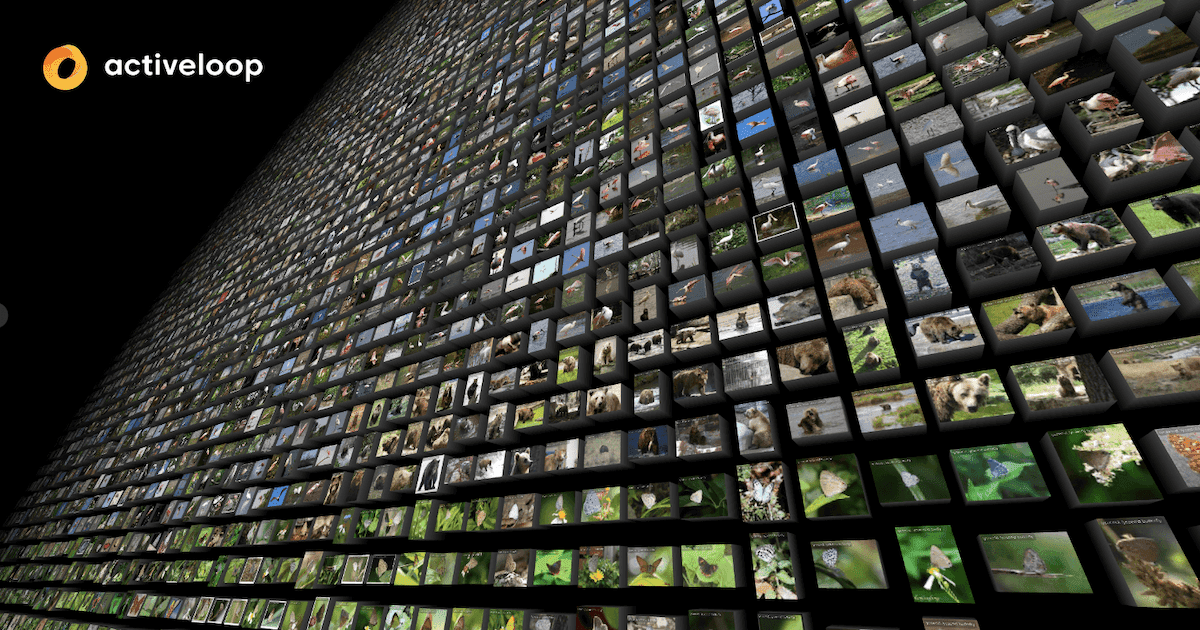
Activeloop
Activeloop is the company behind Deep Lake, a GPU database specifically designed for AI agents and deep learning applications. Deep Lake allows for efficient storage and management of various data types, including embeddings, audio, text, videos, and images, directly on GPUs. Key features include AI-powered tools for PDF interaction like summarization, data extraction, and reading, as well as advanced enterprise and workplace search capabilities. It supports use cases across industries such as MedTech, manufacturing, and logistics, offering solutions for data preparation, model accuracy, and faster query times for generative AI and multi-modal AI assistants. Deep Lake integrates with popular AI frameworks like LangChain and LlamaIndex.

ApertureData
ApertureData offers ApertureDB, a purpose-built database platform designed for the AI era, specifically to manage multimodal AI data. It unifies text, documents, images, and videos natively, allowing for on-the-fly augmentation to prepare datasets for machine learning at scale. The platform features a high-performance vector store for efficient indexing and searching of high-dimensional embeddings, alongside advanced graph filtering for building and evolving knowledge graphs without messy schema updates. ApertureDB acts as a multimodal memory layer for AI agents, enabling them to understand context like humans. It supports fast, scalable search for all AI data, turning complex data into connected insights, and accelerating development from prototype to production 10 times faster. It is ideal for building GenAI apps, agents, RAG workflows, and enhancing visual debugging.
pg_vectorize
pg_vectorize provides a robust solution for integrating semantic and full-text search capabilities directly into any Postgres database. It automates the process of converting text into embeddings and orchestrates these operations, leveraging popular LLMs. Users can choose between an HTTP server implementation, ideal for managed databases like RDS or Cloud SQL, or a Postgres extension for self-hosted instances, offering direct SQL functions. This flexibility allows for rapid development of Retrieval Augmented Generation (RAG) applications and advanced search engines, building upon the strengths of pgvector for similarity search and pgmq for background task orchestration.
vlite
vlite is a simple and blazing fast vector database built entirely in NumPy, eliminating the need for complex database setups or running servers. It's specifically designed for Retrieval-Augmented Generation (RAG) applications, offering exceptionally fast vector retrieval using binary embeddings. A key innovation is its CTX file format, which acts like a browser cookie for user embeddings, ensuring efficient storage, retrieval, portability, and user context. vlite supports ingesting various data types including text, PDF, CSV, PPTX, and webpages, with features like chunking, metadata filtering, and PDF OCR for scanned documents. Benchmarks show it to be significantly faster than alternatives like Chroma on indexing and retrieval, while also consuming less disk space. It is available as a Python package and integrates seamlessly with LangChain.
InsForge
InsForge is an open-source backend development platform specifically designed for AI coding agents and AI code editors. It simplifies full-stack application development by exposing backend primitives such as databases, authentication, storage, and functions through a semantic layer. This layer allows AI agents to understand, reason about, and operate these backend systems end-to-end. Key features include fetching backend context, configuring primitives directly, and inspecting backend state and logs via structured schemas. InsForge supports core products like user management, Postgres relational databases, S3 compatible file storage, an OpenAI compatible API across multiple LLM providers, serverless edge functions, and site deployment. It can be run locally via Docker Compose or deployed with one-click solutions like Railway, Zeabur, and Sealos.
rag_api
rag_api is an ID-based Retrieval-Augmented Generation (RAG) FastAPI designed for asynchronous and scalable document indexing and retrieval. It seamlessly integrates Langchain with PostgreSQL/pgvector, allowing for efficient management of documents organized into embeddings by file_id. This approach enables targeted queries when combined with file metadata, making it ideal for applications like LibreChat or any other ID-based RAG use case. The API offers robust document management features, including methods for adding, retrieving, and deleting documents, alongside asynchronous support for enhanced performance. It supports various embedding providers such as OpenAI, Azure, Hugging Face, Google GenAI, VertexAI, and Ollama, and allows for configurable chunking, batch processing, and distance thresholds to optimize retrieval quality and cost.
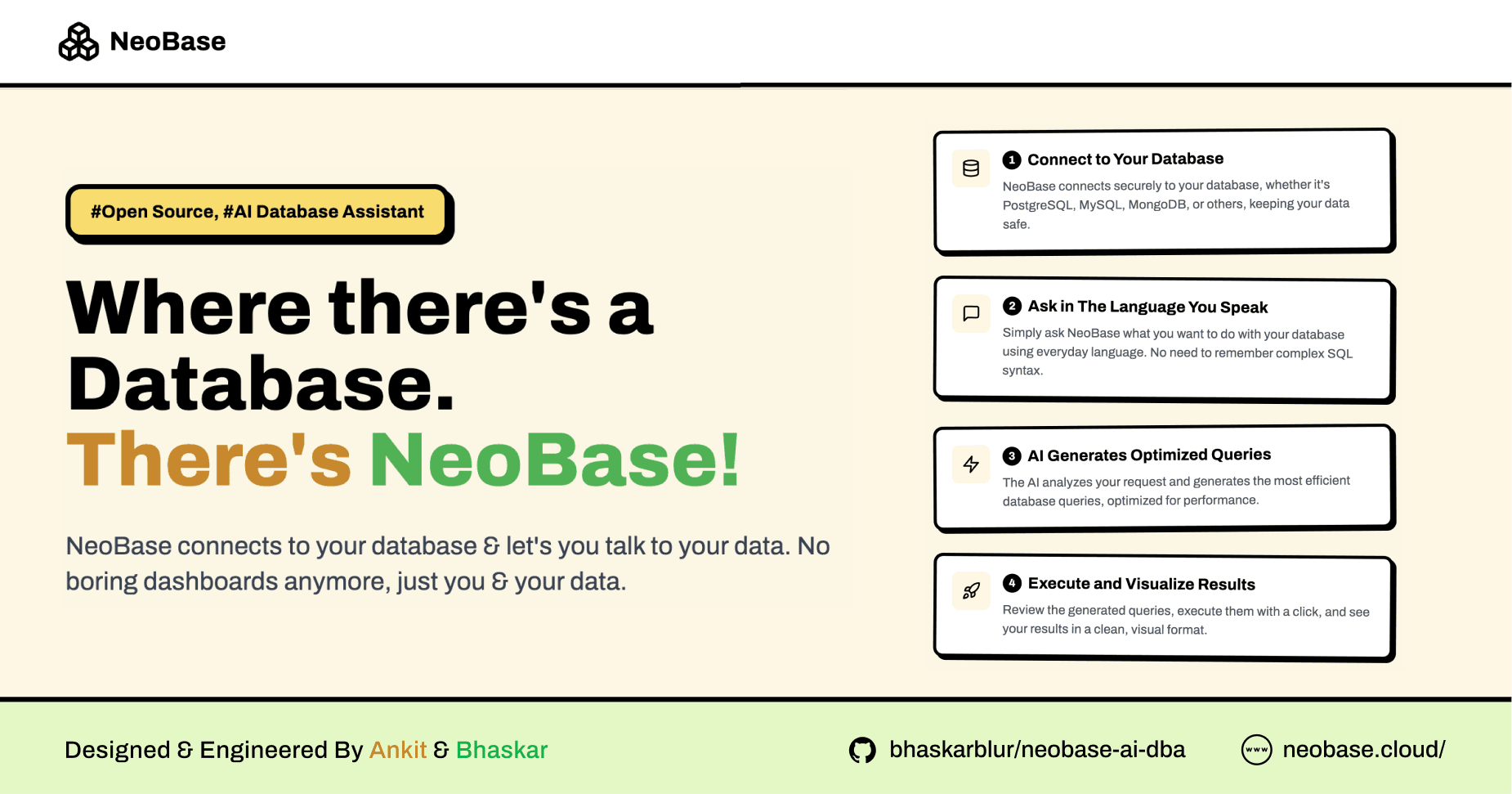
NeoBase
NeoBase is an AI Copilot for Database designed to simplify database interaction for developers and teams. It allows users to query, analyze, and manage their databases using natural language, eliminating the need for complex SQL queries. The tool supports connections to various data sources, including PostgreSQL and MySQL, and offers features like AI-powered query generation, multi-datasource support for data pipelines and analytics, and real-time monitoring. NeoBase also emphasizes enterprise security and compliance, with options for on-premise deployment, making it suitable for both individual developers and larger organizations seeking efficient and secure database management solutions.

ERBuilder
ERBuilder is an AI-powered tool designed to streamline the creation of Entity-Relationship (ER) diagrams. Leveraging OpenAI GPT, it can automatically generate ER diagrams from natural language data model descriptions, user stories, or requirements. This feature significantly simplifies the data modeling process, making it accessible for users with varying levels of database design experience. Beyond initial generation, ERBuilder also allows users to update existing data models by inputting new descriptions or requirements, with the AI suggesting modifications to align with the new specifications. The tool offers an intuitive user interface for reviewing and adjusting diagrams, ensuring accuracy and saving considerable time for developers and data professionals.
multi-agent-postgres-data-analytics
Multi-agent-postgres-data-analytics is an experimental and learning tool designed for building multi-agent systems, specifically focusing on interacting with PostgreSQL databases using natural language. This project, powered by GPT-4, Assistance API, AutoGen, Postgres, and Guidance, demonstrates how LLMs can enable reasoning and decision-making with reduced explicit rules. It's presented as a stepping stone for understanding multi-agent concepts, patterns, and building blocks, rather than a ready-to-use framework. The repository is accompanied by a video series that details its construction from scratch, diving deep into the complexities and principles of multi-agent software development. It highlights core technologies like OpenAI's GPT-4 and Assistance API, AutoGen for multi-agent frameworks, and Guidance for structured LLM responses.
LexTrack AI
LexTrack AI is positioned as the top AI dating app, designed to streamline and optimize the online dating experience. It allows users to centralize all their dating applications into one platform, offering a 'Dating God Mode' experience. The tool leverages artificial intelligence for various functionalities, including profile optimization to present users in the best light, intelligent messaging assistance to craft engaging conversations, and efficient date planning to organize meetups. This comprehensive approach aims to simplify the complexities of modern dating, making it more effective and less time-consuming for its users.
HelixDB
HelixDB is a native graph-vector database engineered in Rust, designed to support advanced AI applications such as RAG (Retrieval Augmented Generation), semantic search, knowledge graphs, and AI agent workflows. It combines graph and vector capabilities natively, providing a highly scalable and performant solution for complex data relationships. The database is built for efficiency, offering high throughput and low latency, making it suitable for both prototyping with Helix Lite and demanding enterprise applications. Developers can get started on Helix Cloud or run it locally, leveraging its efficient graph structures and compiled graph and vector queries.
SQLFlash
SQLFlash is an AI-powered tool designed to optimize SQL queries and enhance database performance. It automatically rewrites SQL, analyzes execution plans, and provides smart index recommendations to eliminate bottlenecks. The platform supports all relational databases, including MySQL and PostgreSQL, and offers zero-configuration optimization for over 10 database engines. SQLFlash emphasizes transparency with a dual-pane SQL diff viewer, AI query plan explainer, and cost-benefit analysis. It ensures data privacy by not requiring access to sensitive business data or database permissions. The tool also features dynamic SQL optimization, including MyBatis XML auto-rewrite, making it suitable for various development environments.
QueryGenie
QueryGenie is an AI-powered tool designed to streamline the process of generating database queries. It allows users to input requests in plain English, which the AI models then translate into functional database queries. This capability significantly reduces the time and effort typically required to extract insights from data, making it accessible even for those without extensive SQL knowledge. The tool currently supports PostgreSQL databases, providing a focused solution for users working with this specific database type. Its core value lies in democratizing data access and analysis by abstracting away the complexities of query writing.
pgai
pgai is a Python library designed to simplify the development of AI applications, including RAG (Retrieval-Augmented Generation) and semantic search, by leveraging PostgreSQL. It automates the creation and synchronization of vector embeddings from various data sources like PostgreSQL tables and S3 documents, ensuring embeddings are updated as data changes. The tool features a Semantic Catalog for natural language to SQL conversion, enabling AI-powered text-to-SQL for agentic applications. It offers powerful vector and semantic search capabilities using pgvector and pgvectorscale. Built for production, pgai supports batch processing for efficient embedding generation and includes built-in handling for model failures, rate limits, and latency spikes. It is compatible with any PostgreSQL database, including Timescale Cloud, Amazon RDS, and Supabase.
databend
Databend is an open-source enterprise data warehouse built in Rust, offering a unified architecture for analytics, search, AI, and Python sandbox environments. It provides core capabilities such as large-scale analytics, vector search, full-text search, and auto schema evolution. Databend is agent-ready, featuring sandbox UDFs for agent logic, SQL for orchestration, transactions for reliability, and branching for safe experimentation on production data. Its architecture supports flexible agent orchestration with a control plane for resource scheduling, an execution plane for SQL orchestration, and a compute plane for isolated sandbox workers. Databend is cloud-native, elastic, and compatible with S3, Azure, and GCS, making it suitable for enterprise-scale AI workloads.
Devaten
Devaten is an innovative on-premise AI tool designed for building and managing AI agent pipelines, offering enterprises full control over their data with enhanced privacy. It specializes in AI Agent Orchestration, allowing users to design, deploy, and manage intelligent data pipelines with customizable agents for automated monitoring, decision-making, and reporting. The platform provides real-time monitoring and insights, tracking performance metrics, detecting anomalies, and offering live visibility into operations across various sectors. Devaten also features smart alerting with AI-driven recommendations and predictive analytics for simulating future scenarios and optimizing workflows. Its key differentiator is 100% on-premises deployment, ensuring complete data control and compliance, making it suitable for sensitive industries like healthcare, telecom, finance, and manufacturing.
pgvector
pgvector is an open-source extension designed for PostgreSQL databases, providing robust capabilities for vector similarity search. It allows users to efficiently store high-dimensional vectors alongside other data within their Postgres database. The extension supports both exact and approximate nearest neighbor searches, making it suitable for a wide range of AI and machine learning applications that rely on vector embeddings. By integrating vector search directly into Postgres, pgvector simplifies data management and retrieval workflows, eliminating the need for separate vector databases. It supports various distance metrics, offering flexibility for different use cases and data types, and is ideal for developers looking to enhance their applications with semantic search, recommendation systems, or RAG capabilities.
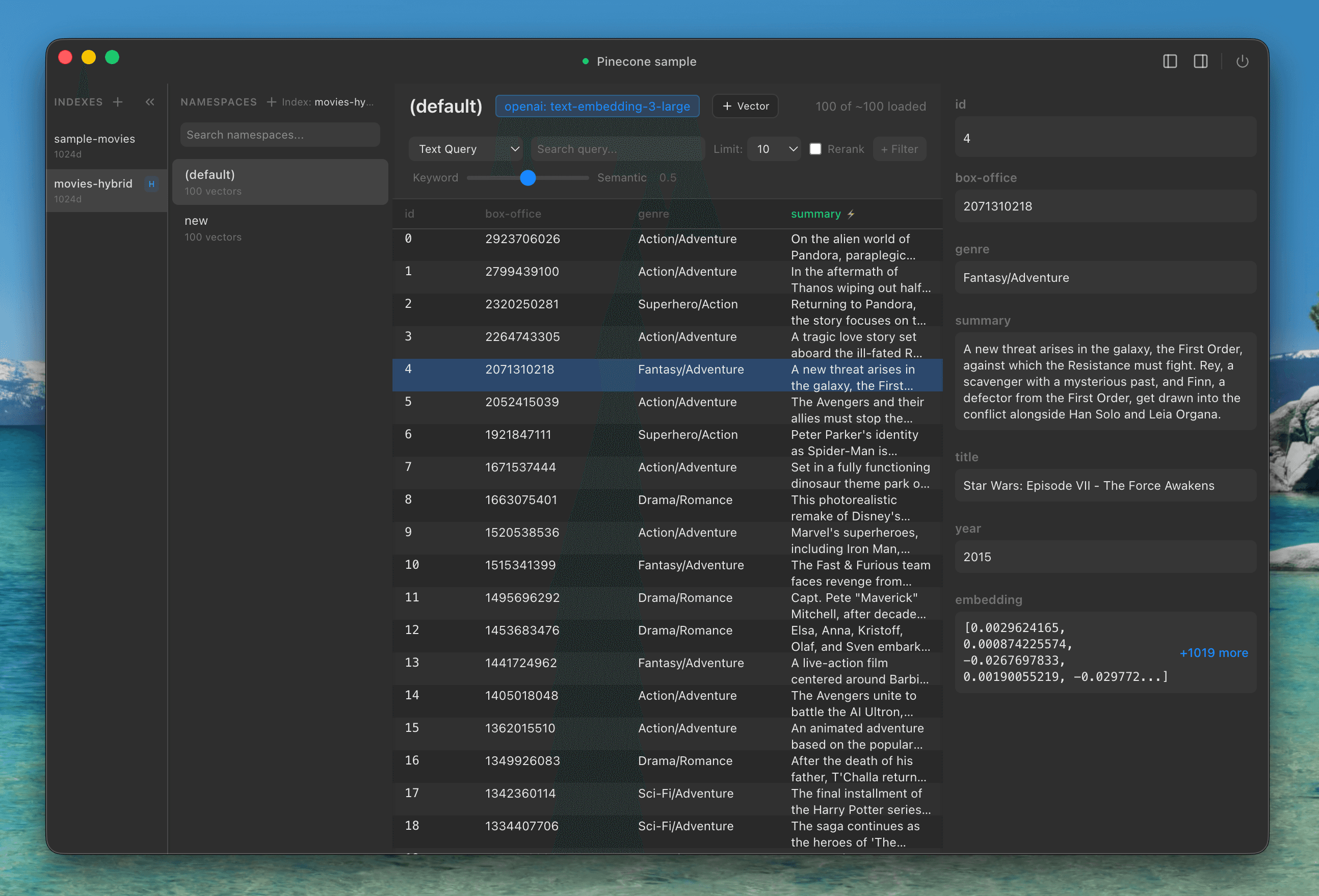
Pinecone Explorer
Pinecone Explorer is a native macOS desktop application designed for exploring and managing your Pinecone vector database. It enables users to browse indexes and namespaces, inspect vectors and metadata, and perform advanced queries using dense, sparse, and hybrid search. The tool includes built-in reranking capabilities and powerful retrieval debugging tools to help optimize vector search applications and troubleshoot query results with precision. It offers multi-environment support, allowing connection to serverless and pod-based indexes, and management of multiple API keys. The application provides a beautiful native macOS experience with smooth animations and intuitive interactions for efficient vector management.
sqlcoder
SQLCoder is a family of state-of-the-art large language models developed by Defog for converting natural language questions into SQL queries. It has been shown to outperform models like GPT-4 and GPT-4-Turbo on natural language to SQL generation tasks using Defog's sql-eval framework, and significantly surpasses other popular open-source models. The tool can be installed and run on various platforms, including NVIDIA GPUs, Apple Silicon, and non-Apple Silicon computers with specific CMAKE_ARGS configurations. Users can connect it to their database to visually add metadata and query it. The model weights are available for download from Hugging Face, and sample inference code is provided for integration with the transformers library.