
Coding & Development
Browsing page 211 of AI tools for Coding & Development. Sorted by confidence score — our independent quality rating.

Elessar
Elessar is an AI assistant and platform designed to significantly enhance engineering productivity and visibility. It seamlessly integrates with existing ecosystems by connecting codebases, communications, and documentation tools like GitHub, Notion, Linear, and Slack. Key features include AI-generated standardized changelogs for pull requests, automated documentation in Notion, and a Slack bot that creates temporary channels per PR with two-way sync and AI summaries. Elessar also offers a VS Code extension for doc search and changelogs, integrated issue tracking with Linear, and personalized daily email digests. The platform emphasizes privacy and security, ensuring data processed by OpenAI is not used for training models.
Wisp CMS
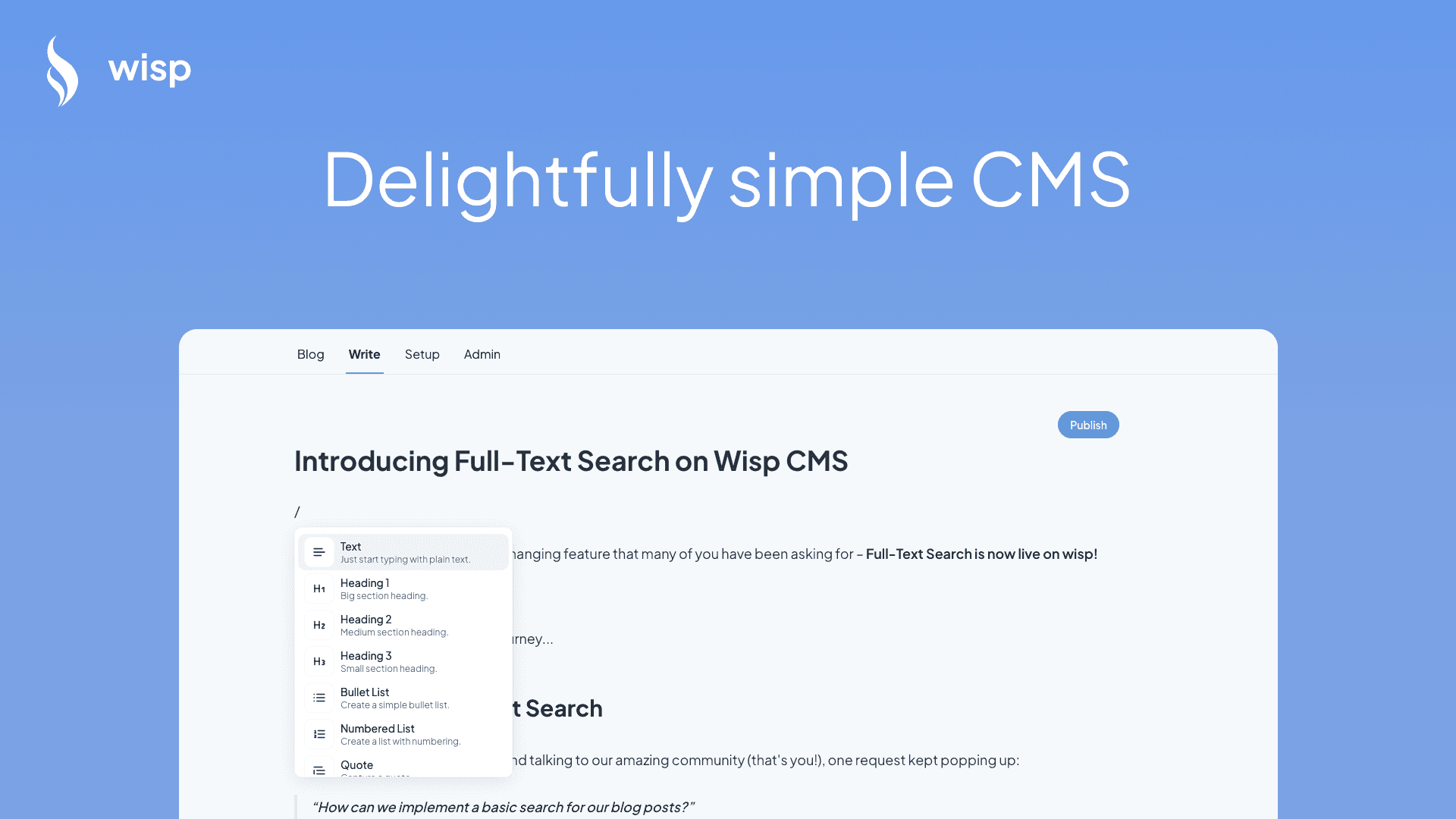
Wisp CMS is a headless content management system specifically designed for Next.js and React applications, aiming to streamline the content creation and publishing process. It eliminates common pain points like image hosting frustrations and the need for markdown skills, offering an intuitive editor similar to Medium or Notion. Developers can integrate Wisp into their Next.js sites with just a few lines of code, leveraging its SDK and TypeScript types. Content is delivered via a global CDN for fast rendering and improved SEO, with built-in features like JSON-LD, sitemaps, and metadata support. Wisp helps teams focus on core features by reducing interruptions from content updates and enabling non-technical users to manage blog posts and images independently.
Airframe
Airframe is a comprehensive AI software sourcing platform designed to empower organizations in deploying AI with confidence. It helps users navigate complex build vs. buy decisions, compare AI vendors, and gain structured market intelligence. The platform offers an AI Agent Search to find products, experts, and generate requirements, alongside tools to explore markets. Users can understand hidden costs in per-use AI token models and receive contextual recommendations based on their existing tech stack. Airframe also facilitates searching by workflow to find technology choices matching specific use cases and provides detailed vendor comparisons, including market positioning and strengths. It offers an API for token-efficient access to its catalog and expert data, making it a decision intelligence solution for the post-SaaS era.
WrapFast
WrapFast offers an iOS SwiftUI boilerplate designed to accelerate the development of AI wrappers and general iOS applications. It provides a comprehensive starter project with essential features like authentication flows, in-app purchases, paywalls, and secure AI integration through a backend proxy. The tool aims to help developers and solopreneurs launch multiple apps quickly, reducing the need to write repetitive boilerplate code. It supports integration with OpenAI and Anthropic APIs, including ChatGPT, Vision, DALL·E, and Claude, with a Node.js Express backend to secure API keys. WrapFast also includes detailed documentation, step-by-step tutorials, and access to a private Discord community for support and collaboration.
superU AI
superU AI is an affordable voice AI platform designed to automate inbound and outbound calling campaigns for marketers. It enables businesses to qualify leads, provide instant follow-ups, and book meetings efficiently, reducing the need for human agents. The platform offers smart automation, understanding caller intent, handling common tasks, and syncing with CRMs for clear post-call insights. Key features include global language support, enterprise-grade security and compliance (SOC 2, ISO 27001, GDPR, CCPA), and a library of live AI call demos across various industries. superU AI is built to handle millions of calls, providing robust analytics and the ability to refine campaigns to perfection.

light-speed
Light-Speed offers advanced AI vision systems designed for the security and monitoring of sports facilities and smart cities. The technology utilizes state-of-the-art Artificial Intelligence and Computer Vision to process real-time image streams from digital cameras, converting them into valuable information about ongoing events. It can recognize complex interactions between people and objects, generate augmented reality images, and assist surveillance operators by monitoring numerous cameras simultaneously or replacing them where human presence is impractical. The system is highly customizable, capable of being trained to detect new types of complex events, including specific behaviors of people, animals, vehicles, and infrastructure. Light-Speed prioritizes privacy, operating on a "Privacy by Design" principle, ensuring no biometric data is extracted or saved. It is compatible with any digital camera and can be updated remotely to add new functionalities.
Rainforest QA
Rainforest QA is an AI-accelerated UI testing tool designed to automate end-to-end testing with a no-code approach. It helps SaaS startups and other organizations ship software faster by significantly reducing the burden of test maintenance. The platform blends artificial intelligence with QA expertise to improve software release cycles, allowing developers and QA teams to focus on innovation rather than repetitive testing tasks. Key features include no-code test automation, AI-accelerated UI testing, and integrations with popular development and communication tools like Jira, Slack, and Microsoft Teams. Rainforest QA also offers an API and CLI for programmatic control over tests and runs.
llama-cookbook
Llama-cookbook serves as the official guide for developers and data scientists looking to build with the Llama model family. This comprehensive repository offers practical resources for getting started with model inference, fine-tuning, and implementing Retrieval-Augmented Generation (RAG). It compiles popular community approaches, diverse use-cases, and the latest recipes for both Llama text and vision models. The cookbook is structured to help users solve end-to-end problems, integrate with various third-party providers, and understand the nuances of deploying Llama models in different scenarios. It also includes a source code library and FAQs for common fine-tuning questions.
LLM-Blender
LLM-Blender is an innovative ensembling framework designed to significantly enhance the performance of large language models (LLMs) by combining the strengths of multiple open-source LLMs. It addresses the challenge of varying optimal LLMs for different examples through its two core modules: PairRanker and GenFuser. PairRanker employs a specialized pairwise comparison method to discern subtle differences between candidate outputs, while GenFuser merges top-ranked candidates into an improved output. The framework also introduces MixInstruct, a benchmark dataset for large-scale evaluation. LLM-Blender offers functionalities for re-ranking model outputs, best-of-N sampling, and serves as a local pairwise evaluator for better Reinforcement Learning from Human Feedback (RLHF) and Direct Preference Optimization (DPO). It can be easily integrated into existing workflows via pip installation and Hugging Face wrappers.
LLMTest_NeedleInAHaystack
LLMTest_NeedleInAHaystack is an open-source tool designed to evaluate the in-context retrieval capabilities of Large Language Models (LLMs). It operates by embedding a specific 'needle' (a random fact or statement) within a lengthy 'haystack' (a long context window) and then prompts the LLM to retrieve this statement. The tool allows for iteration over various document depths and context lengths to comprehensively measure model performance. It supports major LLM providers including OpenAI, Anthropic, and Cohere, offering flexibility in testing different models. The package can be easily installed via PyPi and executed from the command line, with options to customize test parameters such as provider, model name, context lengths, and document depths. It also includes features for multi-needle evaluation and integration with LangSmith for orchestrating and storing evaluation results.
LMFlow
LMFlow is an open-source, extensible toolkit designed for the finetuning and inference of large machine learning models. It emphasizes user-friendliness, speed, and reliability, making large models accessible to a broad community. Key features include support for various finetuning methods like Full Finetuning, LISA (Layerwise Importance Sampling for Memory-Efficient Large Language Model Fine-Tuning), and LoRA (Low-Rank Adaptation). The toolkit also offers acceleration and memory optimization techniques such as FlashAttention (versions 1 and 2), Gradient Checkpointing, and Deepspeed Zero3 Offload. For inference, LMFlow supports CPU inference for LLaMA models via 4-bit quantization and integrates with vLLM for fast serving. It also provides long context support through position interpolation for LLaMA models and includes a Gradio-based UI for local chatbot deployment.
Starinco
Starinco offers a low-code platform, Logic Lens, that leverages AI and deep learning to autonomously detect, track, and classify objects in various media. This platform is designed for rapid prototyping and deployment of complex, customized visual analytics solutions, enabling businesses to integrate them seamlessly for predictive maintenance, anomaly detection, process monitoring, and defectoscopy. Starinco's platform features rich model repositories, a low-code studio, in-built camera/device management, and robust analytics with real-time notifications. It supports flexible deployment options including on-premise, on-cloud, or on-edge, and prioritizes security with end-to-end encrypted communication and role-based access control. The tool aims to empower diverse industries with advanced, easy-to-implement technological solutions for operational efficiency and management.
lorax
LoRAX (LoRA eXchange) is an open-source framework designed to serve thousands of fine-tuned Large Language Models (LLMs) on a single GPU. This dramatically reduces serving costs without compromising throughput or latency. Key features include dynamic adapter loading from HuggingFace, Predibase, or local files, heterogeneous continuous batching for efficient request packing, and adapter exchange scheduling to optimize system throughput. It also offers optimized inference with tensor parallelism, pre-compiled CUDA kernels, and quantization. LoRAX is production-ready with prebuilt Docker images, Helm charts for Kubernetes, Prometheus metrics, distributed tracing, and an OpenAI-compatible API supporting multi-turn chat conversations and structured output.
GGUF My Repo
GGUF My Repo is a specialized AI tool hosted on Hugging Face Spaces, designed for users who need to quantize models into the GGUF format. Users can log in using their Hugging Face account, specify a model repository ID, and then select a desired GGUF quantization method along with optional settings. The tool automates the process of creating a new repository, which can be either public or private, containing the quantized model. This streamlines the conversion of models for use with GGML-compatible runtimes, making it easier to deploy efficient AI models.

Do AI coding agents improve velocity and quality?
This paper, titled "Do AI coding agents improve velocity and quality?", investigates the real-world effects of using LLM-based coding agents on software projects. It analyzes the AIDev dataset to understand how coding agent adoption impacts development velocity and software quality in public GitHub repositories. The study differentiates between 'agent-first' and 'IDE-first' repositories, revealing that agentic tools significantly speed up development in new projects but show diminishing returns in AI-saturated ones. Furthermore, the findings consistently indicate that agentic tool adoption is associated with increased maintainability risks, including higher static analysis warnings and cognitive complexity, regardless of project type. The paper emphasizes the need for strong quality safeguards to prevent technical debt accumulation.

I stopped coding for 6 weeks. My AI agents shipped more when I came back than in 6 months before.
GAAI (Governed Agentic AI Infrastructure) is an open-source governance framework designed to enhance the reliability and productivity of AI coding agents. It operates through a .gaai/ folder at the project root, implementing four core layers: Dual-Track Agentic separation (one agent for discovery/thinking, another for delivery/execution), Skills (agents only execute authorized tasks), Rules (governing all actions), and Persistent Memory (agents recall past decisions). This framework prevents scope creep, unauthorized decisions, and ensures context is maintained across sessions, leading to more predictable and trustworthy AI-driven development. It has been proven to significantly increase code output and reduce AI drift, as demonstrated by its application in building the Callibrate AI expert matching marketplace.

Which Is the Best Custom Mobile App Development Company in Saudi Arabia With Strong Client Reviews a
Apptunix is a premier mobile app development company based in Saudi Arabia, offering comprehensive services for custom Android and iOS applications. They focus on engineering high-performance, secure, and scalable digital infrastructure tailored to the Saudi market, with a strong emphasis on bilingual UX and compliance with local regulations like SAMA, SDAIA, and PDPL. Apptunix provides end-to-end mobile app development, from strategy and design to launch and scaling, across various industries including fintech, healthcare, and logistics. Their expertise extends to AI-powered app features, real-time data processing, cloud-native architecture, and blockchain integration, ensuring cutting-edge solutions for startups, enterprises, and government-backed organizations.

TechWings
TechWings is a software development and design company with over 8 years of experience, specializing in building AI-enabled, meaningful, and visually stunning digital solutions. They offer a range of services including product design, research & development, web development, mobile development, DevOps & automation, and team extension. TechWings provides dedicated agile teams and software outsourcing to help clients innovate and accelerate their development speed. They work with both startups and enterprises, focusing on custom complex software development and AI development, and aim to reduce risks by examining technical feasibility, marketability, and scalability of new products.
SpiNNcloud
SpiNNcloud revolutionizes the inference market by democratizing AI infrastructure with ultra-low energy systems. Its core technology is a brain-inspired computing architecture, uniquely optimized for the efficient inference of dynamically sparse algorithms. The platform features commercially available SpiNNaker2, offering 18 times higher energy efficiency than GPUs, and the upcoming SpiNNext, promising 78 times higher efficiency. SpiNNcloud's systems are scalable to supercomputer levels through parallel topology and are energy-proportional via event-based communication. This infrastructure addresses the energy bottleneck caused by the rapid growth of GenAI, making energy-efficient algorithms and hardware a priority for AI data centers.
Hillbot
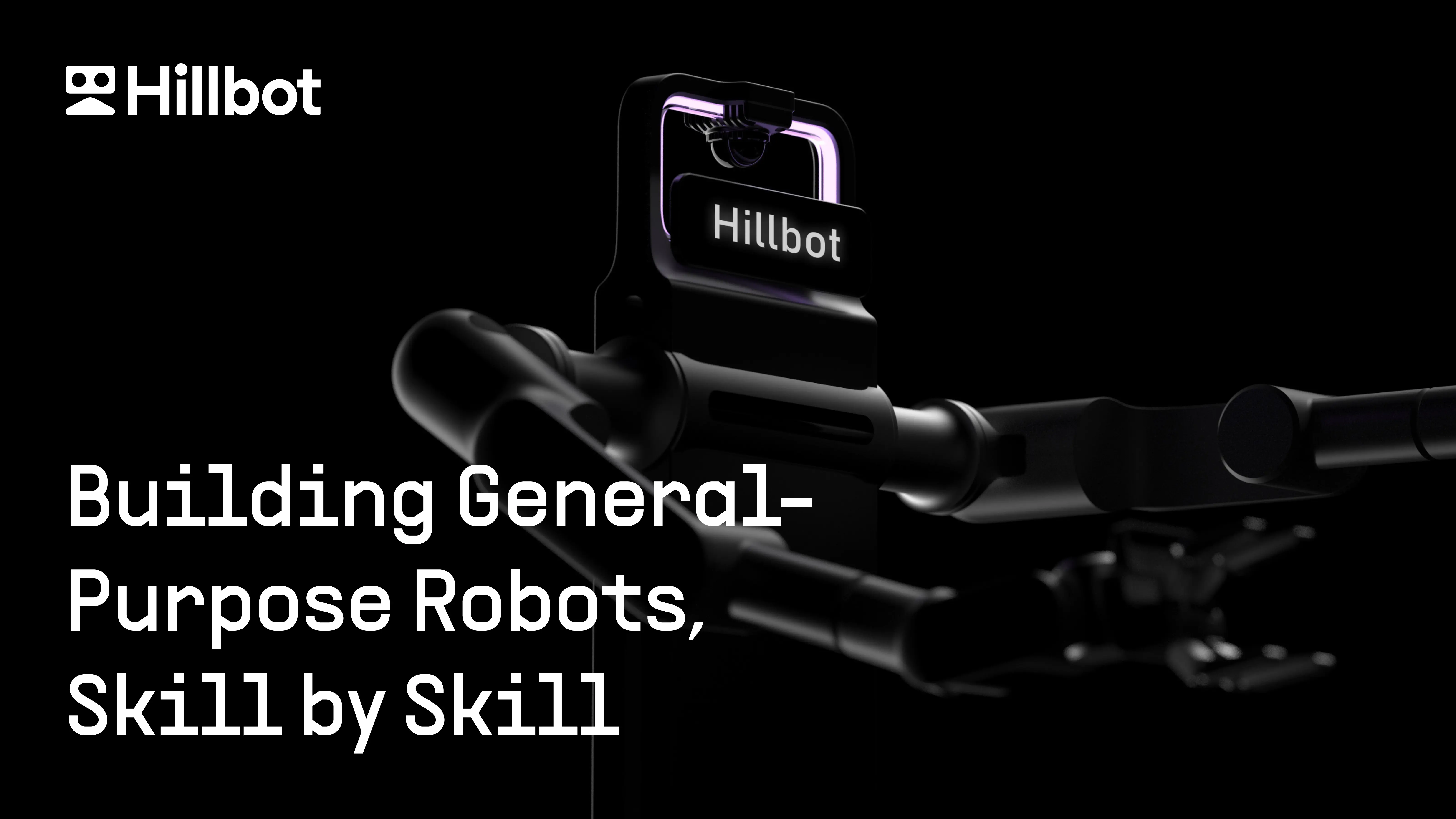
Hillbot is at the forefront of embodied AI, specializing in the development of general-purpose robots through advanced skill learning. The platform utilizes both real-world data and infinite synthetic data generated from simulations to train robots for a wide array of tasks. Its core technologies include ManiSkill, an open-source platform for robot simulation that enables the use of synthetic training data, and Sapien, a unified framework for robot simulation and scalable synthetic data generation. Hillbot's approach allows for the incremental development of robotic capabilities, as demonstrated by examples like learning to reach for objects, open drawers, or maintain balance.
Ottic
Ottic functions as an HR platform specifically designed for AI agents, enabling businesses to hire and manage AI agents as if they were human employees. These AI agents are integrated with your existing tools and follow your established processes, aiming to reduce operational costs by up to 75% after the initial three months. The platform is designed to replace junior-level positions with AI agents that offer consistent performance and never quit. Ottic highlights an average saving of $4,200 per month, positioning itself as a solution for business automation and workforce optimization through AI.
chowder.dev
chowder.dev offers a unified API layer designed to aggregate, normalize, and serve data from any source, providing a full claw infrastructure for deploying and managing OpenClaw instances. It features managed claws, allowing users to spin up isolated instances with dedicated sandboxes, workspaces, and gateways. The platform supports 11 messaging channels, including Telegram, Discord, and Slack, enabling claws to communicate where users already are. chowder.dev also includes a skills marketplace for installing capabilities like browsing and code execution, robust authentication with granular permissions, and an OpenAI-compatible API for seamless integration. It provides stateful sessions and memory for persistent conversations, making it ideal for developers building sophisticated AI agents.
LowTech AI
LowTech AI offers a suite of easy-to-use AI-powered tools designed to boost productivity, creativity, and overall happiness for a wide range of users. The platform provides AI tools backed by thoughtful prompts, making advanced AI accessible to writers, managers, teachers, and many others. Users can quickly summarize text, generate professional emails, code R functions, or find synonyms, all through simple fill-in-the-blank inputs. LowTech AI emphasizes effortless intelligence, allowing users to leverage superhuman abilities without needing extensive technical knowledge. The platform also supports flexible tool creation and seamless sharing, enabling users to create custom AI tools or easily improve existing ones, and share them without requiring recipients to sign up.

YACSS
YACSS is an advanced SEO platform designed to automate the process of generating AI websites and building powerful cloud links. Users can create websites based on a single keyword, which are then uploaded to various cloud platforms like AWS, Google Cloud, and Azure to enhance domain authority and search engine rankings. The tool offers features such as automated sitemaps, Google News compatibility, built-in SEO optimization, and content generation using OpenAI. YACSS also facilitates local SEO by generating topic clusters, local minisites, and integrating Google Maps data for points of interest and driving directions. It supports mass page builds using a token system and allows for the creation of tiered link structures up to 5 tiers deep, making it a comprehensive solution for SEO experts and agencies.