
Coding & Development
Browsing page 408 of AI tools for Coding & Development. Sorted by confidence score — our independent quality rating.

fastformers
FastFormers is an open-source project from Microsoft that provides a collection of methods and recipes for achieving highly efficient inference with Transformer models, specifically for Natural Language Understanding (NLU) tasks. The tool demonstrates impressive speed-ups, including a 233x acceleration on CPU with multi-head self-attentive Transformer architecture. It allows users to replicate results presented in the FastFormers paper and supports various optimization techniques such as model training, distillation, pruning, 8-bit integer quantization for CPU with ONNX Runtime, and 16-bit floating point conversion for GPU. The repository is built on top of several open-source projects including Hugging Face's transformers and ONNX Runtime.
executorch
ExecuTorch is PyTorch's unified solution for deploying AI models directly on-device, spanning from smartphones to microcontrollers. It's engineered for privacy, performance, and portability, powering Meta's on-device AI across various products. The tool allows developers to deploy LLMs, vision, speech, and multimodal models using familiar PyTorch APIs, accelerating research to production without manual C++ rewrites, format conversions, or vendor lock-in. Key features include native PyTorch export, a production-proven architecture, a minimal 50KB base runtime footprint, and support for over 12 hardware backends like Apple, Qualcomm, and ARM. It uses ahead-of-time (AOT) compilation to optimize models for edge deployment, offering a seamless workflow from export to execution.
deepwiki-rs
Litho (deepwiki-rs) is an AI-powered documentation generation engine that transforms raw code into beautifully structured, professional architecture documentation. It automatically analyzes your source code to generate comprehensive documentation in the C4 model format, including context, container, component, and code diagrams. This eliminates the burden of manual documentation, ensuring that your architectural information remains perfectly in sync with code changes. Litho supports multiple programming languages such as Rust, Python, Java, Go, C#, and JavaScript, and can integrate with CI/CD pipelines for automated documentation generation on every commit. Its core capabilities include AI-driven architecture documentation, automatic C4 model diagram creation, intelligent extraction of code comments and relationships, and a customizable template system. Advanced features extend to external knowledge integration, database schema documentation with ERD diagrams, Git history analysis, and interactive documentation with embedded diagrams.
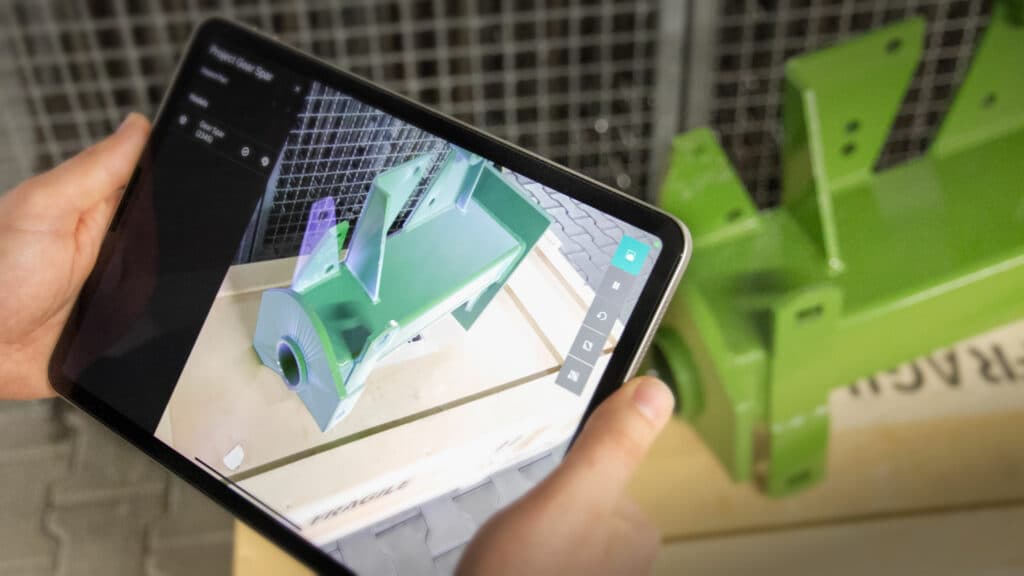
Visometry GmbH
Visometry GmbH specializes in industrial augmented reality (AR) solutions, providing advanced computer vision technologies for manufacturing. Their flagship products include VisionLib, an object tracking SDK for enterprise AR applications, and Twyn, a software platform designed for visual quality control using AR and digital twins. These solutions help businesses achieve digital transformation, optimize processes, and reduce costs by enabling precise augmentation of physical objects with digital information. Visometry's technology is globally recognized, assisting companies in enhancing efficiency and accuracy in industrial settings.

ScrollGuard for iOS
ScrollGuard for iOS is a productivity tool designed to combat endless scrolling on social media platforms by selectively blocking addictive short-form video content. Unlike traditional screen time apps that restrict entire applications, ScrollGuard focuses on removing only the algorithmic feeds such as Instagram Reels and YouTube Shorts, allowing users to maintain their social connections, messages, stories, and posts. The tool works by creating clean web app versions of Instagram, YouTube, and Facebook on iPhone, blocking distracting content before it loads. It offers customizable blocking features, multi-app support, and an optional Strict Mode for enhanced discipline. All content detection and blocking occur on-device, ensuring user privacy and battery efficiency. ScrollGuard aims to help users regain focus and time without requiring them to delete social media apps entirely.
DeepSeek-Prover-V2
DeepSeek-Prover-V2 is an advanced open-source large language model specifically engineered for formal theorem proving within the Lean 4 environment. It employs a sophisticated recursive theorem proving pipeline, initialized with data from DeepSeek-V3, to decompose complex mathematical problems into manageable subgoals. The model then utilizes reinforcement learning to enhance its ability to bridge informal reasoning with formal proof construction. DeepSeek-Prover-V2 is available in two model sizes, 7B and 671B parameters, with the larger model built upon DeepSeek-V3-Base and the smaller on DeepSeek-Prover-V1.5-Base, featuring an extended context length of up to 32K tokens. It has demonstrated state-of-the-art performance, achieving an 88.9% pass ratio on the MiniF2F-test and solving numerous problems from PutnamBench. The project also introduces ProverBench, a benchmark dataset comprising 325 formalized problems from AIME competitions and textbook examples, designed for comprehensive evaluation across high-school and undergraduate-level mathematics.
Deep-Reinforcement-Learning-Algorithms-with-PyTorch
Deep-Reinforcement-Learning-Algorithms-with-PyTorch is an open-source GitHub repository offering PyTorch implementations of a wide array of deep reinforcement learning (RL) algorithms and environments. It features implementations of popular algorithms such as Deep Q Learning (DQN), Double DQN (DDQN), Soft Actor-Critic (SAC), Proximal Policy Optimisation (PPO), and Hindsight Experience Replay (HER) for both DQN and DDPG. The repository also includes custom environments like Bit Flipping Game, Four Rooms Game, and Long Corridor Game, alongside support for OpenAI Gym environments. It provides scripts to watch agents learn various games and train them on custom environments, making it a valuable resource for researchers and developers working on AI agents and model training.
rlcard
RLCard is a comprehensive, open-source toolkit designed for reinforcement learning (RL) in card games. Developed by DATA Lab at Rice and Texas A&M University, it offers a versatile platform for researchers and developers to implement and test various RL and searching algorithms within popular card game environments such as Blackjack, Leduc Hold'em, Texas Hold'em, DouDizhu, Mahjong, UNO, Gin Rummy, and Bridge. The toolkit provides easy-to-use interfaces, supports environment local seeding, multiprocessing, and includes a model zoo with pre-trained and rule-based models. It also integrates with PettingZoo, allowing for multi-agent reinforcement learning experiments.

TitanML
Doubleword AI, formerly TitanML, specializes in delivering optimized high-performance inference solutions for various AI use cases. Their core offerings include the Doubleword API for scalable inference, and the Doubleword Inference Stack for high-performance inference. The platform supports batch inference for large-scale jobs at reduced costs, a control layer for managing models and deployments across teams and clouds with built-in governance, and private infrastructure options for sensitive use cases, allowing deployment in private clouds, on-premise, or hybrid environments. Doubleword AI aims to help businesses deliver value by providing a robust inference layer, reducing the burden of managing complex AI infrastructure.
deep-learning-localization-mapping
This repository, deep-learning-localization-mapping, serves as a comprehensive collection of deep learning-based localization and mapping approaches. It includes models for various tasks such as odometry estimation (visual, visual-inertial, inertial, LIDAR), geometric and semantic mapping, and global localization. The repository also features survey papers on deep learning for visual localization and mapping, and deep learning for inertial positioning, providing a valuable resource for understanding the state-of-the-art in spatial machine intelligence. Researchers and engineers in robotics, computer vision, and related fields will find this collection useful for exploring and implementing advanced localization and mapping techniques.
JarvisIR
JarvisIR is an AI-powered image restoration tool designed to enhance and improve the quality of digital images. Users can upload images suffering from common problems such as blur, darkness, or noise. The tool intelligently analyzes the uploaded image, identifies the specific issues, and then recommends and applies the most suitable restoration algorithms to address them. The result is a processed, restored version of the image, aiming to elevate its overall perception and clarity. While the current live website indicates a runtime error, the intended functionality is to provide an intelligent solution for various image restoration needs.

Outfit
Outfit is an intuitive, drag-and-drop design tool specifically crafted for building AI application interfaces. It empowers users to create custom, high-quality user experiences powered by any AI model or workflow. The platform simplifies the complex world of AI app development by allowing easy arrangement of elements on a flexible canvas. Users can integrate their own backend and deploy their AI apps with a single click to a custom subdomain, making the process of bringing AI solutions to market fast and efficient. It's designed for AI dreamers looking for lightweight apps.
Crepe
Crepe offers a robust implementation of character-level convolutional networks for text classification, built on Torch 7. This open-source project allows users to reproduce the experimental results from the "Character-level Convolutional Networks for Text Classification" article published in NIPS 2015. It includes data preprocessing scripts to convert CSV datasets into a Torch 7 binary format and a training program. The tool is designed for technical users and researchers, providing a foundation for advanced text classification tasks. While it requires a specific environment, including Torch 7 and potentially a powerful GPU, it serves as a valuable resource for understanding and applying character-level CNNs.
stagehand
Stagehand is an AI browser automation framework designed to control web browsers using both natural language and code. It addresses the limitations of existing tools by offering a hybrid approach, allowing developers to choose between AI-driven navigation for unfamiliar pages and precise code for known actions. This flexibility makes web automation more maintainable and reliable. Key features include the ability to preview AI actions, cache repeatable actions to save time and tokens, and a self-healing mechanism that remembers previous actions and involves AI when website changes break an automation. Stagehand is open-source and provides an optimized, low-level interface to the browser built for automation.
star-vector
StarVector is a multimodal vision-language model designed for Scalable Vector Graphics (SVG) generation, capable of performing both image-to-SVG and text-to-SVG conversions. Unlike traditional vectorization methods that often produce artifacts or struggle with diverse SVG primitives, StarVector operates directly in the SVG code space, leveraging visual understanding to create compact and semantically rich outputs. It has been trained on SVG-Stack, a diverse dataset of 2 million samples, and evaluated on SVG-Bench across 10 datasets and 3 tasks. StarVector excels at vectorizing icons, logotypes, technical diagrams, graphs, and charts, offering state-of-the-art performance.
StableAnimator
StableAnimator is an open-source, end-to-end ID-preserving video diffusion framework designed for high-quality human image animation. It synthesizes videos directly from a reference image and a sequence of poses, eliminating the need for post-processing tools like face-swapping or restoration. The framework incorporates a global content-aware Face Encoder and a novel distribution-aware ID Adapter to ensure identity consistency. During inference, it utilizes a Hamilton-Jacobi-Bellman (HJB) equation-based optimization to further enhance face quality. StableAnimator supports resolutions like 576x1024 or 512x512 and provides tools for human skeleton and face mask extraction, making it a comprehensive solution for pose-driven human image animation.
sports
sports is an open-source project by SkalskiP dedicated to exploring the intersection of Computer Vision and Sports. It features various experiments, including football player tracking using YOLOv5 and ByteTrack, 3D football player pose estimation with YOLOv7, and assigning players to teams based on uniform color using GPT-4V. The project is designed for researchers and developers interested in applying advanced AI techniques to sports analytics, offering practical examples and code for implementing these vision-based solutions. It serves as a valuable resource for understanding and replicating complex computer vision tasks in a sports context.
stable-fast
stable-fast is an ultra-lightweight inference optimization framework specifically designed for HuggingFace Diffusers on NVIDIA GPUs. It achieves state-of-the-art inference performance across various diffuser models, including StableVideoDiffusionPipeline, with compilation times of only a few seconds, unlike other solutions that can take dozens of minutes. The framework supports dynamic shapes, LoRA, and ControlNet, and integrates key techniques such as CUDNN Convolution Fusion, Low Precision & Fused GEMM, Fused Linear GEGLU, NHWC & Fused GroupNorm, and CUDA Graph. It also improves the `torch.jit.trace` interface for more stable tracing of complex models and offers dynamic quantization for VRAM reduction, making it a powerful tool for developers working with AI models.

Bunny Database
Bunny Database provides a SQL service designed for easy creation of SQLite-compatible databases. It's built to offer low-latency access globally, allowing users to start simple and expand regions without rearchitecting. The service integrates with familiar libSQL SDKs for TS/JS, Go, Rust, and .NET, and also supports HTTP connections. A key feature is its cost-effectiveness, as it only incurs storage costs when idle, ensuring users only pay for active usage. It's part of the bunny.net platform, leveraging the same fast and reliable global network. The service is particularly well-suited for read-heavy use cases such as catalogs, directories, metadata filtering, user profiles, and app configurations.
catboost
CatBoost is a high-performance, open-source Gradient Boosting on Decision Trees library designed for a variety of machine learning tasks, including ranking, classification, and regression. It offers superior quality compared to other GBDT libraries on many datasets and boasts best-in-class prediction speed. CatBoost supports both numerical and categorical features, and provides fast GPU and multi-GPU support for out-of-the-box training. It also includes built-in visualization tools and enables fast, reproducible distributed training with Apache Spark and CLI. The library is compatible with Python, R, Java, and C++, making it a versatile tool for developers and data scientists.
awesome-ChatGPT-repositories
awesome-ChatGPT-repositories is a comprehensive curated list of open-source GitHub repositories, specifically focusing on projects related to ChatGPT, the OpenAI API, and Codex. This resource serves as a valuable hub for developers, researchers, and enthusiasts looking to explore, contribute to, or utilize AI models and tools. It helps users discover various ChatGPT-related projects, fostering collaboration and innovation within the open-source community. The repository is maintained by the community, ensuring a dynamic and up-to-date collection of resources.
awesome-automl-papers
awesome-automl-papers is a comprehensive, curated list of resources dedicated to Automated Machine Learning (AutoML). This open-source project compiles a wide array of materials including academic papers, insightful articles, practical tutorials, informative slides, and relevant projects. It serves as an invaluable resource for anyone looking to understand or stay abreast of the rapidly evolving AutoML landscape. The repository covers key areas such as Automated Data Clean, Automated Feature Engineering, Hyperparameter Optimization, Meta-Learning, and Neural Architecture Search. It also provides an overview of various AutoML approaches and their applications, making it a central hub for both newcomers and experienced professionals in the field.
awesome-attention-mechanism-in-cv
awesome-attention-mechanism-in-cv is an open-source GitHub repository providing a curated list of attention mechanisms and plug-and-play modules specifically for computer vision applications. This resource is designed to assist researchers and developers by offering a comprehensive collection of relevant papers, their publication links, and associated GitHub repositories. The list covers various categories including Attention Mechanisms, Dynamic Networks, Plug and Play Modules, and Vision Transformers. It aims to provide a quick reference for understanding and implementing different attention-based techniques, although it acknowledges that not all modules may be included due to the vastness of the field. Users are encouraged to contribute suggestions and improvements to enhance the list's completeness.
awesome-game-ai
awesome-game-ai is an open-source repository offering a curated collection of resources for game AI, specifically focusing on multi-agent reinforcement learning. It covers both perfect and imperfect information games, categorizing materials by game type. The repository includes open-source projects, review papers, research papers, conference information, and competitions related to game AI. It highlights advancements in games like Starcraft, Dota 2, Go, Chess, and various card games, providing valuable insights for researchers and developers in the field. Contributions to the list are welcomed via pull requests.