
Coding & Development
Browsing page 66 of AI tools for Coding & Development. Sorted by confidence score — our independent quality rating.

Promptmatic
Promptmatic is a Google Chrome extension designed to supercharge your ChatGPT experience by providing a comprehensive solution for prompt management. It allows users to bookmark, save, and organize ChatGPT prompt templates and custom GPTs all in one place, accessible instantly with a single click directly within the ChatGPT dashboard. The tool boasts a free library of 2900 vetted and tested high-quality ChatGPT prompt templates for various writing and research tasks. Additionally, Promptmatic features a smart prompt template editor with over 300 presets for roles, instructions, styles, and tones, enabling users to create dynamic and reusable prompts efficiently. It works seamlessly with both free and paid ChatGPT accounts, aiming to save time and enhance productivity for anyone using ChatGPT.

Devies Digital Core
Devies Digital Core offers specialized AI, UX, and engineering teams to help companies design, build, and scale their digital products. Their services encompass a wide range of expertise, from machine learning (ML) and large language models (LLM) to secure and scalable software solutions. Devies focuses on bridging the gap between technology, culture, and business to deliver high-performance teams and complete software solutions. They emphasize a product mindset in a consulting world, aiming to provide clarity and momentum to businesses by finishing what they start. Their offerings include R&D, cybersecurity, and data, AI & ML services, catering to clients seeking robust digital product development.

MindSearch
MindSearch is an open-source, LLM-based multi-agent framework designed for developing web search engines, similar to Perplexity.ai Pro and SearchGPT. It leverages a multi-agent architecture to mimic human search behavior, aiming to elicit deeper and more nuanced AI search capabilities. The tool provides a robust backend with support for various search engines like DuckDuckGo, Bing, Brave, Google, and Tencent, and offers flexible frontend options including React, Gradio, and Streamlit. Users can configure different language models, including InternLM2.5-7b-chat and GPT-4, and deploy asynchronous agents for enhanced performance. MindSearch is ideal for developers and researchers looking to build custom, intelligent search solutions with advanced agent-based functionalities.

PovChat AI
PovChat AI provides a platform for engaging with unlimited AI characters and chatbots for free. Users can explore various AI roleplay scenarios, including AI boyfriend, girlfriend, companionship, and RPGs. The platform is powered by advanced models, enabling interactive stories and dynamic conversations. It caters to individuals interested in AI fantasy and conversational AI, offering a space to create and interact with virtual characters without cost. PovChat AI focuses on delivering an accessible and engaging experience for AI roleplay enthusiasts.
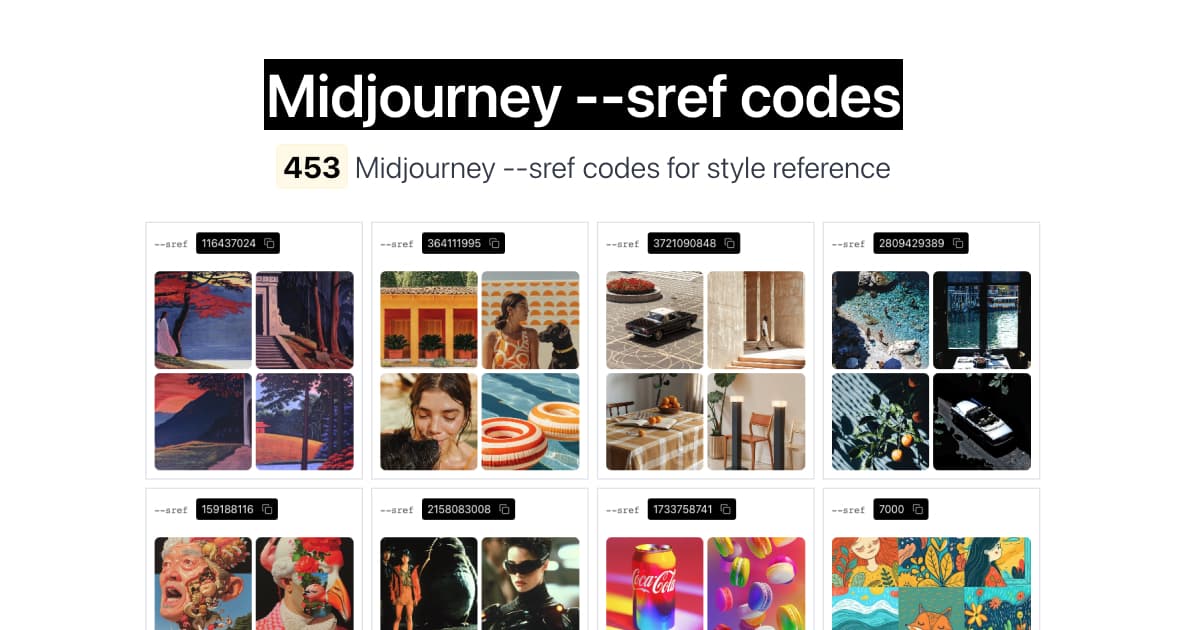
Midjourney Sref Codes Library
Midjourney Sref Codes Library offers a comprehensive collection of over 5600 --sref codes and style references specifically designed to enhance images generated using Midjourney. Users can explore a wide range of styles, including Anime, 3D, Cartoon, Whimsical, Realistic, Illustration, Comic, Watercolor, Cinematic, Sketch, and Retro. The platform allows users to copy sref codes for immediate use and offers premium access to unlock additional curated styles. It also provides a Midjourney Cheat Sheet, creative prompt ideas, and monthly updates with new sref codes, making it a valuable resource for Midjourney enthusiasts looking to refine their AI art.
DFT
DFT (Dynamic Fine-Tuning) is an open-source tool designed to enhance the generalization capabilities of Supervised Fine-Tuning (SFT) for Large Language Models (LLMs). Through mathematical analysis, DFT identifies and rectifies problematic reward structures implicitly encoded in standard SFT gradients. The core innovation lies in a single-line code modification that dynamically rescales the objective function with the token's probability, stabilizing gradient updates. This approach has demonstrated significant performance gains over standard SFT on various benchmarks, particularly in mathematical reasoning and code-focused tasks. DFT also shows competitive results in offline reinforcement learning settings, providing a simpler yet effective alternative. It is available on GitHub and integrates with popular frameworks like TRL, LLaMA-Factory, and ms-swift.
MidiTok
MidiTok is a Python package designed to tokenize MIDI and symbolic music files, making them suitable for deep learning models. Introduced at the ISMIR 2021 LBDs, it converts music into sequences of tokens for various AI tasks such as generation, transcription, and music information retrieval. The tool supports most known music tokenizations, including REMI, Compound Word, and Octuple, and is built to share common parameters and methods across them. MidiTok integrates with the Hugging Face Hub, allowing users to train tokenizers with Byte Pair Encoding (BPE), Unigram, and WordPiece, and offers data augmentation methods. It uses Symusic for reading and writing MIDI and abc files, and Hugging Face tokenizers for fast encoding.
distrifuser
Distrifuser is a training-free algorithm designed to significantly accelerate diffusion model inference for high-resolution image generation by leveraging multiple GPUs. It addresses the fragmentation issue seen in naive parallel approaches by employing synchronous communication for initial patch interaction, followed by asynchronous communication to hide overhead. This method allows for substantial speedups, achieving up to 6.1x faster generation with 8 A100 GPUs for 3840x3840 images, without sacrificing visual fidelity. The tool is integrated with NVIDIA's TensorRT-LLM and supported by ColossalAI, offering a robust solution for developers and researchers working with large-scale generative AI models. It provides APIs similar to Hugging Face's Diffusers, making it accessible for those familiar with the ecosystem.
Mysti
Mysti is an open-source VS Code extension designed to enhance coding productivity by integrating multiple AI coding agents. It allows developers to leverage the collective intelligence of up to 12 AI providers, including Claude Code, Codex, Gemini, and GitHub Copilot, either individually or in collaborative teams. Key features include a 'Brainstorm Mode' where two AIs debate solutions using various strategies, an '@-Mention System' for routing tasks to specific agents, and 'Autonomous Mode' with configurable safety controls. Mysti also offers 16 developer personas to shape AI thinking, intelligent plan detection, and context compaction to prevent token overflow. It works with existing AI subscriptions, requiring only the installation of relevant CLI tools.
ChatGPT Can Use Your Computer Now. Here's What That Actually Means.
This comprehensive article delves into the groundbreaking capability of AI models, such as OpenAI's GPT-5.4 and Anthropic's Claude, to natively interact with and operate computer environments. It explains the fundamental 'screenshot loop' mechanism that allows AI to analyze screens and execute actions like mouse movements and keyboard inputs. The piece provides an in-depth look at different implementations, including OpenAI's agent mode and Codex, Anthropic's three-track approach with Computer Use API, Claude Code, and Cowork, Perplexity Computer's multi-model orchestration, Google's Gemini Agent, and Microsoft's Copilot Studio. It compares their benchmarks, architectural differences, pricing, and target applications, from general computer use to specialized coding and enterprise solutions. The article emphasizes the rapid advancements and the implications for productivity and automation across various sectors.
HeroUI Pro
HeroUI Pro offers a comprehensive suite of premium UI components, templates, and AI tooling for React and React Native development. It focuses on providing a solid baseline for UI, ensuring design and code stay in sync from Figma to React and React Native. The platform includes real components like tables, calendars, modals, and complex forms, designed to be easily customizable to match any brand. HeroUI Pro also features AI Skills and MCPs (Multi-Component Prompts) to give AI agents deeper design context, enabling tools like Cursor and Claude to generate code using Pro components and adhering to your design system. With full-page templates for various applications like dashboards, mail, chat, and finance, it allows developers to start from a strong structure rather than a blank file, accelerating product development.
multi-agent-postgres-data-analytics
Multi-agent-postgres-data-analytics is an experimental and learning tool designed for building multi-agent systems, specifically focusing on interacting with PostgreSQL databases using natural language. This project, powered by GPT-4, Assistance API, AutoGen, Postgres, and Guidance, demonstrates how LLMs can enable reasoning and decision-making with reduced explicit rules. It's presented as a stepping stone for understanding multi-agent concepts, patterns, and building blocks, rather than a ready-to-use framework. The repository is accompanied by a video series that details its construction from scratch, diving deep into the complexities and principles of multi-agent software development. It highlights core technologies like OpenAI's GPT-4 and Assistance API, AutoGen for multi-agent frameworks, and Guidance for structured LLM responses.
OpenDAN-Personal-AI-OS
OpenDAN (Open and Do Anything Now with AI) is an open-source Personal AI Operating System designed to revolutionize the AI landscape by consolidating diverse AI modules into one place for personal use. It ensures unmatched interoperability, empowering users to create powerful AI agents such as butlers, assistants, personal tutors, and digital companions, all while retaining control. These agents can collaborate on complex challenges, integrate with existing services, and command smart (IoT) devices. OpenDAN supports rapid installation via Docker, making it compatible with various hardware environments like PC, Mac, Raspberry Pi, and NAS. Key features include switchable large language models (supporting local LLaMa), built-in AI agents like Jarvis (Personal Assistant) and Mia (Information Assistant), and connectivity via Telegram/Email. It also enables building local private knowledge bases and implementing workflows for complex tasks.
Local-first documentation MCP for AI agents
Neuledge Context is an open-source tool that provides local-first documentation for AI coding assistants, ensuring accurate and version-specific information. It offers hundreds of pre-built documentation packages for popular frameworks like React, Django, and Spring Boot, which can be installed in seconds. The tool indexes documentation into portable SQLite files with FTS5 full-text search, allowing for sub-10ms queries. Designed for developers, it runs entirely on your machine, eliminating cloud calls, rate limits, and offline limitations. It's compatible with AI assistants like Claude, Cursor, and VS Code Copilot via the Model Context Protocol (MCP), and supports indexing private documentation without sending data to third parties, ensuring privacy and security.
finBERT
finBERT is a specialized Natural Language Processing (NLP) model designed for financial sentiment analysis. It enhances the standard BERT language model by further training it on a large financial corpus, making it highly effective for understanding the sentiment expressed in financial texts. This tool is particularly useful for analyzing documents like earnings call transcripts, financial news, and reports to extract sentiment. It provides capabilities for training the model on specific datasets, such as the Financial PhraseBank, and offers a script to quickly get sentiment predictions from text files, including softmax probabilities for positive, negative, and neutral labels, and a calculated sentiment score. Developed as an intern research project by the Prosus AI team, finBERT is available on Hugging Face and is open-source under an Apache-2.0 license.
patchwork
patchwork is an open-source agentic AI framework designed for enterprise workflow automation, streamlining development tasks such as pull request reviews, bug fixing, and security patching. It operates via a self-hosted CLI agent and integrates with various large language models, including OpenAI, Google's Gemini, Groq, and Hugging Face models. Key components include reusable 'Steps' for atomic actions, customizable 'Prompt Templates' optimized for specific chores, and 'Patchflows' which are LLM-assisted automations combining steps and prompts. Patchflows can run locally or within CI/CD pipelines, offering out-of-the-box solutions for generating docstrings, auto-fixing vulnerabilities, and resolving issues. The framework supports open-source models and allows for flexible configuration through CLI arguments or YAML files, making it adaptable to diverse development environments.
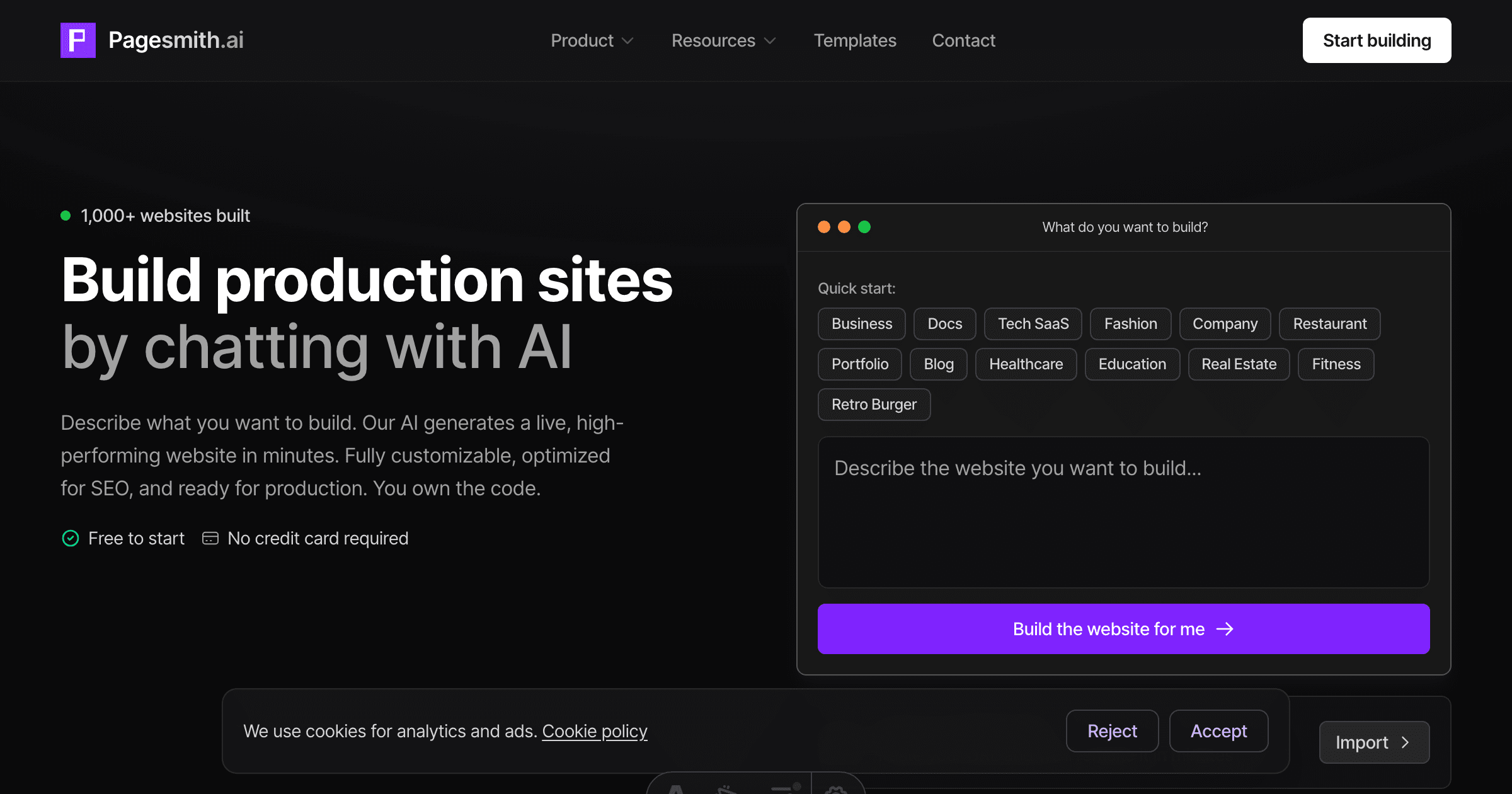
Pagesmith.ai v1.1
Pagesmith is an AI-powered website builder that creates fast, beautiful websites optimized for Google and AI search. Users describe their desired website in plain English, and the AI builds a complete, multi-page site with real HTML and Schema.org markup. Pagesmith sites are designed for high Lighthouse scores, ensuring quick loading times and better search rankings. A key differentiator is the ability to own and export your website's code, preventing vendor lock-in. It includes features like built-in hosting, a blog editor, and contact forms, making it a comprehensive solution for individuals and businesses looking for an SEO-friendly online presence without coding.
FlagEmbedding
FlagEmbedding is a comprehensive, open-source toolkit designed for retrieval and retrieval-augmented Large Language Models (LLMs). It offers a suite of functionalities for search and RAG applications, including various embedding models like BGE-VL for multimodal visual search and BGE-M3 for multi-linguality, multi-granularity, and multi-functionality. The toolkit also provides reranker models to enhance search accuracy. FlagEmbedding supports both inference and fine-tuning of these models, making it a versatile solution for developers and researchers working on advanced information retrieval systems. It is actively maintained with ongoing updates, tutorials, and community support, ensuring users have access to the latest advancements in the field.
Open WebUI
Open WebUI is a feature-rich, user-friendly, and extensible self-hosted AI platform designed for entirely offline operation. It supports various LLM runners like Ollama and OpenAI-compatible APIs, with a built-in inference engine for Retrieval Augmented Generation (RAG). Key features include effortless setup via Docker or Kubernetes, granular permissions, responsive design, full Markdown and LaTeX support, and hands-free voice/video call capabilities. It also offers a Model Builder, native Python Function Calling, persistent artifact storage, and advanced vector database support for RAG. The platform integrates with numerous web search providers and image generation/editing engines, ensuring a comprehensive AI deployment solution.

AIOTEL
AIOTEL is at the forefront of digital transformation, leveraging Digital Twins, IoT, Generative AI, 3D, and Extended Reality (XR) to innovate across various industries. The platform aims to empower businesses by enhancing operational efficiency, providing advanced visualization, and enabling real-time asset monitoring. By integrating these cutting-edge technologies, AIOTEL helps organizations achieve predictive analytics and drive significant improvements in their processes. This comprehensive approach supports the evolution towards Industry 5.0, focusing on creating intelligent, interconnected, and highly efficient operational environments. AIOTEL's solutions are designed to transform how industries and economies function, fostering innovation and sustainable growth.
PEFT
PEFT (Parameter-Efficient Fine-Tuning) is a state-of-the-art open-source library developed by Hugging Face, designed to make fine-tuning large pretrained models more accessible and cost-effective. Instead of fine-tuning all model parameters, PEFT methods adapt models by only adjusting a small number of extra parameters, drastically cutting down on computational and storage requirements. It integrates seamlessly with Hugging Face Transformers for easy model training and inference, Diffusers for managing adapters in diffusion models, and Accelerate for distributed training of very large models. PEFT allows users to achieve performance comparable to fully fine-tuned models with a fraction of the resources, making advanced AI model adaptation feasible on consumer hardware.
Smol Developer
Smol Developer, powered by E2B, offers isolated sandboxes that enable AI agents to securely execute code, process data, and utilize various tools. The platform provides SDKs for easy management of these environments, supporting both JavaScript/TypeScript and Python. Users can define custom templates for their sandboxes, controlling the base image, build commands, and environment variables. It features flexible pricing with a free Hobby tier and paid Pro and Enterprise options, allowing customization of CPU, RAM, and session length. E2B is designed for building and running AI agents with confidence, ensuring data protection through enterprise-grade security.
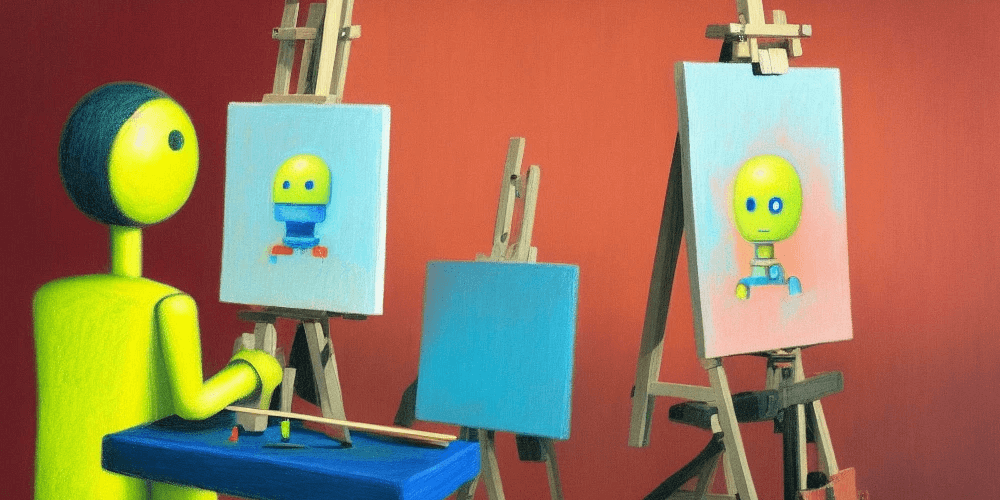
ArtBot
ArtBot is a free, no-login required platform for generating AI-created images and photos using Stable Diffusion. It operates on the AI Horde, a distributed open-source network of GPUs, making powerful generative AI art accessible to everyone. Users can create new images, utilize ControlNet for precise image manipulation, perform image-to-image transformations, and use inpainting for detailed edits. The platform also features a live paint tool, a community showcase, and tools for interrogating images and managing workers within the AI Horde. ArtBot aims to be a gateway for experimenting with generative AI art without any cost or registration barriers.
ruby-openai
ruby-openai is a comprehensive Ruby gem designed to simplify interaction with the OpenAI API. It allows developers to easily integrate advanced AI capabilities into their Ruby applications, supporting a wide range of OpenAI features such as chat completions, streaming responses, vision models, embeddings, and image generation with DALL·E 2 and DALL·E 3. The gem also offers compatibility with other AI services like Azure OpenAI, Deepseek, Ollama, Groq, and Gemini, providing flexibility for various deployment scenarios. Key functionalities include token counting, file management for fine-tuning and assistants, and real-time WebRTC conversations. It's highly configurable, allowing for custom timeouts, base URIs, and error logging, making it suitable for both quick tests and robust production environments.