
Data & Analytics
Browsing page 25 of AI tools for Data Labeling & Annotation in Data & Analytics. Sorted by confidence score — our independent quality rating.

reasoning-gym
reasoning-gym is a Python library designed for training reasoning models using reinforcement learning. It offers a comprehensive set of dataset generators and reasoning environments, allowing users to create and manage training data with adjustable complexity. The tool provides access to over 100 distinct tasks, covering a wide range of reasoning challenges. This makes it a valuable resource for researchers and developers focused on advancing AI's reasoning capabilities, particularly those working with reinforcement learning approaches. While the provided content is from GitHub's pricing page, it indicates that the underlying project is likely open-source or free to use, given its presence on GitHub and the lack of specific pricing for the 'reasoning-gym' itself, suggesting it's a development framework rather than a commercial product.

Babel Audio
Babel Audio is a human data company that collects high-quality speech data to help train and improve audio AI systems. It offers remote opportunities for individuals to earn money by participating in audio recording (conversations and voice prompts) and annotation (converting audio to text) projects. The work is flexible, allowing contributors to set their own hours and work remotely from anywhere. Participants are paid weekly, with rates varying by project and language, and can earn extra for completing challenges. A computer, stable internet connection, and a decent-quality microphone are sufficient to get started.
Satellite-Imagery-Datasets-Containing-Ships
Satellite-Imagery-Datasets-Containing-Ships is a comprehensive GitHub repository that curates radar and optical satellite datasets specifically designed for ship detection, classification, semantic segmentation, and instance segmentation tasks. These datasets are invaluable for researchers and developers working in computer vision, machine learning, remote sensing, and maritime analysis. The repository details various datasets, including SSDD, OpenSARship, SAR-Ship-Dataset, AIR-SARShip, HRSID, LS-SSDD, and FUSAR-Ship, providing information on their authors, year, tasks supported, and direct access links. Each dataset entry includes specifics like image dimensions, spatial resolutions, polarization types, and annotation formats, making it a crucial resource for developing and evaluating algorithms for maritime surveillance and naval operations.
techniques
The 'techniques' GitHub repository serves as a comprehensive resource for deep learning methods specifically tailored for satellite and aerial imagery analysis. It provides an organized overview of various techniques designed to handle the unique challenges of processing large-scale image datasets. The repository focuses on methodologies for identifying diverse object classes within these images, making it a valuable asset for researchers and developers in the field. As an open-source project, it is freely accessible for both research and development purposes, fostering collaboration and advancement in the application of AI to geospatial data.
rabbitAI
rabbitAI specializes in delivering game-changing training data for computer vision engineers, focusing on highly-accurate real-world ground truth capturing solutions for reliable and safe AI. The platform provides device-specific ground truth to accelerate algorithm learning, allowing them to specialize efficiently on specific hardware. This results in more room for optimization, reduced hardware costs, quicker inference times, and shorter development cycles. rabbitAI's innovative recording technology captures complex and dynamic scenarios with unparalleled resolution, extracting 3D models for real-world image data with 1mm precision. It also enhances existing real-world data by deriving additional material through data-driven and realistic computer graphics, offering 100x more data variance through edge-case augmentation.
PublicAI
PublicAI is a Web3-based AI data infrastructure that facilitates a Train-To-Earn network, allowing individuals to contribute to AI development and earn rewards. The platform offers a Data Hub for earning through data tasks and a Data Hunter Extension for content contribution. PublicAI has secured significant funding to build the human layer of AI, ensuring high data quality through a decentralized network of verified contributors, skill validation, and a stake-slashing mechanism. It provides competitive workforce access, quality control via on-chain staking, and cost efficiency. The platform supports collecting and annotating multi-modal data, including text, audio, video, and mapping data, with an AI-assisted workflow for data labeling and model evaluation.
Blip Image Captioning Large
Blip Image Captioning Large is an AI tool hosted on Hugging Face that provides descriptive captions for uploaded images. It allows users to easily generate text descriptions for their visual content, with the added flexibility of adjusting the token range to control the length of the generated caption. This tool is particularly useful for tasks requiring automated image understanding and textual representation, such as content creation, research, or educational applications. Its CPU-based operation makes it accessible for various users, offering a straightforward interface to transform images into descriptive text.
CountGD_Multi-Modal_Open-World_Counting
CountGD_Multi-Modal_Open-World_Counting is an AI tool designed for open-world object counting in images. It offers a flexible multi-modal input approach, allowing users to upload an image and specify the object to count either by typing its name or by drawing bounding boxes around example instances within the image. The application then processes this input to return the total number of the specified object. This tool is particularly useful for computer vision tasks requiring precise object enumeration in diverse and unconstrained environments, making it valuable for researchers and developers working on image analysis and quantitative data extraction.
Detic
Detic is an object detection tool hosted on Hugging Face Spaces, developed by akhaliq. It leverages Gradio for its user interface, enabling users to interactively detect objects within images. While the current live website indicates a runtime error due to insufficient hardware capacity, the tool's core functionality is designed for object detection. The JSON-LD structured data suggests it is an AI application, indicating its purpose in machine learning tasks. Although specific features are not detailed on the current page, its nature as an object detection tool implies capabilities for identifying and localizing various objects within visual data.
aiconix GmbH
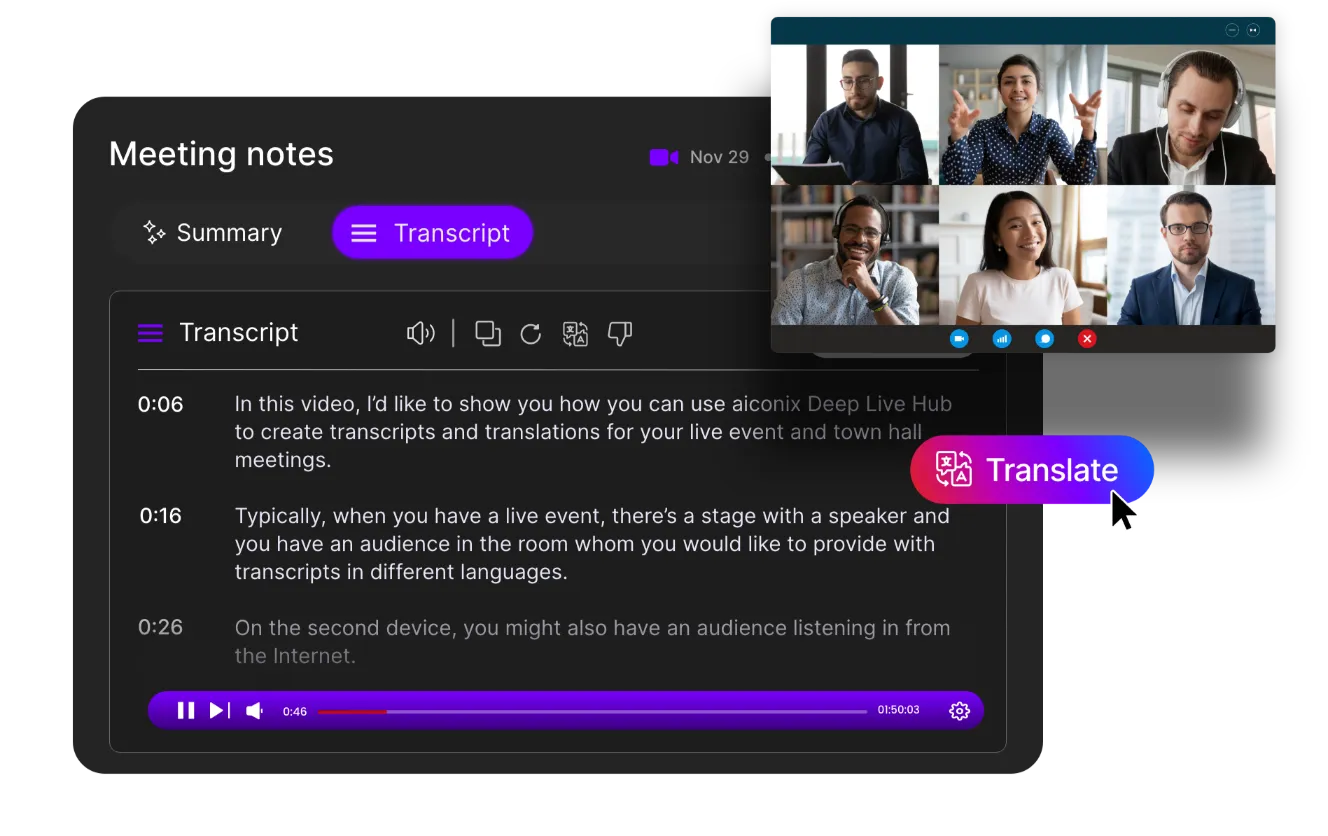
DeepVA is a composite AI platform designed for media companies to extract comprehensive information from images, videos, and live streams. It automates complex AI processes like tagging, indexing, and searching, significantly enhancing content management, accessibility, and workflow efficiency. The platform supports both cloud and on-premises deployments, ensuring data security and compliance with regulations like GDPR and the AI Act. Key features include Deep Media Analyzer for insights, Deep Model Customizer for creating custom AI models, and Deep Live Hub for AI-based live subtitling and translation. DeepVA integrates seamlessly with existing workflows via an API-centric approach, making it ideal for media asset management, workflow engines, OTT platforms, newsroom tools, and event platforms.
Function Calling Datasets Explorer
Function Calling Datasets Explorer is a web-based tool hosted on Hugging Face Spaces, designed to facilitate the exploration and viewing of datasets within a specified Hugging Face collection. Users can easily browse through various datasets using 'Previous' and 'Next' buttons, making it straightforward to discover and analyze data relevant to function calling in AI applications. This tool is particularly useful for researchers, developers, and data scientists who work with machine learning models and require quick access to diverse datasets for training, testing, or understanding function calling mechanisms. While the tool itself is free to use, it operates within the Hugging Face ecosystem, which offers various paid tiers for enhanced storage, compute, and advanced features.
labelCloud
labelCloud is a lightweight, open-source tool designed for labeling 3D bounding boxes within point clouds. It supports two primary labeling modes: picking, for precise front-top edge selection, and spanning, for defining length, width, and height by selecting four vertices. The tool offers extensive correction options for translation, dimension, and rotation, including a 'z-Rotation Only Mode' that can be deactivated for 9 DoF-Bounding Boxes. Beyond bounding box labeling, labelCloud also facilitates semantic segmentation based on bounding boxes. It boasts broad compatibility with various point cloud file formats for import (e.g., .pcd, .ply, .xyz) and supports multiple label export formats like centroid_rel, centroid_abs, vertices, and KITTI. Users can easily configure the software via `config.ini` and `_classes.json` files, making it adaptable to diverse use cases in 3D object detection and computer vision.

Sureform
Sureform specializes in collecting high-quality multimodal human data, primarily focusing on video, to advance the development of AI models. This data is crucial for building AI systems that can interact more naturally and effectively with the real world, particularly in the fields of multimodal and embodied AI. By gathering diverse human interactions across various environments, Sureform provides the essential training data needed for the next generation of intelligent AI applications. The platform aims to support the creation of AI models capable of understanding and responding to complex human behaviors and environments.

Visage Technologies
Visage Technologies is an expert in building efficient AI solutions, with over 20 years of experience in consultancy and engineering. They specialize in AI/ML solutions optimized for performance and compliance, focusing on custom edge AI development with high accuracy and low latency. Their services span from technology and architecture design to prototyping, project management, and data management. They leverage advanced hardware, platforms, and expertise in various cameras, sensors, and operating systems to develop AI-driven solutions for embedded systems. Visage Technologies also offers proprietary SDKs like visage|SDK™ (FaceTrack, FaceAnalysis, FaceRecognition) and makeup|SDK for face-related computer vision applications, used by over 300 clients worldwide.
This tutorial
This JAX tutorial offers in-depth guidance on utilizing distributed arrays and automatic parallelization, crucial for high-performance numerical computing within the AI domain. It is specifically designed to assist machine learning researchers and engineers in optimizing their computational workflows. By mastering the techniques presented, users can efficiently develop complex models and conduct advanced scientific simulations using the JAX framework. The tutorial aims to enhance computational efficiency, enabling faster iteration and more powerful AI development.
BiomedParse
BiomedParse is an open-source foundation model developed by Microsoft for comprehensive biomedical image analysis. It supports joint segmentation, detection, and recognition of biomedical objects across nine diverse modalities, including CT, MRI, Ultrasound, and PET. The tool offers a unified approach, consolidating these tasks to provide an efficient and flexible solution for researchers and practitioners. The v2 release features larger pretraining data, improved segmentation performance for small objects using the BoltzFormer architecture, and state-of-the-art 3D segmentation performance with built-in object existence detection. It is particularly useful for analyzing complex biomedical data and supports both 2D and 3D imaging types.
Lightning Rod: Training Data From News
Lightning Rod is an AI tool designed to build domain-expert AI models from messy historical data and public sources. It automates the creation of verified training datasets, eliminating the need for extensive hand-labeling. The platform processes raw documents and public feeds like news, SEC filings, and Wikipedia to generate high-quality, citable QA pairs and other data types. It features an agent-driven workflow where users describe their needs, and the agent handles source gathering, question generation, outcome resolution, and context addition. Lightning Rod provides full provenance with citations and source documents, and offers a simple, powerful API for integration, allowing for rapid dataset generation and model training.
Raiinmaker: Earn With AI
Raiinmaker is a platform designed to enhance the performance of AI video models through a combination of real human validators and AI-driven data quality feedback. It provides natively captured, meta-data rich, ethically sourced, and licensed on-demand videos for training AI models. The platform activates a global network of over 300,000 human contributors across 190 countries to efficiently and safely train data. Key features include custom data pipelines for specific requirements, original and licensed video data to ensure ethical sourcing and legal compliance, and a real-time feedback loop for continuous model evaluation and improvement. Raiinmaker supports multiformat and multimodal readiness, catering to needs from LLMs with video-grounded context to next-gen vision models.
Distilabel Synthetic Data Pipeline Finder
Distilabel Synthetic Data Pipeline Finder is a specialized tool hosted on Hugging Face Spaces, designed to assist users in discovering and exploring synthetic data pipelines. This application enables users to search through a vast collection of dataset cards and viewers available on the Hugging Face platform. Users can efficiently filter their search results based on various criteria such as likes, downloads, and dataset size, making it easier to pinpoint the most suitable synthetic data for their needs. While the live application currently shows a runtime error, its intended purpose is to streamline the process of finding and evaluating synthetic data resources for machine learning and data science projects.
Xfeat - Feature Matching
Xfeat - Feature Matching is an application designed to analyze and compare two images by identifying and highlighting their common features. Users can upload two images, and the tool will process them to pinpoint and visually represent the matching elements, providing a clear indication of their similarity. This capability is particularly useful for tasks requiring visual comparison, such as quality control, object recognition, or even creative design analysis. Hosted on Hugging Face Spaces, Xfeat offers an accessible platform for anyone needing to quickly assess visual correspondence between different images.
Deepfake Image Detection
Deepfake Image Detection is an AI tool hosted on Hugging Face Spaces, designed to analyze uploaded face images and determine if they are real or AI-generated deepfakes. The application provides confidence levels for its detection and visually highlights the specific areas of the image that the model focused on during its analysis. This feature helps users understand the basis of the detection. While the tool itself is accessible, its underlying infrastructure and advanced features are part of Hugging Face's broader paid offerings, which include various hardware options and inference endpoints for more demanding use cases.
EVACLIP
EVACLIP is a Hugging Face Space designed for comparing powerful zero-shot image classification models. Users can upload an image and provide a list of labels to classify it, receiving classification results from both the EVACLIP and CLIP models. This tool is particularly useful for AI researchers and machine learning engineers who need to evaluate the performance of different image classification models without specific training. It aids in understanding how various models interpret and categorize images based on provided labels, helping in the selection of the most suitable model for a given application. The platform provides a direct comparison, highlighting the strengths and differences between the models.
Paligemma2 Detection
Paligemma2 Detection is an AI-powered tool designed for object detection and segmentation within images and videos. Users can upload their media files and specify target objects using a text prompt. The application then processes the input, identifying and highlighting the requested objects with annotations. This tool is particularly useful for tasks requiring precise object localization and segmentation, leveraging the capabilities of the Paligemma2 model. It provides a straightforward interface for applying advanced computer vision techniques to various visual data.
CLIP Embedding Explorer
The CLIP Embedding Explorer is a specialized tool designed for visualizing and exploring embeddings created by the CLIP (Contrastive Language-Image Pre-training) model. This application, built using Gradio, provides a platform for users to delve into the numerical representations of both images and text, understanding how the CLIP model interprets and relates different modalities. It is particularly useful for researchers, data scientists, and developers working with multimodal AI, offering insights into the model's internal workings and the relationships it identifies between visual and linguistic data. The tool's MIT license ensures flexible use and encourages community contributions.