
Data & Analytics
Browsing page 14 of AI tools for Statistical & Scientific in Data & Analytics. Sorted by confidence score — our independent quality rating.

codespaces-jupyter
codespaces-jupyter offers a ready-to-use development environment within GitHub Codespaces, specifically tailored for machine learning and data science projects. It comes pre-configured with Python and Jupyter notebooks, allowing users to immediately dive into their work without extensive setup. This tool provides a blank canvas for new projects, enabling users to explore and experiment with data science concepts. The environment is self-contained within a single codespace, offering flexibility for development. Users can choose to publish their work to a GitHub repository when ready or simply delete the codespace if it was for exploration, making it ideal for quick prototyping and learning.
clip-as-service
clip-as-service is an open-source tool designed for scalable embedding, reasoning, and ranking of images and text using the CLIP model. It can be easily integrated as a low-latency, high-scalability microservice into neural search solutions. Key features include fast serving of CLIP models with TensorRT, ONNX runtime, and PyTorch, offering up to 800QPS. It supports elastic scaling of multiple CLIP models on a single GPU with automatic load balancing. The tool provides an easy-to-use, minimalist API for both image and sentence embedding, supporting async clients and various protocols like gRPC, HTTP, and WebSocket. It also integrates smoothly with the Jina and DocArray neural search ecosystem, enabling the rapid building of cross-modal and multi-modal solutions.
ZenteiQ.ai
ZenteiQ.ai is an advanced AI platform designed to revolutionize engineering design by integrating physics-native AI with Scientific Foundation Models. It specializes in transforming complex simulation and experimental data into actionable intelligence, accelerating discovery, design, and industrial innovation across various sectors. The platform's capabilities are highlighted by its ability to handle intricate equations like the Heat Equation, Wave Equation, Navier-Stokes, and Schrödinger, indicating its application in highly technical and scientific domains. ZenteiQ.ai aims to provide intelligent surrogates for engineering design, enabling more efficient and accurate development processes.
solo-learn
solo-learn is an open-source library dedicated to self-supervised methods for unsupervised visual representation learning, built on PyTorch Lightning. It aims to offer state-of-the-art techniques within a consistent and comparable framework, while also incorporating various training optimizations. The library is self-contained, allowing for flexible integration of its models into other projects. Key features include a wide array of self-supervised methods like Barlow Twins, BYOL, DINO, MAE, MoCo V2+, SimCLR, and VICReg, alongside support for various backbones such as ResNet, ViT, and ConvNeXt. It also boasts increased data processing speed with Nvidia Dali, flexible augmentations, and comprehensive evaluation methods including online/offline linear evaluation and K-NN evaluation. The tool is ideal for machine learning researchers and developers working on visual representation learning tasks.

Mind Webs Ventures
Mind Webs Ventures is a deep tech company specializing in processing data to provide governments and MSMEs with smart policy and decision-making capabilities. Their flagship product, DataSense, answers spatial intelligence questions across climate, infrastructure, ESG, regulation, and research. Users can explore purpose-built tools to turn data into powerful, actionable intelligence, helping them work smarter, faster, and with deeper insight. The platform allows users to connect their own data for custom questions and offers features like in-depth analytics, automated schedulers, decision assist with contextual AI, intelligent segmentation, risk intelligence, and predictive forecasting. Mind Webs Ventures emphasizes trust, data-driven insights, scalability, and enterprise-grade security.

4Point AI (Techstars FW24)
4Point AI is a frontier technology lab building toward subsurface AGI through its Spatial Intelligence platform, offering an operating system for modern subsurface decisions. It serves investors, mining operators, and governments by providing decision-grade geological insights. The platform leverages Spatial Intelligence to integrate surface signals and physics constraints for subsurface realization, generating decision vectors, uncertainty maps, target ranking, drill prioritization, and risk controls. It aims to solve problems like data scarcity, prediction instability, and broken decision chains in traditional exploration programs, fundamentally rewriting how exploration programs are run by moving uncertainty management upstream.
Internlm2 Math 7b
Internlm2 Math 7b is an advanced language model specifically engineered to address math-related queries. Users can input their questions or instructions and receive comprehensive, detailed responses. The tool offers an interactive interface, allowing for adjustments to settings such as token length, which can influence the depth and scope of the generated answers. While the current live website indicates a runtime error, the tool's core functionality is centered around providing AI-powered assistance for mathematical problem-solving, making it suitable for educational, research, and analytical applications.
Preferred Computational Chemistry, Inc.
Matlantis is an atomic-level AI simulator that provides fast, accurate insights for experimental discovery in materials science. It leverages a fusion of materials science and AI to enable atomistic simulations with accuracy comparable to quantum chemical calculations, but at significantly higher speeds. Matlantis can simulate chemically and structurally complex materials without restrictions on elemental composition or arrangement. This tool transforms materials research by operating ahead of experiments, drastically reducing development time from months to seconds. Key features include its core AI model PFP, applied technologies like LightPFP and Matlantis CSP, and comprehensive support for implementation and utilization.
AutoGL
AutoGL is an open-source AutoML framework and toolkit specifically designed for machine learning on graphs. It enables researchers and developers to easily and quickly conduct automated machine learning tasks on graph datasets. The framework supports various graph-based machine learning tasks through its auto solver, which integrates five main modules: auto feature engineer, neural architecture search (NAS), auto model, hyperparameter optimization (HPO), and auto ensemble. AutoGL is compatible with popular graph libraries like PyTorch Geometric (PyG) and Deep Graph Library (DGL), supporting tasks such as node classification, link prediction, and graph classification. It also serves as a flexible framework for implementing and testing custom AutoML or graph-based machine learning models.
Bag_of_Tricks_for_Image_Classification_with_Convolutional_Neural_Networks
Bag_of_Tricks_for_Image_Classification_with_Convolutional_Neural_Networks is an open-source project that provides a platform for experimenting with and implementing various training tricks to improve the accuracy of image classification using Convolutional Neural Networks (CNNs). Inspired by the paper "Bag of Tricks for Image Classification with Convolutional Neural Networks," this repository tests popular techniques such as Xavier initialization, warmup training, no bias decay, label smoothing, random erasing, linear scaling learning rate, and cosine learning rate decay. It uses the CUB_200_2011 dataset and a VGG16 network for experiments, offering a practical resource for researchers and developers looking to optimize their CNN models.
shapiq
shapiq is a Python package designed for machine learning explainability, specifically focusing on Shapley Interactions and Shapley Values. It provides tools for approximating any-order Shapley interactions, benchmarking game-theoretical algorithms, and explaining feature interactions within model predictions. The library extends the functionality of the well-known SHAP package, offering a more comprehensive view of machine learning models by quantifying synergy effects between features, data points, or weak learners. It supports various interaction indices like k-SII, SV, FBII, and FSII, and includes functionalities for visualizing feature interactions through network plots. shapiq is intended for Python 3.12 and above, and can be installed via uv or pip.
graph-learn
Graph-Learn, formerly AliGraph, is a robust and distributed framework designed for the development and application of large-scale graph neural networks (GNNs). Developed by Alibaba, it has been successfully deployed in various industrial scenarios such as search recommendation, network security, and knowledge graphs. The framework offers a comprehensive solution encompassing both GNN training and online inference services. Its training component supports sampling on batch graphs and incremental GNN model training, compatible with TensorFlow and PyTorch. The online inference service, Dynamic-Graph-Service, ensures real-time sampling on dynamic graphs with streaming updates, boasting P99 latency within 20ms for large-scale graphs. It provides Python, C++, and Java interfaces for flexible integration.
ydata-synthetic
ydata-synthetic is an open-source Python package designed for generating synthetic tabular and time-series data. It incorporates state-of-the-art generative models, including various GAN architectures like CTGAN, WGAN, and TimeGAN, as well as Gaussian Mixture models. The tool provides a low-code experience for quick data generation and features a Streamlit-based UI for an intuitive workflow, from training models to generating and profiling synthetic data samples. It supports diverse applications such as privacy compliance, bias removal, dataset balancing, and augmentation, making it a versatile solution for data scientists and developers working with sensitive or limited datasets.
Pixstart
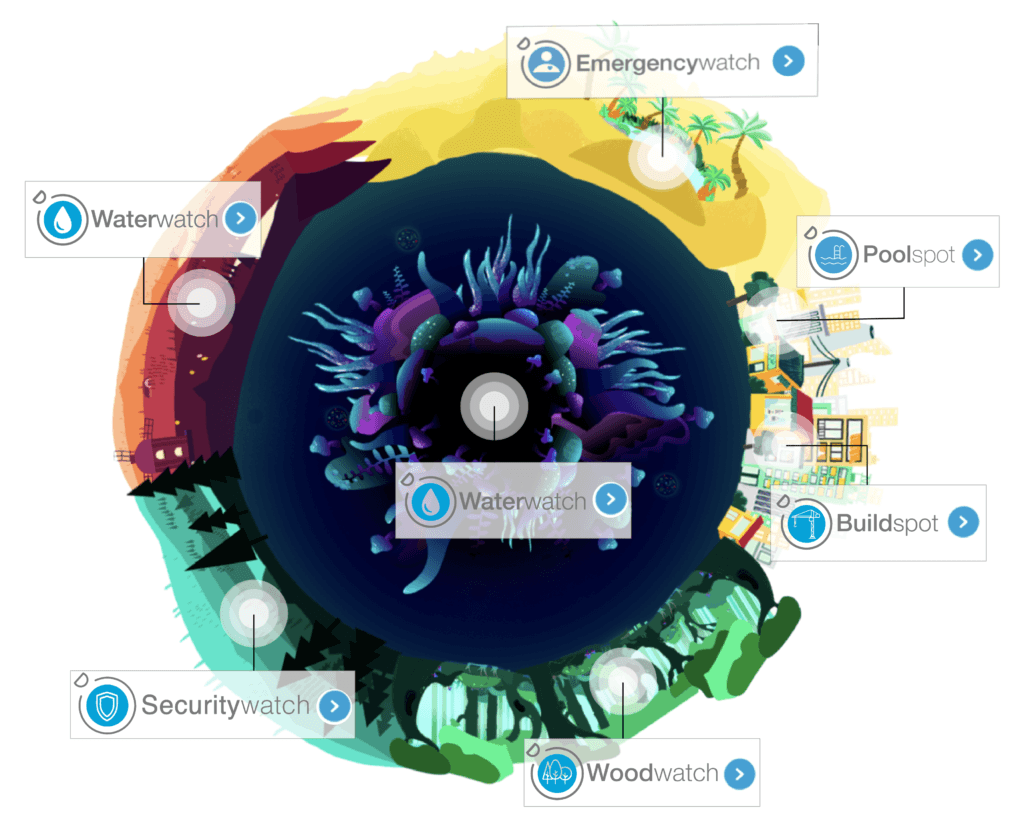
Pixstart offers innovative solutions for public and private actors to better manage and monitor the ecology of territories using satellite data and AI. The tool helps track the evolution of environments, providing insights into water quality, forest health, and complex environmental zones. It enables users to monitor natural resources and exploitation infrastructures, conduct comprehensive environmental diagnostics, and receive advice on actions to take. Pixstart's tools assist in identifying and adjusting best practices to support and improve ecosystems, addressing challenges posed by climate change and human activities with significant economic and health repercussions.

RoadGauge Ltd
RoadGauge Ltd offers an innovative solution for 3D road analysis, leveraging AI technology and readily available hardware like GoPro cameras. Users can mount a camera, record a drive, and upload the video to RoadGaugeAI for processing. The platform then reconstructs the road in 3D, providing sectional profiles with defects measured and geotagged to millimeter accuracy. It identifies safety hazards, profiles road surfaces, and helps locate, classify, and manage transport assets. This cost-effective system allows users to own their hardware, reduce inspection capital expenses, and receive survey results in various formats like PDF, KML, GPX, and CSV, with fast delivery times.

Valo Health
Valo Health is a technology company revolutionizing drug discovery and development by integrating human and machine intelligence. Their approach combines real-world data, AI, advanced causal inference techniques, and predictive chemistry to create a powerful engine for accelerating life-changing cures. Valo harnesses AI to find patterns in large-scale human data, identify novel disease targets, and rapidly engineer novel small molecules through human causal biology and closed-loop chemistry. This deep integration across biology, chemistry, and engineering disciplines allows them to explore vast chemical spaces and advance promising lead series into candidates, ultimately aiming to reduce costs and failure rates in drug development.
AI-basketball-analysis
AI-basketball-analysis is an AI-powered web application and API designed to analyze basketball shots and shooting poses. It leverages object detection and the OpenPose framework to provide detailed insights into player movements, shot accuracy, and body keypoints. Users can upload basketball videos for analysis or submit POST requests to its API to receive JSON responses with detected keypoints and other data. The tool identifies successful and missed shots, tracks the basketball, and analyzes elbow and knee angles to determine release angles and times. It's built on a Faster R-CNN architecture, trained on the COCO dataset, and offers features like shot counting, pose analysis, and a detection API. The project is intended for noncommercial research use only due to OpenPose's license.
causalml
CausalML is an open-source Python package developed by Uber for uplift modeling and causal inference using machine learning algorithms. It offers a comprehensive suite of methods to estimate the Conditional Average Treatment Effect (CATE), allowing users to understand the causal impact of interventions on outcomes for individuals with observed features. The package is designed to work with both experimental and observational data, making it versatile for various applications. Key use cases include optimizing campaign targeting by identifying customers most likely to respond favorably to ads and personalizing engagement strategies by estimating heterogeneous treatment effects for optimal recommendations. CausalML provides a standard interface, simplifying the process of applying advanced causal analysis techniques.
Gemma3n Visual (Audio) Question Answering
Gemma3n Visual (Audio) Question Answering is an AI tool that enables users to interact with images using audio queries. By uploading an image and speaking a question, users receive a text-based answer. This functionality makes it a valuable resource for multimodal AI research, allowing for exploration into how AI can process and respond to combined visual and auditory inputs. The tool is built as a Hugging Face Space, indicating its accessibility and potential for community-driven development and experimentation in the field of AI agents and automation.
Metrics
Metrics is an open-source toolbox offering implementations of various supervised machine learning evaluation metrics across multiple programming languages. Developers and researchers can utilize this tool to assess model performance in Python, R, Haskell, and MATLAB/Octave environments. It includes a wide array of metrics such as Absolute Error, Area Under the ROC, F1 Score, Log Loss, Mean Absolute Error, Mean Squared Error, and Root Mean Squared Error. The project is currently in a beta release, focusing on ensuring compatibility and functionality across its supported language repositories. It aims to provide a comprehensive suite for evaluating machine learning models.
sentiment
sentiment is a Node.js module designed for efficient sentiment analysis, leveraging the AFINN-165 wordlist and Emoji Sentiment Ranking. It provides a robust solution for analyzing arbitrary blocks of input text, offering features like the ability to append and overwrite word/value pairs from the AFINN wordlist. The module also supports adding new languages and defining custom scoring strategies for negation and emphasis on a per-language basis. Benchmarks indicate that sentiment is significantly faster than alternative implementations, making it a strong choice for performance-critical applications. It also includes validation against UCI datasets to ensure accuracy.

SkyFi
SkyFi is an Earth intelligence platform offering instant access to satellite imagery and geospatial analytics. Users can order and task satellite imagery and SAR from top providers, access a vast archive of data, and download geospatial data and analytics through a unified platform. Key features include advanced analytics like object detection and hyperspectral signature analysis, commercial imagery tasking, and access to open data. SkyFi also provides specialized access to constellations like Vantor and Planet SkySat, as well as Maritime AIS data and ICEYE US Direct SAR intelligence, catering to diverse needs from agriculture to military and defense.
word2vec-api
word2vec-api is a straightforward web service designed to expose word embedding models through a simple API. Built upon the Gensim Word2Vec implementation, it supports models in both Word2Vec text and binary formats. The service is easy to launch and configure, requiring users to specify the model path, host, and port. It provides various endpoints for common word embedding tasks such as calculating similarity between words, finding most similar words, and retrieving word vectors. This tool is particularly useful for developers and data scientists who need to integrate word embeddings into their applications or research projects without building the serving infrastructure from scratch.
approachingalmost
approachingalmost is a GitHub repository that serves as a companion to the book "Approaching (Almost) Any Machine Learning Problem." This resource offers valuable insights and practical code examples for individuals looking to tackle various machine learning challenges. While the repository does not share the complete code from the book, it provides environment files and references to datasets, encouraging users to code along and understand the concepts. It is designed to support machine learning practitioners and data scientists in their learning journey, offering a structured approach to solving complex problems. Users can find links to purchase the book from various regional Amazon stores and Pothi, as well as instructions for setting up the development environment.