
Data & Analytics
Browsing page 9 of AI tools for Statistical & Scientific in Data & Analytics. Sorted by confidence score — our independent quality rating.

node
Node provides a supplementary code for Neural Oblivious Decision Ensembles, designed for deep learning on tabular data. This tool specializes in learning deep ensembles of oblivious differentiable decision trees, offering a robust approach to data analysis. While it can run on CPU, optimal performance is achieved with a GPU, which significantly reduces processing time. The implementation is noted to be memory inefficient, potentially requiring substantial GPU memory. It is compatible with popular Linux x64 distributions and MacOS, with Docker recommended for other systems. Users need Python (Anaconda recommended) and specific Torch versions to run the provided notebooks, which showcase classification and regression scenarios.
apic.ai
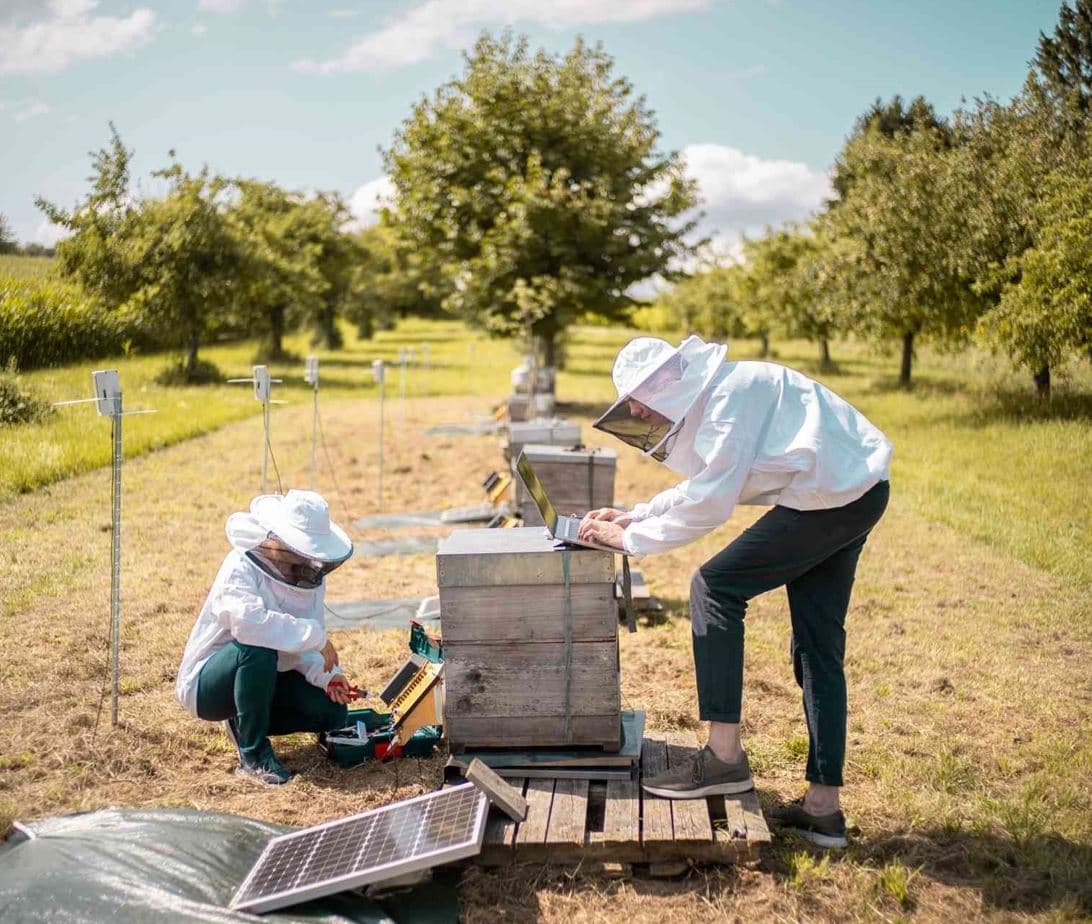
apic.ai is a leading specialist in automated pollinator monitoring, leveraging artificial intelligence and edge computing to provide reliable and fully automated behavioral assessments of bees and bumblebees. Their minimal-invasive camera system, installed at hive entrances, visually detects all movement in and out of the colony. The collected video footage is analyzed using AI algorithms, providing real-time data on activity, foraging behavior, pollen diversity, mortality, and individual size. This technology helps manufacturers and testers of plant protection products improve risk assessment, enables seed producers to develop practices that enhance crop pollination, and supports companies in designing pollinator-friendly habitats. The scientific approach ensures validated methods and verifiable results, making even subtle effects of substances and environmental factors visible.
pymde
PyMDE is a Python library designed for computing vector embeddings for finite sets of items, such as images, biological cells, or network nodes. Built with PyTorch, it offers a simple yet general framework called Minimum-Distortion Embedding (MDE), allowing users to easily recreate well-known embeddings or develop new ones tailored to specific applications. PyMDE is competitive in runtime with more specialized embedding methods, with even faster performance on a GPU. It features fast preprocessing routines implemented in Rust, including approximate and exact k-nearest neighbor algorithms and breadth-first search for all-pairs shortest paths. PyMDE can be used to visualize datasets, generate feature vectors for supervised learning, compress high-dimensional data, and draw graphs efficiently.
Deix S.r.l.
Deix S.r.l. specializes in developing innovative algorithms and applications by leveraging expertise in mathematical modeling, artificial intelligence, and optimization. They provide solutions that enable companies to make informed decisions and identify new business opportunities. Deix offers both ready-to-use products and tailor-made solutions designed to meet specific business needs. Their approach integrates internal knowledge and data to deliver high-quality, efficient results, as evidenced by client testimonials highlighting speed, technical expertise, and proactivity in solving complex challenges.
Falcondale
Falcondale specializes in developing applied quantum machine learning and optimization solutions designed to deliver real-world impact. The company focuses on leveraging quantum intelligence to solve complex problems across various industries. Falcondale aims to provide a competitive edge through its advanced quantum technologies, offering solutions that go beyond traditional computational methods. Their expertise lies in translating cutting-edge quantum research into practical, deployable applications for businesses and organizations seeking innovative data analysis and optimization capabilities.
synthetic-personality-dataset
The synthetic-personality-dataset offers a high-fidelity collection of 10,000 synthetic records designed to simulate the behavioral and social patterns of introverted and extroverted individuals. Generated using Syncora.ai's synthetic data engine, this dataset ensures zero privacy risk while preserving real-world behavioral distributions. It is ideal for researchers, data scientists, and AI developers focused on personality prediction, behavioral modeling, machine learning experiments, and social science research. The dataset includes features like time spent alone, social event attendance, social media posting habits, and a personality target label, making it suitable for various analytical and ML use cases without compromising privacy or ethical concerns.
VideoLLaMA2
VideoLLaMA2 is an open-source project designed to significantly advance spatial-temporal modeling and audio understanding within video-Large Language Models (LLMs). It offers a comprehensive framework for researchers and developers to explore and build upon state-of-the-art video analysis capabilities. The tool provides various pre-trained models, including vision-only and audio-visual checkpoints, supporting tasks such as multi-choice video QA, video captioning, open-ended video QA, and audio-visual QA. It includes detailed instructions for installation, running online and offline demos, and quick-start guides for training and evaluating custom VideoLLaMA2 models using datasets like VideoLLaVA. The project emphasizes its top performance on leaderboards like MLVU and VideoMME for ~7B-sized VideoLLMs.
VideoMamba
VideoMamba is an innovative open-source state space model designed for efficient video understanding, specifically addressing the dual challenges of local redundancy and global dependencies in video data. It adapts the Mamba architecture to the video domain, overcoming limitations found in existing 3D convolution neural networks and video transformers. Its linear-complexity operator enables efficient long-term modeling, which is crucial for processing high-resolution and extended video content. The tool demonstrates scalability in the visual domain without requiring extensive dataset pretraining, thanks to a novel self-distillation technique. It also exhibits sensitivity for recognizing fine-grained short-term actions, superiority in long-term video understanding, and compatibility with multi-modal contexts, setting a new benchmark for comprehensive video analysis.
NC State Data Science and AI Academy
The NC State Data Science and AI Academy provides comprehensive resources for individuals and organizations looking to enhance their capabilities in data science and artificial intelligence. The academy offers a range of courses designed to build foundational knowledge and advanced skills, alongside consulting services to help apply these concepts in real-world scenarios. It also supports research enablement, fostering innovation and practical application of data science principles. The academy's mission is to empower its participants to think critically and work effectively with data, exploring various applications of data science and AI across different domains.
smile
SMILE (Statistical Machine Intelligence and Learning Engine) is a robust and comprehensive machine learning framework implemented in Java, with convenient APIs available for Scala and Kotlin developers. It offers a wide array of algorithms and tools for statistical machine intelligence and learning applications, making it suitable for various data science tasks. The framework is designed for performance and flexibility, supporting Java 8 and newer versions. It empowers developers to build, train, and deploy machine learning models efficiently, catering to both research and production environments. SMILE's extensive feature set covers areas such as classification, regression, clustering, association rule mining, and more, providing a solid foundation for advanced analytical projects.
similarities
similarities is a comprehensive, open-source toolkit designed for advanced similarity calculation and semantic search. Built with Python 3, it offers out-of-the-box functionality for various tasks, including text-to-text, text-to-image, and image-to-image searches, capable of handling billion-level datasets. The toolkit features semantic matching models based on text2vec for text similarity and search, supporting multiple SentenceBERT-like pre-trained models across various languages. It also includes literal matching models like Word2Vec and BM25. For image and cross-modal similarity, similarities leverages CLIP models, enabling image-to-image, text-to-image, and vector-to-image searches with support for Chinese-CLIP models and GPU acceleration. It provides command-line tools for vector extraction, index building, batch retrieval, and service deployment, making it a versatile solution for developers and data scientists.
Topological
Topological is developing physics-based foundation models specifically for CAD optimization, aiming to help hardware teams iterate at the speed of software teams. The technology leverages AI to accelerate engineering workflows, scaling design and optimization processes to identify ideal designs for complex problems while adhering to physical constraints. Its first model, UToP-v1, is a state-of-the-art topology optimization model that understands physics, geometry, and manufacturability. This model can generate highly efficient designs based on physical requirements, boasting less than 5% compliance error and operating 1930 times faster than traditional methods. Topological is reimagining mechanical engineering and computational design through precision spatial AI.
Ambr Institute
Ambr Institute offers a health information software designed as an operating system for preventive medicine. It unifies patient labs, lifestyle, and history, providing doctors with AI-powered insights to highlight emerging health trends and draft actionable preventive strategies. The platform acts as an intelligent layer over existing systems, ingesting fragmented patient data, processing it through explainable AI, and outputting streamlined clinical insights. Key features include a 15-second prep dashboard, patient engagement tools, live simulations, and automated documentation. Ambr helps clinics scale longevity and preventive practices by turning complex health data into clear, actionable protocols, boosting patient retention, and automating data collection. It also offers a 'Digital Twin' for patients, providing a personalized, science-backed platform for a longer, healthier life.
text-classification-models-tf
text-classification-models-tf offers TensorFlow implementations for a range of text classification models, catering to developers and researchers working with natural language processing. The repository includes popular architectures such as Word-level CNN, Character-level CNN, and Very Deep CNN, alongside Word-level Bidirectional RNN, Attention-Based Bidirectional RNN, and RCNN. It also provides a link to semi-supervised text classification models using transfer learning. The tool is designed for Python3 and TensorFlow environments, with clear instructions for installation and usage, including training and testing classification models on datasets like DBPedia. Sample test results are provided for various models, showcasing their accuracy.
LTrace Geosciences
LTrace Geosciences is a leader in research, development, and innovation for the energy sector, transforming complex academic research into practical, high-impact commercial solutions since 2018. Their core expertise includes Artificial Intelligence, Digital Rock Physics, History Matching, and Quantitative Seismic Interpretation. Key products include GeoSlicer, a free and open-source AI digital rock platform developed in cooperation with Petrobras and Equinor, and the LTrace Inversion Suite, which streamlines the process from data preparation to result validation for estimating elastic properties. They provide comprehensive services in Quantitative Seismic Interpretation and Reservoir Characterization, utilizing a fully integrated, probabilistic workflow for robust uncertainty quantification.
NuWave Solutions
BigBear.ai, previously known as NuWave Solutions, delivers AI-powered decision intelligence solutions tailored for critical operations across various sectors. Their expertise spans defense, intelligence, manufacturing, supply chain, healthcare, life sciences, and homeland security. The platform offers capabilities such as AI orchestration and sensor fusion for managing AI models and data, cybersecurity with AI-driven analytics and digital twins for threat detection, and predictive intelligence for digital transformation. BigBear.ai also provides modeling and simulation using digital twin technology, digital identity management with facial recognition, and computer vision for enhanced monitoring and threat detection. These solutions aim to improve operational efficiency, optimize supply chains, enhance situational awareness, and reduce costs for enterprises and government agencies.
Audio-Classification
Audio-Classification is an open-source project designed for developing and prototyping deep learning models for audio classification. Built with TensorFlow 2.3, it offers a comprehensive pipeline that covers essential steps from audio preprocessing to model training and result visualization. Users can leverage Jupyter notebooks for interactive development, perform audio cleaning and splitting, and train various model types including conv1d, conv2d, and lstm. The tool also integrates Kapre for on-the-fly audio transforms from time to frequency domains, making it suitable for researchers and developers working on audio-related machine learning tasks. It's accompanied by a YouTube series that guides users through its functionalities.

immunoMAPs
immunoMAPs is a premier computational platform designed to advance immunotherapy development through high-quality, end-to-end immunological data analysis. It assists small and medium enterprises (SMEs) in making data-driven decisions across the entire immunotherapies development life cycle. The platform utilizes advanced AI and machine learning models for immuno-informatics, enabling the identification of tumor antigens with immunopeptidomics, prediction of therapy responses to immune-checkpoint inhibitors, comprehensive TME analysis, and adverse event predictions. By integrating multi-omics datasets, immunoMAPs enhances the precision of peptide predictions and supports the design of novel immunotherapies, ultimately reducing risks in preclinical and clinical development.
Vyasa Analytics
Certara.AI is a secure, scalable, and specialized AI platform tailored for the life sciences industry, designed to break down data silos and enhance analytical capabilities. Unlike generalized AI platforms, Certara.AI focuses on biomedical research and development, providing researchers with the tools to make evidence-based decisions across drug discovery, clinical trials, and regulatory submissions. It offers an AI model-agnostic approach, allowing deployment with tailored generative AI models or custom implementations. The platform ensures real-time data access through a flexible data fabric, enabling simultaneous search and analysis from multiple sources. Its adaptable architecture supports scalability across various data environments without disrupting existing infrastructure, making it a robust solution for complex life science data challenges.
Gosta Labs
Gosta Labs develops trustworthy AI systems specifically for healthcare professionals, aiming to advance patient care and medical practice. Their flagship product, Gosta Aide, acts as a personal AI assistant, automating note generation, structuring patient data, and supporting real-time decision-making across tens of thousands of clinical appointments. This leads to more accurate documentation, faster workflows, and higher-quality patient interactions. Gosta Labs also offers an API for leveraging their healthcare-specific models and partners with life sciences companies to integrate their AI into existing applications. Built in Europe on secure infrastructure, Gosta Labs emphasizes GDPR and EU AI Act compliance, ensuring safe and regulatory-compliant solutions.

ImageProVision
ImageProVision specializes in advanced image processing and analytics, empowering pharmaceutical leaders, scientific researchers, and industrial giants to extract definitive insights from complex visual data. Their CLAIRITY™ Suite offers a range of AI/ML-powered solutions for tasks such as particle size and shape analysis (CLAIRITY™ PARTICLE, MORPHOWIZ), automated microscopy (CLAIRITY™ AUTO), nano-scale analysis (CLAIRITY™ NANO), and microbial colony counting (CLAIRITY™ MICROBE). The platform also supports capsule seam analysis, vial inspection, and cell analysis. ImageProVision's tools are designed to accelerate discovery, meet compliance standards, and enhance quality control across diverse applications.

MOSTLY AI
MOSTLY AI is a data intelligence platform designed to unlock the power of data through secure access, high-quality synthetic data generation, and seamless analysis. The platform features an AI Assistant for persistent data analysis and collaboration, allowing users to gain insights from live production data using natural language. It supports the creation of realistic mock data for safe experimentation and testing, and generates high-fidelity, privacy-safe synthetic datasets that mimic real data without exposing sensitive information. Additionally, MOSTLY AI enables the simulation of edge cases and future scenarios for stress testing strategies. The platform is built for individuals, teams, and enterprise organizations, offering scalable deployment options and an open-source Synthetic Data SDK for local data generation.
ENACOM Group
ENACOM Group specializes in developing and regionalizing advanced computational methods for various engineering applications. The company's core expertise lies in areas such as multiobjective optimization, machine learning, and data mining. ENACOM is committed to fostering technological development within Brazil, actively supporting research initiatives, and facilitating the transfer of technology to practical applications. While specific features are not detailed on their website, their focus suggests a strong emphasis on scientific and statistical analysis, likely catering to technical professionals in engineering and research fields.
Food-Recipe-CNN
Food-Recipe-CNN is a deep learning project designed to recognize food images and suggest matching recipes. Utilizing deep convolutional neural networks (CNNs) with Keras, this system can classify food images into 230 distinct categories. The project leverages a large dataset of over 400,000 food images and 300,000 recipes from chefkoch.de. It employs transfer learning with pre-trained CNNs like InceptionV3 and VGG16, alongside feature extraction and dimensionality reduction techniques such as PCA. The goal is to provide a solution for automated recognition of photographed dishes and subsequent recipe retrieval, with a web application called DeepChef in development.