
Research & Education
Browsing page 26 of AI tools for Academic Research in Research & Education. Sorted by confidence score — our independent quality rating.

GPT Researcher
GPT Researcher is an open-source AI research agent designed to deliver rapid insights and in-depth research for any given task. It streamlines the research process by gathering accurate information from multiple online and local trusted sources, organizing results, and providing citations. The tool supports a wide range of Large Language Models (LLMs) including OpenAI, Anthropic, Groq, and Llama 3, and can utilize various search engines like Google, Bing, and DuckDuckGo. Users can generate long reports exceeding 2,000 words and export them in multiple formats such as PDF, Word, Markdown, JSON, and CSV. GPT Researcher is highly versatile, capable of assisting with tasks from market analysis and trend spotting to academic studies and travel planning, making it suitable for both individuals and enterprises.

ICLR
The International Conference on Learning Representations (ICLR) is a premier global gathering for professionals and researchers dedicated to advancing artificial intelligence, specifically in the fields of representation learning and deep learning. Renowned for showcasing cutting-edge research, ICLR covers a wide array of topics including unsupervised, semi-supervised, and supervised representation learning, metric learning, sparse coding, and optimization for representation learning. The conference also explores applications in machine vision, computational biology, speech recognition, text understanding, gaming, and robotics. Attracting a diverse audience from academia, industry, and startups, ICLR is one of the fastest-growing AI conferences worldwide, fostering discussions on how to best learn meaningful and useful data representations.
ChatGLM2-6B
ChatGLM2-6B is the second-generation open-source bilingual chat LLM, building upon the original ChatGLM-6B with significant improvements. It features a more powerful base model, trained on 1.4T Chinese and English identifiers, resulting in substantial performance gains across various benchmarks like MMLU, C-Eval, GSM8K, and BBH. The model also boasts a longer context length, extended from 2K to 32K using FlashAttention technology, with an 8K context length for dialogue training. Inference is made more efficient through Multi-Query Attention, leading to a 42% increase in speed and reduced memory footprint, allowing for longer dialogues on 6GB VRAM with INT4 quantization. The model weights are fully open for academic research and permit free commercial use after registration, fostering community-driven large model technology development.
Globe Explorer
Globe Explorer is an AI-powered discovery and learning engine designed to provide intelligent and relevant search results across a wide array of topics. This tool leverages artificial intelligence to enhance the discovery and learning process, making it easier for users to find the information they need. It aims to streamline research and education by offering a more intuitive and effective way to search and understand complex subjects. Globe Explorer is suitable for individuals seeking to deepen their knowledge, conduct research, or simply explore new areas of interest with the assistance of advanced AI capabilities.
Data Science Salon
Data Science Salon, now known as AI Loves Data, is a comprehensive platform dedicated to fostering a diverse community in AI, machine learning, and data science. Since 2016, it has offered unique content and a vendor-neutral space for technical specialists. The platform aims to eliminate bias in recruitment and algorithms through its initiatives. Key offerings include a variety of events (both in-person and virtual), webinars, a popular podcast, and a blog. It brings together nearly 200,000 community members across various channels, providing opportunities for networking and knowledge sharing with industry leaders. The platform covers topics like Generative AI, Large Language Models, Data Visualization, and Data Security, catering to a broad spectrum of data professionals.
Cambridge Centre for AI in Medicine (CCAIM)
The Cambridge Centre for AI in Medicine (CCAIM) is dedicated to pioneering the development of artificial intelligence and machine learning technologies to transform biomedical science, medicine, and healthcare. Situated at the unique intersection of machine learning, science, and medicine, CCAIM fosters deep collaboration among top-tier researchers from these domains. The Centre's approach is driven by tough clinical problems that inspire cutting-edge ML solutions, which in turn empower scientific exploration and lead to medical advances. CCAIM also maintains strong relationships with industry partners like AstraZeneca, GSK, Sanofi, Boehringer Ingelheim, and QuantumBlack, ensuring that its innovative research effectively reaches real-world applications and is informed by real-life demands.
COSMOS AI Research Group, YTU CE
The COSMOS AI Research Group, part of Yildiz Technical University's Computer Engineering department, specializes in natural language processing and artificial intelligence. Their primary focus is on advancing AI capabilities for the Turkish language through the development of open-source models and datasets. The group is responsible for creating innovative AI products such as COSMOS Mobile, COSMOS LLM (Large Language Model), and COSMOS VLM (Vision Language Model). Their research efforts are supported by the Scientific and Technological Research Council of Turkey (TUBITAK) through its Research Scholarship Program, highlighting their commitment to cutting-edge academic contributions in the field of AI.
DL-NLP-Readings
DL-NLP-Readings offers a comprehensive collection of reading lists focused on Deep Learning and Natural Language Processing. This resource is organized into various categories including Language Modeling and Analysis, Machine Translation, Machine Comprehension, Sequence Labeling, and Sentiment Analysis within NLP. It also covers Computer Vision topics such as Visual Representation Learning, Object Detection, and Vision and Language. Beyond these, the repository includes sections on General Representation Learning, Parameter Efficient Learning, Graph/KB/Social Network Learning, Adversarial Training, Zero/Few Shot Learning, and Reinforcement Learning. It serves as a valuable academic resource for students and researchers looking to explore foundational and advanced papers in these AI domains.
Fylo
Fylo is an AI-powered platform designed to transform scientific research by converting papers into an open, evolving discourse graph. It enables researchers to explore, extend, and remix knowledge across disciplines, fostering more collaborative and efficient scientific discovery. Key features include the Living Graph for real-time updates, AI Forage for cross-disciplinary concept discovery, Graph-as-Language for visual claim building, and Co-Author AI for collaborative brainstorming and narrative export. Fylo aims to dramatically shorten literature review times by automatically surfacing related concepts and supports team workspaces for real-time collaboration. It offers both free and premium tiers, with advanced AI capabilities and unlimited exports available in premium plans.
GITIA
GITIA (Grupo de Investigación en Tecnologías Informáticas Avanzadas) is a research group based at the Universidad Tecnológica Nacional - Facultad Regional Tucumán. Established in 2008, GITIA promotes and applies advanced research in areas such as Artificial Intelligence, Data Science, collaborative work, decision-helping tools, distributed problem solving, and industrial applications of AI. The group emphasizes research with regional impact and international academic relevance, exemplified by projects with EDET S.A. on energy-related technology. GITIA also conducts research in heuristic optimization and agent-oriented software engineering, developing methodologies for complex multi-agent systems.
Hi! PARIS Center - AI for Science, Business & Society
Hi! PARIS Center is a leading interdisciplinary hub dedicated to advancing Artificial Intelligence and Data Science for science, business, and society. Founded by Institut Polytechnique de Paris and HEC Paris, and joined by Inria, CNRS, and UTT, it has been designated an IA Cluster by the French government. The center focuses on cutting-edge research across areas like Generative & Foundation Models, Trustworthy & Sustainable AI, AI & Economy, and AI Cyber-Physical Systems and Robotics. Beyond research, Hi! PARIS offers extensive educational programs, involving thousands of students in transversal activities, and fosters innovation by supporting AI-related entrepreneurial projects. It aims to address global challenges through multidisciplinary research, industry-oriented higher education, and service-oriented innovation.
Ishiki Labs
Ishiki Labs is an applied AI research lab focused on developing socially aware artificial intelligence that can operate effectively in real human environments. They aim to bridge the gap between current AI, which is built for individuals and prompts, and AI that understands social cues, context, and natural conversation. The company identifies key limitations in today's AI, such as a lack of awareness of when to stay silent, proactivity, and natural conversationality. To address these, Ishiki Labs is building a 'Conscious Intelligence layer' to enhance existing AI systems. Their initial product, Fern, is a real-time sales copilot designed to assist sales professionals by providing intelligent support and insights during interactions, demonstrating their vision of socially aware AI in a practical application.
AI Research Buddy
AI Research Buddy is an AI-powered chatbot designed to streamline and automate various tasks, particularly in the realm of research and content creation. Built on the Hugging Face platform, this tool aims to assist users with generating content, automating repetitive tasks, and facilitating research efforts. While the tool's specific functionalities are currently paused, its core purpose is to act as a helpful companion for users looking to enhance productivity through AI-driven assistance. It leverages conversational AI to understand user queries and provide relevant support, making it a valuable asset for individuals seeking to optimize their workflow.
Potato
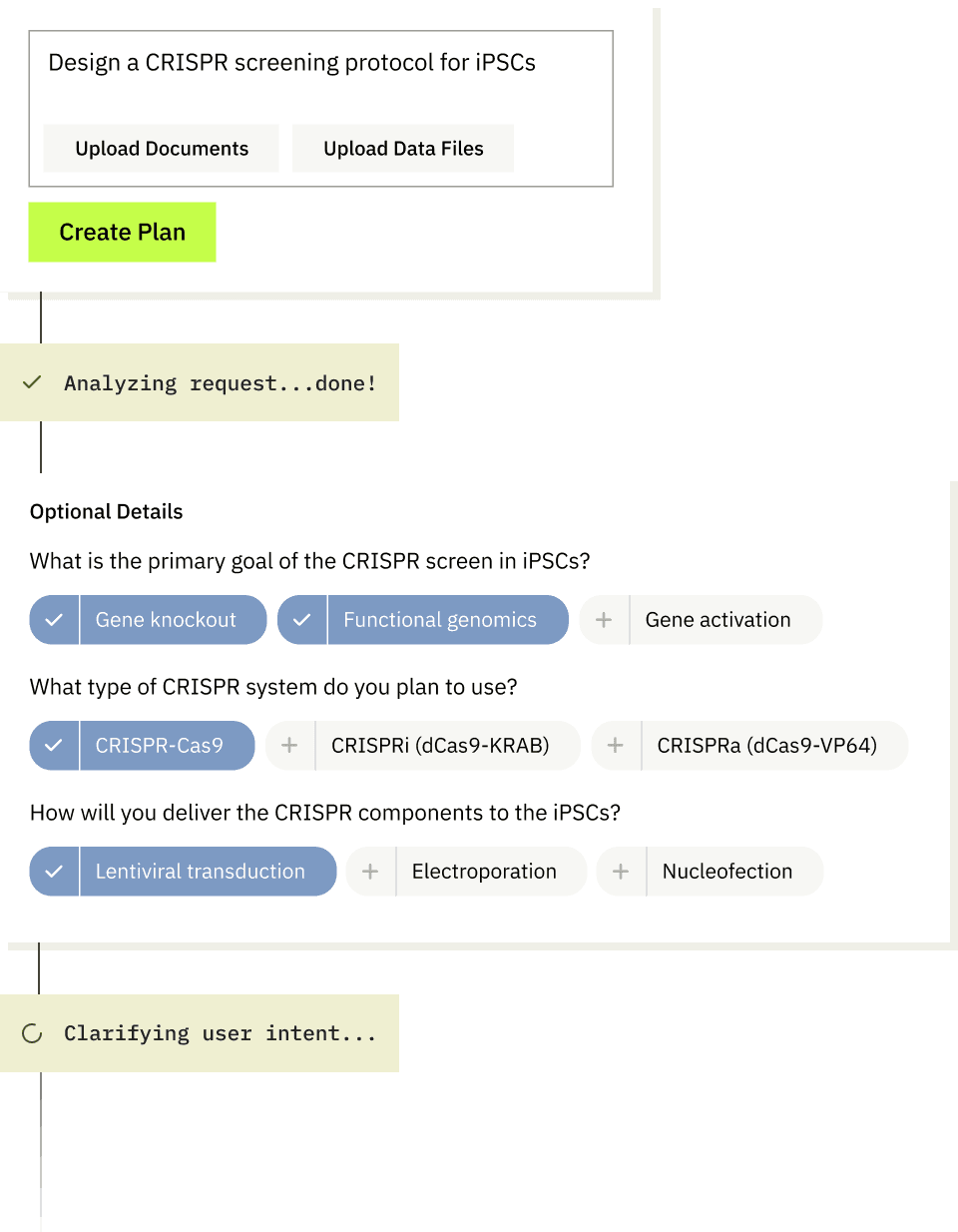
Potato is an AI-driven scientific operating system designed to accelerate scientific execution for life science researchers. It helps users creatively design and execute experiments by allowing them to search and synthesize literature, utilize scientific tools, and collaborate with Tater, an AI co-scientist. Tater can translate scientific intent into reproducible workflows, generate protocols, translate them into robot-ready scripts for automated systems, analyze raw results, and deliver figures. Potato is built for various users, including wet lab biologists, computational biologists, data scientists, bioinformaticians, and automation engineers, across both academia and industry. It emphasizes data privacy and security, ensuring user data remains private and is not used for AI model training.
Arabic Mistral 8-7b
Arabic Mistral 8-7b is a chat-based AI application designed for generating Arabic text responses. Users can input their messages in Arabic and receive comprehensive, detailed responses, also in Arabic. The tool offers flexibility by allowing users to adjust parameters such as creativity and diversity, enabling them to tailor the output to their specific needs. Hosted on Hugging Face Spaces, it provides an accessible platform for Arabic natural language processing tasks. While the current live website indicates a runtime error, the intended functionality is to provide a robust text generation experience in Arabic.
Bagel 7B Demo
Bagel 7B Demo is an AI application hosted on Hugging Face Spaces, designed to facilitate image generation, editing, and understanding through text prompts. Users can create new images, modify existing ones, and obtain explanations about images using simple descriptive text. The tool is built with Gradio and leverages the Bagel 7B language model for its functionalities. While currently paused, interested users can request its restart via the community tab on its Hugging Face Space page. It is licensed under the Apache 2.0 license, indicating its open-source nature.
ASI1 Mini
ASI1 Mini provides a user-friendly interface within a Hugging Face Space, enabling individuals to interact directly with the ASI1-mini Large Language Model. This tool is designed for experimentation and exploration, allowing users to understand and test the capabilities of the LLM without complex setup. It serves as a practical sandbox for those interested in conversational AI and language model interactions, offering a straightforward way to engage with the underlying technology. The platform is accessible via a web interface, making it easy to use for a broad audience.

HeyMarvin
HeyMarvin is an AI-native customer insights platform designed to centralize customer knowledge, run AI-assisted research, and surface actionable insights. It helps leading brands organize, analyze, and act on customer knowledge by bringing together all research and feedback into one smart repository. The platform offers automated qualitative and quantitative data collection, including conducting and recording user interviews, pulling feedback from calls and meetings, and scaling research with AI-moderated sessions. Key features include an AI Research Assistant to cut research time, a centralized Research Repository, Qualitative Analysis, Tagging & Live Notes, and Survey Insights. It integrates with existing tools to unlock insights and share them instantly, enabling teams to make data-driven decisions.
Audiogest
Audiogest is an AI-powered platform designed to transform meetings, interviews, and calls into structured, shareable deliverables. Users can upload any audio or video file to receive accurate transcripts with speaker labels and timestamps, supporting over 99 languages. Beyond transcription, Audiogest leverages AI to generate various content types, from simple summaries to detailed action items, briefs, and reports. A key feature is the ability to create custom prompts, allowing users to tailor AI output precisely to their needs. Results can be shared directly within Audiogest or exported to formats like Word and Markdown, making it an efficient solution for extracting insights and streamlining communication.
Average Diffusion Faces
Average Diffusion Faces is a unique image generation tool hosted on Hugging Face Spaces, designed to create composite 'average' faces using advanced text-to-image diffusion models. Users can interactively select an adjective (e.g., 'happy', 'sad') and a profession (e.g., 'doctor', 'artist') to guide the AI in generating a corresponding average face. This tool is particularly useful for researchers studying facial recognition, AI ethics, and image generation biases, as well as for educational demonstrations in AI art and machine learning. It provides a straightforward interface to explore how different textual prompts influence the visual output of diffusion models, offering insights into their capabilities and potential societal implications.
BaseChat by URIAL (Chat with base, untuned LLMs)
BaseChat by URIAL provides a unique platform for interacting with large language models (LLMs) in their raw, untuned state, alongside their aligned versions. This tool is ideal for researchers, developers, and enthusiasts who wish to understand the foundational behavior of LLMs before fine-tuning. Users can input text prompts and engage with two models simultaneously, offering a direct comparison of their responses. The platform also allows for optional API key integration, providing flexibility for users to connect their own resources. It serves as an excellent environment for educational purposes and for testing the capabilities and limitations of base LLMs.
Baichuan M3 Inquiry
Baichuan M3 Inquiry is an AI-powered inquiry agent designed to facilitate research and information retrieval through conversational AI. Utilizing the advanced Baichuan-M3-235B model, this tool allows users to enter messages and receive detailed responses from an AI assistant. A key feature is its ability to display intermediate thinking steps, offering transparency into how the AI arrives at its final answer. The application also maintains a chat history, enabling continuous and context-aware conversations. Hosted on Hugging Face Spaces, it provides a user-friendly interface for interacting with the Baichuan model.
FaceSeek - AI Face Search
FaceSeek is an AI-powered platform designed for advanced reverse face search and identity verification. This tool allows users to efficiently locate and identify individuals through facial recognition technology. Beyond its core search capabilities, FaceSeek also integrates creative AI tools for image manipulation, enabling users to modify and enhance images with AI assistance. The platform is particularly useful for professionals in security, research, and content creation, offering a versatile solution for various facial recognition and image processing needs. Its features cater to both investigative tasks and creative projects, providing a comprehensive suite of AI-driven functionalities.
ByteMorph Demo
ByteMorph Demo is an online demonstration of the ByteMorph tool, hosted on Hugging Face Spaces. This application enables users to upload an image and then provide a text prompt to guide its modification. The app processes the input and generates a new, edited version of the image according to the user's prompt. It serves as an accessible platform to explore and test the capabilities of ByteMorph's image manipulation technology. Built using Gradio, the demo is available for free, making it easy for anyone to experiment with AI-powered image editing without any cost.