
Research & Education
Browsing page 29 of AI tools for Academic Research in Research & Education. Sorted by confidence score — our independent quality rating.

Symbolica AI
Symbolica AI is an artificial intelligence research lab founded in 2022, focused on developing a symbolic reasoning engine by applying category theory and type theory. Unlike current state-of-the-art models, Symbolica integrates code execution as a first-class primitive at the architectural level, combining symbolic and neural intelligence. Their approach, informed by applied category theory, aims to unify discrete concepts like types and programs with fuzzy concepts like vector spaces and optimization. They have launched Agentica, an agent-builder that leverages their open-source Agentica SDK, enabling agents to iteratively decompose, investigate, and dynamically solve problems through arbitrary code execution. This platform allows users to build multi-agent systems with state-of-the-art performance on top of any model.
StyleTTS2
StyleTTS2 is an advanced text-to-speech (TTS) model designed to produce human-level speech synthesis. It innovates by modeling styles as a latent random variable through diffusion models, allowing it to generate suitable styles for text without needing reference speech. This approach ensures efficient latent diffusion while benefiting from the diverse speech synthesis capabilities of diffusion models. The tool also incorporates large pre-trained speech language models (SLMs), such as WavLM, as discriminators with novel differentiable duration modeling for end-to-end training, significantly improving speech naturalness. StyleTTS2 has demonstrated superior performance, surpassing human recordings on the LJSpeech dataset and matching them on the VCTK dataset. It also excels in zero-shot speaker adaptation on the LibriTTS dataset, outperforming other publicly available models.
World Library in AI
The World Library in AI, powered by Space Frontiers, offers an MCP (Model Context Protocol) server designed to connect large language models (LLMs) like Claude to a vast search index. This tool enables LLMs to query and retrieve information from academic papers, Telegram, Reddit, and YouTube, grounding their responses in real-time data. Users can perform free-text searches, filter by source (documents or social media), and retrieve full documents by URI, including exploring references and citation graphs. It also supports searching within specific documents for relevant passages. The platform is available as a hosted service or can be self-hosted, providing flexibility for integration into various AI workflows.
UltraChat
UltraChat is a comprehensive open-source project focused on creating large-scale, informative, and diverse multi-round dialogue data. Powered by Turbo APIs, it aims to facilitate the development of powerful language models with advanced conversational capabilities. The dataset is structured into three main sectors: 'Questions about the World' for inquiries related to real-world concepts, 'Writing and Creation' for tasks involving creative writing and content generation, and 'Assistance on Existent Materials' for tasks like rewriting, summarization, and inference based on existing texts. UltraChat emphasizes automatic data generation, ensuring no direct use of internet data as prompts to safeguard privacy. It also includes UltraLM, a series of chat language models trained on UltraChat, with versions like UltraLM-13B and UltraLM-65B available.
Model Fine Tuner
Model Fine Tuner is a Hugging Face Space designed for fine-tuning GPT-2 models. Users can upload their own datasets, select relevant columns, and adjust various training parameters to customize the model's behavior. Once trained, the tool facilitates text generation based on user-defined prompts, offering customizable settings for the output. This makes it a valuable resource for individuals looking to experiment with and adapt large language models for specific tasks or domains, providing a straightforward interface for model training and text generation.
Tax Booster: AI dla doradców podatkowych
Tax Booster is an AI tool specifically designed for tax advisors, offering two primary modes: an intelligent search engine and an autonomous tax commentary creation function. The platform analyzes user queries in natural language, understanding factual states and questions to automatically select the most relevant fragments of tax interpretations and court rulings. This process significantly reduces research time, allowing advisors to focus on client consultation. Additionally, it can generate draft responses for clients by analyzing available tax interpretations and court judgments, providing concise and substantive summaries. Tax Booster supports analysis across various tax types, including VAT, PIT, CIT, and PCC, and its databases are updated in real-time to ensure access to the latest information.
Unriddle
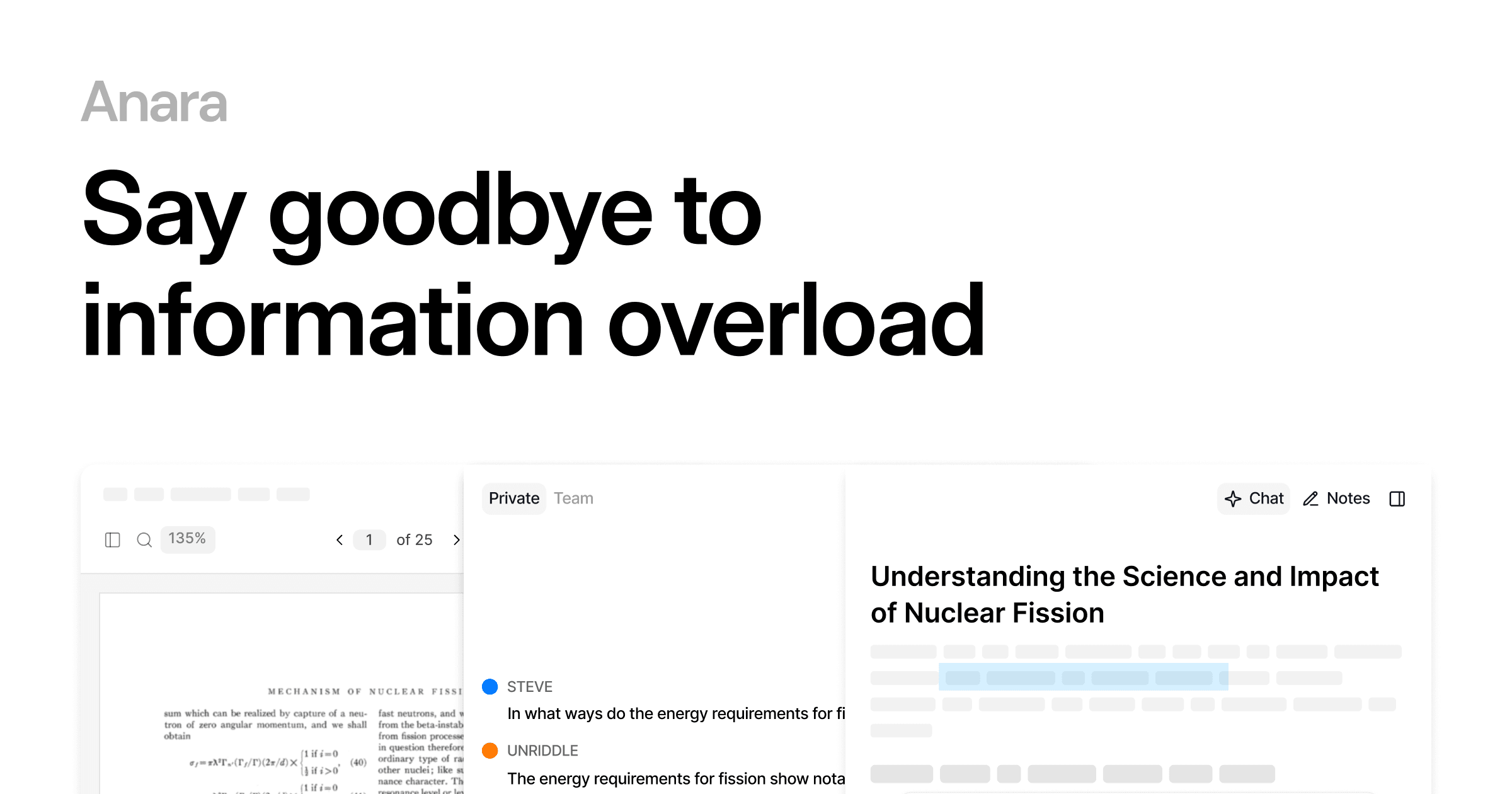
Anara is an AI-powered workspace designed to streamline research workflows for scientists, students, and research teams. It enables users to search for academic papers, extract key passages, and organize their research efficiently. A core feature is its ability to provide accurate references by linking every insight to original sources, allowing for easy verification. The tool also eliminates hallucinations by limiting responses to uploaded files and automatically finds citations based on user writing. Anara can understand various file types, including dense textbooks and research papers, instantly providing concise, scholarly answers. It also generates flashcards and multiple-choice questions from lecture slides or videos, and offers a single, searchable library for individual or collaborative projects.
📚ArxivPaperSearch🔍
📚ArxivPaperSearch🔍 is an AI-powered tool designed to assist researchers, academics, and students in navigating the vast repository of academic papers on ArXiv. Users can input specific questions, and the application will retrieve relevant papers, generate concise summaries, and provide direct answers using its integrated AI capabilities. This streamlines the literature review process, making it easier to extract key information and understand complex research topics quickly. The tool leverages a Retrieval-Augmented Generation (RAG) pattern to ensure accuracy and relevance in its responses, making it a valuable resource for anyone engaged in academic research.
AIGC-Interview-Book
AIGC-Interview-Book is an open-source resource designed to help AIGC algorithm engineers prepare for interviews. This extensive guide covers a wide array of AI topics, including AIGC, LLM large models, AI Agent, traditional deep learning, autonomous driving, machine learning, computer vision, natural language processing, reinforcement learning, big data mining, embodied intelligence, metaverse, and AGI. It compiles essential knowledge and practical experience from industry experts, making it a valuable asset for both interview preparation and academic study. The project also offers insights into AIGC job market trends, salary expectations, and interview strategies, drawing from real-world experiences and interview questions from leading tech companies.
ScholarCopilot
ScholarCopilot is an AI-powered tool designed to streamline the academic writing process for students, researchers, and academics. Utilizing a Retrieval-Augmented Generation (RAG) Large Language Model, it offers intelligent suggestions for text and citations directly within your writing. Users input their academic work, and ScholarCopilot analyzes the content to provide contextually relevant suggestions and format citations accurately. This helps users enhance the quality and efficiency of their paper writing, ensuring proper referencing and coherent argumentation. The tool is available as a Hugging Face Space, making it accessible for academic use.
Awesome-LLM-Post-training
Awesome-LLM-Post-training is a comprehensive, open-source repository dedicated to advancing research in Large Language Model (LLM) post-training methodologies. It serves as a curated collection of influential papers, code implementations, benchmarks, and various resources. The primary focus is on enhancing the reasoning capabilities of LLMs through techniques such as fine-tuning, reinforcement learning, and test-time scaling. The repository categorizes approaches into areas like LLMs in Reinforcement Learning, Reward Learning, Policy Optimization, LLMs for Reasoning & Decision-Making, Exploration & Generalization, Multi-Agent RL, and Applications & Benchmarks. It is an invaluable resource for AI researchers and practitioners looking to explore the latest advancements and contribute to the field of LLM post-training.
AI Developers
AI Developers is a German network dedicated to fostering collaboration and innovation within the artificial intelligence community. It serves as a crucial hub for various stakeholders, including academia, industry professionals, investors, and startups. The network actively facilitates monthly meetups, providing a platform for knowledge exchange, networking, and partnership building. Its core mission is to support AI research, development, and entrepreneurial endeavors, with a strong emphasis on promoting the ethical and equitable advancement of AI technologies. This initiative aims to strengthen Germany's position in the global AI landscape by connecting key players and driving progress in the field.
BioSmartData
BioSmartData is an AI-powered medical software designed to empower healthcare professionals, industry, and hospitals to make better decisions by transforming clinical data into impactful insights. The platform collects and analyzes real-world data (RWD) and real-world evidence (RWE) to provide accurate, real-time information. It features intuitive dashboards for informed, personalized decisions, and is developing Aurora, a customized neural network for pattern identification, outcome prediction, and treatment optimization. BioSmartData captures 97% of structured data, ensuring high accuracy and reliability, and helps physicians assess and adjust data during collection for early detection of adverse effects. It supports multicenter clinical studies and integrates with clinical environments to process first-hand data.
lm-similarity
lm-similarity is a specialized tool hosted on Hugging Face Spaces, designed for comparing the similarity of various language models. It leverages data from the Open LLM Leaderboard, providing a robust platform for AI researchers and machine learning engineers to analyze model performance. Users can select specific language models and datasets, then generate a heatmap to visually represent their similarities. This functionality is crucial for understanding the nuances between different models and informing further research and development in the field of natural language processing. The tool aims to streamline the process of model evaluation and comparison.
CARE-AI
The Centre for Advancing Responsible & Ethical Artificial Intelligence (CARE-AI) is a unique research center located at the University of Guelph, in the Toronto-Waterloo corridor. It distinguishes itself by integrating ethics, governance, and social responsibility directly with technical leadership in AI. CARE-AI's researchers span various colleges at the university, working across three core pillars: AI methodologies, AI applications, and AI responsibility. The center fosters a network of over 90 researchers and scholars, supported by an advisory panel of academic and industry leaders. It applies machine learning and AI to key U of G strengths, including human and animal health, environmental sciences, agriculture, agri-food, business, insurance, and the bio-economy. Researchers investigate methodologies such as learning algorithms, human-computer interfaces, data analytics, sensors, and robots, collaborating with inter-disciplinary departments, industry partners, and other institutions.
AI Bible Verse Studies
AI Bible Verse Studies is an AI-powered tool designed to deepen understanding of biblical texts. It offers insights and analysis of Bible verses, making it a valuable resource for theological study, sermon preparation, and personal spiritual growth. The tool leverages artificial intelligence to help users explore the nuances and contexts of scripture, providing a comprehensive approach to biblical learning. It aims to assist individuals in gaining a richer perspective on religious texts, facilitating both academic and personal engagement with the Bible.
Sentence Embeddings Visualization
Sentence Embeddings Visualization is an AI tool hosted on Hugging Face Spaces, designed for visualizing sentence embeddings. It allows users to explore and understand the relationships between sentences through a visual interface. The tool leverages models like `sentence-transformers/all-MiniLM-L6-v2` to process and represent sentence data. While the current live website content indicates a runtime error, the tool's intent is to provide a platform for data scientists and researchers to gain insights into how different sentences are semantically related, aiding in tasks such as clustering, similarity analysis, and anomaly detection within text data.

Skope
Skope is an AI-powered legal assistant designed to streamline operations for law firms. It offers comprehensive support for legal research, document drafting, and contract review, significantly reducing manual effort. The tool integrates seamlessly into existing workflows, allowing users to access its capabilities via a web browser, directly within Microsoft Word as an add-in, or through an email agent. Skope helps attorneys reclaim hours by automating repetitive tasks, enabling them to focus on high-value legal work. It boasts enterprise-grade security, SOC 2 Type I certification, end-to-end encryption, and a private-by-design approach, ensuring client data is protected and never used for AI model training.
StableBeluga 7B Chat
StableBeluga 7B Chat is an AI chatbot tool hosted on Hugging Face, developed by Sentdex. It provides a platform for users to interact with a conversational AI model, specifically the StableBeluga 7B model. While the current live website indicates a runtime error during the loading process, suggesting potential issues with GPU memory for the quantized model, the tool is intended for engaging in chat-based interactions. It is free to use and is suitable for individuals involved in research, development, and educational activities related to conversational AI. The tool's availability on Hugging Face makes it accessible to a broad community interested in experimenting with and learning about large language models.
Streaming Chat With Gpt-3.5-turbo Using Langchain Sorta
Streaming Chat With Gpt-3.5-turbo Using Langchain Sorta is a Hugging Face Space designed for building streaming chatbots. This tool integrates GPT-3.5-turbo, a powerful language model, with Langchain, a framework for developing applications powered by language models. While the current live website indicates a build error, the intent of the project is to provide a platform for creating conversational AI experiences. It is suitable for individuals interested in experimenting with or developing AI-driven chat functionalities, particularly those focusing on real-time interaction and the capabilities of GPT-3.5-turbo within a Langchain environment. The tool is hosted on Hugging Face, suggesting an accessible and community-oriented approach to AI development.
TaDiCodec TTS AR Qwen2.5 0.5B
TaDiCodec TTS AR Qwen2.5 0.5B is an AI-powered text-to-speech (TTS) tool available as a Hugging Face Space. It enables users to convert written text into spoken audio. A key feature is its ability to perform voice cloning, allowing users to match the voice of a reference audio by providing both the audio sample and its corresponding text. This makes it suitable for generating custom voiceovers or personalized audio content. The tool leverages the Qwen2.5 0.5B model for its synthesis capabilities, offering an accessible solution for various audio generation needs.
Talk to Gemini
Talk to Gemini is a Hugging Face Space application developed by fastrtc, designed to facilitate interaction with Google's Gemini multimodal API. This tool allows users to input text and receive audio responses, with the option to select from different voices. It serves as a practical platform for exploring and testing the capabilities of the Gemini model, particularly its text-to-audio generation features. Users can also provide an API key if required, enhancing its flexibility for various applications. The application is accessible via a web interface, making it easy to use for anyone interested in conversational AI and audio generation.
Talk to OpenAI
Talk to OpenAI is an innovative AI tool hosted on Hugging Face Spaces by fastrtc, designed to facilitate voice-based interaction with OpenAI's advanced GPT-4 model. Users can speak into a microphone, and the application will transcribe their voice input, process it using GPT-4, and then generate an audio response. This provides a hands-on and intuitive way to explore and experiment with AI-driven conversations, making the multimodal API accessible through a natural language interface. It's a practical demonstration of real-time voice-to-text and text-to-speech capabilities powered by OpenAI's technology.
awesome-LLM-resources
awesome-LLM-resources is an extensive, open-source repository that curates and summarizes the best resources for Large Language Models (LLMs). It offers a wide array of topics, including multimodal generation, AI agents, programming assistance, AI review, data processing, model training, and inference. The collection also delves into specialized areas like o1 models, MCP, small language models, and visual language models. Researchers and practitioners can find valuable information on data handling, fine-tuning techniques, inference strategies, and evaluation methods, making it an essential resource for staying current with LLM advancements.