
Research & Education
Browsing page 331 of AI tools for Research & Education. Sorted by confidence score — our independent quality rating.

HLearn
HLearn is a high-performance machine learning library developed in Haskell, designed to offer both speed comparable to low-level languages like C/C++ and flexibility akin to high-level languages such as Python. It distinguishes itself by leveraging functional programming principles and the SubHask library for fast numerical computations. The library's design is deeply rooted in abstract algebra, utilizing concepts like homomorphisms, monoids, and Abelian groups to enable features such as parallel batch training, online training, fast cross-validation, and weighted data points. HLearn also incorporates a unique History monad for debugging optimization procedures without runtime overhead. While it's a research project aiming for an optimal interface, its current focus is on foundational algebraic structures rather than a broad range of popular machine learning techniques.
OrdinaryDiffEq.jl
OrdinaryDiffEq.jl is a high-performance component package within the DifferentialEquations ecosystem, specifically designed for solving ordinary differential equations (ODE) and differential-algebraic equations (DAE). While it can be used independently, it integrates seamlessly with DifferentialEquations.jl. The tool offers a wide range of solvers, including those for neural ordinary differential equations (neural ODEs) and is integral to scientific machine learning (SciML) applications. It supports both out-of-place and in-place syntax for defining differential equations, with optimized versions for static arrays. Additionally, it provides specialized methods for refined ODEs like dynamical equations and SecondOrderODEProblems, enabling the use of symplectic integrators for Hamiltonian dynamics. The package is written in Julia, offering a robust and efficient environment for complex numerical simulations.
SnakeFusion
SnakeFusion is an AI project that leverages genetic algorithms and neural networks to train virtual snakes within a game environment. The core concept involves training five individual snakes, which can then be fused together to create a single, more advanced 'ultimate snake'. This project serves as a practical demonstration of applying evolutionary algorithms and AI in game development. Built using Processing, it provides a hands-on approach to understanding how AI can learn and adapt. Users can interact with the system by adjusting mutation rates, saving trained snakes, and initiating the fusion process to observe the creation of a 'super snake'.

Publish Studio
Publish Studio is an independent product studio dedicated to shaping internet products with a focus on strong identity, sharp execution, and modern polish. The studio works to bring digital products to life, emphasizing a refined and contemporary approach to development. While the specific AI tools or platforms used are not detailed, the studio's mission suggests a comprehensive approach to product creation, likely involving various stages from conceptualization to final deployment. Their expertise lies in crafting internet products that stand out through thoughtful design and efficient implementation.
KENLG-Reading
KENLG-Reading is a comprehensive repository dedicated to knowledge-enhanced text generation, offering a meticulously curated reading list, tutorials, papers, codes, datasets, and leaderboards. It serves as an invaluable resource for researchers and practitioners in the field, providing a survey published in ACM Computing Survey'22. The repository is actively maintained and updated, ensuring access to the latest advancements and high-citation papers. It covers various aspects of text generation, including basic NLG papers, pretrained language models, controllable generation methods, and knowledge-enhanced techniques using knowledge bases, knowledge graphs, and grounded text.
tidybot2
tidybot2 is an open-source project providing a holonomic mobile manipulator designed for robot learning. It includes comprehensive hardware designs and software components for building and operating the robot. The platform supports various tasks, from phone teleoperation and data collection to policy training and inference. Its holonomic base allows for independent and simultaneous control of planar degrees of freedom, simplifying complex mobile manipulation tasks. The project offers a simulation environment for testing the codebase without physical hardware and detailed guides for assembly, usage, and software setup, making it accessible for researchers and developers in the field of robotics.
machine_learning_derivation
machine_learning_derivation is an open-source GitHub repository offering comprehensive notes and derivations for various machine learning algorithms. It covers fundamental topics such as linear regression, support vector machines, dimensionality reduction, and probabilistic graphical models, including EM algorithm and Gaussian Mixture Models. The repository also delves into advanced concepts like variational inference, Markov Chain Monte Carlo sampling, and Kalman filtering. It is designed to support learning and research in machine learning, providing detailed explanations and mathematical derivations for each algorithm. The content is presented in PDF format, making it accessible for in-depth study and reference.
LinksUs
LinksUs is an AI-driven platform designed to bridge the gap between students seeking industry experience and companies looking for emerging talent. It enables businesses to post real-world tasks and short-term projects, providing undergraduates with valuable pre-industry exposure. The platform streamlines talent acquisition for companies by offering a cost-effective way to engage with a pool of skilled students. For students, LinksUs facilitates gaining practical experience, building professional connections, and potentially earning certifications, all while contributing to business productivity. It aims to simplify the hiring process for businesses and empower students with hands-on learning opportunities.
Debaters
Debaters.ai is a domain registered at Dynadot.com, with a website currently under construction. The homepage, pricing, plans, features, FAQ, and documentation pages all display a 'Website coming soon' message, indicating that the platform is not yet live. Users visiting the site are met with a loading screen and a message stating, 'We’re getting things ready. Loading your experience… This won’t take long.' As such, no specific features, pricing models, or use cases can be determined from the current live content. The tool's intended purpose, as an AI-powered platform to enhance critical thinking and advocacy skills, is derived from its stored description, but this is not reflected on the live site.
InstructIR
InstructIR is an AI tool designed for high-quality image restoration, guided by human-written instructions. Developed by mv-lab and presented at ECCV 2024, this model offers an all-in-one solution for various image degradation problems. Users can input an image along with natural language prompts to restore images from multiple degradation types, such as denoising, deraining, deblurring, dehazing, and low-light image enhancement. InstructIR has demonstrated state-of-the-art results, improving over previous all-in-one restoration methods. The project also provides a novel benchmark dataset for future research in text-guided image restoration. It offers a Hugging Face demo and Google Colab tutorial for easy access and experimentation, making advanced image restoration accessible through intuitive text commands.
interpretable-ml-book
Interpretable-ml-book is an open-source resource offering a detailed guide to interpretable machine learning. This book, available for free online, as an ebook, or in paperback, addresses the critical need for transparency in machine learning decisions. It introduces techniques to make black-box models more understandable, covering algorithms for simple interpretable models and methods for analyzing complex models. The resource is designed for machine learning practitioners, data scientists, statisticians, and stakeholders who need to trust and explain AI decisions. It aims to foster a future where machines can clearly articulate their reasoning, making the transition into an algorithmic age more human-centric.
Hibay: Learn & Speak English
Hibay is a mobile application designed to enhance English speaking proficiency through engaging AI-powered conversations. The tool provides a judgment-free environment for users to practice their English across more than 100 realistic scenarios, ranging from everyday discussions to specialized business English and IELTS preparation. Users benefit from immediate feedback on their pronunciation, grammar, and vocabulary, which helps in identifying areas for improvement. Additionally, Hibay offers tailored learning plans, enabling users to build confidence and fluency at their own pace. This comprehensive approach makes it an effective solution for anyone looking to significantly improve their spoken English.

Unlost
Unlost provides a structured program designed to assist students in navigating their post-school journey. Through 6 weekly one-on-one sessions with a trained near-peer facilitator, participants develop a clear and actionable plan for their future. The program focuses on creating concrete post-school plans, identifying contingency pathways, and fostering the confidence needed to pursue these goals. While the website content is minimal, the core offering revolves around personalized guidance and support for students transitioning out of school, aiming to reduce uncertainty and empower them with a strategic outlook.
ChatPaper2Xmind
ChatPaper2Xmind is an open-source tool designed to streamline the process of reading and understanding academic papers. It leverages ChatGPT to transform PDF research papers into structured XMind mind maps, complete with extracted images and formulas. This significantly improves efficiency by providing a concise, visual summary of complex documents. Users can configure various settings, including OpenAI API keys, model selection, language, and the ability to generate images and equations. The tool also supports the use of PDFFigure2 for image extraction, requiring a Java environment. It's ideal for students and researchers looking to quickly grasp the core concepts of papers and create organized study notes.
LightNet
LightNet is an open-source project offering a collection of light-weight neural networks specifically designed for semantic image segmentation. It focuses on achieving high segmentation accuracy while maintaining computational efficiency, making it suitable for embedded devices often found in autonomous driving systems. The repository includes implementations of several architectures such as MobileNetV2Plus, RF-MobileNetV2Plus, MobileNetV2Vortex, MobileNetV2Share, Mixed-scale DenseNet, SE-WResNetV2, and ShuffleNetPlus. These models incorporate techniques like Spatial-Channel Squeeze & Excitation (SCSE), Receptive Field Block (RFB), and Vortex Pooling. LightNet provides code in PyTorch and supports training and evaluation on Cityscapes and Mapillary Vistas Datasets, along with data augmentation using GANs.
Machine-Learning-for-Algorithmic-Trading-Second-Edition_Original
Machine-Learning-for-Algorithmic-Trading-Second-Edition_Original is an open-source GitHub repository accompanying the "Machine Learning for Algorithmic Trading, Second Edition" book published by Packt. This comprehensive resource aims to show how machine learning can add value to algorithmic trading strategies in a practical yet comprehensive way. It covers a broad range of ML techniques, from linear regression to deep reinforcement learning, and demonstrates how to build, backtest, and evaluate trading strategies driven by model predictions. The repository contains over 150 notebooks that put the book's concepts, algorithms, and use cases into action, providing numerous examples for working with market, fundamental, and alternative data, training models, and designing trading strategies. It also includes applications replicating recently published research and uses the latest software versions like pandas 1.0 and TensorFlow 2.2.
machine-learning-interview
machine-learning-interview is a GitHub repository offering an extensive collection of resources for individuals preparing for machine learning interviews. It features a minimum viable study plan, covering topics from LeetCode questions to advanced ML system design. The repository includes real interview experiences from FAANG, Snapchat, and LinkedIn, along with detailed guides on ML system design use cases like YouTube recommendations and ad click prediction. It also provides quizzes to test ML knowledge and links to a Machine Learning System Design book on Amazon, making it a valuable resource for job seekers in the ML field.
Flag Learn
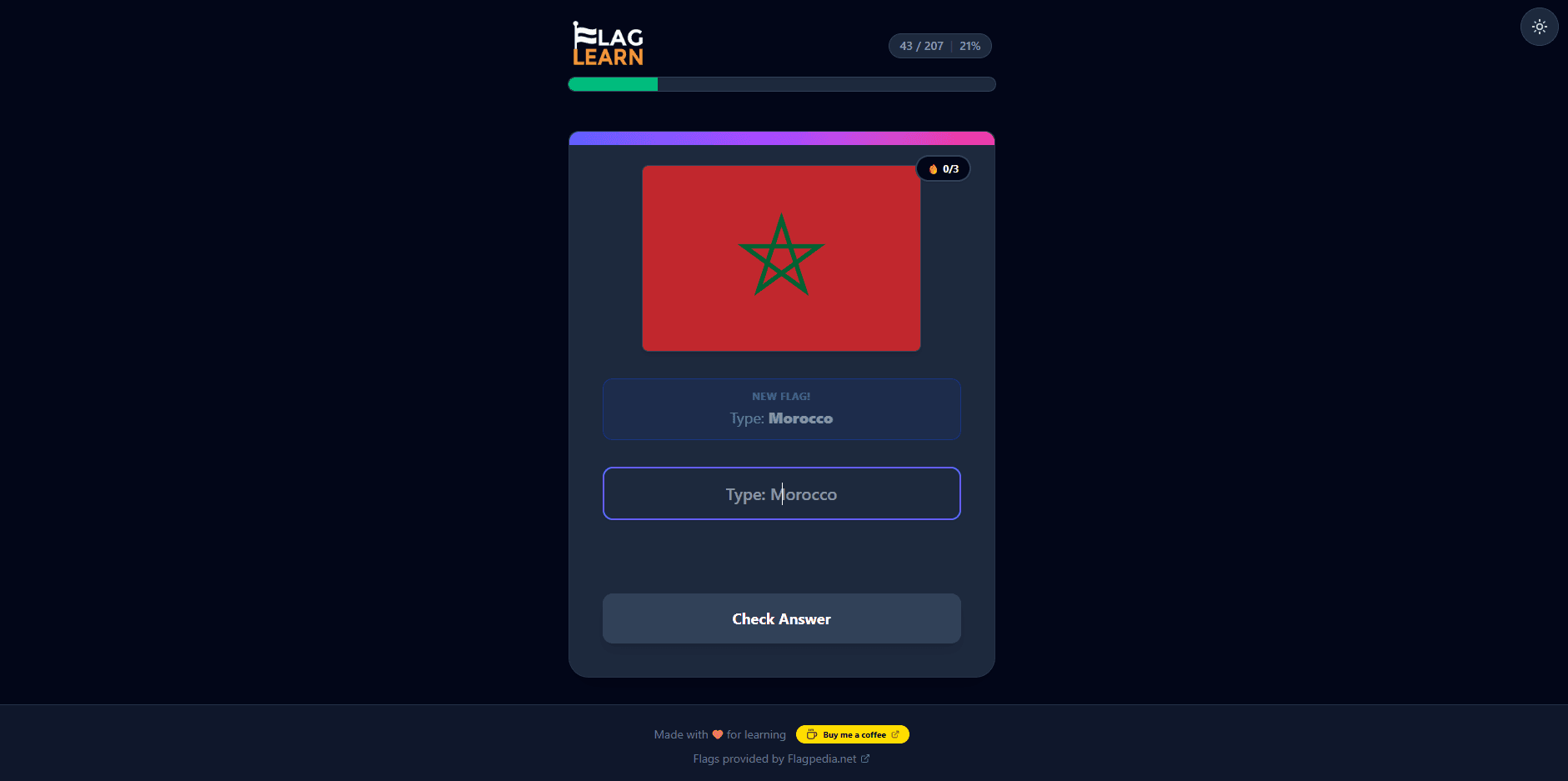
Flag Learn is a free interactive geography and astronomy quiz game designed to help users master world flags, capitals, US states, and constellations. The platform offers a variety of engaging game modes, including Map Locator, Ultimate Mode, and PvP battles, allowing users to test their knowledge and compete with others. A daily Flagle challenge is also available to keep learning fresh and consistent. Users can track their progress, making it an effective tool for improving geography and astronomy knowledge in a fun and interactive way. The game is accessible and designed for a broad audience interested in educational quizzes.

CombienCaFait
Combiencafait is a comprehensive online platform offering over 60 free and up-to-date calculators and simulators for a wide range of daily needs. Users can find tools for financial planning, such as mortgage simulations, salary conversions (gross to net), and compound interest calculations. The platform also includes health-related tools like BMI calculators, as well as utilities for managing time, understanding legal fees, and even basic chemistry calculations. Designed for ease of use, Combiencafait ensures all calculations are reliable and updated for 2026, without requiring registration or tracking user data, making it a secure and anonymous resource for quick decision-making.
introduction_to_ml_with_python
Introduction to Machine Learning with Python is a comprehensive open-source repository designed to accompany the book of the same name by Andreas Mueller and Sarah Guido. It provides all the notebooks and code examples used in the book, making it an invaluable resource for students and practitioners looking to learn machine learning with Python. The repository includes helper functions from the `mglearn` library for creating figures and datasets, and all necessary datasets are included, with the exception of `aclImdb`. Users can set up their environment using `conda` or `pip` to install required packages like `numpy`, `scipy`, `scikit-learn`, `matplotlib`, `pandas`, `pillow`, and `graphviz`. It also supports `nltk` and `spacy` for text processing chapters.

Grifoli - Drawing Coach
Grifoli is a dedicated drawing coach application designed to help users of all skill levels improve their sketching abilities. It offers structured learning through guided courses and specialized tracks, covering areas like portraits and fundamental drawing elements such as composition, proportions, and shading. Users can engage in daily practice with focused exercises and receive instant feedback on every sketch they upload. The app also includes reference tools, allowing users to draw from a source and get a strict reference-based review. Grifoli provides detailed written feedback and skill tests to identify areas for improvement, making it suitable for beginners while also supporting more experienced artists.
ml-practical-usecases
ml-practical-usecases offers a comprehensive database of 650 machine learning system design case studies, compiled from over 100 leading companies such as Netflix, Airbnb, and Doordash. This resource provides practical insights into how these companies leverage ML to improve their products and operational processes. The case studies cover various machine learning applications, highlighting innovative approaches and methodologies. It serves as a valuable learning resource for understanding real-world ML implementations and system design principles. The repository acknowledges Evidently AI for the original compilation, making it a community-driven resource for the machine learning ecosystem.
Chrono Civilizations
Chrono Civilizations offers an interactive historical atlas, allowing users to explore 5,500 years of world history from 3500 BC to 2024 AD. This educational tool visualizes 1,477 historical events and over 2,700 dynamic territory borders across 10 major civilizations, including China, Greece-Rome, Egypt, India, and the Islamic world. Users can watch empires rise and fall in real-time by sliding through an interactive timeline, observing dynasty boundary changes and the coexistence of different empires like Tang Dynasty China and the Roman Empire. It features a bilingual Chinese/English interface and highlights cross-civilization interaction routes such as the Silk Road.
ML-Roadmap-for-2022
ML-Roadmap-for-2022 offers a comprehensive and curated list of resources for individuals looking to master machine learning within a six-month timeframe. This GitHub repository provides a structured learning path, starting from foundational concepts like Python programming, data manipulation with Numpy and Pandas, and data visualization, all the way to advanced machine learning algorithms and practical applications. The roadmap is divided into distinct levels: 'Testing the waters,' 'Gaining Conceptual depth,' and 'Learning Practical Concepts,' each with estimated completion times. It includes links to numerous YouTube playlists, practice problems, and Kaggle datasets, making it an invaluable resource for self-paced learning and practical skill development in machine learning.