
Research & Education
Browsing page 373 of AI tools for Research & Education. Sorted by confidence score — our independent quality rating.

OmniIsaacGymEnvs
OmniIsaacGymEnvs offers a robust platform for developing and testing reinforcement learning agents within the Omniverse Isaac Gym ecosystem. It leverages PPO from the rl_games library and is built upon Isaac Sim's omni.isaac.core and omni.isaac.gym frameworks. Users can train policies, load pre-trained models for inference, and run simulations in both graphical and headless modes for optimized performance. The tool supports various tasks, from Cartpole to complex robotic simulations like Humanoid and ShadowHand, and provides extensive configuration options via Hydra. It also integrates with Docker for streamlined deployment and offers livestreaming capabilities for real-time visualization.
Paper-List
Paper-List is an open-source GitHub repository curated by Yanjie Ze, offering a comprehensive collection of research papers across the domains of robotics, learning, and computer vision. The list is meticulously organized by publication year and conference, including prominent venues like RSS, CVPR, ICLR, NeurIPS, CoRL, ICCV, ICML, and SIGGRAPH. It features papers on topics such as humanoid robots, dexterous manipulation, 3D robot learning, and robot foundation models. The repository also highlights 'Best Papers' and 'Recent Random Papers,' providing direct links to arXiv preprints, official websites, and other resources, making it an invaluable resource for researchers and academics to track cutting-edge advancements in these fields.
InterpretableMLBook
InterpretableMLBook is the Chinese translation of "Interpretable Machine Learning" by Christoph Molnar, a highly regarded work in the field of interpretable machine learning. This book serves as a comprehensive guide to understanding the interpretability of black-box models, making complex concepts accessible to a Chinese-speaking audience. It systematically organizes interpretability methods, describing each through intuitive language and detailed mathematical formulas. A key feature is the practical application of each method to real-world data, allowing readers to truly grasp their utility. The book also includes critical discussions on the advantages and disadvantages of various methods, making it a valuable resource for both technical practitioners and researchers.
cs229-2018-autumn
cs229-2018-autumn is a comprehensive repository offering all notes and materials from Stanford University's CS229: Machine Learning course, specifically from the Autumn 2018 edition. This resource includes detailed lecture notes, presentation slides, and various assignments, providing a complete academic package for students and enthusiasts. Additionally, it links to the corresponding lecture videos available on YouTube, enhancing the learning experience. The repository also contains problem sets, solutions, and project materials, making it an invaluable tool for self-study or supplementary learning in machine learning.
ConvNetDraw
ConvNetDraw is a small, open-source tool designed for creating multi-layer neural network diagrams within a web browser. Users can visualize complex neural network architectures by simply entering a script, making it accessible for quick diagram generation. The project is hosted on GitHub and encourages contributions, indicating an active development community and potential for future enhancements. While straightforward in its current functionality, it provides a valuable resource for researchers, students, and developers looking to illustrate their network designs without needing specialized software.
BinaryNet.pytorch
BinaryNet.pytorch offers a PyTorch implementation of Binarized Neural Networks (BNN), specifically designed for VGG and ResNet models. This open-source tool allows researchers and developers to delve into the world of binarized neural networks, which are known for their efficiency in terms of memory and computational resources. The project is hosted on GitHub and provides the necessary code to run models like resnet18 for datasets such as cifar10. It serves as a valuable resource for those looking to understand, implement, or experiment with BNNs within the PyTorch framework, building upon existing work in the field.
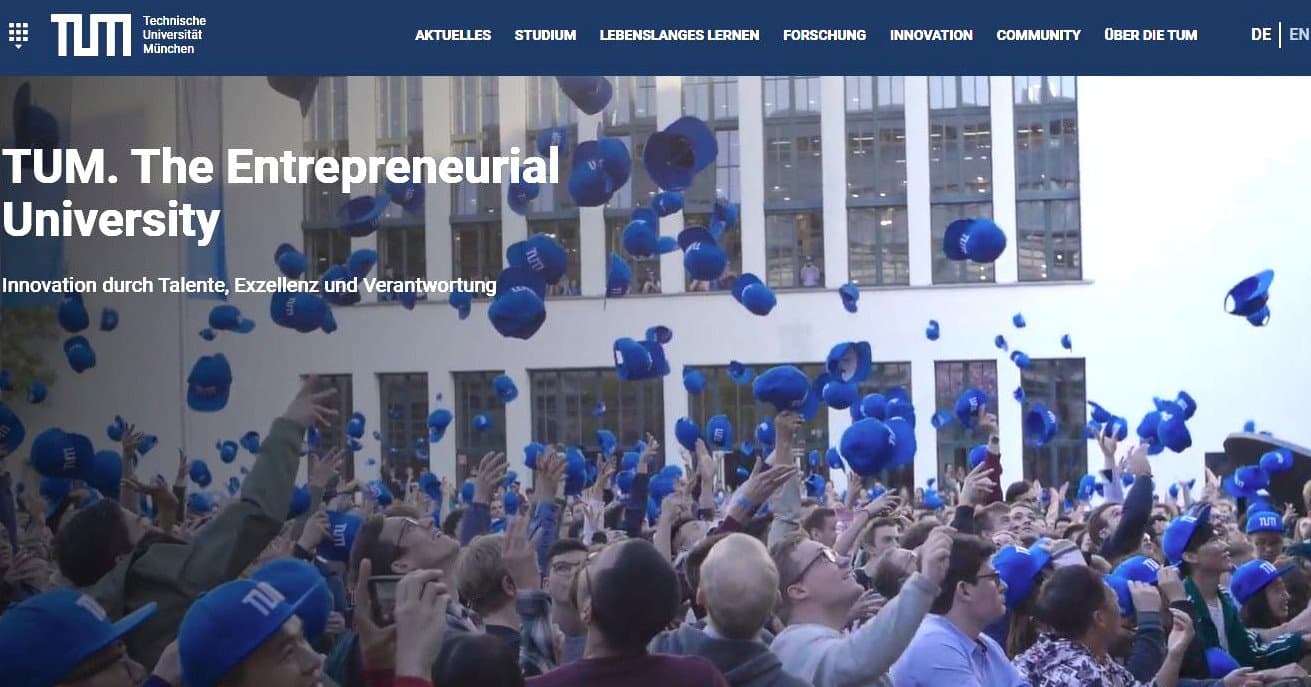
Institute for Computational Mechanics (Wall Lab)
The Institute for Computational Mechanics (Wall Lab) at the Technical University of Munich (TUM) is dedicated to cutting-edge research in computational mechanics. Their work spans application-motivated fundamental research, with a particular emphasis on complex coupled multifield and multiscale problems across various engineering and applied science domains. The institute's activities encompass advanced modeling techniques, the development of novel computational methods, and the creation of specialized software for high-performance computing systems. This focus enables them to tackle challenging scientific and engineering questions, contributing to advancements in fields requiring sophisticated simulation and analysis.
pytorch_diffusion
pytorch_diffusion offers a PyTorch reimplementation of Denoising Diffusion Probabilistic Models, complete with checkpoints converted from the original TensorFlow implementation. This tool allows users to load diffusion models with pretrained weights for various datasets like CIFAR-10, LSUN-bedroom, LSUN-cat, and LSUN-church. It provides a quickstart guide for running a Streamlit demo, making it accessible for immediate use. Users can also instantiate and configure the U-Net model for denoising independently. The repository includes instructions for producing samples, evaluating results against TensorFlow models, and converting TensorFlow checkpoints to PyTorch, making it a comprehensive resource for researchers and developers working with diffusion models.
Nytro SEO
Nytro SEO is an advanced AI-powered platform designed to automate and enhance a website's visibility and performance in search engine results and AI chat rankings. It leverages sophisticated algorithms to optimize on-page SEO and AEO (Ask Engine Optimization) by analyzing website content and correlating it with metadata, keyword search terms, and user search intent. The tool focuses on improving search rankings by refining titles, meta tags, image alts, and link anchor text. Nytro SEO is particularly effective for identifying missing, duplicate, or non-optimized meta tags, which often lead to search engines independently determining snippet content. It aims to provide a cost-effective and efficient solution for SEO agencies, SMBs, and digital marketing firms, working 24/7 to boost digital presence.
python-Machine-learning
python-Machine-learning is an open-source GitHub repository dedicated to machine learning algorithms and projects. It serves as a valuable resource for individuals looking to gain practical experience in machine learning, offering a collection of code examples from various projects and competitions. The repository is maintained by Mryangkaitong and encourages contributions from the community. It also provides links to related blogs and a WeChat official account for in-depth explanations and updates on the projects, making it a comprehensive learning hub for machine learning enthusiasts and practitioners.
Model Medicines
Model Medicines is an AI-driven company dedicated to building better medicines by innovating at the intersection of data science, biology, and drug development. The platform utilizes AI to model chemistry and human biology, accelerating the discovery and development of life-changing drugs. With 192 compounds and 67 validated assets in disease-relevant cellular models across 12 therapeutic targets, Model Medicines focuses on areas such as virology, oncology, inflammation, and longevity. Their proprietary GALILEO™ and AmesNet™ technologies enable ultra-large virtual screening and agentic AI breakthroughs, leading to the identification of best-in-class potential therapeutics, such as MDL-001, a direct-acting, broad-spectrum antiviral.
colorization
Colorization is an open-source project that leverages deep neural networks for automatic image colorization. Developed by Richard Zhang, Phillip Isola, and Alexei A. Efros, it was first presented at ECCV in 2016. The tool also incorporates functionality from "Real-Time User-Guided Image Colorization with Learned Deep Priors" from SIGGRAPH 2017, allowing for interactive colorization. Users can clone the GitHub repository, install dependencies, and then use Python scripts to colorize images. It provides pre-trained colorizers for both ECCV 2016 and SIGGRAPH 2017 models, with clear instructions for integration into Python projects, including necessary pre and post-processing steps like Lab space conversion and resizing.
Furrence 2 Large Demo
Furrence 2 Large Demo is an AI application hosted on Hugging Face Spaces that provides a demonstration of image captioning capabilities. Users can upload an image, and the tool will process it to extract relevant tags. Based on these tags, it then generates a descriptive caption. The application offers flexibility by allowing users to specify both the expected length of the generated caption and a cutoff length for the output, giving them control over the verbosity of the results. This demo is built with Gradio and is licensed under CC-BY-NC-4.0, making it accessible for testing and interaction.

Creax
Creax is an innovation agency with over 25 years of experience, partnering with global innovators to identify future playing fields and address complex challenges. The agency offers services across three key areas: Visionary Roadmaps to sharpen innovation journeys, Smart Opportunities to uncover new markets and applications through emerging trends, and Sustainable Solutions to rethink products and processes with data-driven insights. Creax emphasizes a unique methodology that combines continuous data analysis with creative exploration, helping clients develop next-gen solutions, improve innovation processes, reduce risk, and accelerate progress. They have successfully completed over 1,250 projects across diverse industries.

The Newsroom
The Newsroom specializes in creating provenance tools for journalism, focusing on making information traceable and verifiable. They are developing the first implementation of C2PA standards for text, allowing audiences to verify the origin of digital content. This process involves AI identifying claims from canonical sources, matching statements in articles to original claims, and creating tamper-evident manifests. Additionally, The Newsroom provides comprehensive AI training for newsrooms, covering fundamentals, workflow mapping, leadership guidance, and technical innovation, to help media organizations build AI capabilities and make informed decisions about AI adoption.
PINNpapers
PINNpapers is a comprehensive, open-source repository maintained by the IDRL lab, dedicated to curating essential research papers on Physics-Informed Neural Networks (PINNs). Since PINNs have gained significant traction in scientific computing, this resource serves as a valuable collection of representative works in the field. The repository categorizes papers across various aspects of PINNs, including foundational models, parallel computing approaches, acceleration techniques, model transfer and meta-learning, probabilistic PINNs, uncertainty quantification, and diverse applications. It also lists relevant software libraries like DeepXDE and SciANN, providing links to papers and code where available. Researchers and practitioners can use this resource to stay updated on the latest advancements and foundational concepts in PINN research.
AIMEDIC
AIMEDIC Operator is a B2B AI layer designed for healthcare institutions in Colombia, integrating seamlessly with existing HIS and other data sources like ERPs and analytical warehouses. It automates critical administrative tasks such as generating RIPS (Registro Individual de Prestación de Servicios de Salud), reducing glosas (claim denials) through pre-billing validation, and ensuring regulatory compliance with Colombian health laws like Ley 1581. The platform allows users to query data and generate dashboards using natural language, eliminating the need for SQL or specialized technical knowledge. It focuses on enhancing operational efficiency, providing real-time insights, and adapting to evolving regulatory standards without requiring a replacement of current core systems.
pysc2-examples
pysc2-examples offers a collection of Deep Reinforcement Learning examples specifically designed for StarCraft II. Built upon Deepmind's pysc2, OpenAI's baselines, and Blizzard's s2client-proto, it provides a robust framework for developers and researchers. The project leverages TensorFlow 1.3 and includes examples for tasks like 'CollectMineralShards' using Deep Q Networks and A2C algorithms. Users can quickly set up the environment, install necessary libraries like pysc2 and baselines, download StarCraft II maps, and then train and enjoy their AI agents. It supports various parameters for training, including algorithm choice (deepq, a2c), total timesteps, exploration fraction, and options for prioritized replay or dueling networks.

BRAID UK
BRAID UK is a 3-year national research programme funded by the UKRI Arts and Humanities Research Council (AHRC), led by the University of Edinburgh in partnership with the Ada Lovelace Institute. It focuses on integrating Arts, Humanities, and Social Science research more fully into the Responsible AI ecosystem. The program aims to bridge the divides between academic, industry, policy, and regulatory work on responsible AI, with over £18 million in funding from 2022 to 2028. BRAID UK offers various projects including demonstrator projects, fellowships, scoping projects, and artist commissions, alongside opportunities for flexible impact funding and a Responsible AI Innovation course for SMEs.
Academic Help
Academic Help is an AI-powered platform dedicated to supporting students through various stages of academic writing and research. The tool provides a comprehensive suite of resources aimed at improving the quality and efficiency of academic work. Key functionalities include features to enhance writing style, ensure the originality of content through plagiarism checks, and simplify the often-complex citation process. By offering these integrated tools, Academic Help strives to boost academic performance and streamline workflows for students across different educational levels, making the research and writing journey more manageable and effective.
3D-GRAND: Densely-Grounded 3D-LLM
3D-GRAND is a Densely-Grounded 3D-LLM designed to bridge the gap between natural language descriptions and 3D environments. Users can select a 3D scene and input a query to describe specific objects or locations. The tool then provides visual highlights of the relevant objects directly overlaid on the 3D model, offering a unique way to interact with and understand 3D data through text. This AI tool facilitates research in 3D understanding and grounding, making complex 3D scenes more accessible and interpretable through language-based interaction. It is available as a Hugging Face Space, indicating its potential for academic and research-oriented applications.
3DOI
3DOI is a research tool hosted on Hugging Face Spaces, designed for the academic exploration of 3D object interaction. The project focuses on understanding how 3D objects behave and interact when presented with only a single image as input. This tool is primarily intended for researchers and academics in the field of computer vision and artificial intelligence who are working on problems related to 3D reconstruction, scene understanding, and object manipulation from limited visual data. While the current live website indicates a runtime error preventing full functionality, the underlying goal is to provide a platform for experimentation and development in this specialized area.
squeezeDet
squeezeDet is an open-source project providing a TensorFlow implementation of SqueezeDet, a convolutional neural network specifically designed for real-time object detection. This tool is particularly optimized for autonomous driving applications, emphasizing a unified, small, and low-power architecture. It allows users to train and evaluate object detection models using datasets like KITTI, supporting various network backbones such as SqueezeNet, ResNet50, and VGG16. The repository includes scripts for installation, demo execution, training, and validation, making it a comprehensive resource for researchers and developers working on efficient object detection in resource-constrained environments.
spark-py-notebooks
spark-py-notebooks is a comprehensive collection of IPython/Jupyter notebooks designed to educate users on various Apache Spark concepts using Python (pySpark). The tutorials range from fundamental to advanced topics, focusing on Big Data Analysis and Machine Learning. Users can learn about RDD creation, basic RDD operations like map, filter, and collect, sampling, set operations, and data aggregations. The collection also delves into working with key/value pair RDDs and introduces MLlib for basic statistics, exploratory data analysis, logistic regression, and decision trees. Additionally, it covers Spark SQL for structured processing with DataFrames and includes applications like building a movie recommendation web service.