
Coding & Development
Browsing page 24 of AI tools for Backend & APIs in Coding & Development. Sorted by confidence score — our independent quality rating.

CryptoDo
CryptoDo is an AI-powered, multichain, no-code builder designed for creating web3 solutions and decentralized applications (DApps). It enables users to build verified smart contracts for businesses or crowdsales in just five minutes, eliminating the need for programming skills. The platform's core is a modular no-code architecture that facilitates the creation of web3 applications through a visual builder. Additionally, CryptoDo incorporates an AI module, offering enhanced customization options for smart contracts, making blockchain technology more accessible and adaptable. It supports various use cases including DeFi, NFT tokenization, DAO & Voting, Web3 Safe, and GameFi, aiming to simplify and accelerate blockchain development.
Responses.js
Responses.js is a Hugging Face Space that provides an OpenAI-compatible API for generating both text and image-based responses. This tool allows users to submit either text or image inputs and receive comprehensive outputs from a variety of underlying models. It is designed to facilitate the creation of dynamic AI-powered applications by offering a flexible interface for interacting with different generative AI capabilities. Developers can leverage this space to integrate advanced text and image generation features into their projects, making it a valuable resource for building and testing AI-driven functionalities.
Innic
Innic is an AI-powered tool designed to streamline SQL database connection and management. It aims to simplify complex database interactions and management tasks, making it easier for professionals to work with SQL databases. The tool is particularly useful for data engineers and data scientists who frequently interact with SQL environments, offering features that enhance efficiency and reduce manual effort in database operations. While specific features are not detailed on the current website, the core value proposition revolves around leveraging AI to improve database management workflows.
ml-compiler-opt
ml-compiler-opt provides an open-source infrastructure for Machine Learning Guided Optimization (MLGO) within LLVM. This framework systematically integrates machine learning techniques into LLVM, replacing traditional human-crafted optimization heuristics with machine-learned models. Currently, MLGO supports two key optimizations: inlining-for-size and register-allocation-for-performance. The repository contains the training infrastructure and related tools for MLGO, specifically supporting Policy Gradient training with Evolution Strategies planned for future release. It also offers pretrained models that can be directly used with LLVM, simplifying deployment for developers looking to leverage ML-guided compiler optimizations.

Launchpad Stack
Launchpad Stack is a full-stack development tool designed to streamline the process of generating custom code for web applications. Users answer questions about their preferred technologies, project goals, and configuration preferences. The tool then custom-generates a suite of inter-operable code packages covering infrastructure, application, CI/CD pipeline, monitoring, and security. This code is 100% owned by the user with no restrictive licenses. Launchpad Stack aims to provide the flexibility and savings of Infrastructure as a Service (IaaS) with the speed and experience of a Platform as a Service (PaaS), offering a one-time payment model rather than recurring subscriptions. It sets secure, best-practice defaults for various tech stack components, including authentication, alerting, and a modern UI.
Keel Studio
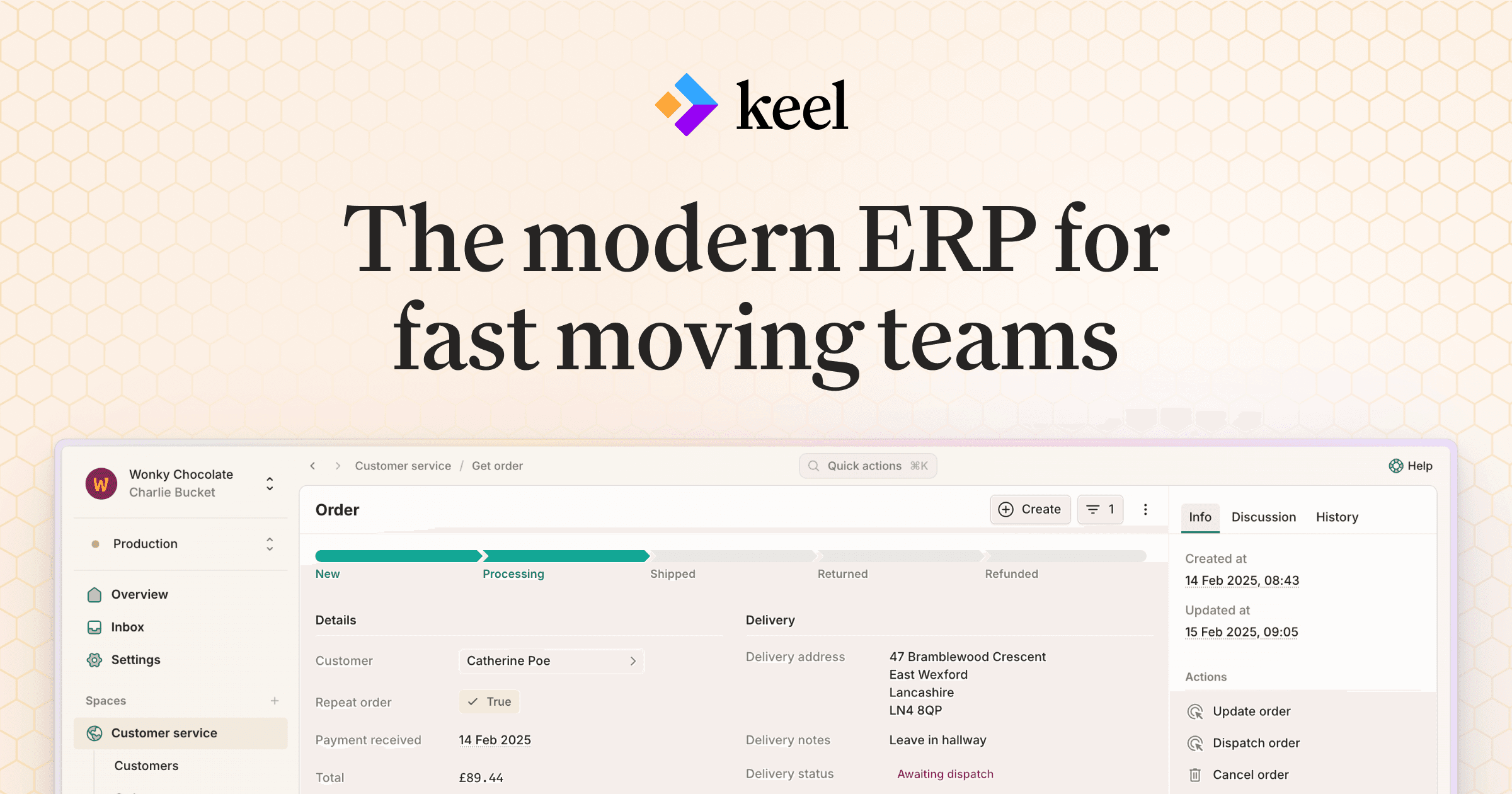
Keel Studio provides a comprehensive solution for rapidly building and deploying production-ready backends. Users can describe their system with a prompt and receive a complete backend featuring a database, APIs, authentication, permissions, observability, and internal tools. The platform is built on a code-first approach, utilizing the Keel Schema as the source of truth for data models, API endpoints, authentication, and secrets. It supports collaboration by instantly creating tools that allow entire teams, including customer service, marketing, and logistics, to interact with data securely. Keel Studio is designed for fast-moving operations teams, enabling them to build custom operational systems like CRM, inventory, and procurement without the complexity of traditional ERPs.
serve
Jina-Serve is a robust, open-source framework designed for building and deploying multimodal AI applications using a cloud-native stack. It facilitates communication via gRPC, HTTP, and WebSockets, allowing developers to scale their AI services efficiently from local development environments to full production. Key features include native support for major ML frameworks and data types, high-performance service design with scaling, streaming, and dynamic batching, and LLM serving with streaming output. Jina-Serve also offers built-in Docker integration, an Executor Hub, and one-click deployment to Jina AI Cloud, making it enterprise-ready with Kubernetes and Docker Compose support. It provides advantages over tools like FastAPI through DocArray-based data handling, native gRPC support, and seamless microservice scaling.
vulcan-sql
VulcanSQL is an open-source Analytical Data API Framework designed to simplify the creation of RESTful APIs from various data sources like databases, data warehouses, and data lakes. It addresses common pain points in traditional API development, such as time-consuming custom coding, integration complexity, security concerns, and scalability issues. By allowing users to insert variables into templated SQL, VulcanSQL generates SQL statements on the fly, making data accessible for AI agents and data applications. It utilizes DuckDB as a caching layer to boost query speed and reduce API response times. The framework supports flexible deployment options, including Docker, and offers features like OpenAPI document generation for standardization, ensuring easier integration and maintenance.
APIPark
APIPark is an open-source, cloud-native AI gateway and API developer portal designed to simplify the management, integration, and deployment of AI services for developers and enterprises. It offers ultra-high performance and supports over 100 mainstream AI models, including OpenAI, Azure, Anthropic Claude, Google Gemini, and many others, unifying API requests and responses. Key functionalities include combining AI models and prompt templates into custom APIs, standardizing data formats to reduce switching costs, and providing a developer portal for team collaboration. APIPark also features robust security with application and API key management, detailed usage monitoring, and advanced capabilities like load balancing and multi-model disaster recovery. It is designed for easy, one-command deployment, making it accessible for quickly building AI products and agents.
csghub-server
csghub-server is the open-source backend server for CSGHub, a platform designed for managing large model assets. It facilitates the management of models, datasets, and other LLM assets through a robust REST API. Key features include the creation and management of users and organizations, automatic tagging of models and datasets, and comprehensive search functionalities. Users can also preview dataset files online, download individual files including LFS files, and track activity data like downloads and likes. The server supports extensible and customizable architectures, allowing integration with various Git servers and flexible configuration of LFS storage systems. It also enables on-demand content moderation and has a roadmap for supporting more Git servers, Git LFS, dataset online viewers, and model/dataset auto-tagging.
d1-manager
D1 Manager is a comprehensive web UI and API designed for managing Cloudflare D1, a serverless SQL database. It offers a user-friendly interface that simplifies the management of databases, tables, and records. A key feature is its integrated AI assistant, which helps users write SQL queries using natural language, significantly streamlining the query creation process. The tool also supports semantic queries through OpenAI API or Cloudflare AI Worker, translating natural language into executable SQL. With features like listing tables, showing schema, running SQL queries, and editing table data via the UI, D1 Manager aims to simplify database operations, allowing developers to focus more on data utilization rather than complex management tasks. It also includes I18n support for multiple languages and an API for programmatic operations.

API-Monitor
API-Monitor is a specialized tool designed to provide instant alerts for changes in third-party APIs. It eliminates the need for constant dashboard monitoring, notifying users via email or webhooks when an API's structure or status code changes. The service checks API endpoints every 5, 15, or 60 minutes, tracking response structures and detecting modifications like missing fields, new fields, or type changes. This proactive monitoring helps prevent production failures and reduces debugging time, ensuring applications remain functional even when external APIs evolve. It offers a simple setup process, requiring only an API endpoint URL and optional headers or webhook configurations.
seldon-server
Seldon-server is an open-source machine learning platform designed to help data science teams deploy models into production within a Kubernetes cluster. While this specific project is archived and superseded by Seldon Core, it laid the groundwork for serving a wide range of ML models, including those built with TensorFlow, Keras, Vowpal Wabbit, XGBoost, and Gensim. It features an API with Predict and Recommend endpoints for supervised machine learning models and high-performance recommendation engines, respectively. Other capabilities include dynamic algorithm configuration for A/B and Multivariate tests, a Command Line Interface (CLI), secure OAuth 2.0 REST and gRPC APIs, and a Grafana dashboard for real-time analytics. Seldon-server supports deployment on-premise or in the cloud (e.g., GCP, AWS, Azure).
Echolon
Echolon is a powerful, local-first API client designed for modern developers, offering a robust open-source alternative to tools like Postman. It boasts deep Git integration, allowing all workspaces, collections, variables, and settings to be stored locally as plain text files, enabling seamless version control and team collaboration through standard Git workflows. The tool supports multiple protocols including REST/HTTP and WebSocket, with GraphQL support on the roadmap. Echolon is built with an offline-first architecture, ensuring all data is stored on your machine without mandatory cloud sync or account requirements, prioritizing user privacy and data security. Key features include an advanced request editor, dynamic variable system, one-click API publishing, and powerful API mocking capabilities for both local and cloud environments.
SpeedTorch
SpeedTorch is a Python library designed to optimize data transfer between CPU and GPU in PyTorch, particularly for deep learning applications. It achieves faster transfer speeds for pinned CPU to GPU tensors and GPU to CPU tensors, in some cases up to 410x faster for GPU to CPU transfers. The library is especially beneficial for training large numbers of embeddings by allowing them to be hosted on CPU RAM when idle, thereby sparing GPU RAM. It also enables the use of non-sparse optimizers like Adamax for sparse training, which is typically not supported. SpeedTorch leverages Cupy tensors and custom memory allocators to achieve its performance gains, making it a valuable tool for developers working with memory-intensive PyTorch models.
Lovable
Lovable is an AI-powered full-stack development platform designed to accelerate the creation of web applications and websites. Users can describe their desired app or website through natural language chat or by providing screenshots and documents, and the AI will build a working prototype in real-time. The platform supports iterative refinement with simple feedback and one-click deployment. Lovable builds front-end applications using React, Tailwind, and Vite, and can connect to OpenAPI backends, with Supabase support for data persistence and authentication in alpha. It integrates with GitHub for source control and allows users to own their projects and code. The platform offers features like real-time execution visualization, error detection with an auto-repair option, and version history for tracking changes.

Aspen
Aspen is a free, native API testing application designed for macOS, focusing specifically on REST APIs. It operates with a zero-trust policy, meaning all operations are performed locally on your machine without requiring a login, ensuring high data security and privacy. The tool integrates an AI assistant, named Alfred, to significantly speed up API integrations and development by generating data models, OpenAPI Specifications, and integration code. Aspen also features Collections, allowing users to organize, import, export, and share API requests, facilitating teamwork and reuse. It supports importing from tools like Postman, making it a versatile option for developers seeking an efficient and secure API testing solution.
I got tired of switching between Postman, curl, and my editor so I built a terminal AI agent that does all three.
Charm offers a terminal-based AI agent designed to streamline development workflows by combining API testing, command-line execution, and code editing into a single interface. This tool aims to reduce the need for developers to switch between different applications like Postman, curl, and text editors. By wiring into your LLM of choice, Charm brings AI assistance directly to your terminal, making coding more glamorous and efficient. It supports macOS, Linux, Windows, and BSD, and is built on open-source technologies, emphasizing a commitment to the open-source community. Charm also provides various open-source libraries and tools for building terminal user interfaces and applications.
Doczilla
Doczilla offers a high-performance API designed for efficient PDF and screenshot creation, ensuring scalable and reliable document delivery for developers and businesses. The platform simplifies document generation by allowing users to create, save, and manage templates using a robust HTML editor and a Handlebars-based templating system. This streamlines workflows, enabling the definition of templates once and rendering them repeatedly. Doczilla supports various image formats like PNG, JPEG, and WebP for screenshots and can convert password-protected web pages to PDFs using basic authentication. It prioritizes security, never storing data longer than necessary, and offers flexible API responses, including immediate direct responses or structured webhook callbacks. The service is designed to scale effortlessly, handling everything from hundreds to millions of documents.
CaptureKit
CaptureKit offers a robust Screenshot API designed for developers to automate website screenshots, content extraction, and AI analysis. It enables users to capture pixel-perfect images in various formats like PNG, JPEG, WebP, or PDF, with options for full-page capture, CSS selector targeting, and device emulation. Beyond screenshots, CaptureKit can extract metadata, links, clean Markdown, or HTML from any URL, and integrate AI analysis for summaries, categories, and contact signals. The platform boasts edge caching, fast response times, and a global infrastructure that handles headless browsers and scaling, allowing developers to focus on their applications rather than browser management. It integrates with popular tools like Zapier, n8n, Make, and various LLMs, making it versatile for different workflows.

SharpAPI
SharpAPI offers pre-built AI API endpoints designed for developers across various domains including e-commerce, HR, content creation, travel, and SEO. The platform provides clean JSON responses and SDKs for every major programming language, simplifying the integration of AI functionalities into applications. Key features include product description generation, resume parsing, content automation, and sentiment analysis. SharpAPI operates on a credit-based pricing model, where each credit covers a monthly quota of processed words, API calls, and plan features. Users can add or remove credits at any time, with prorated billing adjustments. The tool also offers custom plans for high-volume users and enterprises, ensuring scalability and dedicated support.
llama2-webui
llama2-webui is an open-source tool designed for running Llama 2 models locally through a Gradio web UI. It offers broad compatibility, supporting all Llama 2 models (7B, 13B, 70B, GPTQ, GGML, GGUF, CodeLlama) and various backends like transformers, bitsandbytes (8-bit inference), AutoGPTQ (4-bit inference), and llama.cpp. The tool can be deployed on Linux, Windows, and Mac, utilizing either GPU or CPU resources. Developers can also leverage `llama2-wrapper` as a local Llama 2 backend for generative agents and applications, and it provides an OpenAI-compatible API for seamless integration with existing clients and libraries. Benchmarking scripts are included to evaluate performance on different devices.
NeuralNetwork.NET
NeuralNetwork.NET is a .NET Standard 2.0 library for building neural networks, inspired by TensorFlow and developed entirely in C# 7.3. It enables developers to create sequential and computation graph neural networks with customizable layers. The library offers simple APIs for rapid prototyping, allowing users to define and train models using stochastic gradient descent, as well as save and load network models. A key feature is its GPU support via cuDNN, which significantly enhances performance for training and using neural networks. While no longer actively maintained, it serves as a robust foundation for .NET developers looking to implement machine learning models and custom AI applications, particularly those familiar with C# and .NET environments.

Alfred AI
Alfred AI is an intelligent API assistant designed to transform developer portals by automating workflows and accelerating API operations. It can generate integration code and data models in any language and framework, simplifying the integration process for customers and speeding up onboarding. Users can ask Alfred anything about their API using natural language, and it will instantly provide answers, discover endpoints, and understand API structures. This tool aims to reduce integration support requests by 15x and accelerate API integrations, discovery, and adoption by 10x. Alfred AI can be easily embedded into any developer portal with a single line of code and an OpenAPI Specification, making it a powerful addition for enhancing developer experience and boosting revenue.