
Coding & Development
Browsing page 27 of AI tools for Backend & APIs in Coding & Development. Sorted by confidence score — our independent quality rating.

godot-mcp
godot-mcp is an open-source Model Context Protocol (MCP) server specifically designed for seamless interaction with the Godot game engine. This tool empowers AI agents to directly control and monitor Godot projects, facilitating a robust feedback loop for development and debugging. Key functionalities include launching the Godot editor, executing projects in debug mode, capturing console output and error messages, and programmatically controlling project execution. It also offers features for retrieving Godot versions, listing projects, analyzing project structures, and managing scenes by creating new ones, adding nodes, loading sprites, and exporting 3D scenes. For Godot 4.4+, it supports UID management, allowing for the retrieval and updating of file UIDs.
SPREAD AI
SPREAD AI is an engineering intelligence platform designed for complex engineering organizations, particularly in Automotive & Mobility, Aerospace & Defense, and Industrial Goods & Machinery. It unifies fragmented product data across R&D, Production, and Aftermarket into a living, graph-based functional model of how a product actually works. This enables explainable reasoning about impact, dependencies, and decisions at engineering scale. Key features include rapid data ingestion, creation of product twins, and an action cloud for out-of-the-box solutions and customizable applications. SPREAD AI helps accelerate time-to-market, lower costs, and improve product quality by providing a unified understanding of complex engineering data.
tiktoken-go
Tiktoken-go is a Go port of OpenAI's tiktoken library, designed for efficient Byte Pair Encoding (BPE) tokenization. This tool allows Go developers to seamlessly integrate tokenization capabilities into their applications, particularly when working with OpenAI's various language models like GPT-3.5, GPT-4, and embedding models. It features a cache mechanism, similar to the original Python library, which can be configured via the TIKTOKEN_CACHE_DIR environment variable to store token dictionaries and avoid repeated downloads. For scenarios requiring offline operation or custom dictionary loading, Tiktoken-go supports alternative BPE loaders, including an offline loader that uses embedded files. The library also provides utility functions for counting tokens in chat API calls, adapting to different model versions and their specific token calculation rules.

AuthWarden
AuthWarden is an API-first licensing platform designed for issuing keys and validating activations. It allows users to manage offline access without building or maintaining a custom backend. AuthWarden integrates with any stack using its SDKs, enabling the rapid implementation of licensing solutions. The platform focuses on providing a robust solution for software developers and businesses to control access to their applications and services efficiently. It aims to simplify the complexities of license management, allowing developers to focus on their core product development.

Golemi Proxy
Golemi Proxy is an edge-based API caching solution designed to eliminate latency and reduce origin costs for API services. Built on a global edge network with over 270 Points of Presence (PoPs), it transparently proxies API requests, serving cached responses in milliseconds from the nearest edge location. This significantly reduces the load on origin servers, leading to lower hosting bills and improved API response times globally. Key features include zero-config setup, webhook cache invalidation, support for JSON responses up to 2MB, API authentication forwarding, and real-time logs and analytics. Golemi Proxy is ideal for speeding up headless CMS endpoints, protecting legacy APIs, and scaling public APIs efficiently.
HTTPie AI
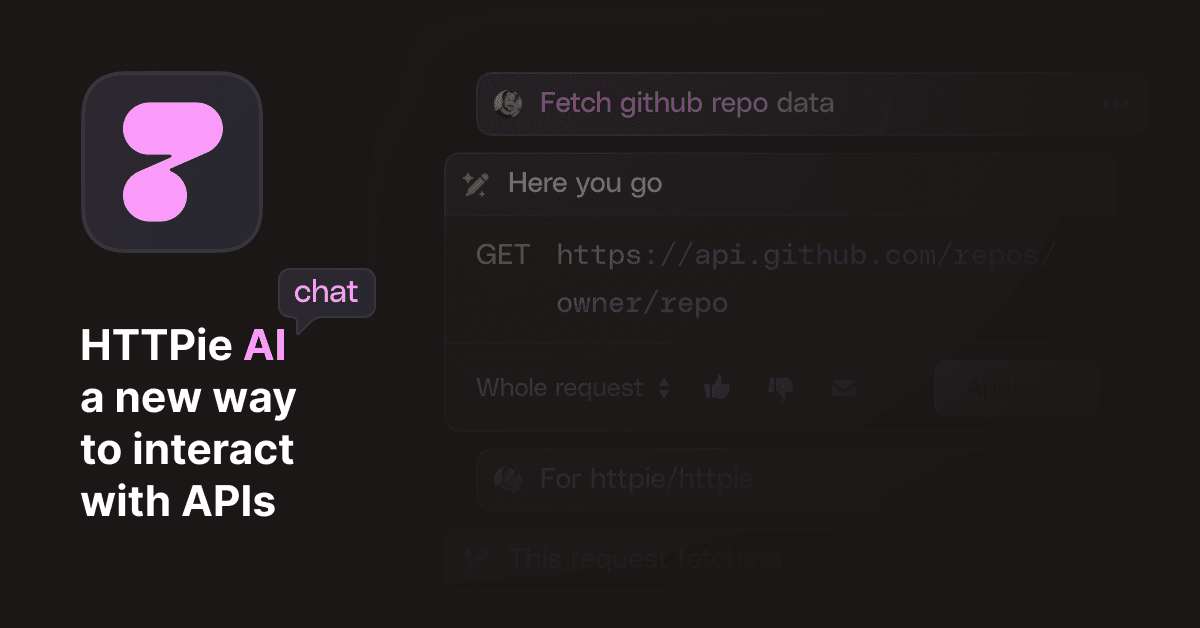
HTTPie AI is designed to make interacting with APIs simple and intuitive, particularly for developers building modern tools. The platform aims to streamline the API workflow, reducing complexity and enhancing productivity. While specific features of the current version are not detailed, the upcoming HTTPie AI 2.0 is announced to include a chat interface, suggesting a more conversational and user-friendly approach to API management and interaction. This evolution indicates a focus on leveraging AI to further abstract the technicalities of API usage, making it accessible to a broader range of technical users. The tool is positioned to assist in various stages of API interaction, from initial exploration to ongoing management.
WordSphere
WordSphere is a leading IT consulting and web strategy company based in the U.S., specializing in comprehensive WordPress development services. They offer a full spectrum of solutions, including WordPress design, frontend theming, UX/UI creation, plugin configuration, and custom development. Beyond WordPress, WordSphere also provides services for Shopify, Joomla, Drupal, Wix, Webflow, and Weebly, alongside AI development and various web solutions like ERP, CRM, and e-learning platforms. Their expertise extends to digital marketing, SEO, maintenance, and web hosting, catering to businesses seeking high-end, scalable web presences.

SaaS Boilerplates
SaaS Boilerplates offers a comprehensive directory of curated SaaS boilerplates and starter kits designed to accelerate the development and launch of new SaaS products. The platform allows users to browse through over 120 boilerplates, filtering them by various technologies such as .NET, Angular, Django, Laravel, Next.js, Node.js, React, Ruby on Rails, Svelte, and Vue.js. Each entry provides details on the boilerplate's features, helping developers choose the most suitable starter kit for their project. The goal is to save significant development time by providing pre-built solutions for common SaaS functionalities, enabling founders to ship their products in days rather than months. The site also features a blog with articles on selecting, implementing, and maximizing efficiency with SaaS boilerplates and starter kits.

Techneed
Techneed is a global creative agency offering comprehensive web design, UI/UX, and development services. They focus on crafting high-performing, SEO-friendly digital products that transform visions into reality for businesses worldwide. Their expertise spans UI/UX design, web development using technologies like React and Next.js, responsive design, brand identity creation, e-commerce solutions, and motion design. Techneed emphasizes a structured creative process, from discovery and strategy to design, development, and launch, ensuring robust and scalable solutions. With offices in Dubai, UK, and Pakistan, they serve a diverse clientele, delivering premium digital solutions that drive results and enhance online presence.
laravel-restify
Laravel-restify is a powerful open-source Laravel package designed to simplify API development by providing a unified layer for both human and AI agent consumption. It automatically transforms your Eloquent models into full-featured JSON:API endpoints and Model Context Protocol (MCP) servers. This innovative approach allows developers to build an API once and serve it seamlessly to traditional applications, developers, and AI agents, ensuring consistency across all consumers. Key features include full JSON:API specification compliance, automatic MCP server generation with tool definitions for AI, unified authorization using Laravel policies, powerful search and filtering capabilities, Laravel Sanctum integration for secure access, GraphQL support, and consistent field validation. This eliminates the need for separate implementations, making API development faster and more efficient.

Sahaj Software
Sahaj Software is an artisanal technology services company focused on delivering purpose-built solutions through intelligent engineering. They specialize in AI, ML, data engineering, and platform engineering, helping organizations achieve data-led transformation. Their approach emphasizes simplicity, first principles thinking, and lean cohesive teams to solve complex problems. Sahaj offers technology advisory services, including tech due diligence and assessment, to provide informed decision-making and better risk management. They are committed to full knowledge transfer, ensuring clients are not dependent on Sahaj post-implementation. The company's ethos is rooted in trust, respect, curiosity, and craftsmanship, aiming to inspire brilliance and reduce exploitation.
node-tensorflow
node-tensorflow is an open-source project offering a NodeJS API for Google's powerful machine learning library, TensorFlow. This initiative focuses on making TensorFlow's capabilities readily accessible to JavaScript developers within the NodeJS environment, prioritizing both performance and stability. Currently in its early design stages, the project actively seeks contributions, particularly from individuals with C++ knowledge, to accelerate its development. It leverages SWIG for interfacing the C++ core API with Node.js bindings, with a roadmap that includes integrating Python API features like Optimizers and Tensor Transformations. The goal is to evolve into a robust Node.js API for end-users, enabling them to build and control TensorFlow computation graphs directly from Node.js.

Digital software labs
Digital Software Labs specializes in providing purpose-driven digital solutions, including mobile app development, web applications, AI solutions, and cloud services. Their expertise spans Flutter, Android, iOS, and React Native app development, alongside comprehensive web development covering frontend, backend, and e-commerce. They also offer digital marketing services like SEO and social media marketing. The company focuses on creating custom software, enterprise solutions, and AI-driven applications, ensuring technical excellence from brainstorming to launch. They cater to startups, growing businesses, and enterprises, offering services like MVP development, platform optimization, cloud services, and ongoing support. Their approach emphasizes meticulous planning, user-centric design, security, and long-term scalability.
Float16
Float16 is a comprehensive GPU management platform designed for deploying, managing, and scaling AI models. It offers a full spectrum of services including AI-as-a-Service (AaaS) for instant access to ready-to-use AI models without coding, Platform-as-a-Service (PaaS) for flexible resource allocation, and Infrastructure-as-a-Service (IaaS) for bare-metal GPU instances. The platform emphasizes ease of use with one-click deployment, significantly reducing setup time from weeks to minutes. Float16 provides dedicated and isolated GPU resources, ensuring zero interference and optimal performance for workloads. It features a credit-based quota system for flexible GPU utilization, eliminating waste from fixed time slots. Supported by NVIDIA Inception Program, Float16 is ideal for ML engineers, data scientists, software developers, and researchers seeking efficient and scalable GPU solutions.
neuropod
Neuropod is a library designed to offer a uniform interface for running deep learning models across various frameworks, including TensorFlow, PyTorch, TorchScript, Keras, and Ludwig. It aims to simplify the productionization of deep learning models, enabling researchers and developers to build models in their framework of choice without being constrained by deployment complexities. A key benefit is framework-agnostic inference code, allowing easy switching between deep learning frameworks without altering runtime code. Neuropod also supports defining a problem API, which helps in building generic tools, pipelines, and comparing models solving the same problem, even if they originate from different frameworks. It supports both C++ and Python, offers efficient zero-copy operations, and ensures model isolation with out-of-process execution.
PDF Extractor API
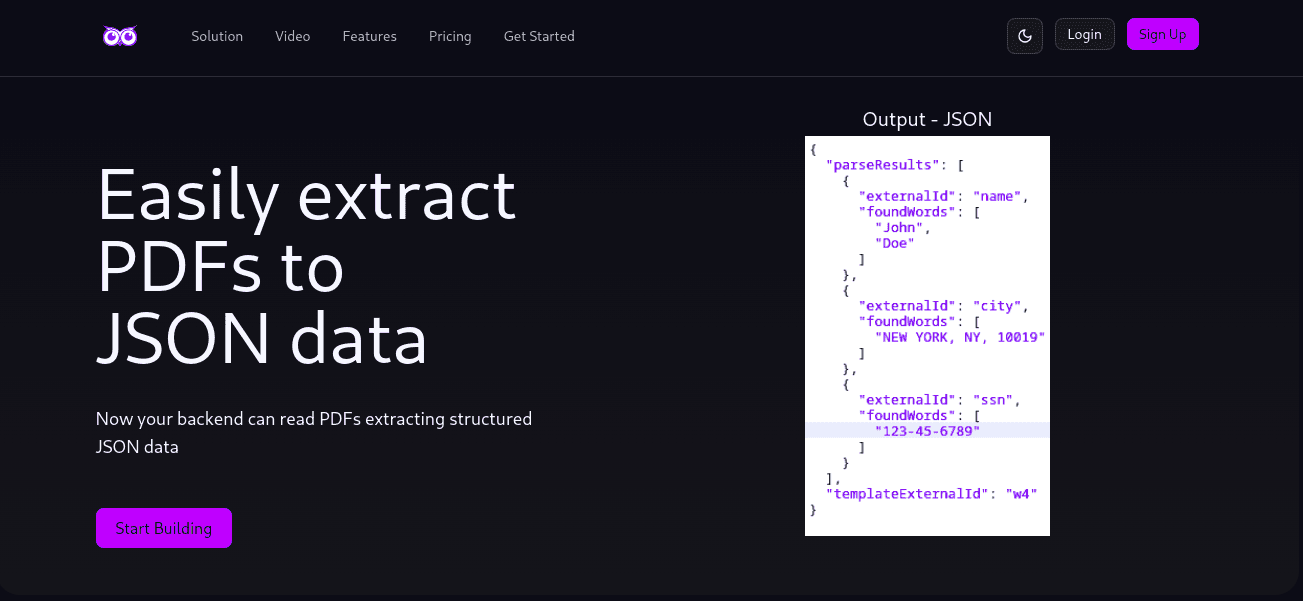
PDF Extractor API provides a reliable solution for developers to convert HTML strings, including CSS and JavaScript, into PDF documents with a single API request. It eliminates the complexities of managing headless browsers, offering consistent output powered by Chrome's rendering engine. The API is designed for production workloads, ensuring fast and scalable PDF generation. Developers can integrate it using any HTTP client, sending JSON input and receiving PDF output. It supports template engines like Handlebars/Mustache for separating data from design, and offers secure API key authentication. The service is built to handle thousands of PDFs per minute, scaling automatically to meet demand.
eps
eps is a machine learning library designed for Ruby, enabling developers to build predictive models efficiently. It supports both regression and classification tasks, automatically splitting data into training and validation sets for performance evaluation. A key feature is its ability to serve models created in other languages like Python and R, using standards like PMML. This allows for flexible integration of diverse machine learning workflows into Ruby applications. The library also offers robust feature engineering options for numeric, categorical, and text data, along with various algorithms including LightGBM, Linear Regression, and Naive Bayes. It provides tools for model monitoring and database storage, making it suitable for continuous integration and deployment of machine learning models.
perplexity-ai
Perplexity AI is a Python module designed as an unofficial API wrapper for Perplexity.ai, offering enhanced functionality and flexibility. A key feature is its ability to leverage Emailnator for automatic generation of new accounts, effectively bypassing query limits and providing unlimited pro queries. The module supports both synchronous and asynchronous APIs, catering to different programming needs. For users who prefer a graphical interface, it also includes a web interface that automates account creation and usage. This tool is particularly useful for developers and data scientists looking to integrate Perplexity.ai's capabilities into their applications or workflows without the constraints of official API keys, offering robust error handling, comprehensive logging, and streaming responses.
awesome-chatgpt-api
awesome-chatgpt-api is a comprehensive, curated list of applications and tools that leverage the new ChatGPT API. This resource is particularly valuable as it highlights tools that enable users to configure and use their own API keys, facilitating free and on-demand access to their personal quota. Beyond just a list of tools, it includes a dedicated development section, offering a collection of projects and articles designed to assist developers in building better applications. The list covers a wide range of categories, including plugins, extensions, web apps, desktop and mobile applications, and command-line interface (CLI) tools, making it a versatile resource for anyone looking to integrate or develop with the ChatGPT API.
Facetorch App
Facetorch App is a Python library designed for comprehensive facial analysis, available as a Hugging Face Space. It allows users to upload photos or use a webcam to detect faces, generate 3D facial landmarks, and analyze various facial attributes. The app provides detailed reports on detected facial expressions, action units, and emotion scores. It also includes capabilities for extracting facial embeddings and performing face recognition. This tool is particularly useful for developers and researchers in computer vision who require advanced facial analysis functionalities for their projects.
SPTAG
SPTAG (Space Partition Tree And Graph) is an open-source library developed by Microsoft Research and Microsoft Bing, designed for large-scale vector approximate nearest neighbor search. It represents samples as vectors and compares them using L2 or cosine distances. SPTAG offers two primary methods: kd-tree (SPTAG-KDT) for efficient index building and balanced k-means tree (SPTAG-BKT) for superior search accuracy in high-dimensional data. Key features include fresh updates for online vector deletion and insertion, and distributed serving across multiple machines. The library is inspired by the NGS approach and uses k-nearest neighborhood graphs for enhanced connectivity, with balanced k-means trees replacing kd-trees for improved accuracy with high-dimensional vectors. It provides an iterative search process combining tree and graph searches.

hava havai
Hava Havai offers the world's first web check-in API, specifically designed for travel agents and Online Travel Agencies (OTAs). This powerful tool enables seamless integration with over 500 airlines globally, allowing for automated web check-ins, seat selection, baggage management, and payment components. With a rapid 2-day integration time, businesses can quickly unlock new revenue streams and enhance customer experience. Key features include built-in UI widgets for mobile and desktop, instant digital boarding pass delivery via WhatsApp, email, and SMS, and a robust API with 99.9% uptime and SOC 2 compliant security. The platform uses transparent, volume-based pricing that scales with usage, making it a cost-effective solution for automating airline check-in processes.

Apives
Apives is designed to be a next-generation API ecosystem, enabling developers to easily discover, understand, and evaluate APIs. The platform aims to provide clarity and trust in the API landscape, helping builders avoid guesswork when integrating with different services. While specific features like pricing models, stability metrics, access types, and endpoint examples are mentioned in the stored description, the live website content focuses on the overarching goal of API discovery and understanding. Apives positions itself as a crucial resource for developers looking to streamline their API integration processes.
botflow
botflow is a Python Fast Dataflow programming framework engineered for building robust data pipelines. It excels in diverse applications such as web crawling, machine learning, and quantitative trading. The framework emphasizes decoupling data and functionality, making it easy to reuse components and maintain complex data flows. Botflow provides core concepts like Pipes and Routes to construct intricate data flow networks, supporting parallel computation through coroutines and ThreadPools. It also features a replay mode for efficient debugging, allowing developers to restart from the nearest completed node after an exception. With built-in nodes for HTTP loading, file I/O, and data manipulation, botflow simplifies the creation of powerful and efficient data processing workflows.