
Coding & Development
Browsing page 29 of AI tools for Code Assistants in Coding & Development. Sorted by confidence score — our independent quality rating.

Estimancy
Estimancy designs and implements generative AI assistants to structure software design, covering requirements gathering, formalization, backlog creation, and estimation. It transforms manual practices into industrialized and traceable processes, aiming to improve efficiency and reliability in software projects. The platform's agents specialize in roles like business analysis, product vision, architecture, agile structuring, development assistance, and test preparation. It automatically produces structured deliverables such as product vision, functional specifications, application architecture, backlogs (epics and user stories), test sets, and documentation. Estimancy claims a 30% time saving in specification phases, 95% reliable estimation, and reduced project risks.
Writebot
Writebot is a Javascript library designed to simplify the integration and use of GPT-3 within applications. It provides developers with a straightforward way to leverage AI for text generation, enabling quick and high-quality output. The library focuses on ease of use, allowing developers to rapidly incorporate advanced AI capabilities into their Javascript projects without extensive knowledge of the underlying GPT-3 API complexities. This makes it an ideal solution for those looking to enhance their applications with AI-powered text generation, from content creation to automated responses, by streamlining the development process and accelerating time to market for AI-driven features.
CodeGrow
CodeGrow is an AI-powered platform designed to streamline iOS app development. It leverages artificial intelligence to assist developers in various stages of the coding process, aiming to enhance efficiency and reduce development time. The tool offers a range of pre-built templates, allowing users to kickstart their projects quickly without starting from scratch. Additionally, CodeGrow integrates monetization tools, providing developers with features to help them generate revenue from their applications. This comprehensive approach makes CodeGrow a valuable asset for developers looking to build and deploy iOS apps more effectively, from initial coding to final monetization strategies.
claude-code.nvim
claude-code.nvim provides a seamless integration between the Claude Code AI assistant and Neovim, allowing developers to utilize AI capabilities directly within their editor. Key features include toggling Claude Code in a terminal window with a single key press, support for command-line arguments like `--continue` and custom variants, and automatic detection and reloading of files modified by Claude Code. It also offers real-time buffer updates, customizable window positions and sizes, and integration with `which-key`. The plugin automatically uses the git project root as the working directory and boasts a modular, maintainable code structure with type annotations and configuration validation. Built entirely with Claude Code, it enhances productivity for Neovim users.
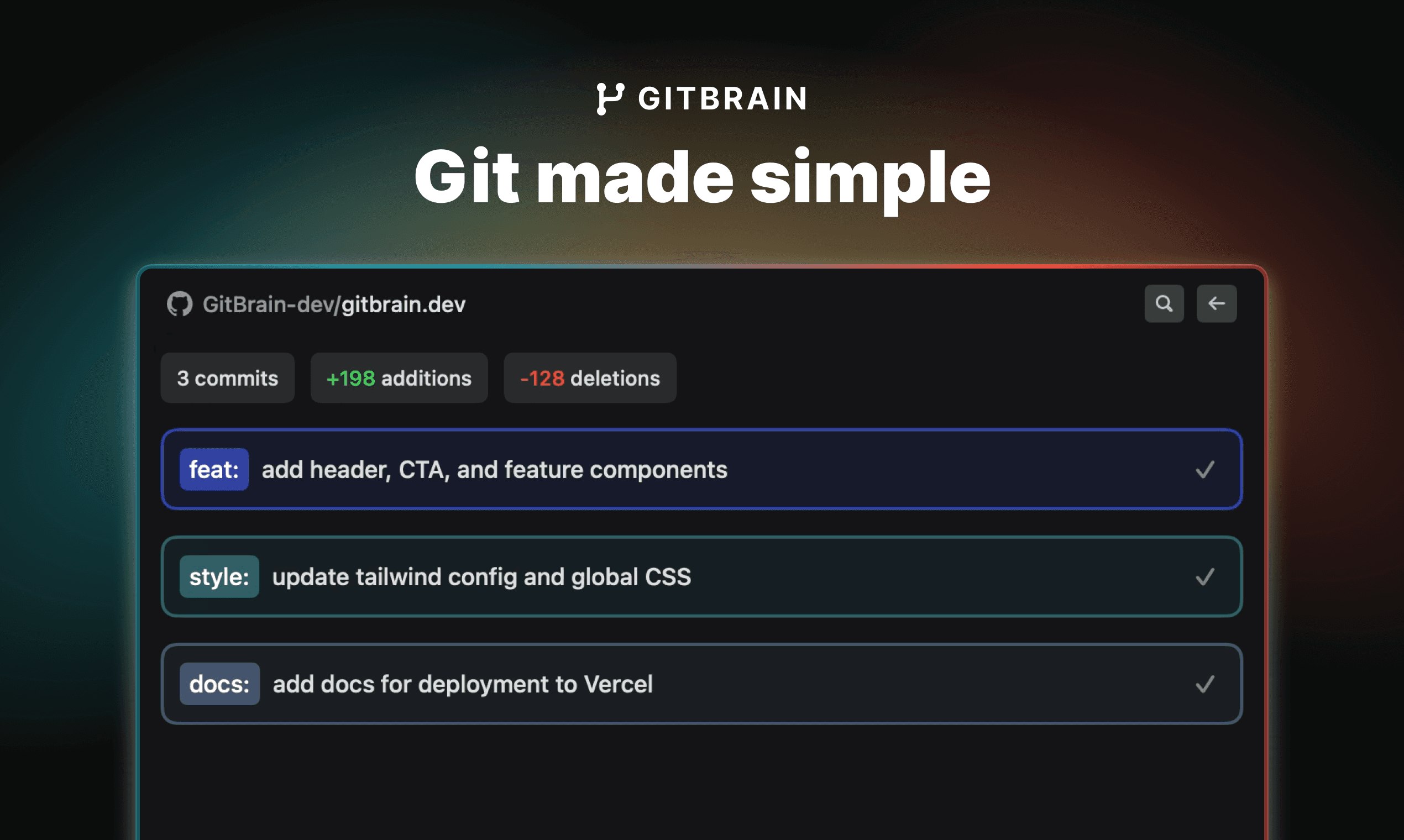
GitBrain
GitBrain is an AI-powered Git client specifically designed for Mac users, aiming to significantly reduce the time developers spend on Git-related tasks. It enhances productivity by intelligently splitting code changes into multiple AI-generated commits, which are fully customizable and editable. Users can select, reorder, and merge commits with AI assistance. The tool also provides self-code review by automatically generating summaries for code changes, ensuring thorough review before committing. GitBrain seamlessly integrates with favorite IDEs by auto-detecting projects and offers a keyboard-friendly design for efficient Git operations. As a native Mac app, it boasts optimized performance and a native UI with light and dark mode themes.
A42 Labs, Inc.
A42 Labs, Inc. is an Artificial Intelligence and Machine Learning software and services company based in Atlanta, GA. They specialize in helping innovative companies build and deploy industry-leading AI and machine learning solutions. Their services include data science consulting, advisory services for data strategy and AI opportunity identification, and solutions development for machine learning and AI applications. A42 Labs also provides embedded experts to boost team productivity and offers an AI Accelerator program to build custom AI solutions in 8 weeks. They have proven AI solutions across various industries, including IoT, Retail, Healthcare, and Finance, covering use cases like predictive maintenance, demand forecasting, fraud detection, and anti-money laundering.
awesome-agent-skills
awesome-agent-skills is a community-curated, open-source directory offering a comprehensive collection of tutorials, guides, and agent skills for various AI assistants. It allows developers to easily extend the capabilities of AI agents such as Claude, Copilot, and Codex by providing simple text files (SKILL.md) that teach them new tasks on demand. Unlike bulk-generated repositories, this collection focuses on real-world skills created and used by engineering teams. The platform emphasizes ease of use, requiring no installation, configuration, or coding. Skills are loaded only when needed, making the process faster and lighter, and are compatible across multiple AI tools. The directory can be browsed live at agent-skill.co and is maintained by Hailey Cheng.
Snippfy
Snippfy is an AI-powered automation tool designed to enhance developer productivity by streamlining various development tasks. It leverages artificial intelligence to automate repetitive processes, allowing developers to focus on more complex and creative aspects of their work. A key feature of Snippfy is its ability to automatically create pull requests, which significantly reduces manual effort in code integration and review cycles. By automating these critical steps, Snippfy aims to improve efficiency, accelerate development timelines, and ensure a smoother, more consistent software development workflow. It is built to integrate seamlessly into existing developer environments, providing a powerful assistant for modern software teams.
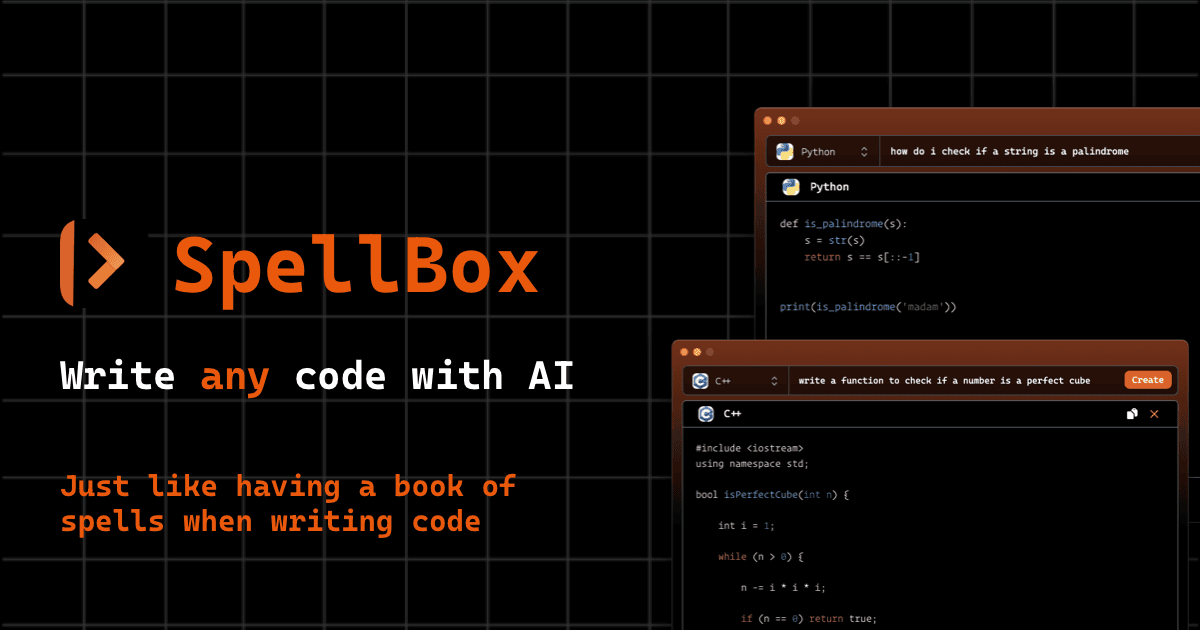
SpellBox
SpellBox is an AI programming assistant designed to streamline the coding process for developers, students, and anyone who writes code. It generates code from simple prompts, helping users solve programming problems quickly and efficiently. Beyond code generation, SpellBox offers a code explanation feature to help users understand existing code without extensive research, and a bookmarking function to save and retrieve code snippets. Available as a standalone desktop application for macOS and Windows, SpellBox also integrates directly into VS Code as an extension, providing an integrated coding experience. It aims to reduce time spent on debugging, syntax errors, and searching for solutions, allowing users to focus on delivering high-quality results.
mesh-transformer-jax
mesh-transformer-jax is a Haiku library that leverages JAX's xmap/pjit operators for model parallelism of transformers, offering a parallelism scheme similar to the original Megatron-LM. This design is optimized for efficiency on TPUs due to their high-speed 2D mesh network. The library also includes an experimental model version with ZeRo style sharding. It is built for scalability, supporting models up to approximately 40 billion parameters on TPUv3s. The project provides pre-trained models like GPT-J-6B, a 6 billion parameter autoregressive text generation model, and includes guides for fine-tuning. It is particularly useful for AI/ML researchers and developers working with large-scale transformer models.
Dereference AI Codetabs
Dereference AI Codetabs is a futuristic IDE designed for developers seeking to maximize productivity with CLI AI tools. It offers multi-session orchestration, allowing users to run and manage multiple AI conversations in parallel, including Claude, GPT-4, and Gemini. The tool features atomic branching, similar to Git, enabling developers to explore alternative solutions without losing context and merge the best results. Built with Rust for native performance, it promises instant responses and efficient memory usage without Electron overhead. Emphasizing privacy, all data and conversations remain local to the user's machine, with no messages stored on external servers, ensuring complete confidentiality for code and prompts.

Gradio
Gradio is a Python library designed to simplify the creation of web interfaces for machine learning models. It allows developers to build interactive demos and web applications for their ML models in minutes, without requiring extensive frontend development knowledge (JavaScript, CSS). Gradio supports over 40 components for various data types, including images, audio, video, 3D models, and dataframes, making it versatile for different ML applications. Users can deploy their applications to platforms like Hugging Face Spaces for free hosting, or generate public links for local demos, facilitating easy sharing and collaboration. It also offers client libraries for Python and JavaScript, enabling programmatic interaction with Gradio apps and integration into other systems.

Octomind
Octomind is an AI-powered QA platform designed for automated end-to-end testing of web applications at scale. It helps engineering teams catch bugs before they reach users by generating, executing, and maintaining tests. The tool integrates seamlessly into CI/CD workflows, providing features like instant test creation from simple actions, stable execution across various environments, and clear debugging with screenshots, logs, and visual diffs. A key differentiator is its self-healing capability, which automatically updates selectors and flows to reduce flaky tests and maintenance effort. Octomind is SOC-2 compliant, does not train on user data, and offers full transparency with open-source local components and portable Playwright test code, ensuring no vendor lock-in.
Skelet AI
Skelet AI is a comprehensive AI-driven platform designed to unleash creativity through content generation, image creation, and text-to-speech capabilities. It features a conversational AI assistant for engaging interactions and supports image recognition. Users can tap into an extensive library of templates to effortlessly craft compelling content. The AI Image Generation transforms ideas into stunning visuals with options for HD quality and various aspect ratios. Additionally, its Text-to-Speech function brings words to life with natural and expressive voices, available in over 40 languages. Skelet AI offers a free plan with 5,000 credits and a premium plan starting from $17.99/month, providing more credits, storage, and access to HD features.
Buildt
Buildt introduces Cosine, an AI coding agent engineered to enhance maintainability, visibility, and control in software development. Cosine operates across various developer environments, including a CLI agent for terminal-based precision, cloud agents for isolated task execution with full visibility, and a native macOS desktop app offering codebase awareness and autonomous task execution. It emphasizes transparency, allowing developers to see agent actions, and supports parallel work to accelerate development. Cosine is built to integrate seamlessly into existing workflows, whether locally, in the cloud, or within private infrastructure, ensuring code and data remain secure and under control. It caters to individual developers and complex team environments, facilitating tasks from building internal tools to turning Figma designs into production code.
InstructLab
InstructLab is an open source project focused on advancing large language models (LLMs) through a community-driven approach. It enables users to contribute 'skills recipes' which are example inputs and outputs for desired LLM capabilities. These recipes are then used to systematically generate synthetic data, which in turn fine-tunes the InstructLab base model. The project emphasizes a structured taxonomy for organizing skills, helping to identify gaps and generate diverse synthetic data efficiently. Users can experiment locally with synthetic data generation, model training, serving, and chatting with the model using the `ilab` command-line interface and quantized models available on GitHub. This collaborative framework aims to change how LLMs are developed and improved.

CodeNext.ai
CodeNext.ai is the premier AI assistant for Xcode, designed to significantly speed up iOS and Mac app development. It offers context-aware code completion and agentic chat capabilities directly within the Xcode environment. Developers can leverage features like 'Tab to autocomplete' for single lines or entire code sections, and use natural language chat agents to write code, fix bugs, or explain existing code. CodeNext also includes custom chat plugins for running Terminal commands and an innovative 'Image to Code' feature to convert design images into functional code. It supports a wide range of leading AI models, ensuring high-quality and efficient coding assistance.
ChatGPT-Data-Science-Prompts
ChatGPT-Data-Science-Prompts is a comprehensive, open-source repository curated by Travis Tang, providing 60 pre-designed prompts specifically for data science applications with ChatGPT. This tool is invaluable for data scientists, developers, and students looking to leverage large language models for tasks such as writing Python code for machine learning models, optimizing existing code, translating code between languages, explaining complex data science concepts, and troubleshooting problems. The prompts cover a wide range of functionalities including data exploration, hyperparameter tuning, feature engineering, SQL generation, and even generating fake datasets. It also includes prompts for explaining models using LIME and SHAP, comparing function speeds, and providing emotional support, making it a versatile resource for daily data science workflows.
LogiCoal
LogiCoal is a free, AI-powered command-line interface (CLI) coding assistant designed to streamline development workflows directly from your terminal. It leverages a sophisticated multi-agent system, including specialized agents like Coder, Researcher, Planner, Reviewer, Tester, and DevOps, orchestrated by an Odyssey agent, to handle complex coding tasks. The tool also incorporates smart model routing, which intelligently selects the optimal AI model for each specific task, ranging from lightweight 7B models for quick operations to powerful 30B models for intricate code generation. LogiCoal offers deep codebase understanding and supports integration with third-party tools via the Model Context Protocol (MCP), enhancing its capabilities. It is available across macOS, Windows, and Linux platforms, with standalone installers requiring no external dependencies.
autodoc
Autodoc is an experimental toolkit designed for developers to automatically generate codebase documentation for git repositories using Large Language Models such as GPT-4 or Alpaca. It works by indexing repository contents through a depth-first traversal and then calling an LLM to create documentation for individual files and folders. These generated documents can be combined to describe system components and their interactions. The documentation resides within the codebase, ensuring it travels with the code. Developers can use a CLI tool to query the codebase and receive specific answers with reference links to code files. Future plans include re-indexing documentation as part of CI pipelines for up-to-date content and supporting self-hosted models like Llama. The tool is currently in early development and functional, but not yet production-ready.

Code Genius
Code Genius is an AI-powered code generator designed to enhance the coding experience for developers. It acts as a pair programming assistant, offering smart suggestions, optimizing code, and generating unit tests for various scenarios. The tool supports popular frameworks like React, Vue JS, and Tailwind CSS, aiming to make code clean, efficient, and error-free. Users can engage in effortless conversations with their AI programming buddy, streamline their workflow with seamless synchronization, and integrate with GitHub for premium members. Code Genius helps developers save significant development time by automating tasks like unit test creation and code documentation.
Kilo Code
Kilo Code is an open-source AI coding agent designed to accelerate development workflows across VS Code, JetBrains IDEs, and the command-line interface. It empowers developers with AI-driven code generation, intelligent refactoring, and efficient debugging capabilities. The tool supports over 500 AI models, allowing users to bring their own API keys or utilize Kilo's pay-as-you-go gateway. A key differentiator is its strong emphasis on privacy, offering local-first options and never training on user code. Kilo Code also features specialized agent modes like Code Mode, Architect Mode, and Debug Mode, along with Cloud Agents for long-running tasks and automated code reviews, making it a comprehensive solution for agentic engineering.
Rubius
Rubius is a software engineering company with a customer-centric approach, offering a wide range of development services. They specialize in creating custom enterprise software, including EAM, MES, SCADA, PDM, PLM, DSS, and LMS solutions. Additionally, Rubius develops CAD/CAM and BIM systems for seamless design and manufacturing processes. Their expertise extends to artificial intelligence, covering machine learning, computer vision, and big data, as well as VR/AR applications for visualization, simulation, and education. With over 270 team members and 20 years of experience, Rubius serves various industries such as construction, manufacturing, oil and gas, retail, logistics, and education, delivering tailored software solutions.
how-to-build-a-coding-agent
how-to-build-a-coding-agent is an open-source workshop designed to teach developers how to construct their own AI-powered coding assistants. Starting from a basic chatbot, the workshop progressively introduces advanced functionalities such as reading and editing files, executing shell commands, and performing code searches. It's structured as a step-by-step guide, making it accessible even for those without extensive AI expertise. The workshop utilizes the Anthropic Claude API and Go programming language, demonstrating how to handle tool requests, errors, and build an agent that learns and improves with each interaction. It culminates in a powerful local developer assistant with various capabilities.