
Coding & Development
Browsing page 22 of AI tools for DevOps & Infrastructure in Coding & Development. Sorted by confidence score — our independent quality rating.

Ritual
Ritual is building the foundational infrastructure for autonomous intelligence, focusing on native compute, privacy, verification, coordination, and markets for long-lived AI agents. The platform addresses the challenges of AI persistence, coordination, and survival in dynamic environments, moving beyond single-call models to systems that plan, negotiate, transact, and coordinate over time. Ritual aims to empower AI agents to outlive their operators, manage their own finances, and maintain confidentiality under adversarial conditions. This infrastructure facilitates the emergence of new asset classes, non-human market participants, and composable institutions, driven by advancements in AI, mechanism design, systems, and cryptography.

angel
Angel is a high-performance distributed machine learning and graph computing platform built on the Parameter Server philosophy. Jointly developed by Tencent and Peking University, it is optimized for large-scale data and high-dimensional models, demonstrating strong applicability and stability. The platform partitions complex model parameters across multiple parameter-server nodes and implements various machine learning and graph algorithms using efficient model-updating interfaces and flexible consistency models. Developed with Java and Scala, Angel supports running on Yarn and offers PS Service abstraction for Spark on Angel. It includes a wide range of traditional machine learning methods, deep learning frameworks, and graph algorithms, making it suitable for both industrial and academic use cases.
Arize Phoenix
Arize Phoenix is an open-source AI observability platform designed for experimentation, evaluation, and troubleshooting of LLM applications. It offers robust tracing capabilities using OpenTelemetry-based instrumentation, allowing users to monitor their LLM application's runtime. The platform also facilitates performance benchmarking through LLM-powered response and retrieval evaluations. Users can create versioned datasets for experimentation, evaluation, and fine-tuning, and track changes to prompts, LLMs, and retrieval. Phoenix includes a playground for optimizing prompts and comparing models, alongside prompt management features for systematic testing. It is vendor and language agnostic, with out-of-the-box support for popular frameworks and LLM providers, and can be deployed in various environments.
AITemplate
AITemplate (AIT) is a Python framework designed to transform deep neural networks into highly optimized CUDA/HIP C++ code for lightning-fast inference serving. It achieves close to roofline FP16 TensorCore performance on NVIDIA GPUs and MatrixCore performance on AMD GPUs for major models like ResNet, BERT, and Stable Diffusion. AITemplate is fully open-source and offers a unified, flexible approach with easily extendable high-performance primitives. A key differentiator is its independence from third-party libraries like cuBLAS or TensorRT, compiling models into self-contained, portable binaries. It also features advanced horizontal, vertical, and memory fusion techniques to maximize performance. The FX2AIT tool facilitates easy conversion of PyTorch models, even supporting partial acceleration for models with unsupported operators.

Q.ANT
Q.ANT is at the forefront of photonic computing, offering solutions for more energy-efficient AI and High-Performance Computing (HPC). Their flagship product, the Native Processing Server (NPS), is the first commercial photonic processor designed to integrate seamlessly into existing computing ecosystems. This technology promises up to 30 times higher energy efficiency compared to conventional CMOS technologies, significantly reducing operational costs and environmental impact for data centers. Q.ANT's approach addresses the limitations of traditional computing by providing a scalable and sustainable alternative for complex AI training, inference, machine learning, physics simulations, and time-series analysis.
determined
Determined is an open-source machine learning platform designed to streamline the entire machine learning lifecycle. It simplifies complex tasks such as distributed training, allowing for faster model development and iteration. The platform also provides robust hyperparameter tuning capabilities to help users achieve optimal model performance. Beyond training, Determined offers comprehensive experiment tracking for analysis and reproducibility, alongside efficient resource management to help reduce cloud GPU costs. It is fully compatible with popular deep learning frameworks like PyTorch and TensorFlow, making it a versatile solution for developers and researchers.
DevOpsGPT
DevOpsGPT is an AI-driven software development automation solution that leverages large language models (LLMs) and DevOps tools to transform natural language requirements into functional software. This multi-agent system aims to significantly improve development efficiency, shorten development cycles, and reduce communication costs, leading to higher-quality software delivery. Key capabilities include clarifying requirement documents, generating interface documentation, writing pseudocode based on existing projects, and facilitating continuous integration and software version releases. It supports any development language and can extend existing codebases. The tool offers features like existing project analysis, professional model selection, and integration with various DevOps platforms in its enterprise edition.
Activepieces
Activepieces is an open-source automation platform designed to empower organizations to build a self-driven AI culture. It allows IT departments to deploy automation infrastructure with enterprise-grade control and security, while enabling teams across HR, finance, marketing, and sales to adopt AI agents. The platform offers a no-code workflow builder, making it accessible for non-technical users to create intelligent agents and automate tasks. Key features include an AI Adoption Stack, AI Agents, Control & Governance, and flexible deployment options (cloud or self-host). Activepieces aims to provide a cost-effective alternative to traditional automation tools like Zapier and Make, offering predictable pricing and extensive integrations.
Cirrascale Cloud Services
Cirrascale Cloud Services offers a robust private AI cloud infrastructure designed to accelerate AI training and inference workloads. The platform supports a wide range of leading accelerators, including NVIDIA (B200, H200, H100, A100, RTX series), AMD Instinct, and Cerebras. Key benefits include high throughput, multi-tiered storage, professional and managed services to reduce DevOps overhead, and the absence of egress or ingress data transfer fees. With high-bandwidth, low-latency networking and tailored multi-GPU server solutions, Cirrascale aims to maximize the speed and efficiency of AI projects, remove bottlenecks, and optimize workflows for seamless, secure, and efficient private AI operations. They also offer specialized services like Private Gemini on Google Distributed Cloud and Google GPAR Services.
BeyondRisk AI-6
BeyondRisk AI-6 is a platform tailored for enterprises to develop and expand AI-native applications. It focuses on integrating infrastructure and data to remove data silos and reduce tool proliferation, thereby streamlining the development process. The platform empowers organizations to innovate their software development methodologies, offering a comprehensive solution for managing complex AI environments. By providing a unified approach to AI infrastructure and data management, BeyondRisk AI-6 helps businesses overcome common challenges associated with scaling AI initiatives, such as regulatory reporting burdens and the complexity of on-premise vs. cloud ML infrastructure.
LLamaTuner
LLamaTuner is an open-source, efficient, flexible, and full-featured toolkit designed for fine-tuning large language models (LLMs). It supports a wide range of models including Llama, Llama2, Llama3, Qwen, Baichuan, GLM, Falcon, and even visual language models (VLMs) like LLaVA. The toolkit is optimized for efficiency, capable of fine-tuning 7B LLMs on a single 8GB GPU and supporting multi-node fine-tuning for models exceeding 70B. It automatically dispatches high-performance operators like FlashAttention and Triton kernels to boost training throughput and is compatible with DeepSpeed for ZeRO optimization techniques. LLamaTuner offers various training algorithms such as QLoRA, LoRA, and full-parameter fine-tuning, alongside support for continuous pre-training, instruction fine-tuning, and agent fine-tuning. It also includes features for chatting with large models using pre-defined templates.
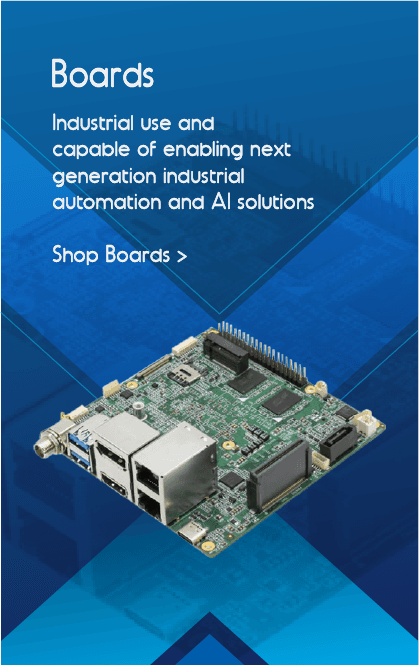
up-board.org
UP Bridge the Gap provides a robust platform for AI on the Edge computing, featuring a diverse range of devices such as boards, modules, and complete systems. These devices are designed for industrial use, facilitating advanced industrial automation and AI solutions. The platform supports various applications, including smart city infrastructure, transportation, and industrial inspection, leveraging integrated AI accelerators like Hailo-8™. UP Bridge the Gap also offers development kits, camera support, and a vibrant community forum for technical discussions and support, making it a comprehensive ecosystem for edge AI deployment.
ktransformers
KTransformers is an open-source research project focused on efficient inference and fine-tuning of large language models (LLMs) through CPU-GPU heterogeneous computing. It comprises two core modules: kt-kernel for high-performance inference kernels and kt-sft for a fine-tuning framework. kt-kernel offers CPU-optimized operations with AMX/AVX acceleration, MoE optimization, and quantization support (INT4/INT8 CPU, GPTQ GPU), with easy integration via Python API. kt-sft integrates with LLaMA-Factory for resource-efficient fine-tuning of ultra-large MoE models, supporting LoRA and production-ready features like chat and batch inference. The framework is designed for researchers and engineers working to optimize LLM performance on diverse hardware configurations.
llumnix
Llumnix is an open-source project designed for efficient and easy multi-instance Large Language Model (LLM) serving. It acts as a cross-instance request scheduling layer built on top of LLM inference engines like vLLM, aiming to optimize multi-instance serving performance. Key benefits include low latency through reduced time-to-first-token (TTFT) and queuing delays, high throughput via integration with state-of-the-art inference engines, and support for techniques like prefill-decode disaggregation. Llumnix achieves this through dynamic, fine-grained, KV-cache-aware scheduling and continuous rescheduling across instances, enabled by a near-zero overhead KV cache migration mechanism. It is easy to use, requiring minimal code changes for vanilla vLLM deployments, and offers seamless integration with existing multi-instance deployment platforms, fault tolerance, elasticity, and high service availability.
NodeMaven IP Quality Filter
NodeMaven IP Quality Filter offers a premium proxy service designed to prioritize IP quality, ensuring that 95% of its IPs have clean records. This focus on quality minimizes the risk of blacklisting and improves the success rate of online operations. The service provides various proxy types including Residential, Mobile, and ISP Proxies, each optimized for specific use cases like multi-accounting, data collection, and geo-targeting. Key features include a speed and quality filter for faster, more reliable connections, ZIP-level targeting for precise location accuracy, and sticky sessions up to 7 days for consistent identity. NodeMaven also offers a Scraping Browser for auto-scaling automation and data collection, making it suitable for affiliate marketing, AI agents, crypto, and digital marketing.
MInference
MInference is a powerful tool designed to significantly speed up the inference process for long-context Large Language Models (LLMs). By employing approximate and dynamic sparse attention calculations, MInference can reduce inference latency by up to 10x during the pre-filling stage on an A100 GPU, all while preserving model accuracy. It supports processing million-token prompts and has been integrated into various LLMs like Qwen2.5 and LLaMA-3.1. The framework also includes MMInference for multi-modality models and SCBench for evaluating long-context methods from a KV cache perspective, offering comprehensive solutions for optimizing LLM performance.
Console
Console is an AI-Native ITSM platform designed to significantly reduce the IT support workload by automating the resolution of common requests. It leverages AI Agents to understand an organization's unique processes and policies, enabling it to auto-resolve over 50% of support requests directly within communication platforms like Slack and Microsoft Teams. The platform utilizes 'Playbooks' for step-by-step instructions, 'Access Policies' for self-serve app access, and integrates with existing 'Knowledge Bases' to provide relevant information. Console aims to free up IT teams from repetitive tasks, allowing them to focus on more strategic projects, and boasts rapid deployment, with many teams reaching production in three weeks or less.
Prophecis
Prophecis is a comprehensive, one-stop cloud-native machine learning platform developed by WeBank. It integrates various open-source machine learning frameworks and offers robust multi-tenant management capabilities for machine learning compute clusters. The platform provides full-stack container deployment and management services for production environments, supporting the entire machine learning lifecycle from data preprocessing and feature engineering to model training, evaluation, release, and deployment. Key components include Prophecis Machine Learning Flow for distributed modeling, MLLabis for development and exploration with Jupyter Lab integration, Model Factory for model storage and deployment, Data Factory for feature engineering, and Application Factory for CI/CD and DevOps tools.
Baseten
Baseten is an AI infrastructure platform designed for deploying and scaling AI models in production environments. It offers a comprehensive inference platform that includes dedicated inference for high-scale workloads, allowing users to serve open-source, custom, and fine-tuned AI models on purpose-built infrastructure. The platform provides pre-optimized Model APIs for testing new workloads and evaluating the latest AI models, alongside the capability to run training jobs on inference-optimized infrastructure. Baseten emphasizes bleeding-edge performance research, cross-cloud high availability, and seamless developer workflows, ensuring fast model runtimes and 99.99% uptime. It supports rapid scaling across any cloud provider, with options for single-tenant, self-hosted, and hybrid deployments, catering to various security and latency requirements.

BizzSoftware
BizzSoftware specializes in accelerating enterprise innovation by providing rapid, quality, secure, and affordable custom software solutions. They eliminate common IT department hurdles by offering end-to-end services including intuitive design, interactive prototyping, robust software engineering across various platforms, secure hosting and continuous monitoring, and proactive support. Their expertise extends to developing AI-powered platforms, as demonstrated by case studies in AI matchmaking for recruiting, AI-based lead generation and email marketing, and AI-driven inventory optimization for retail. BizzSoftware also revolutionized video content delivery for large enterprises and digitized project management processes with AI-powered feedback analysis. They are ISO 27001 certified, ensuring high standards of information security.
runx
runx is an open-source deep learning experiment management tool designed to automate common tasks in AI research. It facilitates hyperparameter sweeps, logging (including TensorBoard integration), and robust checkpoint management. The tool also provides experiment summarization capabilities with `sumx` and ensures code checkpointing for reproducibility. It automatically creates unique, per-run directories to prevent data overwrites and allows for easy submission of batch jobs to a farm. While the project is no longer maintained and contains security vulnerabilities, it offers a foundational approach to managing complex deep learning experiments.
robusta
Robusta is an open-source platform designed to improve Prometheus alerts for Kubernetes environments. It provides smart grouping to reduce notification spam, AI enrichment for faster alert investigation, and automatic remediation capabilities to fix issues quickly. Robusta integrates with Prometheus via webhooks and offers features like correlating alerts with Kubernetes resource changes, generating native alerts for OOMKills, and updating external systems upon alert resolution. It supports numerous notification destinations and metrics/alerting tools, and can be installed with or without an existing Prometheus setup. The platform also offers a free Robusta UI account for an AI Assistant, alert timelines, and change tracking.
service-streamer
Service Streamer is a middleware designed to optimize web services for deep learning applications, particularly by improving GPU utilization. It addresses the challenge of discrete user requests in web services versus the mini-batch processing typical of deep learning models, collecting requests into mini-batches to leverage parallel computing capabilities. This approach significantly enhances overall system performance and reduces latency for online inference. The tool is easy to use, requiring minor code changes to achieve substantial speed improvements, and offers good expandability for multi-GPU scenarios. It is compatible with various web and deep learning frameworks, making it a versatile solution for deploying and accelerating machine learning models in production environments. Service Streamer supports distributed GPU workers and web servers, and can be integrated with Redis for distributed setups.
sre
The SmythOS Runtime Environment (SRE) is an open-source, cloud-native runtime and SDK specifically designed for production AI agents. It offers OS-level abstractions for various AI resources such as LLMs, vector databases, storage, and caching, all accessible through a unified API. This allows developers to write agent logic once and scale it across local, cloud, and edge environments without changing their business logic. SRE emphasizes built-in security, observability, and includes over 40 production-ready components. It provides a robust and scalable foundation for agent orchestration and lifecycle management, making it easier to ship production-ready AI agents.