
Coding & Development
Browsing page 13 of AI tools for Frontend & UI in Coding & Development. Sorted by confidence score — our independent quality rating.
UX Pilot AI
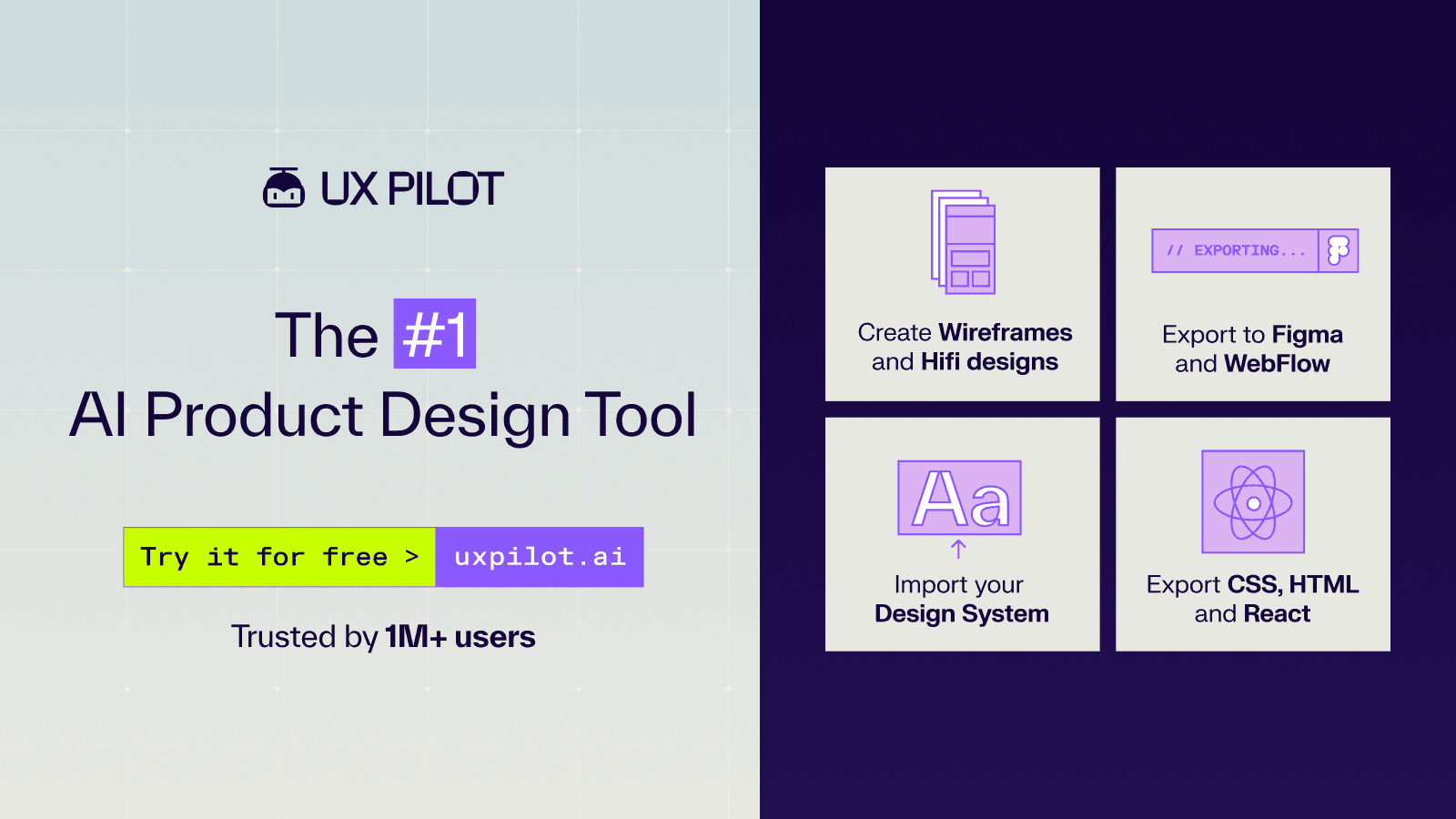
UX Pilot AI is an AI-powered UX/UI design platform that transforms ideas into production-ready interfaces in seconds. It allows users to generate wireframes and high-fidelity UI designs from natural language prompts, supporting multi-screen user journeys and adapting layouts for various devices. The platform integrates with Figma for further customization and offers clean code export in React/HTML/Tailwind, with GitHub sync capabilities. Key features include AI UI generation, wireframe generation, autoflow for user journeys, one-click high-fidelity generation, and design system support. It also provides UX analysis and the ability to convert PRDs or sketches into digital interfaces, streamlining the entire UX workflow from ideation to handoff.
SaaSykit
SaaSykit is a comprehensive Laravel-based SaaS starter kit designed to accelerate the development and launch of Software-as-a-Service products. It provides a robust boilerplate with essential features such as subscription and one-time purchase management, integrating seamlessly with payment providers like Stripe, Paddle, Lemon Squeezy, Polar, and Creem. The kit includes a beautiful admin panel for managing products, plans, pricing, and customer data, alongside a user dashboard for customer self-service. SaaSykit also offers multi-tenancy support, customizable themes, a ready-to-use blog for SEO, and built-in authentication with social login options. It's optimized for AI-assisted development, making it compatible with leading AI coding tools.

angular-node-java-ai
angular-node-java-ai is an open-source full-stack starter project designed to accelerate the development of modern web applications. It provides a robust foundation with Angular 20 for the frontend, and Node.js (JavaScript/TypeScript) or Spring Boot (Java 21) for the backend. The project emphasizes AI integration, including Large Language Models (LLM), voice, and podcast functionalities, making it suitable for building intelligent applications. It ensures CI/CD compatibility and offers straightforward Docker deployment options, promoting isolated and testable components. Developers can quickly set up a complete stack with mock data or connect to PostgreSQL/MySQL databases, streamlining the development workflow.
a1111-sd-webui-lycoris
a1111-sd-webui-lycoris is an extension designed for stable-diffusion-webui, enabling users to seamlessly load and manage LyCORIS models. This standalone extension utilizes sd-webui's extra networks API to prevent conflicts with other LoRA extensions. It supports various LyCORIS algorithms and allows for detailed control over model parameters like text encoder and UNet weights. Users can install it directly from the webui's 'available' or 'from url' tabs, or by manually cloning the repository. It's important to ensure the stable-diffusion-webui version is compatible, specifically after commit a9fed7c3, for optimal performance and to avoid unexpected behavior.
AliTech Solutions
AliTech Solutions provides comprehensive future tech services, focusing on software development for various business applications such as Workflow Management Software and CRM Systems. Their expertise extends to AI/ML development, DevOps, and UI/UX design, ensuring end-to-end custom solutions. They integrate innovative technologies like cloud computing and artificial intelligence to enhance business operations and drive efficiency. AliTech emphasizes user-centric design, creating intuitive interfaces and user-friendly applications that meet and exceed user expectations. They offer customizable solutions tailored to unique organizational needs, with robust support and maintenance services post-implementation.

Marblism
Marblism offers a suite of AI employees designed to automate and streamline various business operations. These AI assistants can manage your inbox, post on social media, write SEO-optimized articles, generate leads, handle reception duties, and even assist with legal document review. The platform aims to free up business owners from time-consuming tasks, allowing them to focus on growth. Marblism integrates with popular tools like Gmail, Outlook, Instagram, Facebook, X, LinkedIn, and Google Calendar, and supports over 100 languages. It offers a 7-day money-back guarantee and provides continuous learning for its AI employees based on user feedback.
Sleek.design
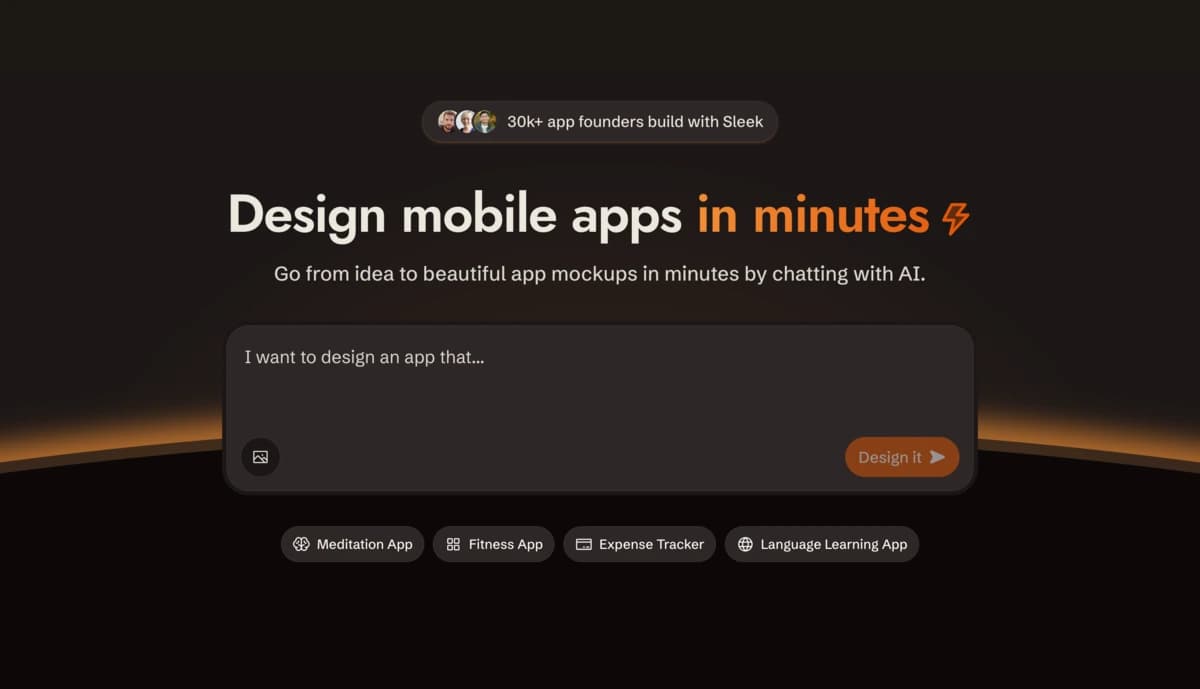
Sleek.design is an AI-powered mobile app designer that transforms ideas into beautiful app mockups in minutes. Users can generate iOS and Android app designs by chatting with AI or uploading images, eliminating the need for a traditional designer. The platform offers easy editing and refinement of designs, with the ability to export layouts directly to Figma as native, editable layers or as HTML/React with Tailwind CSS code. Sleek provides pre-built templates and style presets like Neo-Brutalism, Glassmorphism, and Soft Clay 3D Minimal to inspire and accelerate the design process. It caters to non-technical founders, startup founders, and solo entrepreneurs, offering a cost-effective and time-efficient alternative to hiring designers.
Hado SEO | Prerender.io Alternative
Hado SEO is designed to enhance the search engine visibility of AI-built applications. By leveraging server-side rendering, it ensures that content generated by AI apps is fully indexable by search engines and social media platforms. This process helps improve discoverability and organic traffic for AI-powered tools and websites. The platform aims to solve the common problem of AI-generated content being difficult for traditional search engine crawlers to access and understand, thereby boosting SEO performance and user engagement for modern web applications.
llm-ui
llm-ui is an open-source React library specifically designed for integrating Large Language Models (LLMs) into user interfaces. It simplifies the process of displaying and interacting with LLM outputs, offering features like the ability to add custom components to the LLM's streamed responses. The library also includes throttling to smooth out pauses in streamed output, ensuring a native frame rate rendering experience. It provides robust support for code blocks across various programming languages using Shiki, and its headless nature allows developers to bring their own styles for complete UI customization. This makes llm-ui a flexible solution for developers looking to build dynamic and responsive AI-powered applications.
Whattocode
Whattocode is an AI-powered platform specifically designed to generate frontend coding challenges. This tool aims to provide developers and coding students with a consistent and effective way to practice and improve their frontend development skills. By offering tailored exercises, Whattocode helps users enhance their abilities in various frontend technologies and concepts. The platform focuses on practical application, allowing users to engage with real-world coding scenarios to solidify their understanding and proficiency. It serves as a valuable resource for anyone looking to maintain or advance their frontend coding expertise through regular, targeted practice.
Streamlit
Streamlit is an open-source Python framework designed to simplify the creation and sharing of interactive web applications. It allows users to convert Python scripts into dynamic data apps, dashboards, and even chat applications in minutes, significantly reducing development time. Key features include live editing for instant updates, a simple and Pythonic coding experience, and interactive prototyping capabilities. Streamlit supports a wide range of applications, from LLM and chatbot apps to scientific, NLP, finance, and geography apps. Users can deploy, manage, and share their creations for free using the Streamlit Community Cloud platform, fostering a vibrant community around the tool.
webnn
The Web Neural Network API (webnn) is an open-source project hosted on GitHub, developed by the Web Machine Learning Working Group. This API aims to standardize how web applications can leverage neural networks, allowing for on-device machine learning capabilities directly within the browser. Developers can clone the repository, install dependencies, and build the specification locally using tools like Bikeshed to contribute or test changes. The project emphasizes community contributions, with clear guidelines for pull requests and a process for review and deployment of specification updates. It provides a foundational layer for integrating AI and machine learning models into web environments, promoting efficient and standardized development.
WebGPT
WebGPT is an innovative project demonstrating the capability to run GPT models directly within a web browser, leveraging the power of WebGPU. This implementation, crafted in under 1500 lines of vanilla JavaScript and HTML, functions as both a proof-of-concept and an educational resource for developers interested in on-device AI inference. It has been successfully tested with models up to 500 million parameters, with potential for larger models through further optimization. The project highlights the significant advancement WebGPU brings to web applications, offering near-native access to the GPU and compute shaders. Developers can easily run WebGPT by cloning the repository and using a compatible browser like Chrome Canary or Edge Canary, with options to use included models or import custom ones.
Xvibe
Xvibe is an AI-powered platform designed to revolutionize iOS app development. It allows users to create stunning native iOS applications from simple natural language prompts, effectively turning ideas into functional code. The tool generates real Swift code, which can then be run in Xcode, making it ideal for rapid prototyping, learning Swift programming, or quickly deploying lightweight applications. By leveraging cutting-edge AI, Xvibe aims to simplify the app creation process, making it accessible to a wider range of users, from seasoned developers looking to accelerate their workflow to beginners exploring the world of iOS development.
HeroUI Chat
HeroUI Chat is an AI-powered platform designed to help users generate beautiful applications regardless of their design experience. It functions as an AI code assistant, transforming ideas into reality by generating production-ready React code from simple prompts or even screenshots. The tool aims to simplify UI development by automating the code generation process, making it accessible for a wide range of users. It supports prompt-to-code and prompt-to-design functionalities, enabling users to build websites, web apps, and frontend deployments efficiently. HeroUI Chat positions itself as an AI web app builder, creator, developer, and designer, catering to those looking to accelerate their development workflow.
Cohere Chat UI
Cohere Chat UI is an application that provides an interactive chat interface for engaging with AI assistants powered by Cohere's chat models. Users can have conversations with the AI by entering text messages, making it suitable for testing and interacting with large language models. The tool offers customizable chat settings, allowing users to tailor their experience. A key feature is the ability to upload documents, which the AI assistant can then reference during conversations, enhancing the relevance and accuracy of its responses. Users can also save or clear their chat history, providing flexibility in managing their interactions. This platform is hosted on Hugging Face Spaces, making it accessible for those interested in exploring Cohere's AI capabilities.
interacxion
interacxion is an AI-powered design tool specifically tailored for tech ventures, enabling them to create landing pages efficiently. It acts as a design counterpart, providing unbiased landing page designs with a quick turnaround time. The tool aims to streamline the design process for product offerings, allowing businesses to rapidly iterate and deploy their web presence. By leveraging AI, interacxion helps overcome the challenges of traditional design workflows, offering a faster and potentially more cost-effective solution for developing compelling landing pages.
Hypi.Tink
Hypi.Tink is a platform designed to empower businesses by providing AI-powered low-code and no-code tools. It simplifies the process of building applications, making development more accessible to a wider range of users. The platform offers robust features for user authentication, including multiple login and signup options, alongside comprehensive user management and access control capabilities. Hypi.Tink aims to streamline application development, allowing users to create mobile, website, and desktop applications efficiently without extensive coding knowledge.
StableSwarmUI
StableSwarmUI is a modular web-user-interface for Stable Diffusion, designed to make powerful tools easily accessible while maintaining high performance and extensibility. It offers a primary 'Generate' tab for beginners with a variety of features, and a 'Comfy Workflow' tab for advanced users seeking unrestricted graph access. Key features include an image editor, auto-workflow generation, and a Grid Generator. The project is currently in Beta, with plans for improved mobile browser support, LLM-assisted prompting, and convenient direct distribution. It supports installation on Windows, Linux, and Mac (M1/M2) systems, and can also be run via Docker, Google Colab, or Runpod. StableSwarmUI aims to be a comprehensive solution for all Stable Diffusion needs.

Testbook
Testbook.ai is an innovative, AI-powered no-code testing platform designed to streamline web application testing. It offers robust features for automated regression testing, UI comparison, and cross-browser compatibility testing. Users can record interactions with their web applications and play them back instantly, eliminating the need for manual scripting. The platform seamlessly integrates with popular testing clouds such as Saucelabs, BrowserStack, Testing Bot, and LamdaTest, expanding testing capabilities across various environments. Testbook.ai also includes an AI-powered UI testing feature for intelligent detection of visual discrepancies, detailed reports, and a self-healing mechanism for stable test scripts. It supports hybrid testing with a manual stepper and offers Jira integration for efficient bug tracking.
vosk-browser
vosk-browser is a speech recognition library designed to run efficiently in web browsers, leveraging a WebAssembly build of Vosk. It provides real-time speech-to-text conversion capabilities, making it suitable for integrating voice control and accessibility features into web applications. The library is built to be easy to use, offering installation via npm or CDN. It explicitly compiles Vosk for use in a WebWorker context, ensuring smooth performance without blocking the main thread. Developers can utilize it for microphone input or audio file processing, with support for 13 languages, and access a live demo to see its functionality.
web-llm
WebLLM is a high-performance, in-browser LLM inference engine designed to bring language model inference directly onto web browsers with hardware acceleration. It operates entirely within the browser, eliminating the need for server support and leveraging WebGPU for enhanced performance. The engine is fully compatible with OpenAI API, allowing users to apply the same API functionalities, including streaming, JSON-mode, and function-calling, to open-source models locally. WebLLM supports a wide range of models like Llama 3, Phi 3, Gemma, and Mistral, and allows for custom model integration in MLC format. It offers structured JSON generation, real-time interactions, and supports Web Worker and Service Worker for optimized performance and offline capabilities.
neurojs
neurojs is an open-source JavaScript framework designed for deep learning and reinforcement learning applications within the browser environment. While it mainly focuses on reinforcement learning, it is versatile enough for various neural network-based tasks. The library includes practical examples and demos, such as a 2D self-driving car visualization, to showcase its capabilities. It supports advanced features like uniform and prioritized replay buffers, advantage-learning, and models such as deep-q-networks and actor-critic (via deep-deterministic-policy-gradients). neurojs also allows for binary import and export of network configurations, including weights, and is built for high performance. However, development on neurojs is no longer actively maintained, with the recommendation to use more general frameworks like TensorFlow-JS.
FunkyDesigns
FunkyDesigns serves as a comprehensive platform for users seeking Clash for Windows, a network proxy tool based on the Clash open-source project. The site facilitates downloads of Clash for Windows and acts as a directory for various VPN node providers, often referred to as "airports." It highlights both paid and free node options, emphasizing features like high-speed internet access, support for streaming services (Netflix, TikTok), and compatibility with platforms like ChatGPT. The platform details different pricing tiers from various providers, including monthly and annual plans, and supports multiple operating systems such as Windows, Android, macOS, and iOS, with compatibility for Clash, v2ray, shadowrocket, and vmess clients.