
Coding & Development
Browsing page 144 of AI tools for Open Source & Models in Coding & Development. Sorted by confidence score — our independent quality rating.

VectorHub
VectorHub is a free and open-source learning platform designed for individuals ranging from software developers to senior ML architects who are keen on integrating vector retrieval into their machine learning stack. The platform offers practical resources to help users create Minimum Viable Products (MVPs) with easy-to-follow learning materials. It also assists in solving use case-specific challenges related to vector retrieval, enabling users to confidently take their MVPs to production. Additionally, VectorHub provides insights into various vendors in the space, helping users select the solutions that best fit their needs. A notable tool offered by VectorHub is the Vector DB Comparison, which outlines and verifies the feature sets of different Vector Database solutions.
ViT-pytorch
ViT-pytorch offers a PyTorch reimplementation of the Vision Transformer (ViT) model, based on the paper 'An Image is Worth 16x16 Words: Transformers for Image Recognition at Scale'. This tool allows users to leverage the power of Transformers for image recognition, demonstrating that applying them directly to image patches and pre-training on large datasets yields state-of-the-art results. It includes various pre-trained models like ViT-B_16, R50+ViT-B_16, and ViT-L_32, which can be downloaded and used for training. The repository provides scripts for training models on datasets like CIFAR-10 and CIFAR-100, with options for mixed precision training and gradient accumulation. Additionally, it supports visualization of attention maps, offering insights into how the model processes images.
ViTPose
ViTPose is an official PyTorch implementation for human pose estimation, based on the NeurIPS'22 paper "ViTPose: Simple Vision Transformer Baselines for Human Pose Estimation" and the TPAMI'23 paper "ViTPose++: Vision Transformer for Generic Body Pose Estimation." This tool achieves impressive accuracy, including 81.1 AP on the MS COCO Keypoint test-dev set. It supports both single-task and multi-task training, covering human, animal, and whole-body pose estimation. ViTPose provides pre-trained models, detailed configurations, and a web demo integrated into Huggingface Spaces for easy experimentation with videos and images. It's built on PyTorch and utilizes mmcv, making it a robust solution for researchers and developers in computer vision.
luminoth
Luminoth is an open-source deep learning toolkit tailored for computer vision tasks, with a primary focus on object detection. Built on Python, TensorFlow, and Sonnet, it offers support for models like Faster R-CNN and SSD, and provides pre-trained checkpoints on popular datasets such as COCO and Pascal. While it was a promising project, Luminoth is no longer actively maintained, and its developers recommend transitioning to Facebook's Detectron2 for more modern algorithms and broader use cases. The toolkit was designed to be extensible, allowing users to adapt datasets and train their own models either locally or via Google Cloud ML Engine, with robust visualization tools for monitoring and understanding model performance.
Granite-4.0 WebGPU
Granite-4.0 WebGPU offers a unique capability to run the Granite-4.0-Micro AI model entirely within your web browser, leveraging WebGPU technology for local execution. This eliminates the need for cloud-based inference, providing a private and potentially faster solution for AI model deployment. It's particularly well-suited for developers and researchers who require a self-contained environment for testing and utilizing AI models without external dependencies. The tool is designed for ease of access and local processing, making it an excellent choice for those focused on privacy, offline capabilities, or reducing computational costs associated with remote servers. It enables detailed and descriptive text generation about products from images, making it useful for e-commerce or inventory management applications.
UFO
UFO³ (Unified Framework for Orchestration) is a powerful open-source framework developed by Microsoft, designed for weaving digital agent galaxies. It facilitates the creation and orchestration of intelligent agents across multiple devices and heterogeneous platforms. The framework introduces Galaxy, a multi-device orchestration system built on principles like declarative decomposition into dynamic DAGs, continuous result-driven graph evolution, and heterogeneous, asynchronous, and safe orchestration. It utilizes a Unified Agent Interaction Protocol (AIP) for secure communication and offers template-driven MCP-empowered device agents for rapid development. UFO³ supports complex multi-step automation, cross-device collaboration, and DAG-based task orchestration, making it suitable for advanced AI agent development and deployment.
machine_learning
The machine_learning repository on GitHub offers a comprehensive collection of Python-coded examples and detailed documentation for various machine learning algorithms. It is structured around the mathematical principles taught in Dr. Andrew Ng's Machine Learning course at Stanford University and Dr. Tom Mitchell's course at Carnegie Mellon, alongside concepts from Christopher M. Bishop's "Pattern Recognition And Machine Learning." The Python code is original, providing a hands-on resource for understanding and implementing these algorithms. Each IPython notebook includes a list of pertinent reading materials, suggesting a sequential approach to learning. This resource is ideal for those looking to deepen their understanding of machine learning through practical application.

Lucid AI
Lucid AI, based in San Francisco, positions itself as a simulation company. Its core focus appears to be on the creation of "World Models" and "Generative Video," suggesting an emphasis on advanced AI for creating simulated environments or visual content. The company's messaging, including phrases like "Memory Made Manifest" and "Dreamer of Dreams," indicates an exploration of consciousness, memory, and the unfolding of infinite worlds within the mind. It invites users to consider if they are "lucid," implying a connection to dream states and the potential for AI to bring these concepts to life.
Machine-Learning-for-Cyber-Security
Machine-Learning-for-Cyber-Security is a comprehensive, curated list of tools and resources dedicated to the application of machine learning in the cyber security domain. This GitHub repository serves as a central hub for anyone looking to explore or implement ML techniques for threat detection, prevention, and analysis. It categorizes resources into essential sections such as Datasets, Papers, Books, Talks, Tutorials, and Courses, making it easy for users to find relevant information. From foundational research papers on network intrusion detection to practical tutorials on building an antivirus with machine learning, this resource aims to equip security professionals, researchers, and students with the knowledge and tools needed to leverage AI in combating cyber threats.
VLM2Vec
VLM2Vec is an open-source project from TIGER-AI-Lab, providing a unified framework for training and evaluating powerful multimodal embeddings across diverse visual formats, including images, videos, and visual documents. It introduces MMEB-V2, a comprehensive benchmark with 78 tasks designed to systematically evaluate embedding models across these modalities. VLM2Vec-V2 sets a new state-of-the-art, outperforming strong baselines. The tool supports easy configuration of training and evaluation using YAML files and allows for easy extension with new datasets. It is built on state-of-the-art Vision-Language Models like Qwen2-VL, using instruction-guided contrastive training to produce fixed-dimensional embeddings for various inputs.
m1-machine-learning-test
m1-machine-learning-test is a GitHub repository offering code and detailed instructions for benchmarking the performance of Apple's M1, M1 Pro, M1 Max, M1 Ultra, and M2 chips when running machine learning tasks with TensorFlow. The repository includes sample code for various experiments, such as training a TinyVGG model on CIFAR10, an EfficientNetB0 feature extractor on Food101, and a RandomForestClassifier on the California Housing dataset. It provides comprehensive guides for setting up a TensorFlow environment on Apple Silicon using Miniforge, installing necessary dependencies like tensorflow-macos and tensorflow-metal for GPU acceleration, and common data science packages like Jupyter, pandas, numpy, matplotlib, and scikit-learn. This resource is ideal for developers and data scientists looking to optimize and test machine learning workflows on Apple's hardware.
Geekflare Connect
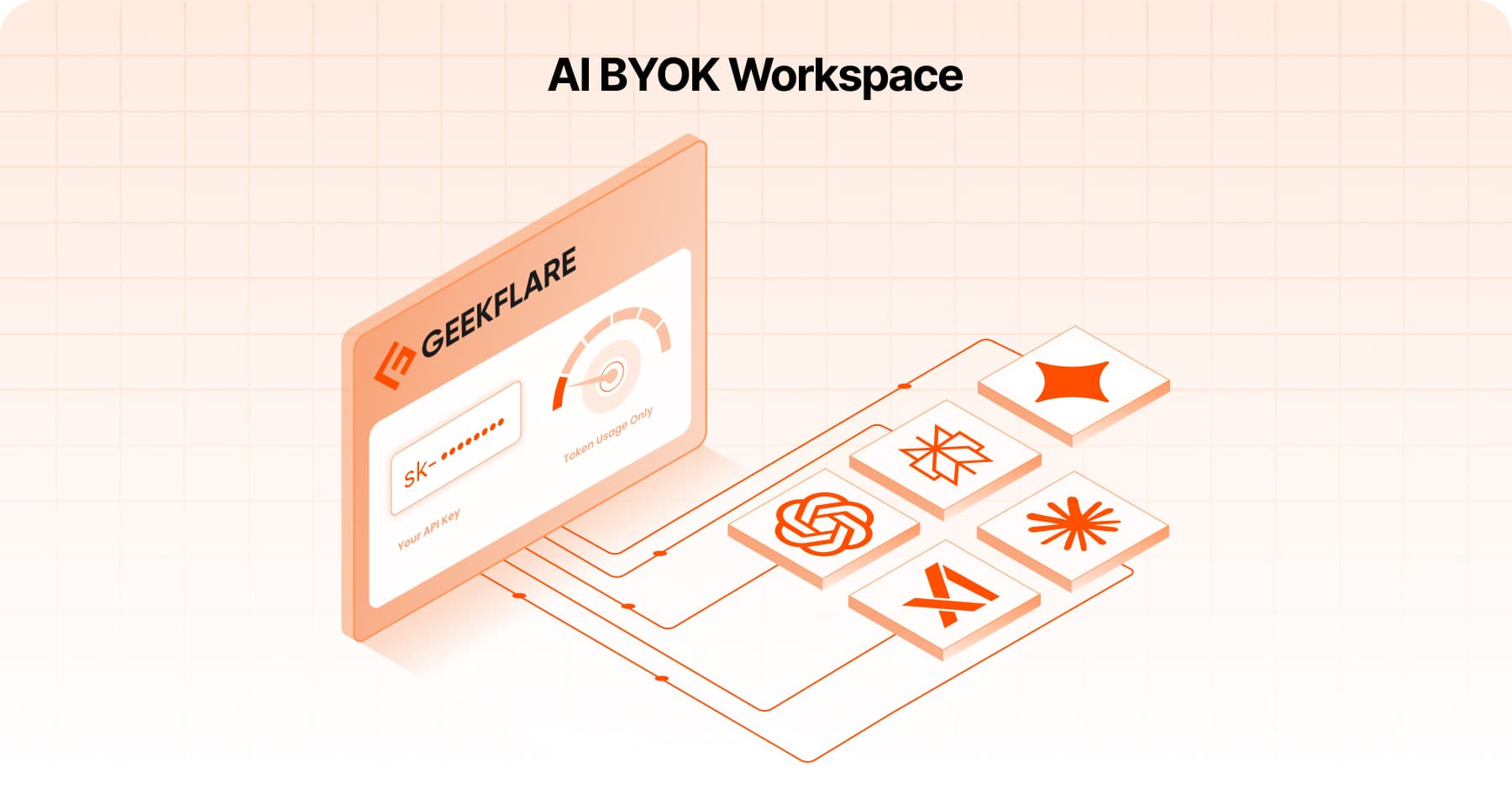
Geekflare Connect offers a secure Bring Your Own Key (BYOK) AI workspace designed for teams to collaborate efficiently with various AI models. Users can connect their own API keys from providers like OpenAI, Google, and Anthropic, enabling side-by-side comparison of model responses and secure prompt sharing. The platform provides a unified interface to access over 35 AI models, organize chats into projects, and perform deep research by querying reasoning AI models and Google Search simultaneously. It includes features for shared prompt libraries, user roles, permission controls, and in-depth usage analytics and cost tracking, aiming to significantly reduce AI expenses by up to 65% through a consumption-based model.
Kairos
Kairos is a US nonprofit dedicated to accelerating talent in the fields of AI safety and policy. The organization offers several programs, including SPAR, a part-time remote research fellowship that matches aspiring AI safety researchers with experts for impactful projects. Pathfinder provides funding, mentorship, and resources to organizers of AI safety student groups at universities worldwide. The Generator Residency is a three-month program for highly agentic executors to build infrastructure for the AI safety ecosystem. Additionally, Kairos hosts intensive three-day workshops through the Global Challenges Project, focusing on critical thinking about AI safety and biosecurity. Kairos aims to build a robust ecosystem of researchers, policymakers, and technical professionals to navigate the challenges of transformative AI.
MLOPs-Primer
MLOPs-Primer is a comprehensive collection of resources designed to educate individuals on Machine Learning Operations (MLOps). It serves as a foundational guide for understanding the best practices and technologies essential for deploying machine learning models effectively in real-world scenarios. The primer includes various educational materials such as blogs, guides, books, community resources, courses, and academic papers, covering topics from risk assessment to building, testing, and monitoring ML systems. It aims to help ML teams build responsible and scalable machine learning infrastructure, making it a valuable starting point for anyone looking to upskill in the evolving MLOps landscape.
SuperPicky
SuperPicky is an AI-powered photo culling tool specifically designed for bird photographers, aiming to streamline the often tedious process of selecting the best shots. It leverages advanced AI to provide smart ratings based on head sharpness and aesthetic quality (TOPIQ), alongside precise focus detection by analyzing RAW focus points. The tool intelligently groups burst sequences, identifies over 11,000 bird species, and detects bird-in-flight (BIF) poses and bird eye positions, writing this valuable metadata directly to EXIF and IPTC tags. With its integrated result browser, photographers can efficiently filter, review, and compare images in a user-friendly interface. SuperPicky is ideal for wildlife and bird photographers seeking to drastically reduce post-processing time, enhance their workflow, and ensure they select only the highest quality images from large shooting sessions. It also offers a command-line interface and Lightroom plugin for advanced users.
mlxtend
mlxtend (machine learning extensions) is a comprehensive Python library designed to enhance day-to-day data science tasks. It offers a wide array of functionalities, including robust ensemble methods like stacking and voting classifiers, essential feature selection and extraction techniques, and versatile visualization utilities for decision regions and confusion matrices. Additionally, mlxtend provides plotting helpers for in-depth model analysis and supports frequent pattern mining, notably incorporating the Apriori algorithm for association rule mining. This library is a valuable extension to Python's existing data analysis and machine learning ecosystem, making complex tasks more accessible for developers and data scientists.
NapkinML
NapkinML is a lightweight, open-source library offering concise implementations of various machine learning models using NumPy. Designed for simplicity and educational purposes, many of its model implementations are compact enough to fit into a single tweet. The library includes essential algorithms such as K-Means, K-Nearest Neighbors, Linear Regression, Linear Discriminant Analysis, Logistic Regression, Multilayer Perceptron, and Principal Component Analysis. It serves as an excellent resource for developers and students looking to understand the core mechanics of these models without the overhead of larger frameworks. Its focus on minimal code makes it perfect for quick experimentation and learning the mathematical foundations of machine learning.
AI agent deploys an edge AI model on a microcontroller via MCP
This tool demonstrates an AI agent's ability to deploy and iterate on edge AI models directly onto microcontrollers, specifically a TFLite Micro keyword spotting model on an nRF52840. Utilizing the Model Context Protocol (MCP) and a debug probe, the agent can flash firmware, debug, and optimize performance in a single terminal session. It significantly reduces the time from model training to hardware deployment, handling complex embedded tasks like Zephyr RTOS integration, CMSIS-NN optimization, and fixed-point DSP. The process, which typically takes weeks, is condensed to hours, allowing ML engineers to focus on model performance and accuracy rather than embedded plumbing. The agent also builds custom plugins during the session to enhance its capabilities, transforming a byte-level debug probe into an edge-AI development environment.
Object Detection Safari
Object Detection Safari is a free, web-based tool designed for exploring object detection through an interactive interface. Users can search for specific objects within images by providing text prompts, or upload their own queries to find relevant images and objects. The tool delivers labeled results, offering options to refine searches for more precise outcomes. It serves as an excellent resource for individuals interested in learning about object detection, providing a hands-on experience for educational and fun exploration. Developed by MyScale, it operates as a Hugging Face Space, making it accessible for anyone to experiment with AI-powered image analysis.
FranzKafka.xyz
FranzKafka.xyz is an open-source writing platform designed for a distraction-free writing experience. It eliminates common distractions like feeds and metrics, allowing users to focus solely on their content. A unique feature is the option to connect your own database via Supabase, offering flexibility and control over your data. The platform aims to evoke the feeling of filing a document into history, emphasizing permanence and thoughtful composition. It's ideal for those seeking a minimalist approach to writing and knowledge management.
Plug-and-Play Bias Detection
Plug-and-Play Bias Detection is an open-source AI tool available as a Hugging Face Space, developed by avid-ml. It is designed to help users identify and mitigate bias within their machine learning models. This tool is crucial for ensuring fairness and upholding ethical considerations in the development and deployment of AI applications. While the current live website indicates a runtime error, suggesting it may not be fully operational at this moment, its core purpose is to provide a accessible platform for bias detection. As an open-source project, it promotes transparency and community contribution in addressing AI fairness challenges.

Simply Privacy
Simply Privacy is New Zealand's leading privacy and responsible AI consultancy, offering pragmatic and realistic privacy solutions. Their approach is rooted in global best practices, applying risk-based, privacy, and trust by design thinking to all their work. They aim to empower clients to achieve their objectives in a way that respects individuals and their data, acting as enablers rather than barriers. The consultancy provides services to manage privacy and AI governance risks, build trust, and offers training, e-learning modules, and articles on privacy-related topics. They work with a diverse range of clients, including government agencies, universities, and large corporations, providing practical and robust advice tailored to specific business needs.
awesome-chatgpt-api
awesome-chatgpt-api is a comprehensive, curated list of applications and tools that leverage the new ChatGPT API. This resource is particularly valuable as it highlights tools that enable users to configure and use their own API keys, facilitating free and on-demand access to their personal quota. Beyond just a list of tools, it includes a dedicated development section, offering a collection of projects and articles designed to assist developers in building better applications. The list covers a wide range of categories, including plugins, extensions, web apps, desktop and mobile applications, and command-line interface (CLI) tools, making it a versatile resource for anyone looking to integrate or develop with the ChatGPT API.
ANTsPy
ANTsPy is a powerful Python library that wraps the well-established C++ ANTs (Advanced Normalization Tools) framework, providing blazing-fast medical image processing capabilities. It enables users to perform advanced operations such as image registration, segmentation, and statistical learning. The library also includes functions for efficient reading and writing of medical images, as well as tools to create publication-ready visualizations. For those interested in deep learning, ANTsPyNet is available for training and visualizing deep learning models on medical imaging datasets. It supports installation via pre-compiled binaries or building from source, making it accessible for various development environments.