
Coding & Development
Browsing page 180 of AI tools for Coding & Development. Sorted by confidence score — our independent quality rating.

verl
verl, short for Volcano Engine Reinforcement Learning for LLMs, is an open-source RL training library designed for large language models. Initiated by ByteDance Seed team and maintained by the verl community, it provides a flexible, efficient, and production-ready framework for post-training. Key features include easy extension of diverse RL algorithms through its hybrid-controller programming model, seamless integration with existing LLM infrastructures like FSDP and Megatron-LM, and flexible device mapping for efficient resource utilization. verl is known for its state-of-the-art throughput and efficient actor model resharding with 3D-HybridEngine, significantly reducing memory redundancy and communication overhead. It supports various RL algorithms such as PPO, GRPO, and DAPO, and is compatible with popular Hugging Face and Modelscope Hub models.

Scripto
Scripto is an AI-driven platform specifically designed for allied health professionals to enhance report writing and clinical reasoning. By leveraging AI-powered insights, the tool aims to significantly reduce the time and effort spent on documentation, allowing professionals to focus more on patient care. It provides turbocharged capabilities for generating reports and refining clinical reasoning, leading to more efficient workflows and improved quality of output. The platform is built to alleviate stress for users by streamlining complex tasks and offering intelligent assistance, ultimately contributing to better clinical recommendations and overall practice management.
openllmetry
OpenLLMetry is an open-source observability tool designed for GenAI and LLM applications, built upon the OpenTelemetry framework. It offers comprehensive observability over your LLM application by providing extensions and instrumentations for various LLM providers and Vector DBs. The tool seamlessly integrates with existing observability solutions like Datadog, Honeycomb, and others, leveraging the underlying OpenTelemetry standard. Developed and maintained by Traceloop, OpenLLMetry includes a convenient SDK for easy setup, allowing developers to quickly start tracing their code. It supports a wide range of destinations and instruments calls to major LLM providers and Vector DBs, ensuring full visibility into your AI application's performance.

National Supercomputing Centre (NSCC) Singapore
The National Supercomputing Centre (NSCC) Singapore, established in 2015 and funded by the National Research Foundation (NRF), manages Singapore’s national high-performance computing (HPC) resources. NSCC allocates these critical assets to support key National Research & Development (R&D) programmes and projects, aiming for significant economic outcomes and scientific imperatives for Singapore. The center leverages HPC to advance Singapore’s strategic interests, boost national research initiatives, and facilitate industry transformation in areas such as computational science, artificial intelligence (AI), visualisation, modelling & simulation, climate research, biomedicine, genetics, and big data analytics. NSCC also focuses on developing and training an HPC-enabled workforce to maintain Singapore’s global competitiveness.
web-search-mcp
Web Search MCP is a TypeScript-based Model Context Protocol (MCP) server designed to integrate advanced web search functionalities with local Large Language Models (LLMs). It offers multi-engine web search, prioritizing Bing, Brave, and DuckDuckGo for optimal reliability and performance, and includes full page content extraction from search results. The server provides three specialized tools: `full-web-search` for comprehensive searches with content extraction, `get-web-search-summaries` for quick results without full content, and `get-single-web-page-content` for extracting content from a specific URL. It supports concurrent processing and smart request strategies, switching between Playwright browsers and Axios requests to ensure efficient results. Developed and tested with LM Studio and LibreChat, it is compatible with recent LLM models like Qwen3 and Gemma 3.
web-ui
WebUI is an open-source project built on Gradio, designed to enable users to run AI agents within their web browser. It leverages the browser-use foundation to make websites accessible for AI agents, offering a user-friendly interface for interaction. The tool boasts expanded support for numerous Large Language Models, including Google, OpenAI, Azure OpenAI, Anthropic, DeepSeek, and Ollama, with plans for further integration. A key differentiator is its custom browser support, allowing users to utilize their own browser instances, thereby bypassing re-authentication and enabling high-definition screen recording. Additionally, WebUI provides persistent browser sessions, allowing the browser window to remain open between AI tasks to maintain a complete history and state of AI interactions.
whisper.net
Whisper.net offers .NET bindings for OpenAI's Whisper models, making speech-to-text conversion straightforward within .NET environments. It leverages whisper.cpp and supports a wide array of runtimes, including CPU, CUDA (12 and 13), CoreML, OpenVino, and Vulkan, catering to different hardware and performance needs. The tool is open-source and provides flexibility for developers to integrate voice recognition into their applications across multiple platforms like Windows, Linux, macOS, Android, iOS, and WebAssembly. It also includes a Ggml model downloader for easy integration with Hugging Face models, and allows for custom native binary compilation for specific requirements.
whisper.unity
whisper.unity provides Unity3d bindings for the whisper.cpp library, allowing developers to integrate OpenAI's Whisper automatic speech recognition (ASR) model directly into their Unity applications. This tool offers high-performance, local inference, meaning speech-to-text processing occurs on the user's machine without requiring an internet connection. Key features include multilingual support for around 60 languages, the ability to translate speech from one language to another (e.g., German to English text), and various model sizes to balance speed and accuracy. It supports GPU acceleration on Windows (Vulkan), macOS/iOS/visionOS (Metal), and Android (ARM64), significantly improving performance. The project is free, open-source, and can be used in commercial projects.
ZerePy
ZerePy is an open-source Python framework designed for deploying AI agents on the X platform, leveraging multiple large language models. Built from a modularized version of the Zerebro backend, ZerePy enables users to launch their own agents with similar core functionalities. It features a CLI interface for managing agents, a modular connection system, and blockchain integration for on-chain activities on Solana, Ethereum, and Monad. The framework supports various LLMs including OpenAI, Anthropic, Ollama, and XAI (Grok), and offers social platform integrations with Twitter/X and Farcaster. Users can customize agents with detailed configurations, including bios, traits, and examples, and integrate with the GOAT (Great Onchain Agent Toolkit) for advanced blockchain interactions.

Screenshot Coder
Screenshot Coder is an AI-powered tool designed to streamline frontend development by converting screenshots directly into code. It allows developers to generate clean, production-ready code at high speed, significantly reducing the time spent on manual coding from visual designs. The tool supports popular frameworks such as Tailwind CSS, Bootstrap, and React, making it versatile for various projects. Users can get their first three code generations for free without needing a credit card, providing an easy entry point to experience its capabilities. Screenshot Coder aims to simplify the process of turning design mockups into functional web interfaces, enhancing productivity for developers.
Wuerstchen
Wuerstchen is an open-source framework designed for the efficient pretraining of text-to-image models. Unlike common approaches that use single-stage compression, Wuerstchen introduces an additional stage, resulting in a 42x compression factor while maintaining faithful image reconstruction. This multi-stage compression (Stage A, B, and C) allows the computationally expensive text-conditional part to be learned in a highly compressed latent space. The tool provides notebooks for both reconstruction (Stage B) and text-conditional generation (Stage C), and is fully integrated into the Hugging Face `diffusers` library, enabling easy use with Python. It also offers training scripts for users to train their own models, highlighting its speed and cost-effectiveness due to the smaller latent space (12x12).
Shell Sage
Shell Sage is an open-source AI-powered terminal companion designed to make command-line operations more intuitive and safe. It offers robust Ollama integration, allowing users to generate shell commands, debug errors, and enhance CLI workflows using either local or cloud AI models. A key differentiator is its priority for local LLM processing, ensuring 100% privacy for sensitive operations. The tool supports multiple API options for cloud providers like Groq, OpenAI, Anthropic, Fireworks, and Deepseek, providing flexibility. Features include interactive confirmation for potentially destructive commands, context-aware error analysis with automatic fixes, and seamless switching between local and cloud modes. Shell Sage is ideal for developers seeking an intelligent assistant that prioritizes privacy while offering powerful command-line enhancements.

WisBot
WisBot AI is a comprehensive platform designed for AI consultancies and engineering teams to streamline the deployment of client-ready AI agents. It addresses the common challenges of building production-grade AI applications by providing a full stack solution, including app templates, authentication, user interfaces, databases, deployment pipelines, and monitoring tools. Users can start from pre-built templates, define agent logic in an isolated sandbox environment, run automated evaluations, and deploy with a single click. The platform ensures client isolation with dedicated infrastructure per project and offers continuous monitoring to catch regressions. WisBot allows teams to focus on agent logic rather than the surrounding infrastructure, accelerating delivery and enabling them to take on more client engagements.

DCAI
DCAI, the Danish Centre for AI Innovation, serves as Denmark's national AI infrastructure, dedicated to advancing AI research and innovation. It offers sovereign and secure AI computing capabilities through Gefion, a high-performance supercomputer. This infrastructure aims to lower the barrier to accessing advanced computing resources for various stakeholders. DCAI collaborates with academia, startups, and enterprises, providing them with the necessary tools to accelerate their AI initiatives. The center focuses on enabling cutting-edge machine learning and research infrastructure, ensuring robust support for complex computational demands within the AI domain.
Spectral Labs
Spectral Labs is a spatial intelligence company dedicated to building novel foundation models for manufacturing, robotics, and other engineering applications. Their core mission is to develop reasoning models that can understand and engineer physical systems, addressing the limitations of existing foundation models that lack inherent spatial understanding. The company trains large models capable of intelligent design and reasoning about physical systems, marking a significant step towards advanced AI in engineering. Spectral Labs has released SGS-1, a state-of-the-art generative model for 3D parametric CAD, demonstrating their commitment to pioneering solutions in structured CAD. Their team comprises experts with backgrounds from leading tech companies and research institutions, bringing cutting-edge applied AI experience to their work.

Trumio Inc.
Trumio Inc. is an AI-powered learning platform specifically designed for technology professionals navigating the complexities of AI transformation. It delivers outcome-focused competency development through experiential learning, ensuring that users gain practical skills. The platform emphasizes personalized, measurable, and engaging learning experiences, helping individuals and teams to develop and sustain the necessary competencies for success in an AI-driven world. Trumio aims to bridge the skill gap by providing hands-on training that is directly applicable to real-world technological challenges.
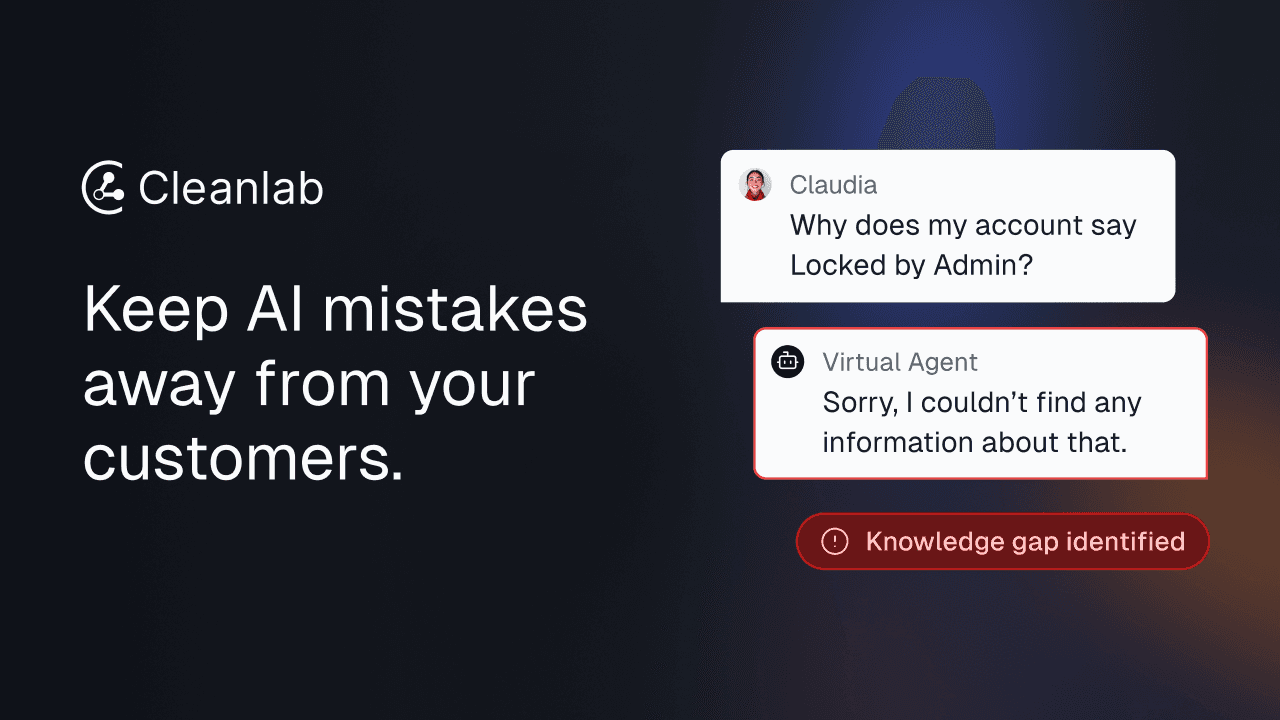
Cleanlab
Cleanlab is a platform designed to make AI agents production-ready by providing robust controls for safety, compliance, and trust. It automatically identifies and prevents poor AI responses in real-time, guarding against hallucinations, retrieval errors, documentation gaps, policy violations, and malicious use. The platform also empowers non-technical teams with a fast human-in-the-loop workflow to quickly fix AI and knowledge base issues, improving response accuracy and safety. Cleanlab supports both customer-facing and employee-facing AI agents, helping organizations maximize AI impact while minimizing brand risk. It deploys as an independent layer, compatible with any AI system and knowledge base, offering VPC or SaaS deployment options.
OpenRouter 3D Generator
OpenRouter 3D Generator is an AI-powered tool designed for creating 3D models from text prompts. Leveraging the Shap-E model through OpenRouter, it enables users to generate 3D assets efficiently. The platform features a straightforward interface where users can input a prompt, generate a model, and then download or share it. It also includes a browse creations section to view other generated models. The tool aims to simplify the 3D asset creation process, making it accessible for quick prototyping or integrating AI-generated models into various projects. It provides options to connect to OpenRouter and supports toggling themes for user preference.

wabi.ai
Wabi AI is a personal software platform designed to democratize the creation and sharing of AI-powered mini-apps. It allows users to transform prompts into remixable, screen-first applications, moving beyond traditional chat interfaces. The platform aims to foster a User-Generated Software (UGS) movement, where individuals can author and share software for various everyday scenarios, from personal organizers to specialized trackers. Backed by a16z with $20M seed funding, Wabi AI emphasizes visual interfaces and stateful mini-apps, contrasting with the limitations of chat-based AI. It offers a gallery of curated templates that users can instantly remix and customize, making software creation accessible to a broad audience without requiring extensive coding knowledge.
Mimrr
Mimrr is an AI agent designed to enhance productivity for product development teams by automating repetitive tasks and resolving fragmented workflows. It integrates seamlessly with essential development tools such as GitHub, GitLab, Azure DevOps, Bitbucket, Slack, and Jira, adding automation and intelligence to existing processes. Mimrr focuses on freeing developers and product managers to concentrate on delivering value by automating unit tests, codebase documentation, ticket writing, requirement reporting, and PR reviews. A key differentiator is its ability to be deployed in VPC/on-prem infrastructure, ensuring data privacy by never training on user data or connecting to third-party AI solutions. It also provides actionable development process insights and helps reduce technical debt.
Engine
Engine is an AI-powered platform designed to help developers and startups build applications, agents, and businesses using advanced AI models. It provides autonomous coding agents capable of multi-agent teams, web browsing, email, and scheduling. The platform supports the latest AI models from providers like Anthropic and OpenAI, running them in fast and secure cloud sandboxes. Engine offers one-click deployment, SEO readiness, and hosting, making it a comprehensive solution for developing web apps, mobile apps, and custom code. It also integrates with tools like Convex for authentication and databases, and is extensible with any MCP server, allowing users to leverage its MCP in their own tools. The service is free to use, eliminating the need for credit card or API key.

Grant Assistant
Grant Assistant is an AI-powered platform designed to help mission-driven organizations, including nonprofits, consultants, and higher education institutions, streamline their grant writing process. The tool offers two core functionalities: 'Discover' for identifying best-fit funding opportunities in seconds, and 'Respond' for drafting compelling, funder-aligned proposals in a fraction of the time. Its proprietary AI technology is trained on over 7,000 successful grant proposals, ensuring high-quality output that reflects the organization's voice and mission. Built by grant professionals, Grant Assistant prioritizes data security, ensuring user data is never used for training general language models. It aims to support grant professionals by automating tedious tasks, allowing them to focus on strategy and relationship building.
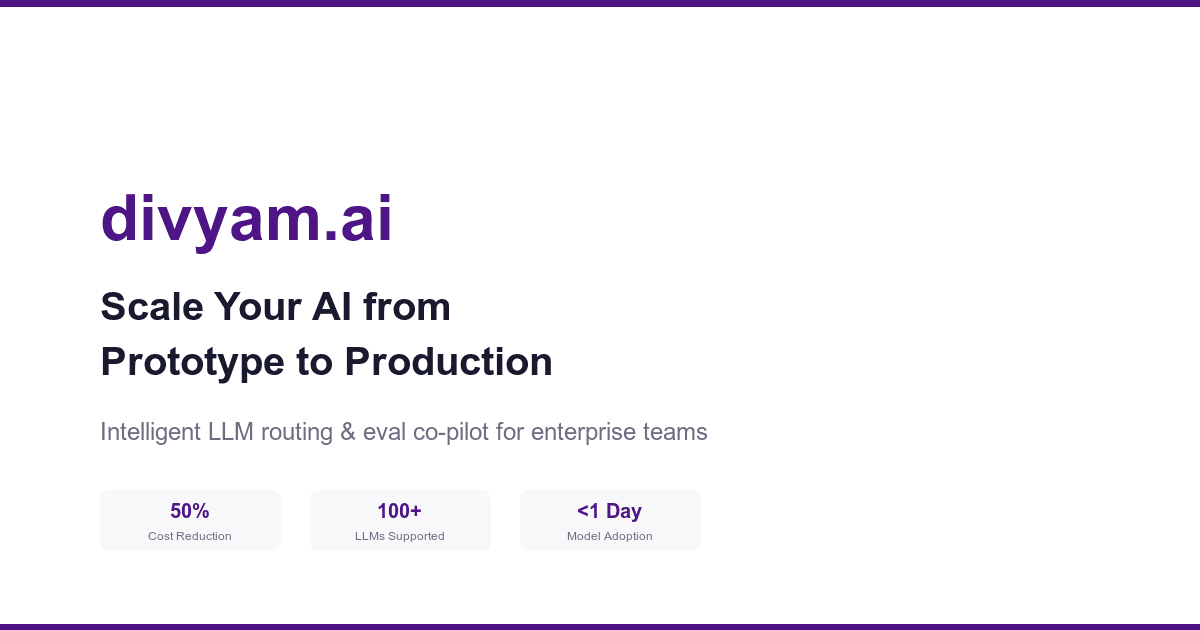
Divyam.AI
Divyam.AI is an adaptive AI infrastructure platform designed to scale AI applications from prototype to production for enterprise teams. It acts as a closed-loop system for optimizing production inference, continuously measuring real-world outcomes and evaluating quality against customer-specific standards. The platform features EvalMate for creating comprehensive evaluation pipelines, a Model Router for dynamic, agent-level intelligence in prompt routing, and continuous optimization to benchmark and adopt new models automatically. Divyam.AI aims to significantly reduce inference costs by routing prompts to optimal models while improving quality and providing full observability into every inference decision.
playmix.ai
playmix.ai is an innovative AI game maker that transforms game ideas into playable experiences in seconds. Users can simply describe their concept, and the platform generates a game ready for play. Beyond game creation, playmix.ai excels at producing game-ready art and animated sprite sheets in various styles, catering to both 2D and 3D asset needs. The platform fosters a vibrant community where users can browse and play games created by others, as well as share their own creations with friends. It's designed to make game development accessible and fast, leveraging multimodal AI agents for text, image, video, and 3D generation.