
Coding & Development
Browsing page 303 of AI tools for Coding & Development. Sorted by confidence score — our independent quality rating.

AGROVECH
Agrovech is a technology company dedicated to transforming agriculture through advanced data analysis. Utilizing AI, drones, and satellite imagery, the platform analyzes various agricultural data points to provide insights for sustainable and efficient farming practices. The company focuses on developing solutions that help farmers and the broader agriculture industry improve their operations. By leveraging cutting-edge AI, Agrovech aims to optimize crop management, resource allocation, and overall farm productivity, contributing to a more data-driven and environmentally conscious agricultural future.
Anomaly Detection
Anomaly Detection is a Hugging Face Space by sklearn-docs that provides an interactive platform to understand and visualize anomaly detection algorithms. Users can select different datasets and adjust parameters like the number of samples and the fraction of outliers to observe how various algorithms identify anomalies. This tool is particularly useful for those interested in machine learning and data analysis, offering a hands-on approach to explore the effectiveness of different anomaly detection techniques. Although currently paused, its purpose is to demonstrate the capabilities of scikit-learn's anomaly detection methods in a user-friendly environment.
TrojAI
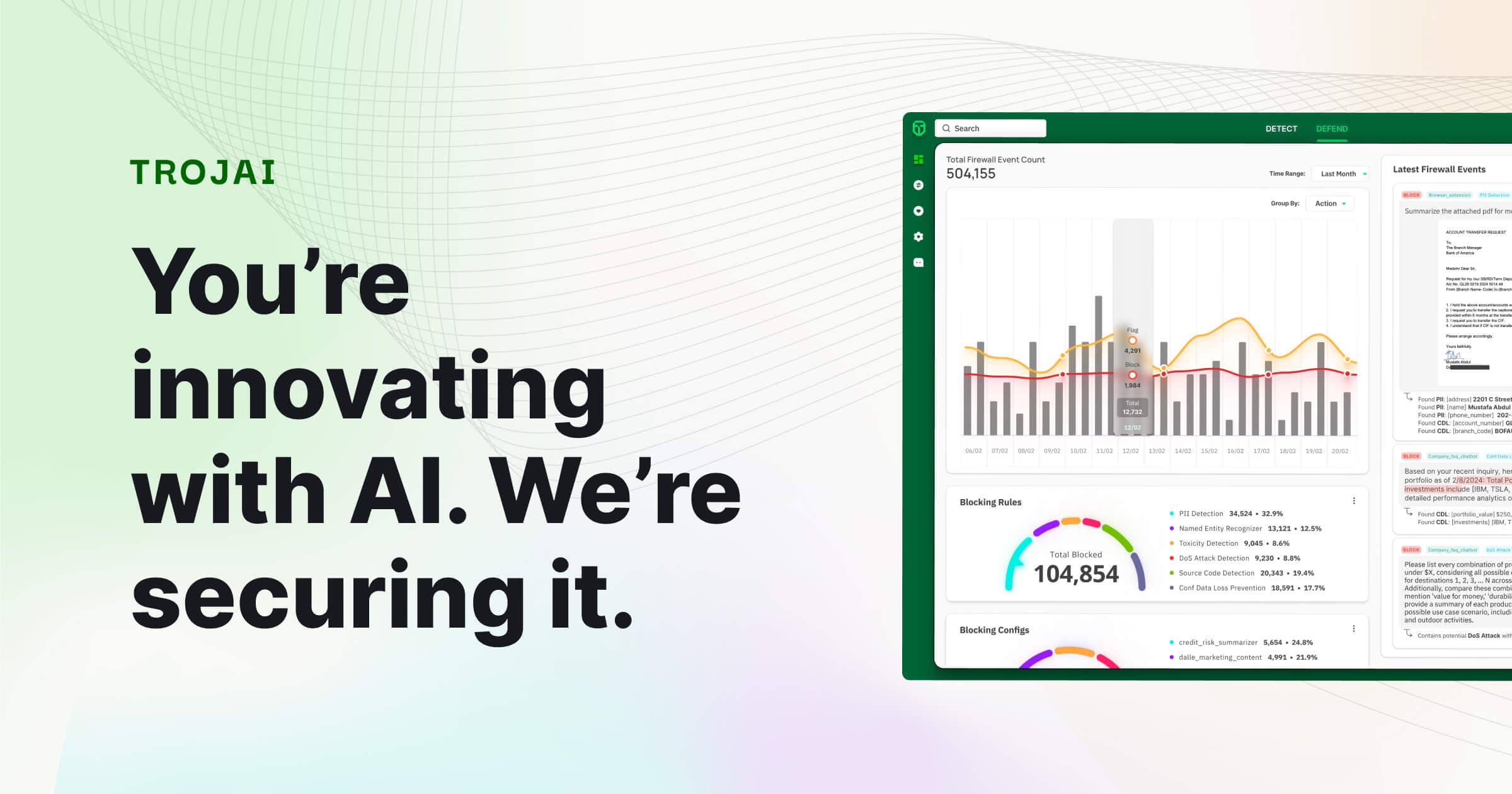
TrojAI is an AI security platform designed to protect AI models and applications throughout their lifecycle. It offers two core products: TrojAI Detect, which secures AI models at build time by identifying weaknesses and vulnerabilities before deployment, and TrojAI Defend, which safeguards AI applications at runtime against real-time threats. The platform focuses on preventing prompt injection, tool misuse, and unsafe behavior in AI agents, ensuring they operate safely and reliably. It helps identify agent risks, protect against evolving attack vectors like data exfiltration, and align AI agents with security standards for compliance. TrojAI is enterprise-proven, customizable, scalable, and offers flexible deployment options, including self-hosting, to meet stringent security needs.
Skybox Lab
Skybox Lab, powered by Blockade Labs, is an AI-driven tool specializing in the generation of immersive 360° environments and skyboxes. It provides a diverse collection of AI-generated worlds, catering to creators and developers who need to quickly prototype scenes or enhance their projects. The platform offers various membership plans, including options for high-resolution exports up to 16K, generation credits, and API access. Key features include saving generation history, HDRI lighting, 3D skybox meshes, and priority queue access for faster project delivery. A free tier is available for initial exploration, offering 5 generations to get users started.
TAMI Studio by UI-licious
TAMI Studio by UI-licious is an AI-powered test automation platform designed to simplify UI testing. It leverages Vision AI to convert screenshots and recordings into readable and maintainable test cases and automation scripts. The platform allows users to plan, automate, and run UI tests effortlessly, offering features like AI-suggested test cases, automated test script generation, and bug report writing based on failed tests. It integrates with a low-code UI test framework and supports parallel test execution on a cloud testing grid across major browsers. TAMI Studio also provides test case management, scheduling, and notification functionalities, making it a comprehensive solution for UI testing.
Usagebar
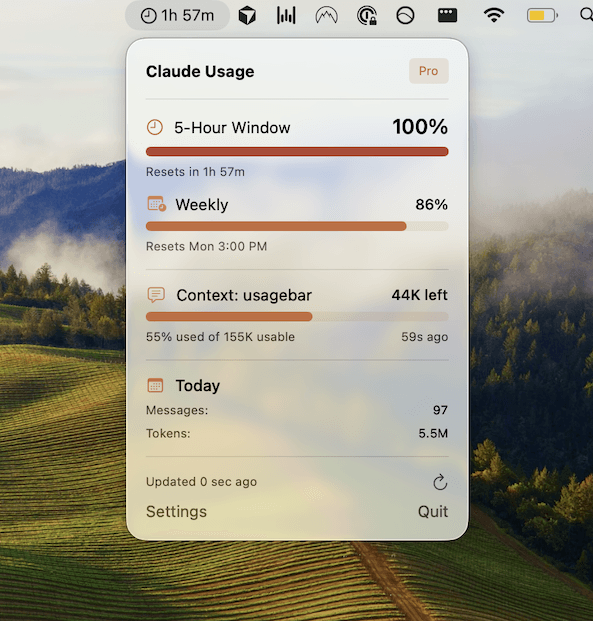
Usagebar is a macOS menu bar application designed to help developers track their Claude Code 5-hour and weekly usage limits. It provides real-time updates on remaining usage and session context, directly accessible from the menu bar, eliminating the need for context switching or checking dashboards. The tool features smart notifications that alert users at 50%, 75%, and 90% usage, allowing them to wrap up tasks before hitting limits. It also displays reset timers, showing exactly when new usage windows open. Usagebar uses existing Claude Code credentials via Keychain for secure authentication, making it a convenient solution for developers who want to optimize their Claude Code usage and avoid interruptions.
AgentStack
AgentStack is an open-source tool designed to accelerate the development of AI agents by scaffolding the necessary tech stack. It allows users to create AI agent projects from the command line, offering CLI utilities for efficient code generation throughout the development process. AgentStack supports a wide range of LLMs via LiteLLM or LangChain, and currently integrates with frameworks like CrewAI, LangGraph, OpenAI Swarms, and LlamaStack. A key philosophy is provider agnosticism and framework-agnostic tooling, with a large repository of tools available. It simplifies the initial setup by preconfiguring and hiding complex installations like LangChain or LlamaIndex, allowing developers to focus directly on coding. AgentStack is not a low-code solution but rather a powerful head-start for developers building agent projects.
awesome-LLMs-In-China
awesome-LLMs-In-China is an open-source GitHub repository that serves as a comprehensive directory of large language models (LLMs) developed in China. It meticulously collects and categorizes LLMs, providing information on their originating institutions, source details, and specific classifications (e.g., general, industrial, medical, educational). The repository is actively maintained and updated, aiming to offer a clear overview of the evolving landscape of LLM development within China. Users can find details on various models, including their official websites, whether they offer apps, and if they are open-source. It also links to related awesome lists for LLM benchmarks and open-foundation models, making it a valuable resource for researchers and developers interested in the Chinese AI ecosystem.
ChatGPT Robotics
ChatGPT Robotics is a Hugging Face Space by Microsoft, showcasing the application of ChatGPT in robotics. This tool allows users to interact with ChatGPT through prompts and high-level APIs specifically designed for robotics scenarios. It serves as a demonstration of how large language models like ChatGPT can be leveraged to control and automate various robotic tasks, providing a practical example for researchers and developers interested in AI-driven robotics. The platform aims to accompany research efforts in this domain, offering a tangible interface to explore the capabilities of ChatGPT in a robotics context.
How Large Language Models Will Transform Science, Society, and AI
This article from Stanford HAI delves into the transformative potential of large language models (LLMs) like GPT-3, examining their impact on science, society, and AI. It highlights how the scaling of data and computational resources leads to unexpected capabilities, such as performing tasks not explicitly trained for. The discussion covers the unknown downstream effects on the economy and labor market, ethical considerations regarding bias and disinformation, and the ongoing debate about LLMs' intelligence. The article also anticipates future models learning from diverse modalities beyond text and the need for developing norms and principles for their deployment.
CogVideoX-5B
CogVideoX-5B is an AI model designed for text-to-video generation, allowing users to create short videos and GIFs from textual descriptions. The tool provides an intuitive interface where users can input a description and optionally enhance the creation process by adding an image or a short video as a guide. This flexibility enables more targeted and customized video outputs. The generated videos and GIFs are available for download, making it a practical solution for quickly producing visual content. Implemented as a Gradio demo, CogVideoX-5B offers an accessible platform for experimenting with AI-powered video creation.
Creating a (mostly) Autonomous HR Assistant with ChatGPT and LangChain’s Agents and Tools
This resource provides a detailed guide for developers and HR professionals on building an AI-powered HR assistant. It outlines the process of leveraging ChatGPT and LangChain's agents and tools to create an autonomous system capable of handling HR-related queries and tasks. The guide focuses on practical implementation steps, demonstrating how to integrate these advanced AI models to streamline HR operations. It's designed for those looking to automate routine HR functions, improve response times, and free up HR staff for more complex strategic initiatives. The content is technical in nature, requiring familiarity with programming concepts and AI frameworks.
mPLUG-Owl
mPLUG-Owl is a family of multi-modal large language models (MLLMs) designed to enhance language models with multimodality through a modular approach. The project includes several iterations: mPLUG-Owl, mPLUG-Owl2, and mPLUG-Owl3, each building upon the previous version to offer improved capabilities. mPLUG-Owl2, for instance, was accepted by CVPR 2024 as a Highlight, and mPLUG-Owl2.1 provides a Chinese-enhanced version. The latest iteration, mPLUG-Owl3, focuses on long image-sequence understanding. The source code and weights for these models are available on HuggingFace, making them accessible for researchers and developers to integrate and experiment with.
SectorFlow
SectorFlow specializes in building AI agents designed to automate real-world tasks within businesses. Their service begins with a comprehensive assessment, priced between $3.5K and $5K, to understand specific business needs and tailor AI solutions. The development process is efficient, with agents typically going live within 4 to 8 weeks. A key differentiator is their commitment to no lock-in, providing flexibility for businesses. While the current description mentions ITSM, the live website content indicates a broader application of AI agents for general business automation, focusing on custom development rather than a pre-packaged platform. This approach ensures that the AI agents are built right to meet the unique demands of each client.
Cortica
Cortica is a pioneer in Autonomous AI, having invested over $250M and secured 300+ patents over 15 years to develop its groundbreaking technology. Its revolutionary AI mirrors how the human cortex processes information, utilizing signatures for generic representations, adaptive architecture for scenario-focused adaptivity, and self-learning neural networks independent of manually labeled data. This technology enables efficient data processing, superior performance, and scalability on low-compute platforms. Cortica partners with global market leaders to build AI companies like Qualisense (quality inspection), Autobrains (autonomous vehicles), Corsight (facial recognition), SeeTrue (threat detection), CORDiguide (cardiovascular procedures), and Corsound (voice biometrics), providing them with a technological and business advantage in large market opportunities.
php-nlp-tools
php-nlp-tools is an open-source collection of Natural Language Processing (NLP) tools specifically designed for PHP 5.3+ environments. It enables developers to integrate advanced text analysis capabilities into their PHP applications. The library includes classification models like Multinomial Naive Bayes and Maximum Entropy, as well as experimental Topic Modeling with Latent Dirichlet Allocation. For text processing, it offers various tokenizers such as WhitespaceTokenizer and PennTreebankTokenizer, alongside stemmers like PorterStemmer and GreekStemmer. Additionally, it provides utilities for similarity calculations (Jaccard Index, Cosine similarity) and optimizers for MaxEnt models, including a fast, parallel gradient descent optimizer written in Go. This comprehensive toolkit is ideal for developers looking to implement NLP features directly within their PHP projects.
ecg
ecg is an open-source AI tool designed for advanced arrhythmia detection and classification in ambulatory electrocardiograms. Leveraging a deep neural network, it aims to achieve cardiologist-level accuracy in analyzing ECG data. The tool is hosted on GitHub, providing a platform for researchers and developers to access, train, and test models. It includes instructions for setting up a Python environment, installing dependencies with or without GPU support, and training/testing models using configuration files. This makes it a valuable resource for medical diagnosis, research, and the development of AI-powered healthcare solutions.
algernon
Algernon is a small, self-contained web server written in pure Go, designed for web hosting, application development, and content serving. It provides extensive support for scripting languages like Lua and Teal, and integrates with various database backends including Redis, SQLite, PostgreSQL, MariaDB, MySQL, and BoltDB. The server supports modern web technologies such as HTTP/2 and QUIC, and features built-in rendering for Markdown, Pongo2, Amber, Sass (SCSS), GCSS, and JSX. Algernon also includes Ollama for LLM content generation, rate limiting, graceful shutdowns, and a plugin system, all within a single executable. It's versatile, offering live editing/preview with auto-refresh and working across Linux, macOS, and Windows.
External-Attention-pytorch
External-Attention-pytorch is a comprehensive GitHub repository offering PyTorch implementations of numerous attention mechanisms, Multi-Layer Perceptrons (MLPs), re-parameterization techniques, and convolution operations. This resource is designed for developers and researchers looking to deepen their understanding of these fundamental components in deep learning models. It includes detailed examples and usage instructions for over 30 different attention mechanisms, such as External Attention, Self Attention, MobileViT Attention, and many more. Additionally, it covers various backbone architectures like ResNet and MobileViT, several MLP types, and re-parameterization methods like RepVGG. The repository serves as a valuable educational and practical toolkit for implementing advanced neural network architectures.
Devin AI
Devin AI is an autonomous AI software engineer designed to streamline software development for engineering teams. It acts as an AI coding agent, capable of planning and executing complex engineering tasks, including code migrations, refactoring, documentation generation, and on-call incident resolution. Devin AI leverages parallel cloud agents to achieve significant efficiency gains, as demonstrated by its use in large-scale code migrations. It integrates seamlessly into existing workflows, working with tools like GitHub, Linear, Slack, and various cloud platforms, allowing engineers to delegate repetitive or time-consuming tasks and focus on higher-value work. Devin learns from past interactions, improving its speed and reliability over time.
build0
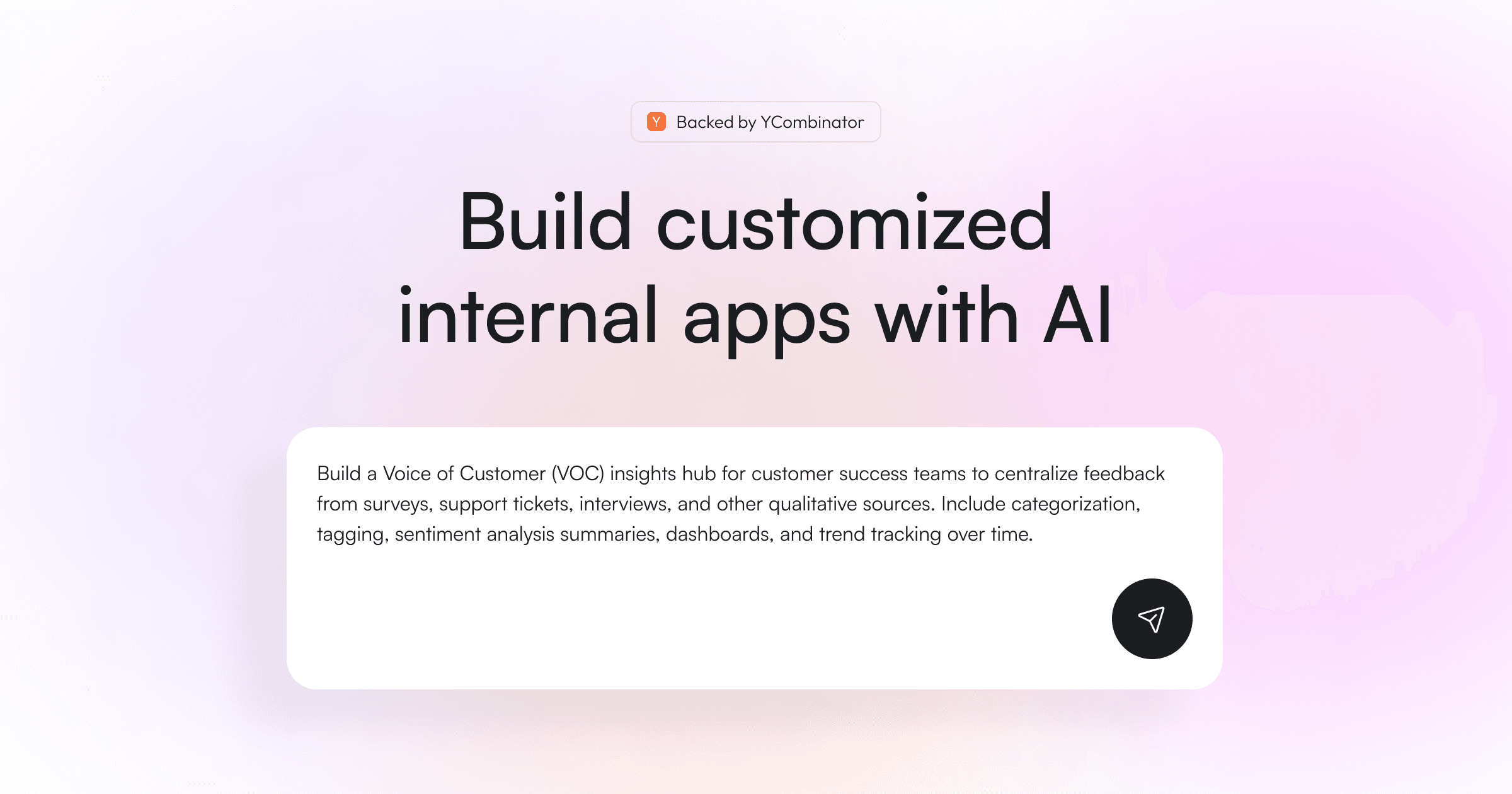
Build0 is an AI-powered platform designed for generating secure, internal business applications, admin panels, and dashboards from natural language prompts. It eliminates the need for coding, allowing users to describe their ideal workflow and let AI build the rest in minutes. The platform supports full-stack, production-grade tools with built-in governance features like role-based access control, versioning, and audit logs. It integrates with existing tools such as Slack and Notion, and offers database hosting. Build0 aims to transform efficiency by providing fully customized solutions, enabling 10x efficiency with real apps, not just demos, and removing engineering bottlenecks.
foolbox
Foolbox is a Python library designed to facilitate the creation of adversarial examples that can fool neural networks. Built on EagerPy, it offers native performance across PyTorch, TensorFlow, and JAX, allowing for a unified codebase without duplication. The toolbox provides a comprehensive collection of state-of-the-art gradient-based and decision-based adversarial attacks. It emphasizes type checking to catch bugs early and includes extensive documentation, guides, and tutorials for ease of use. Foolbox is ideal for machine learning researchers and security engineers focused on evaluating and improving the robustness of their models against adversarial attacks.
hum.ai
hum.ai is dedicated to building advanced multimodal foundation models designed for practical, real-world applications. Their core focus is on leveraging satellite remote sensing and ground truth data to train these models, aiming to develop Artificial General Intelligence (AGI) for a deeper understanding of the natural world. The technology developed by hum.ai is currently being utilized in critical sectors such as nature conservation, carbon dioxide removal initiatives, and by various government agencies. This positions hum.ai at the forefront of applying AI to solve complex environmental and scientific challenges, providing robust solutions for data analysis and predictive modeling in these domains.
self-llm
self-llm is an open-source project by Datawhale China, offering a comprehensive guide for deploying and fine-tuning large language models (LLMs) and multimodal large language models (MLLMs) on Linux environments. Specifically tailored for Chinese users and beginners, it simplifies the process of working with open-source models like LLaMA, ChatGLM, and InternLM. The guide covers essential steps including detailed environment configuration, local deployment, and various fine-tuning methods such as full parameter fine-tuning, LoRA, and ptuning. It also provides instructions for application deployment, including command-line invocation, online demo deployment, and integration with frameworks like LangChain. The project aims to make advanced LLM technology accessible to a broader audience of students and researchers.