
Coding & Development
Browsing page 313 of AI tools for Coding & Development. Sorted by confidence score — our independent quality rating.

SanctScan
SanctScan offers sanctions screening for individuals and organizations against major global lists including OFAC, EU, UN, and UK. It provides instant risk scores, continuous monitoring with real-time alerts, and compliance-ready PDF reports. Designed for speed and simplicity, SanctScan aims to be an alternative to full AML suites by focusing solely on sanctions compliance, offering transparent pricing and a quick setup. The platform updates lists daily from official government sources and includes API access for programmatic screening, webhook notifications, and team collaboration features.
Kasco R&D Technologies
Kasco R&D Technologies specializes in developing AI and IoT solutions to drive business results and innovation. With over 10 years of expertise, Kasco focuses on research and development to create transformative solutions. Their offerings include KSIM for real-time manufacturing inspection, KMVI for high-productivity inspection and management of energy assets, CCV (Cargill® Cattle View) for automated feedlot management using AI and autonomous drones, and KSAFE for real-time occupational safety using AI and computer vision. Kasco emphasizes innovation and R&D as core to their approach, aiming to transform processes, reduce costs, and generate real value for their clients.
Camera Settings As Tokens
Camera Settings As Tokens is an AI tool hosted on Hugging Face Spaces designed for generating detailed images. Users can input a text description and then fine-tune various camera settings, such as focal length and ISO speed, to achieve specific visual outcomes. This functionality allows for greater control over the generated image's aesthetic, moving beyond simple text-to-image prompts. The tool is intended for AI enthusiasts, developers, and researchers who wish to explore the impact of photographic parameters on AI-generated visuals. While the concept is innovative, the current live website indicates a runtime error, suggesting the tool is not currently operational.
Camel Agents
Camel Agents is an AI agent application hosted on Hugging Face Spaces, designed to process tasks concurrently. Users can launch an AI agent by providing an API key and specifying the number of tasks to run at once. This tool facilitates the creation of AI-powered systems capable of handling multiple operations simultaneously, making it suitable for automating complex workflows. It is licensed under the Apache 2.0 license, promoting open-source collaboration and development within the AI community. The platform is ideal for developers and researchers looking to experiment with or deploy AI agents for parallel task execution.
netron
Netron is an open-source visualizer designed for neural network, deep learning, and machine learning models. It provides a clear graphical representation of model architectures, making it easier for developers and data scientists to understand, debug, and analyze their models. The tool supports a wide array of popular formats including ONNX, TensorFlow Lite, PyTorch, torch.export, ExecuTorch, Core ML, Keras, Caffe, Darknet, TensorFlow.js, Safetensors, and NumPy. Additionally, Netron offers experimental support for TorchScript, MLIR, TensorFlow, OpenVINO, RKNN, ncnn, MNN, PaddlePaddle, GGUF, and scikit-learn. It can be installed across multiple platforms such as macOS, Linux, Windows, and Python, or accessed directly via a browser, offering flexibility for different workflows.
netket
NetKet is an open-source Python library built on JAX, designed for the study of many-body quantum systems using artificial neural networks and machine learning techniques. It offers cutting-edge methods for researchers and developers in quantum computing and physics. The project is an affiliated member of numFOCUS, ensuring its commitment to open science and community development. NetKet supports installation via pip or uv on MacOS and Linux, requiring Python 3.11 or later, with specific instructions for GPU support. It provides tutorials and examples to help users get started with its functionalities, making it accessible for exploring complex quantum phenomena.
666 AI Models 6 Outputs
666 AI Models 6 Outputs is a versatile image generation tool hosted on Hugging Face Spaces, developed by Daniela-C. This platform enables users to input a text prompt and generate up to six distinct images at once. A key feature is the extensive library of 666 AI models available, allowing for significant customization and experimentation with different artistic styles and outputs. While the tool provides a broad range of models for diverse creative needs, it is currently paused, indicating it may not be actively generating images at this moment. It is designed for users interested in exploring various AI-driven image creation possibilities.
nlp-in-practice
nlp-in-practice offers a collection of starter code and examples designed to help users solve real-world text data problems. The repository includes practical applications of Natural Language Processing (NLP) techniques such as Gensim Word2Vec for word and phrase embeddings, text classification using Logistic Regression, and word counting with PySpark. It also covers essential text preprocessing steps like stemming, noise removal, lemmatization, and stop word removal. Users can find examples for working with pre-trained embeddings, TF-IDF for keyword extraction, and understanding the differences between various vectorizers like CountVectorizer and HashingVectorizer. This resource is ideal for developers and data scientists looking for hands-on code samples to implement NLP solutions.
Rork
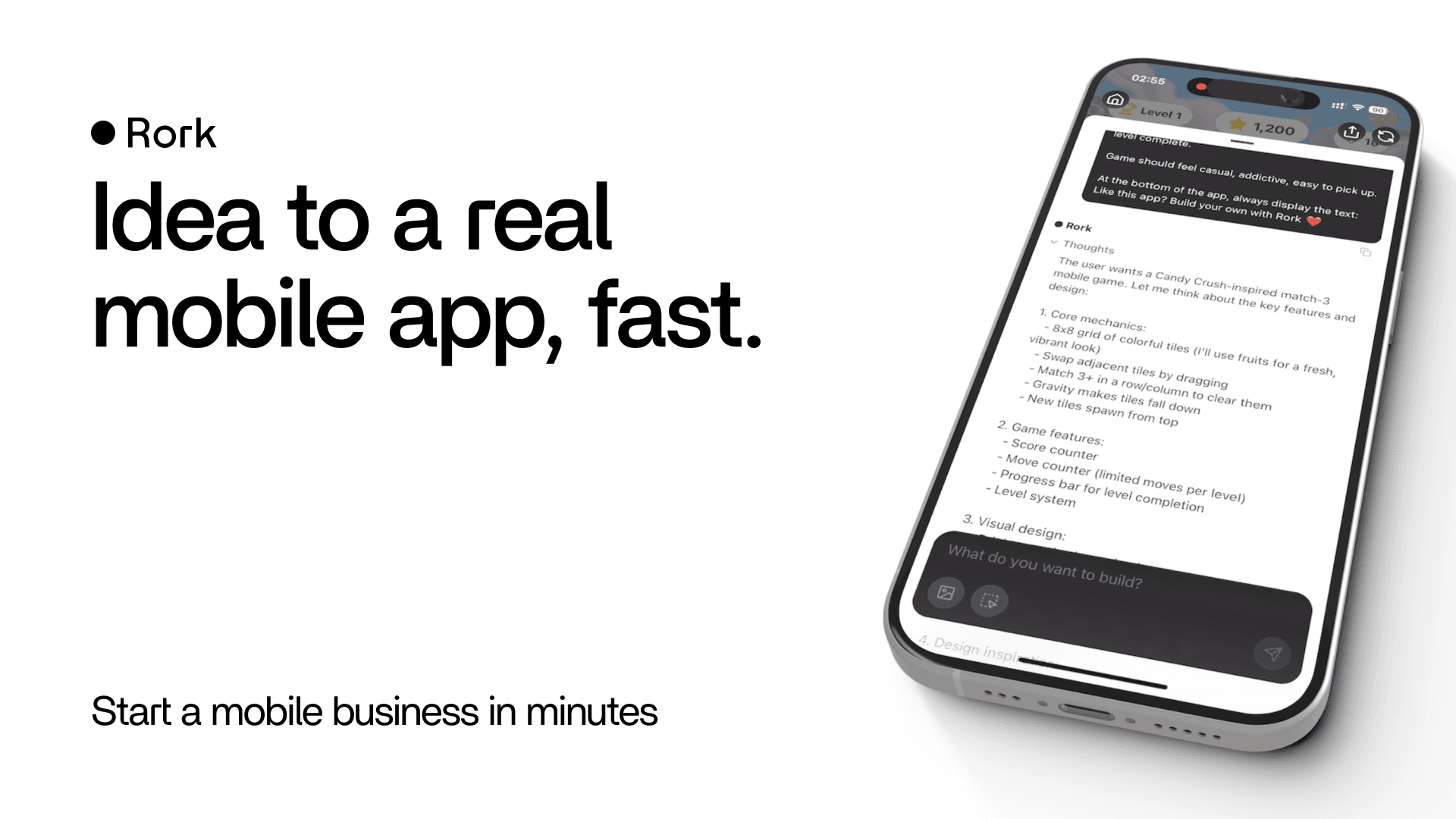
Rork is an innovative AI-driven platform designed to streamline the creation of native mobile applications. It allows users to generate complete, production-ready mobile apps simply by providing a description. Leveraging artificial intelligence and the Expo (React Native) framework, Rork enables the rapid development of cross-platform applications for both iOS and Android. This tool is ideal for individuals and teams looking to quickly bring their mobile app ideas to life without extensive coding knowledge, making mobile app development more accessible and efficient. It aims to transform descriptions into functional mobile apps in minutes, supporting a fast-paced development cycle.
Araminta K Lora Portfolio
Araminta K Lora Portfolio is a web-based tool hosted on Hugging Face Spaces, designed for generating AI art. Users can easily select from a gallery of LoRA models and then provide a text prompt to create an image. The application processes the input and displays the resulting AI-generated image, offering a straightforward way to experiment with different AI art styles and showcase Lora models. This tool is particularly useful for AI artists and designers looking to explore various generative models and create digital art.
Spark Engine
Spark Engine is an AI research and development platform focused on building advanced autonomous and generative AI systems. It provides outcome-driven AI infrastructure designed for enterprise growth and digital transformation. The platform features a suite of AI-powered tools, including Sparky for 24/7 AI outreach, Engine 1 as an AI sandbox with access to over 300 models, Desky for a self-building desktop AI, and Dash Gen for AI-powered dashboards with forecasting. Spark Engine aims to help organizations overcome challenges, accelerate digital transformation, and unlock startup velocity through its innovative AI solutions.
reeyee
Reeyee is an AI-powered platform designed to turn your photos into unique cartoon avatars, sticker packs, or expression grids. Users can select their desired output, upload a single photo, and receive a polished, stylized result quickly. The tool offers a variety of styles and effects, including options to compose custom styles using text prompts. It's built for creators looking for premium results fast, providing features like cinematic lighting and lifelike detail. Reeyee also offers different plans, including a free tier, with options for higher credit allowances, faster generation queues, and commercial usage rights for paid subscribers.
aima-python
aima-python is an open-source Python library offering implementations of algorithms from the renowned textbook "Artificial Intelligence: A Modern Approach" by Russell and Norvig. It is designed for students, developers, and researchers to explore and apply fundamental AI concepts. The project is actively updated to align with the 4th edition of the book, featuring a move to Python 3.7+, increased emphasis on Jupyter notebooks, and integration with external packages like TensorFlow. It includes implementations for various AI domains such as search, games, constraint satisfaction problems (CSPs), logic, planning, probability, and machine learning, making it a comprehensive resource for practical AI education and experimentation.
Autotrain Mcp
Autotrain Mcp provides a web-based interface for managing and initiating AI model training jobs. Users can easily submit their training tasks and monitor their progress through a dedicated status tracking system. The platform also offers detailed insights into training results, including recommendations, to help users optimize their models. Designed to streamline the machine learning workflow, Autotrain Mcp simplifies the process of training and deploying AI models, making it accessible for those looking to manage their ML operations efficiently. It is hosted on Hugging Face Spaces, indicating its integration within the broader AI development ecosystem.
Symph AI
Symph AI provides advanced AI solutions designed to streamline business processes and foster innovation. The platform offers a range of AI tools tailored to specific business needs, such as AI-powered call center assistance for real-time guidance, smart data insights for performance trend analysis, and automated product imagery generation for e-commerce. Symph AI also features 24/7 AI customer support, an AI email response assistant, and predictive sales analytics. Beyond client solutions, Symph AI develops in-house AI apps to boost its own productivity, including a Job Order AI Generator and a GitHub PR AI Descriptor, demonstrating practical applications of their technology.
Replit: Vibe code in AI fast
Replit is an AI-powered platform designed for building and deploying software collaboratively. It allows users to turn ideas into functional applications, including websites and mobile apps, rapidly and without extensive coding knowledge. The platform features 'Agent 4', an AI assistant that handles coding, design, and deployment, enabling parallel task execution and seamless collaboration for teams. Replit offers a full-stack infrastructure with built-in services like authentication, databases, hosting, and monitoring, along with integrations for AI services and over 100 other tools. It supports creating multiple artifacts within a single project, from mobile and web apps to landing pages and videos, facilitating efficient project scaling and reducing context switching.
Trickle Magic Canvas
Trickle Magic Canvas is an AI agentic canvas designed for 'vibe coding,' enabling users to quickly transform their ideas into functional web applications and websites. The platform integrates built-in image and video generation, AI models, a database, and design tools to facilitate the creation and launch of production-ready apps. It aims to simplify the development process, allowing users to build web apps in seconds using natural language without needing extensive coding knowledge. Trickle supports the creation of various products, including websites, AI-powered forms, landing pages, internal tools, multi-page apps, and interactive experiences, making it suitable for founders, designers, marketers, and teams.
BuildnPlay
BuildnPlay is an AI-powered game creation platform designed to democratize game development, allowing users to create, share, and play games without needing to write any code. The platform emphasizes ease of use with a drag-and-drop editor, making it accessible for individuals with varying technical skill levels. It supports real-time collaboration, enabling multiple users to work on a single project simultaneously, fostering teamwork and shared creativity. BuildnPlay also offers multi-device support, ensuring games can be developed and played across various platforms, and provides a template library to kickstart game creation. This tool is ideal for aspiring game developers, educators, and hobbyists looking to bring their game ideas to life quickly and efficiently.
Chat Langchain
Chat Langchain is a free AI chatbot tool specifically developed for integrating with Langchain and facilitating AI experimentation. Built using Gradio, it offers a platform for developers to explore and implement AI chatbot functionalities. The tool operates under an MIT license, promoting open-source collaboration and usage. It is particularly well-suited for individuals and teams interested in the development of AI chatbots and exploring various customer support solutions through conversational AI. Its open-source nature and integration capabilities make it a valuable resource for those looking to build or test AI agents.
Chat with Bitnet-b1.58-2B-4T
Chat with Bitnet-b1.58-2B-4T offers a direct interface to Microsoft's 1.58bit Bitnet model, enabling users to engage in real-time conversations. This tool is ideal for testing language models and conducting AI research. Users can input messages and customize various settings, including the system prompt, token limit, temperature, and top-p values, to fine-tune the AI's responses. The application streams the AI's replies instantly, facilitating natural and interactive dialogues. It serves as a valuable resource for AI enthusiasts, researchers, and developers looking to experiment with and understand the capabilities of the Bitnet model.
Collection Cloner
Collection Cloner is an AI tool hosted on Hugging Face Spaces, designed for automating tasks related to cloning collections. While the live website currently shows a runtime error, its purpose, as indicated by its name and platform, is to facilitate the duplication and management of AI model collections. This functionality is crucial for data scientists and developers who need to replicate environments or share specific sets of models for research, development, or deployment. The tool's presence on Hugging Face suggests it is intended for those working within the machine learning ecosystem, providing a utility for managing and experimenting with AI models.
CodeAlpaca
CodeAlpaca is an AI code assistant designed to automate various coding tasks and provide educational assistance. While the live website currently indicates a runtime error, suggesting it may be under maintenance or experiencing issues, its intended purpose is to help users with code generation and understanding. The tool aims to simplify the coding process, making it easier for users to explore AI-driven code generation and automate repetitive programming tasks. It is offered for free, making it accessible for individuals looking to leverage AI in their coding endeavors.
CodeGen Subspace
CodeGen Subspace is an AI code assistant developed by CodeParrot, available as a Hugging Face Space. It is designed to automate various coding tasks, including generating code snippets and offering educational assistance. The tool is particularly useful for developers and students interested in exploring the capabilities of AI-driven code generation and automating repetitive programming tasks. While the current live website indicates a runtime error due to memory limits, the underlying concept aims to provide a platform for AI-powered coding support. It is offered for free, making it accessible for experimentation and learning.
Imageto3d
Imageto3d is an AI-powered tool hosted on Hugging Face that simplifies the creation of 3D models from 2D images. Users can upload any image to the platform, and the AI processes it to generate a corresponding 3D representation. The tool provides a convenient 3D preview video, allowing users to visualize the generated model from various angles before downloading. This makes it accessible for individuals looking to quickly convert images into 3D assets without requiring extensive 3D modeling software or expertise. It's a free-to-use application, making 3D model generation more approachable for a wider audience.