
Coding & Development
Browsing page 426 of AI tools for Coding & Development. Sorted by confidence score — our independent quality rating.

3AI
3AI is India's largest platform and marketplace for AI and Analytics leaders, professionals, and aspirants, boasting over 56,000 active members from 36 geographies and 1600+ thought leaders from 980+ organizations. It serves as a commune for networking, thought leadership, and professional development, offering various events like summits, roundtables, and special sessions. Members gain access to a vast digital library of articles, case studies, blogs, and over 4000 hours of video content on AI and Analytics via 3AIflix. The platform also provides personalized mentoring, contextualized learning, placement assistance, and a rich repository of industry use cases. 3AI partners with corporates, GCCs, academic institutions, and startups to foster innovation and talent advocacy.
pytorch-memonger
pytorch-memonger is an open-source Python library designed for sublinear memory optimization in deep learning models built with PyTorch. It re-implements the technique described in "Training Deep Nets with Sublinear Memory Cost," significantly reducing the memory required for backward passes from O(N) to O(sqrt(N)). This optimization is particularly beneficial for training large sequential models or using larger batch sizes that would otherwise exceed available GPU memory. By replacing `nn.Sequential` with `memonger.SublinearSequential`, developers can easily integrate this memory-saving technique. The tool also addresses challenges with non-deterministic layers like BatchNorm and Dropout by re-scaling momentum and memorizing random number generator states, respectively, ensuring reliable performance.
a-PyTorch-Tutorial-to-Object-Detection
This PyTorch tutorial provides a comprehensive guide to implementing object detection models, specifically focusing on the Single Shot Multibox Detector (SSD). It assumes a basic understanding of PyTorch and convolutional neural networks, offering resources for both beginners and those looking to deepen their knowledge. The tutorial covers key concepts such as single-shot detection, multiscale feature maps, priors, multibox techniques, hard negative mining, and non-maximum suppression. It delves into the implementation details, including adapting the VGG-16 architecture for base convolutions and converting fully connected layers into convolutional layers. The resource is ideal for developers and researchers aiming to build and understand efficient object detection systems using PyTorch.

Itzam
Itzam is an open-source backend platform specifically designed to simplify the integration of artificial intelligence into various applications. It provides a comprehensive set of tools for efficient prompt and model management, which are crucial components in AI development. The platform aims to significantly reduce the time and effort developers typically spend on tasks such as Retrieval-Augmented Generation (RAG), observability, and overall model management. By handling these complexities, Itzam allows developers to concentrate more on building and enhancing the core AI-powered features of their applications.
U-2-Net
U-2-Net is an open-source project that provides an implementation of the U^2-Net architecture, specifically designed for salient object detection. This deep learning model employs a nested U-structure, which allows for more profound analysis of image features and significantly enhances its ability to accurately identify and segment salient objects. The architecture is known for achieving improved performance in various computer vision tasks related to object detection and segmentation. It is a valuable resource for researchers and engineers working in computer vision, offering a robust framework for developing and experimenting with advanced image processing techniques.

Dytomic
Dytomic is a Montreal-based studio dedicated to creating original games with a strong emphasis on player satisfaction and immersive gameplay. The company leverages smarter tools, ethical development pipelines, and deep worldbuilding techniques to craft engaging experiences. Dytomic aims to innovate within the gaming industry by integrating advanced AI technologies, setting new standards for game development. Their approach focuses on delivering high-quality, unique games that captivate players through rich narratives and compelling mechanics. By prioritizing ethical practices and cutting-edge technology, Dytomic strives to push the boundaries of what's possible in interactive entertainment.
Bonzai
Bonzai offers a unique solution for developers to gain a comprehensive understanding of their codebases. It addresses the challenge of keeping up with rapid code changes, especially in AI-driven development environments. By providing a bird's eye view, Bonzai helps engineers visualize their code architecture with a single command. This capability is crucial for identifying architecture drift and ensuring that the codebase remains coherent and maintainable. The tool aims to simplify the complex task of codebase analysis, making it easier for teams to manage and evolve their software projects effectively.
DINO
DINO (DETR with Improved DeNoising Anchor Boxes) is an open-source object detection model, officially implemented from a paper accepted at ICLR 2023. It offers state-of-the-art, end-to-end object detection capabilities, achieving high accuracy on benchmarks like COCO Val and COCO test-dev with significantly smaller model and data sizes compared to previous best models. A key differentiator is its fast convergence, with the ResNet-50 backbone achieving 49.4 AP in just 12 epochs. The project provides model checkpoints, training logs, and detailed installation instructions, making it accessible for researchers and developers. It also supports various backbones like Swin-L and offers scripts for evaluation, inference, visualization, and distributed training.

ValidMind
ValidMind is an agentic AI governance platform specifically designed for regulated financial services, including banking and insurance. It bridges the gap between rapid AI adoption and real-time regulatory compliance by offering a unified system for managing models, AI systems, and record types. Key capabilities include agentic AI governance, validation automation, and development automation, all designed to scale with agentic AI. The platform helps centralize oversight for responsible AI, unify AI and traditional model risk management, and automate documentation, testing, and workflows. ValidMind aims to accelerate AI adoption, reduce AI risk, and operationalize responsible AI, providing audit-ready evidence for various global regulatory standards.
Skyfire | AI
Skyfire AI offers advanced drone automation and AI solutions, primarily focusing on public safety, defense, and enterprise applications. Their flagship Drone First Responder (DFR) system enables rapid response times, significantly reducing false alarms and increasing threat detection accuracy compared to traditional methods. The platform integrates BVLOS operations, smart automation, and enhanced situational awareness to empower teams with safer and more efficient drone capabilities. Skyfire AI's services extend to disaster response, private security, medical delivery, and specialized R&D for UAS and cUAS technologies, transforming various industries with autonomous and AI-driven drone operations.
CodeSpyder Technologies Pvt. Ltd.
CodeSpyder Technologies Pvt. Ltd. is dedicated to empowering individuals on their coding journey through high-quality, industry-relevant educational programs. The platform focuses on a practical, 'learn by doing' approach, where users engage with hands-on projects to solidify their understanding and skills. A key differentiator is the guidance provided by experienced mentors who come from leading technology companies, ensuring that the curriculum and teaching methods are aligned with current industry demands. This approach aims to equip learners with the practical expertise needed to succeed in the competitive tech landscape, moving beyond theoretical knowledge to real-world application.
Skyline Meridian
Skyline Meridian offers comprehensive digital solutions tailored to unique business needs, encompassing web design, e-commerce, mobile app development, SaaS product development, and AI-ML development. They specialize in crafting personalized shopping experiences, transforming ideas into cutting-edge SaaS applications, and developing impactful mobile apps for both iOS and Android platforms. The company also leverages AI-ML to elevate applications and drive intelligent outcomes, alongside providing custom ERP/CRM solutions for streamlined operations. Additionally, Skyline Meridian offers video content creation services, from whiteboard explainers to educational videos, aiming to make digital solutions accessible to businesses globally.

Sparkle 5
Sitely is a powerful Mac visual website builder designed for non-coders, enabling them to design and launch stunning websites with the help of AI. It provides a jargon-free interface, making website creation accessible and intuitive. Users can quickly add and customize elements, with the canvas reflecting the live website appearance for rapid iteration. Sitely produces fast, static websites out of the box, optimizing images and coding for instant display on any device without loading screens. It eliminates the need for plugins, themes, and complex configurations, offering a streamlined, all-in-one ecosystem for website management, security, and performance. Sitely focuses on long-term reliability and cost-effectiveness, generating energy-efficient websites that are easier and cheaper to operate compared to other builders.
GitHub Retro Stats API
GitHub Retro Stats API provides a unique way to visualize your GitHub profile activity with a high-precision, retro-styled dashboard. It meticulously tracks 24-hour activity, adjusts for different timezones, and presents achievements through a military-style ribbon rack. Users can generate these stats in SVG format for web display or PNG for easy sharing on social media platforms like LinkedIn and Twitter. The tool automatically awards ribbons based on account milestones such as years of service, total stars earned, annual commit volume, and community followers. Special honors like 'Polyglot' for using multiple languages are also recognized. Built with Go, Chi, and SVG, it emphasizes privacy with no external tracking.
lingua-py
lingua-py is a robust natural language detection library for Python, designed to accurately identify the language of text, even for short snippets and mixed-language content. Unlike many other libraries, it focuses on quality over quantity, supporting 75 languages with high precision. It employs a hybrid approach, combining rule-based and statistical Naive Bayes methods, without relying on neural networks or external APIs, allowing for complete offline functionality. The library is optimized for performance and memory efficiency, utilizing compiled Python bindings to a native Rust implementation and storing language models as finite-state transducers (FSTs) that can be searched on disk. This makes it suitable for low-resource environments and ensures fast detection speeds, outperforming many pure Python alternatives.
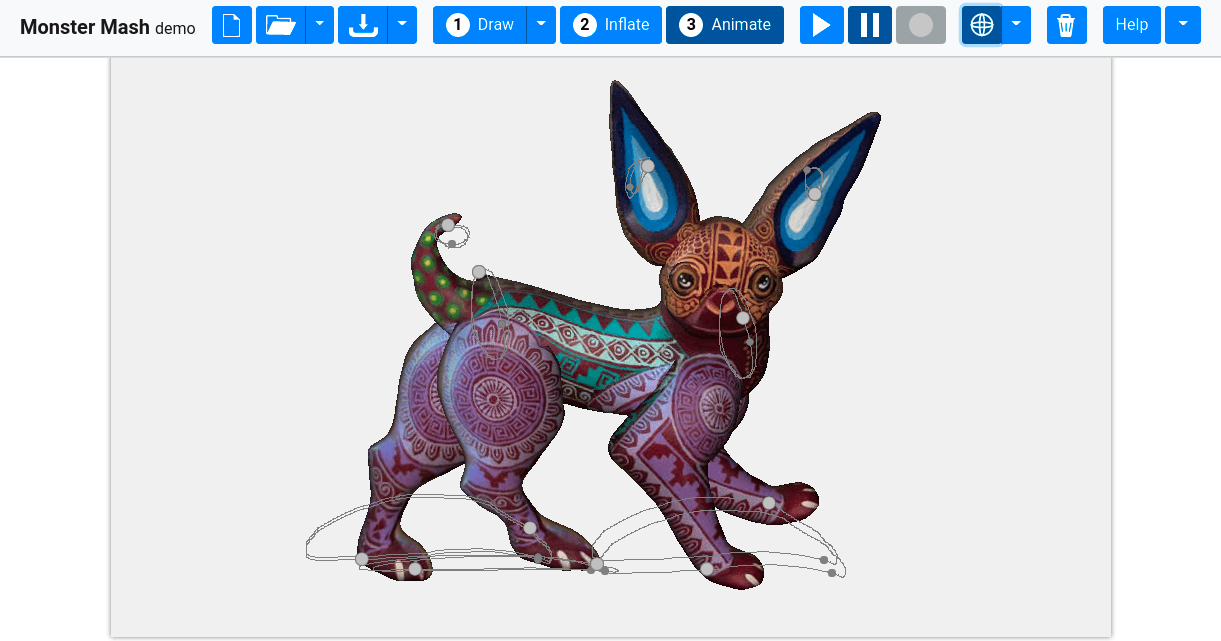
Monster Mash
Monster Mash is an innovative sketch-based modeling and animation tool designed to simplify 3D character creation. Users can draw characters part by part, inflate them into 3D models, and then animate them with ease. The tool offers three primary modes: Draw, Inflate, and Animate, alongside a Redraw option for modifying existing shapes. It supports exporting textured animations to glTF format for use in other 3D software like Blender, and individual frames to Wavefront .obj files. Monster Mash is accessible via web browsers and is optimized for use with a stylus on tablets, making 3D modeling and animation more approachable for a wider audience.
ThinkRoot - The AI Compiler
ThinkRoot is an innovative AI compiler designed to transform natural language descriptions into fully functional, production-ready web applications. Users can describe their desired app in plain English, and ThinkRoot automatically handles the entire software development lifecycle, from specification generation and intelligent development to automated testing, instant deployment, and continuous operations. This platform eliminates the need for coding, DevOps, or technical expertise, making it possible to build web apps, dashboards, and landing pages in minutes. It offers features like 99.9% uptime, usage analytics, auto-scaling, and instant updates, allowing applications to evolve in real-time based on user feedback. ThinkRoot aims to provide consumer-scale ease with enterprise-grade reliability, allowing users to focus on their domain expertise rather than technical barriers.
Dystr
Dystr is an engineering analysis platform designed to accelerate mathematical computations for engineers. It offers a GPU-accelerated runtime, branded as RunMat, which enables users to perform complex math operations at high speeds across various environments including web browsers, desktop applications, and command-line interfaces. This platform aims to help engineers build bigger and bolder projects by providing efficient code execution and analysis capabilities. While the current description mentions MATLAB input syntax and automatic GPU/CPU scheduling, the live website primarily highlights the RunMat feature for fast math execution.
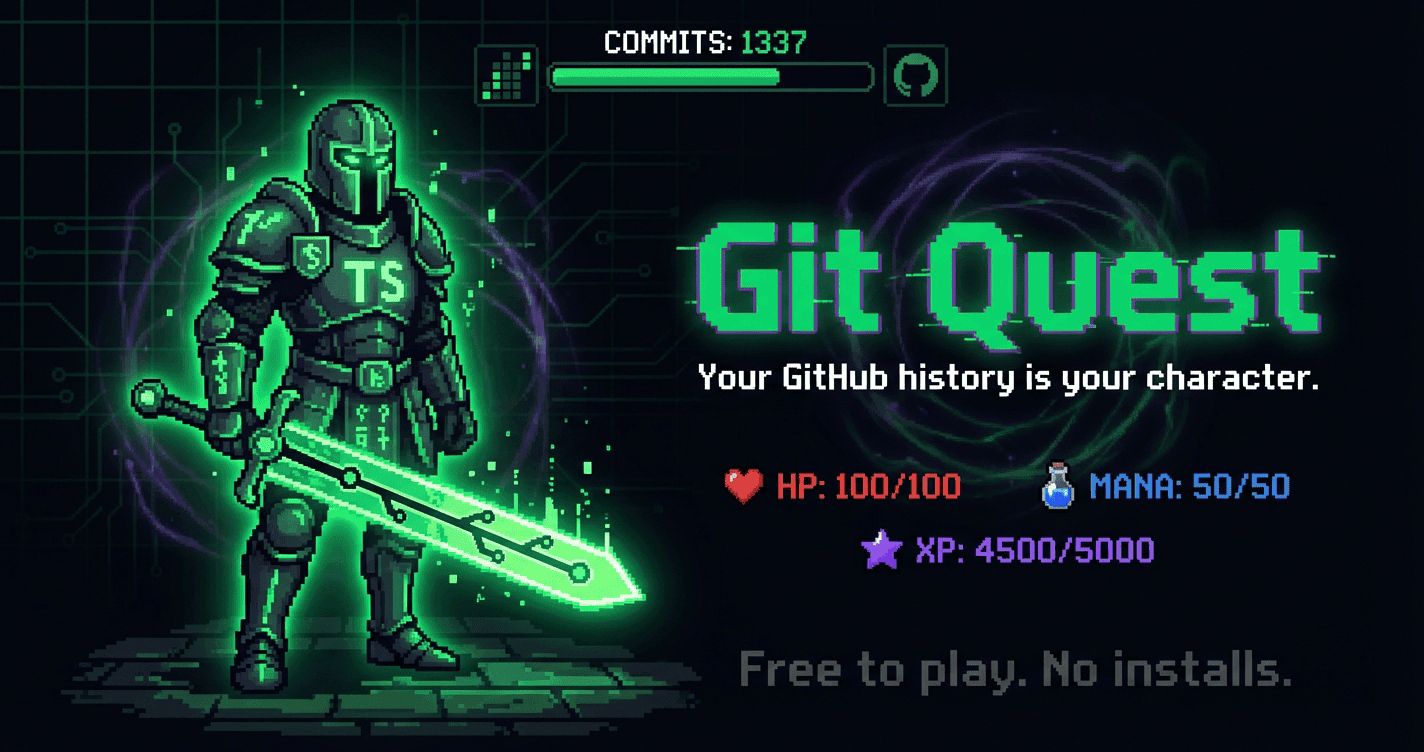
Git Quest
Git Quest is a free developer RPG that gamifies your GitHub commit history, turning your coding efforts into an engaging adventure. By connecting your GitHub account, the platform analyzes your public commit data to create a unique RPG character. Your top programming language determines your character's class, and your commit streaks and overall activity fuel your power and mana. This innovative tool allows your character to automatically battle dungeons while you code, collecting loot and growing stronger. It's designed for developers seeking a fun and motivating way to visualize their productivity and consistency, offering a unique blend of personal analytics and entertainment. Git Quest encourages continuous coding by rewarding every push with in-game progression, fostering a sense of achievement beyond traditional project milestones.
few-shot-object-detection
few-shot-object-detection (FsDet) offers official implementations of few-shot object detection benchmarks, including the ICML 2020 paper "Frustratingly Simple Few-Shot Object Detection." It introduces new benchmarks across PASCAL VOC, COCO, and LVIS datasets, with multiple groups of few-shot training examples and evaluation results for both base and novel classes. The repository provides benchmark results and pre-trained models for a two-stage fine-tuning approach (TFA), where the detector is first trained on abundant base classes and then fine-tuned on a small balanced training set. FsDet is modular, allowing for easy integration of custom datasets and models, serving as a general framework for future research in few-shot object detection.
Soft Video Understanding
Soft Video Understanding is a tool hosted on Hugging Face Spaces, designed for exploring and applying soft video understanding techniques. While the space is currently paused, it aims to provide a platform for AI research and educational endeavors in the domain of video analysis. Users interested in utilizing this tool are encouraged to engage with the community tab to request its restart from the author. This tool is particularly relevant for those in the AI and machine learning fields looking to experiment with advanced video processing and interpretation methods.

Nidum.AI
Nidum.AI offers a decentralized and open-source AI ecosystem, empowering users to run AI models directly on their local machines. This platform eliminates the need for cloud infrastructure and intermediaries, making AI more accessible and transparent. Users can contribute their compute power to the network and, in return, earn rewards, fostering a collaborative and community-driven approach to AI development. Nidum.AI aims to democratize AI by providing a no-cloud, no-middlemen, no-limits environment for AI innovation and deployment. It's designed for those who want to leverage AI without relying on centralized services.

Neysa
Neysa offers an AI Acceleration Cloud System designed for rapid training and inference on GPUs, built on open-source technologies with a full-stack AI infrastructure. It provides a comprehensive platform to build, secure, monitor, and scale AI solutions, including GPU-as-a-Service (GPUaaS) for on-demand NVIDIA GPU instances and Inference-as-a-Service for deploying and scaling open-source models. The platform also features AI Platform-as-a-Service (AI PaaS) for training and scaling AI/ML applications with managed VM and K8S services, alongside robust orchestration and MLOps capabilities to automate the entire model lifecycle. Neysa emphasizes security and control, safeguarding AI environments and models from threats, and offers solutions tailored for various industries such as insurance, manufacturing, banking, and e-commerce.
Ligaments AI Company
Ligaments AI Company provides an AI development platform designed to revolutionize enterprise AI through disruptive innovation. The platform offers end-to-end AI solutions, from advisory to adoption, focusing on operationalizing, monitoring, and maturing AI systems. They specialize in Small Language Models (SLMs) and BYOM architectures to fit enterprise constraints like cost, latency, and compliance. Ligaments AI emphasizes measurable business outcomes, human-in-the-loop processes, and responsible AI by design, ensuring solutions are accountable, auditable, and aligned with enterprise governance. Their LigaX platform allows users to build AI solutions by understanding business needs, generating architecture diagrams and code, and enabling testing in isolated environments before deployment.