
Coding & Development
Browsing page 430 of AI tools for Coding & Development. Sorted by confidence score — our independent quality rating.

Botminds AI
Botminds AI is a leading no-code agentic AI platform designed to transform enterprise operations through intelligent automation. It empowers businesses to automate complex workflows and enable autonomous operations, offering industry-specific AI solutions without the need for coding. The platform is particularly strong in finance, providing an Agentic Finance Platform for lending and credit operations, which analyzes complex financial documents, surfaces decision-ready insights, and accelerates underwriting with governed, audit-ready workflows. Key features include borrower intake automation, loan package intelligence, financial spreading, credit workflow engines, and underwriting intelligence, making it suitable for large-scale, document-heavy enterprise operations.

Gitcord
Gitcord is a comprehensive platform designed for developers to track, analyze, and showcase their GitHub contributions. It offers a unified dashboard to monitor commits, pull requests, and contributions across all repositories in real-time. The tool provides advanced analytics, giving insights into coding patterns, language usage, and productivity trends. Gitcord also supports team and organization insights, enabling effective collaboration and management of GitHub activity. Users can visualize their contributions with beautiful graphs and shareable profile pages, and even compete on developer leaderboards. The platform aims to transform how developers interact with and understand their GitHub activity.
tsai
tsai is an open-source deep learning library designed for time series and sequential data analysis, built upon the Pytorch and fastai frameworks. It provides state-of-the-art techniques for various time series tasks, including classification, regression, forecasting, and imputation. The library is under active development by timeseriesAI and includes a growing collection of models such as PatchTST, RNN with Attention, and TabFusionTransformer. Users can access numerous datasets for univariate and multivariate classification, regression, and forecasting. tsai supports Pytorch 2.0 and offers flexible installation options via pip or conda, with hard and soft dependency management. It also provides comprehensive documentation and tutorial notebooks to help users get started with time series classification, regression, and forecasting tasks.
TinyNeuralNetwork
TinyNeuralNetwork is an efficient and easy-to-use deep learning model compression framework developed by Alibaba. It provides a comprehensive suite of features for optimizing deep learning models, including neural architecture search, pruning (L1, L2, FPGM, ADMM, NetAdapt, Gradual, End2End), and quantization-aware training. The framework leverages PyTorch's QAT as its backend and enhances usability by automating operator fusion and computational graph quantization. It also supports model conversion from floating-point and quantized PyTorch models to TFLite for end-to-end deployment. TinyNeuralNetwork has been successfully deployed on various devices such as Tmall Genie, Haier TV, and Youku video, demonstrating its effectiveness in real-world IoT applications.

smartR AI
smartR AI provides SCOTi, an Agentic AI platform specifically designed for the Aerospace & Defense engineering sector. SCOTi PLM functions as an AI Autopilot, addressing the critical issue of institutional knowledge loss and organizational amnesia in complex projects. It digitizes expert knowledge, captures 'unwritten rules' from senior engineers, and automates requirements traceability, ensuring compliance with standards like DO-178C and ARP4754. The platform aims to recover development schedules, eliminate rework by preventing late-stage design changes, and bridge the 'Complexity Gap' between organizational knowledge and execution. SCOTi is engineered to work with existing PLM and ERP systems, transforming fragmented data into actionable insights and institutional wisdom.
torchani
torchani is an open-source library designed for researchers and developers in molecular simulations and computational chemistry. It provides tools for training and developing ANI-style neural network interatomic potentials, which are crucial for accurate and efficient molecular dynamics simulations. The library is maintained by the Roitberg group and offers a robust framework for creating and utilizing these advanced potentials. Its open-source nature fosters collaboration and allows for customization, making it a valuable resource for academic and industrial research.
lexci innovations
Lexci Innovations offers an AI-native platform designed to integrate cybersecurity, intelligent systems, and engineering capabilities. This unified platform aims to build, protect, and scale digital ecosystems for modern enterprises. Key offerings include the Lexci Platform, which features autonomous threat detection, zero-trust architecture, and real-time defense systems for enterprise-scale security. It also includes InMind AI, focusing on behavioral intelligence and mental wellness powered by adaptive AI systems. Additionally, Lexci provides full-spectrum engineering services, encompassing web development, LMS systems, app development, cloud development, cloud security, and custom AI integration, all designed to support modern digital infrastructure.
icevision
IceVision is an open-source, agnostic computer vision framework designed to be pluggable with various training libraries, including Fastai and Pytorch-Lightning. It provides a curated collection of hundreds of high-quality pre-trained models from sources like Torchvision, Open MMLab's MMDetection, Ultralytic's YOLOv5, and Ross Wightman's EfficientDet. The framework orchestrates the entire deep learning workflow, enabling users to train networks efficiently. Unique features include data curation/cleaning with auto-fix, an exploratory data analysis dashboard, pluggable transforms for better model generalization, access to multiple training loop libraries, and multi-task training for combining object detection, segmentation, and classification models.
RemoveWindowsAI
RemoveWindowsAI is an open-source PowerShell script designed to thoroughly remove various AI features and components from Windows 11. This tool addresses user concerns regarding privacy and security by disabling functionalities such as Copilot, Recall, Input Insights, and typing data harvesting. It also removes AI appx packages, including non-removable ones, and cleans up hidden AI packages in the CBS store. The script can prevent the reinstallation of AI packages through custom Windows Update packages and offers options to replace modern AI-infested apps with classic versions like Notepad and Paint. Users can run the script with a UI or via command-line options for specific removals or a full system cleanup.
VELANDIRCH | AI Software Development Company
VELANDIRCH AI is an AI software development company dedicated to building world-class solutions to help businesses evolve and reach their full potential. The company specializes in a range of services including AI development, web and mobile development, and blockchain solutions. Additionally, VELANDIRCH AI offers data analytics and business intelligence services, aiming to optimize processes and enhance customer experiences for its clients. Their focus is on leveraging advanced technologies to deliver innovative and effective solutions tailored to business needs.
Navera
Navera simplifies AI data infrastructure by providing on-demand connectivity and Infrastructure as Code (IaC) automation. This tool is designed to help manage and streamline AI data pipelines, making it easier for data scientists and AI engineers to deploy and maintain their AI systems. By automating infrastructure provisioning and configuration, Navera aims to reduce operational overhead and accelerate the development cycle for AI projects. It focuses on providing a robust and scalable foundation for AI workloads, ensuring efficient data flow and resource utilization.
openspeech
OpenSpeech is an open-source toolkit designed for end-to-end speech recognition, built upon the powerful PyTorch-Lightning and Hydra frameworks. It offers reference implementations of numerous ASR modeling papers and provides recipes for automatic speech recognition tasks in English, Chinese, and Korean. The toolkit aims to simplify ASR technology by offering features like multi-GPU and TPU training, mixed-precision, and hierarchical configuration management. Researchers and practitioners can easily experiment with over 20 ASR models, customize models, and integrate new datasets. It also includes audio processing capabilities such as Spectrogram, Mel-Spectrogram, and various augmentation techniques like SpecAugment and Noise Injection.
openrecall
OpenRecall is a fully open-source, privacy-first alternative to proprietary solutions like Microsoft's Windows Recall or Limitless' Rewind.ai. It captures your digital history through regularly taken snapshots, essentially screenshots, and analyzes the text and images within them. This data is then made searchable, allowing users to quickly find specific information using keywords or manually scroll back through their history. Key advantages include 100% transparency, cross-platform support for Windows, macOS, and Linux, and a strong privacy focus with local data storage. It also offers local-first AI processing, semantic search capabilities, and full control over data management and security.
Digital Sierra
Digital Sierra is a comprehensive digital transformation partner specializing in engineering reliable, secure, and scalable IT infrastructure. They offer a range of services including DevOps for accelerated delivery with CI/CD pipelines and Kubernetes, CloudOps for 24/7 infrastructure monitoring, and AIOps for intelligent monitoring and analytics with predictive capabilities. The company also focuses on SecOps for integrating security with zero-trust architecture and GRC for compliance with standards like ISO 27001 and SOC 2. Digital Sierra empowers growth through open-source solutions like Odoo ERP, ERP Next, and WordPress, helping businesses scale efficiently without high licensing costs. They cater to MSMEs, early-stage businesses, and NGOs, providing tailored solutions for various industries.
TextWorld
TextWorld is an open-source sandbox learning environment designed for the training and evaluation of reinforcement learning (RL) agents on text-based games. It offers functionalities to generate custom text-based games with adjustable parameters like world size, number of objects, and quest length. Users can play these generated games via a terminal or interact with them programmatically using a Gym-like API in Python. The tool also includes visualization capabilities for game states and supports Docker for easy deployment. Developed by Microsoft, TextWorld provides a robust platform for researchers and developers to experiment with and assess RL algorithms in a controlled, text-based environment.
lime
Lime (Local Interpretable Model-agnostic Explanations) is an open-source Python library designed to explain the predictions of any machine learning classifier. It provides local, interpretable approximations of complex model behaviors, making black-box models more transparent. Lime supports explaining individual predictions for text classifiers, classifiers acting on tabular data (numerical or categorical numpy arrays), and image classifiers. The library is model-agnostic, requiring only that the classifier implements a function outputting probabilities for each class. It offers built-in support for scikit-learn classifiers and provides visualizations in HTML or Matplotlib. Tutorials are available for various data types and use cases, including basic text classification, multiclass scenarios, tabular data, and image analysis with frameworks like Keras and PyTorch.
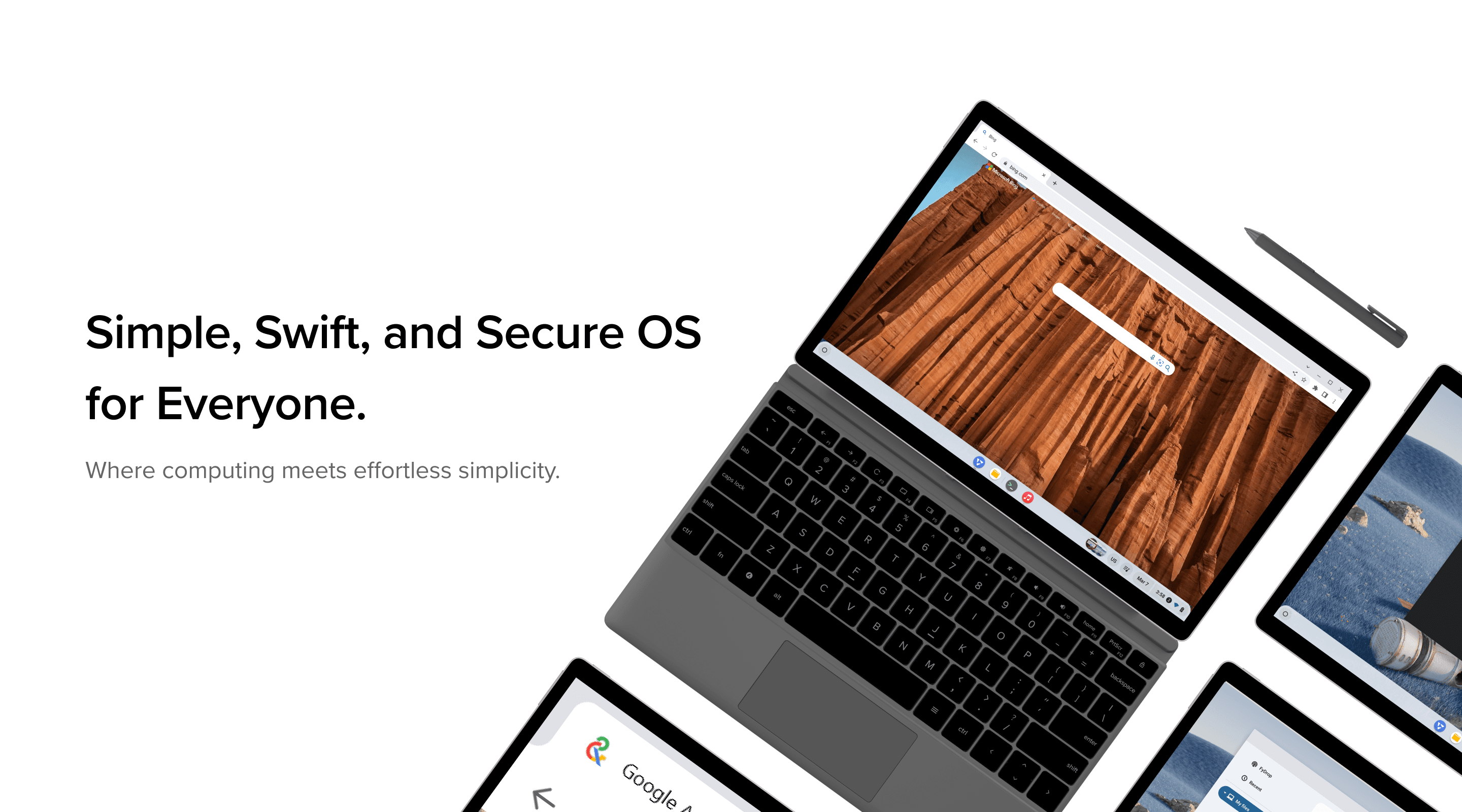
FydeOS AI
FydeOS AI is a flexible ChromeOS alternative designed to deliver a Chromebook-like experience on regular PCs, supporting both Google services and on-premise or cloud deployments. It integrates AI to offer smart control across applications, enhancing the overall user experience. Key features include seamless background updates that work without interruption, an 8-second boot time for instant readiness, and robust built-in security with read-only access and virus protection. FydeOS AI supports a wide range of applications, including Web, Android, and Linux apps, making it a versatile solution for various computing needs. It also offers enterprise solutions with cloud control, brand customization, and cost-effective management for thousands of devices.
gocv
gocv offers Go language bindings for the OpenCV 4 computer vision library, extending its capabilities to Go developers. It supports the latest releases of Go and OpenCV (v4.12.0) across Linux, Docker, macOS, and Windows. The package includes support for Deep Neural Networks (DNN), CUDA for hardware acceleration using Nvidia GPUs, OpenCV Contrib modules, and Intel OpenVINO for optimized inference. This allows developers to build a wide range of computer vision applications, from basic video processing to complex face detection and object tracking, leveraging the power of OpenCV within the Go ecosystem. The project aims to make Go a first-class client for OpenCV developments.
tinyTPU
tinyTPU is an open-source project providing a hardware implementation of a Tensor Processing Unit (TPU) specifically tailored for embedded systems and IoT devices. Unlike Google's original TPU, tinyTPU focuses on fixed-point arithmetic and is designed to be resource-friendly, allowing it to be deployed across different FPGA sizes, from small embedded systems to larger data centers. Its architecture includes a Weight Buffer, Unified Buffer, Systolic Data Setup, a Matrix Multiply Unit (MXU), Accumulators, and Activation functions (Sigmoid and ReLU). The system is configurable, allowing customization of component sizes. It communicates via an AXI interface and has been evaluated on the Xilinx Zynq 7020 SoC, demonstrating competitive performance compared to traditional processors.
nx
Nx is a monorepo solution built with Rust for performance, designed for TypeScript and polyglot codebases. It enhances both developer and AI agent workflows by optimizing builds, scaling CI processes, and automatically fixing failed pull requests. The platform is incremental by design, caching unchanged outputs and running only what's affected. It features AI-native tooling optimized for autonomous AI agents, a polyglot plugin system supporting various tools like Vite, Webpack, Jest, and Gradle, and an integrated CI solution for remote caching and task distribution. Nx also offers self-healing CI with an AI agent that detects failures, analyzes root causes, proposes fixes, and verifies them automatically.

SubSeq
SubSeq is a software company dedicated to building and scaling software products through a repeatable product engine. The company's core mission is to develop innovative software solutions and then scale those that resonate most with users. While the specific AI functionalities mentioned in the stale description (automating tasks like writing tickets, planning sprints, and updating timelines across platforms like Jira, Slack, and GitHub) are not explicitly detailed on the current live website, the company's focus on a 'repeatable product engine' suggests a systematic and potentially automated approach to product development and growth. The website emphasizes building and scaling products that users love, indicating a user-centric and market-driven strategy.
AhinsaAI
AhinsaAI offers loyal AI infrastructure designed for trust and sovereignty, specifically targeting the banking and fintech (BFSI) sector. The platform emphasizes compliance, ethical AI deployment, and robust governance. It enables organizations to deploy AI solutions with a strong focus on consent, oversight, and explainability. AhinsaAI's Rini platform delivers auditable, privacy-first AI capabilities, ensuring that AI applications within sensitive financial environments adhere to strict regulatory standards and maintain data integrity. This makes it an ideal solution for institutions seeking to leverage AI while upholding the highest levels of security and ethical responsibility.
deep-voice-conversion
Deep-voice-conversion is an open-source project implemented in TensorFlow, designed for voice style transfer using deep neural networks. This tool enables users to convert a source voice to a specific target voice, notably demonstrated with the voice of actress Kate Winslet. A key differentiator is its ability to perform voice conversion without requiring parallel data (like source and target voice recordings of the same utterance), relying instead on a collection of target speaker waveforms and a small set of <wav, phone> pairs from anonymous speakers. The architecture comprises two main modules: Net1 for phoneme classification and Net2 for speech synthesis, utilizing CBHG modules for feature extraction from sequential data. It's ideal for researchers and developers interested in advanced voice manipulation techniques.
Let's Build The Future
Founder Pulse India is an independent research initiative dedicated to understanding the Indian startup ecosystem. It conducts studies like the India Founder Awareness & Consideration Index, which surveys founders on their awareness and consideration of early-stage VC programs and accelerators. The research is designed to be independent of commercial interests, ensuring unbiased findings. Participants receive a free playbook detailing how VCs evaluate startups and what they look for in pitches. The methodology is longitudinal, allowing for meaningful trend analysis over time. This platform aims to provide valuable, founder-centric data to the ecosystem, contrasting with data often derived as a byproduct of commercial activities.