
Coding & Development
Browsing page 54 of AI tools for Coding & Development. Sorted by confidence score — our independent quality rating.

llm-python
llm-python is a comprehensive repository offering instructional materials and code samples for working with Large Language Models (LLMs) in Python. It integrates popular frameworks and tools such as LangChain, OpenAI's Agent SDK, LlamaIndex, Chroma (Chromadb), and Pinecone. The resource is designed to help developers build sophisticated LLM applications and agents, with code examples that are self-contained and focused on specific usage patterns. It includes tutorials on building Q&A systems, querying databases, using HuggingFace's Inference API, understanding embeddings, and creating multi-agent systems. The repository also provides code references for public courses on building search engines and generative AI for various sectors.
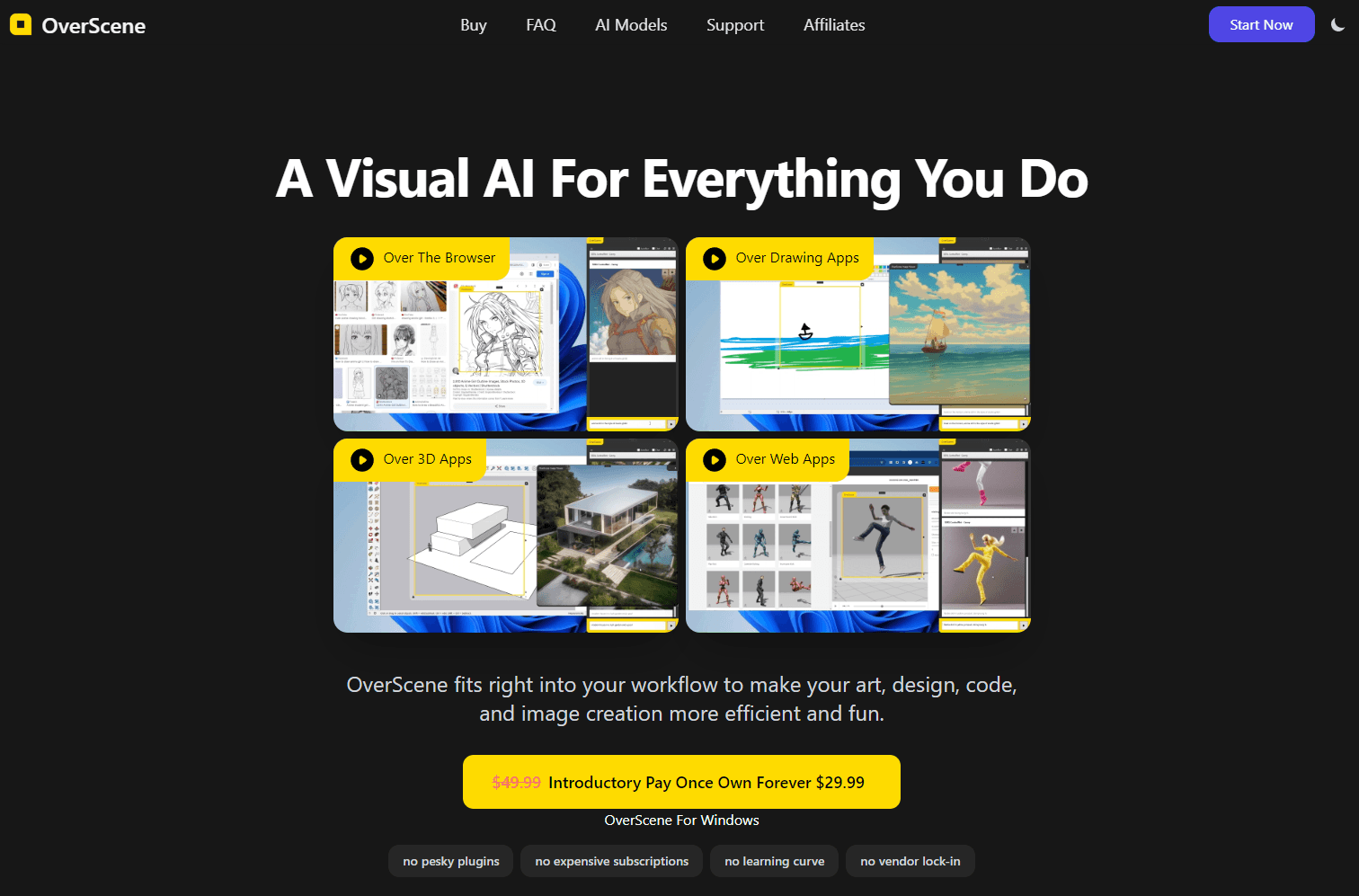
OverScene
OverScene is a unique AI overlay designed to integrate generative AI magic directly into any desktop application. It functions as a visual AI copilot, enhancing workflows for art, design, code, and image creation. Users can transform sketches into masterpieces within software like Photoshop or Blender, generate moodboards, and even convert screenshots into code without writing a single line. The tool offers features like image-to-image, image-to-text, text-to-image, depth-to-image, pose-to-image, text summarization, code generation, and 3D rendering. It boasts a one-click installation, a floating frame for easy interaction, and access to various AI models from platforms like OpenAI and Replicate.com, all while being optimized for lightweight efficiency.
langchain4j
LangChain4j is an idiomatic, open-source Java library designed to streamline the integration of Large Language Models (LLMs) into Java applications running on the JVM. It offers a unified API that abstracts away the complexities of various LLM providers (like OpenAI, Google Vertex AI) and embedding stores (such as Pinecone, Milvus), allowing developers to easily switch between them without extensive code changes. The library provides a comprehensive toolbox for common LLM patterns and techniques, including low-level prompt templating, chat memory management, function calling, and high-level patterns like Agents and Retrieval Augmented Generation (RAG). LangChain4j is built with Java conventions in mind, emphasizing type safety, POJOs, annotations, and seamless integration with enterprise Java frameworks like Quarkus and Spring Boot. It aims to provide a robust and developer-friendly solution for creating sophisticated LLM-powered applications in Java.
luke
LUKE (Language Understanding with Knowledge-based Embeddings) is a cutting-edge pretrained contextualized representation model for words and entities, built upon a transformer architecture. It incorporates entity-aware self-attention to achieve state-of-the-art performance across various NLP benchmarks, including SQuAD v1.1 for extractive question answering, CoNLL-2003 for named entity recognition, ReCoRD for cloze-style question answering, TACRED for relation classification, and Open Entity for entity typing. The repository provides source code for both pretraining the model and fine-tuning it for downstream tasks. LUKE models, including Japanese versions and lite versions with reduced memory footprint, are readily available on the Hugging Face Model Hub, making them accessible for researchers and developers.
BrainGrid
BrainGrid is an AI Product Planner designed to streamline the software development process from idea to deployment. It helps users conceptualize ideas, refine them into detailed specifications, and break down large features into manageable tasks for AI coding agents. The tool clarifies requirements by asking smart questions to uncover edge cases and constraints, generating comprehensive specs including goals, context, architecture, and acceptance criteria. BrainGrid integrates seamlessly with various AI coding tools like Claude Code and Cursor via MCP, CLI, or simple copy-paste, ensuring no vendor lock-in. It aims to reduce back-and-forth, accelerate feature delivery, and minimize regressions, enabling builders to ship production-ready software faster and more reliably.
markdown-site
Markdown-site is an open-source publishing framework designed for AI agents and developers to create and publish websites, documentation, or blogs. It allows users to write content in markdown and sync it directly from the terminal, making it instantly available to browsers, Large Language Models (LLMs), and other AI agents. Built on Convex and Netlify, it offers real-time data synchronization, ensuring that all connected browsers update automatically without requiring a rebuild or redeploy. Key features include four theme options, full-text search, an analytics dashboard, an MCP server for AI tools, newsletter integration, and comprehensive SEO optimization with RSS feeds, sitemaps, and structured data. The framework also provides extensive documentation optimized for AI coding assistants, including specific instructions for Claude Code CLI and general AI agent guidelines.
mcphost
mcphost is an open-source command-line interface (CLI) host application designed to enable Large Language Models (LLMs) to interact with external tools via the Model Context Protocol (MCP). It supports a range of popular LLMs, including Anthropic Claude, OpenAI, Google Gemini, and Ollama-compatible models. The tool acts as a host in the MCP client-server architecture, managing connections and interactions, allowing LLMs to access external tools and data sources, maintain consistent context, and execute commands securely. Key features include interactive and non-interactive modes, script mode for YAML-based automation, support for multiple concurrent MCP servers, dynamic tool discovery, and configurable message history. It also offers a Go SDK for programmatic access, ensuring identical behavior to the CLI for developers building custom applications.
miyagi
Miyagi is a comprehensive sample project designed to help developers envision and build intelligent applications using Microsoft's Copilot stack. It offers an experiential approach to developing AI-infused product experiences, covering both generative and traditional machine learning use cases. The project introduces traditional software engineers to emerging design patterns in prompt engineering, such as chain-of-thought and retrieval-augmentation, alongside techniques like vectorization for long-term memory, fine-tuning of open-source models, agent-like orchestration, and plugins for augmenting and grounding LLMs. It includes examples utilizing Semantic Kernel, Promptflow, LlamaIndex, LangChain, and various vector stores, making it ideal for modernizing applications with AI.
Vibe XL
Vibe XL is an all-in-one platform designed for "vibe coders" and AI-powered builders. It enables users to register and showcase their AI-coded projects with verified proof of creation. The platform also features Vibe Artifacts for extracting structured documents from AI conversations, and AiNFTs, which are living AI products that learn, evolve, and auto-update over time. Users can build and sell these living AI products, such as conversational AI bots and tutors. Additionally, Vibe XL offers Vibe Templates, a community for connecting with other developers, and a job board to find opportunities and monetize their work, making it a comprehensive ecosystem for AI development.
Plainly
Plainly is a free HTML email builder designed to help users create professional, responsive emails quickly and without coding. It features an intuitive drag-and-drop editor and AI capabilities to generate layouts and rewrite copy instantly. Users can access millions of stock photos from Unsplash directly within the editor and visualize how their emails look on mobile devices. Plainly offers smart themes for consistent branding and exports clean, production-ready HTML code compatible with major email platforms like Mailchimp, HubSpot, and SendGrid. It aims to simplify email design, making it as straightforward as writing a document.
mindnlp
MindNLP bridges the gap between HuggingFace's extensive model ecosystem and MindSpore's hardware acceleration capabilities. By simply importing `mindnlp`, users can run over 200,000 HuggingFace models, including Transformers and Diffusers, on Ascend NPU, NVIDIA GPU, or CPU without requiring any code modifications. The tool offers full HuggingFace compatibility, supporting various model architectures and advanced features like mixed precision (FP16/BF16), quantization (INT8/INT4), distributed training, and PEFT/LoRA for parameter-efficient fine-tuning. MindNLP also provides a PyTorch-compatible API via mindtorch, safetensors support, and model hub mirrors for faster downloads, making it an efficient solution for AI developers and researchers.
octocode-mcp
Octocode-mcp serves as an MCP server for semantic code research and real-time context generation, leveraging LLM patterns. It enables users to search naturally across both public and private repositories based on their permissions. The tool is designed to transform any accessible codebase into AI-optimized knowledge, facilitating understanding of simple and complex code flows. It helps users find real implementations and live documentation from various sources. Octocode-mcp also offers agent skills for tasks like code search, multi-phase research, code analysis, planning, RFC generation, PR review, prompt optimization, and documentation writing, empowering AI assistants with advanced engineering capabilities.
MOVA
MOVA (MOSS Video and Audio) is a groundbreaking open-source foundation model designed for scalable and synchronized video-audio generation. Unlike traditional cascaded pipelines that generate sound as an afterthought, MOVA synthesizes video and audio simultaneously in a single inference pass, ensuring perfect alignment and eliminating error accumulation. Key features include native bimodal generation, precise lip-sync, and environment-aware sound effects. The project provides fully open-source model weights, inference code, training pipelines, and LoRA fine-tuning scripts. It also supports an Asymmetric Dual-Tower Architecture leveraging pre-trained video and audio towers fused via a bidirectional cross-attention mechanism for rich modality interaction. MOVA offers API access and ComfyUI integration for flexible use.
Orthogonal
Orthogonal is a platform that offers trusted skills and APIs designed as building blocks for AI agents. It integrates with various AI models like OpenClaw, Claude Code, and Codex, allowing agents to access a wide range of functionalities. The platform operates on a simple, transparent pay-per-request pricing model, eliminating subscriptions and hidden fees. Users can add credits as needed, with new users receiving $10 free credits to start. Orthogonal provides access to all public APIs and includes features like auto top-up beta and detailed analytics to track API usage and spending. It caters to both individual builders and API providers, with enterprise options available for high-volume agent workloads.
Paper2Code
Paper2Code is an innovative tool designed to automate the generation of code from scientific papers, specifically in the field of machine learning. At its core is PaperCoder, a sophisticated multi-agent LLM system that streamlines the process of converting research papers into functional code repositories. This system operates through a meticulously structured three-stage pipeline: planning, analysis, and code generation, with each stage handled by specialized AI agents. Paper2Code aims to significantly reduce the manual effort and time typically required to implement research findings, offering a robust solution for developers and researchers. It supports both OpenAI API and open-source models like DeepSeek-Coder-V2-Lite-Instruct, providing flexibility in deployment and cost management. The tool also includes comprehensive benchmark datasets and a model-based evaluation system for assessing the quality of generated repositories.
open-agent
Open-agent offers an open-source alternative to proprietary agentic AI systems like Claude Agent SDK, ChatGPT Agents, and Manus. It enables users to deploy and modify an agentic AI that can operate computers, browsers, and phones to perform real-world tasks. The platform integrates with cutting-edge models such as OpenAI, Claude, and Gemini, allowing them to collaborate within a multi-agent framework. Users can self-host the system, providing full control and customization. It emphasizes structured planning and decision-making for agents, giving users control over final calls, and is designed for easy deployment via Docker Compose.

Artificial Analysis
Artificial Analysis provides independent comparison and analysis of AI models and API hosting providers. The platform offers detailed benchmarks across critical performance metrics including intelligence, speed, and cost. Users can explore leaderboards for various AI capabilities like language models, image generation, video generation, and speech. It features an 'Intelligence Index' to evaluate model quality, 'Output Tokens per Second' for speed, and 'USD per 1M Tokens' for price. The tool also offers personalized model recommendations based on user priorities and insights into API provider performance, helping users make informed decisions for their AI deployments.
Bitte Protocol
Bitte Protocol empowers developers to launch cutting-edge Web3 experiences by leveraging AI agents. The platform provides a no-code agent builder with extensibility, allowing users to create powerful agents without writing code, utilizing over 50 pre-built tools or adding their own. Developers can easily embed these custom agents into their projects using a whitelabel chat widget to enhance user engagement and streamline workflows. Bitte also offers a comprehensive analytics suite to gain full visibility into agent performance and user behavior, including conversation-to-transaction conversions. It supports various blockchain networks like Near, Ethereum, Base, BNB, Polygon, Gnosis, Arbitrum, Optimism, Avalanche, Sui, Cardano, and Solana, making it a versatile tool for the Web3 ecosystem.
sgpt
SGPT (GPT Sentence Embeddings for Semantic Search) is an open-source tool that provides code, results, and pre-trained models for applying GPT models as Bi-Encoders or Cross-Encoders for symmetric or asymmetric search. SGPT-BE generates semantically meaningful sentence embeddings through contrastive fine-tuning of bias tensors and position-weighted mean pooling. SGPT-CE utilizes log probabilities from GPT models without requiring any fine-tuning. The project offers easy integration with Sentence Transformers and provides multilingual BLOOM SGPT models. Recent updates include GRIT & GritLM, which unify various SGPT functionalities into single, higher-performing models, and improved 5.8B Bi-Encoder models with better performance on USEB and BEIR benchmarks.

CODEXAL
CODEXAL is a software and AI development company offering custom solutions for global businesses. They specialize in end-to-end digital transformation, pragmatic AI, and high-quality web and mobile applications. Their services include AI solutions like NLP, vision, RAG, and chatbots, as well as modern web and mobile app development with a focus on UX, accessibility, and performance. CODEXAL also handles integrations, DevOps, design systems, and technical SEO, ensuring scalable and impactful digital products. They serve clients in Jordan, Saudi Arabia, and worldwide, with a structured delivery process from discovery to launch and growth.
spacy-transformers
spacy-transformers is a powerful open-source package designed to bridge the gap between spaCy's natural language processing framework and state-of-the-art transformer models from Hugging Face. It allows users to seamlessly incorporate pretrained transformers such as BERT, GPT-2, and XLNet into their spaCy pipelines, enabling advanced NLP capabilities. The package supports easy multi-task learning, allowing backpropagation to a single transformer model from multiple pipeline components. It also features automatic alignment of transformer output to spaCy's tokenization, customizable handling of transformer data in the Doc object, and out-of-the-box serialization for model packaging. This integration is crucial for developers and researchers looking to leverage the power of modern transformer architectures within a familiar and extensible NLP framework.
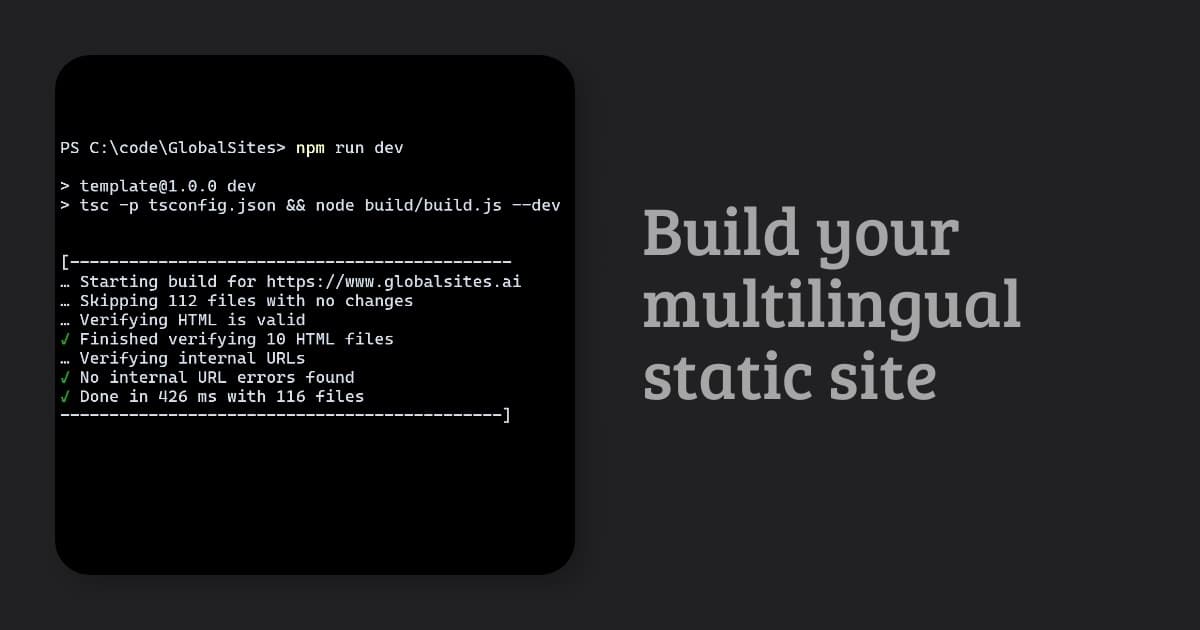
LansiAI
Global Sites offers a boilerplate project designed for building static websites with multiple languages, leveraging AI tooling for translations. It integrates i18next for translation management and includes a custom language switcher, sitemap generator, and robots.txt generator. The platform emphasizes creating fast and secure sites, with HTML files typically around 20KB, ensuring quick loading times. Users can purchase access to GitHub repositories for updates and support. Additionally, Global Sites provides a 'done for you' service, converting a single HTML file into translated pages using AI, or offering a 10-page site conversion. The tool is built with straightforward TypeScript code and focuses on enabling users to expand their site's reach from one language to over 20, with features like adjusted URLs and sitemaps for improved search engine visibility.

DHARMA-AI
DHARMA-AI is an AI Lab specializing in the development of Specialized Small Language Models (SLMs) using proprietary hard tech. Their mission is to transform AI by creating intelligent, personalized, and efficient solutions for businesses. They focus on delivering custom AI models trained with client-specific data, leading to significant cost reductions (up to 50 times less than large market models) and improved accuracy. DHARMA-AI's approach prioritizes ethical, sustainable, and secure AI, with SLMs consuming 30 to 50 times less energy than traditional LLMs. They offer various business lines, including ready-to-use AI products like Smart OCR and KM Maintenance, and an AI Lab for custom solution development and MLOps support.
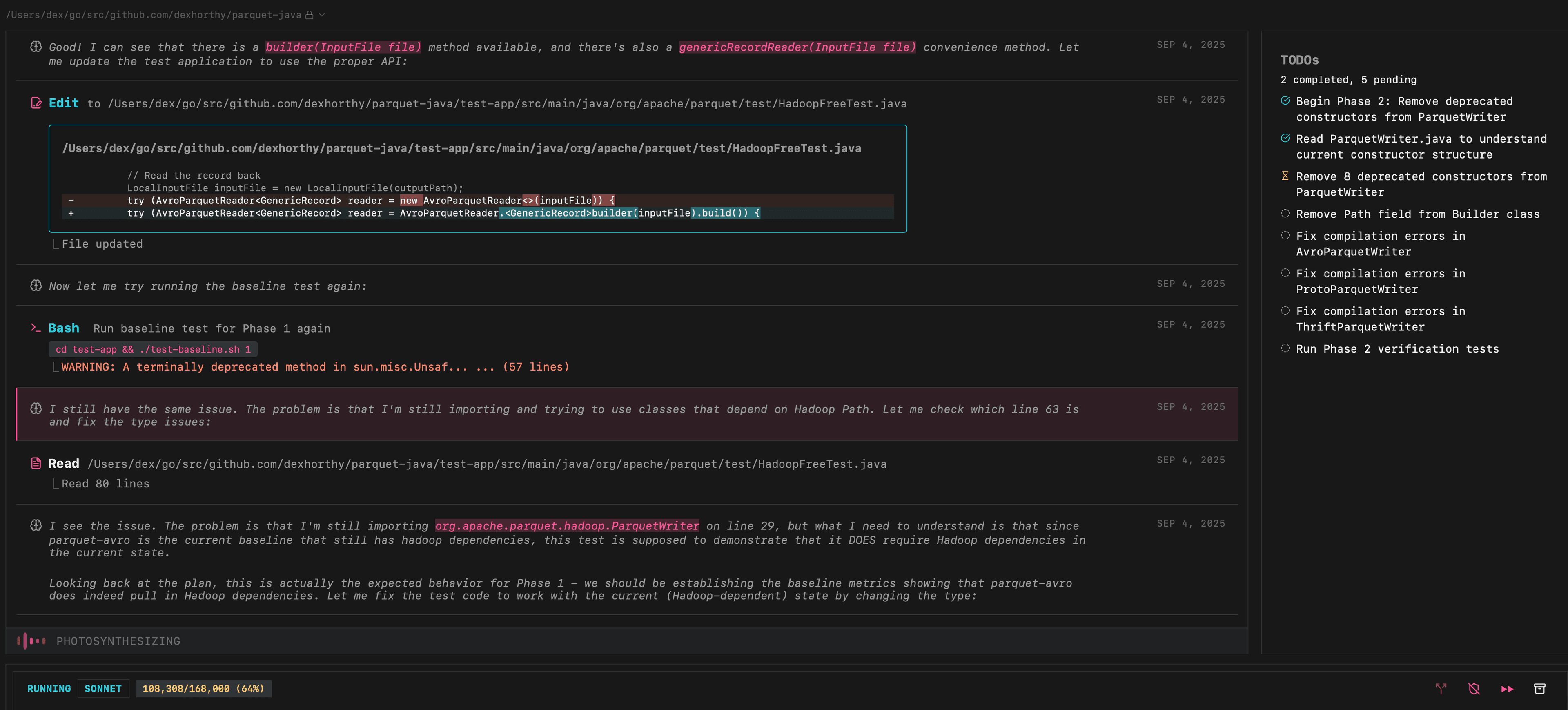
HumanLayer
HumanLayer offers CodeLayer, an IDE specifically designed to orchestrate AI coding agents. This platform provides battle-tested workflows that enable AI to tackle challenging problems within large and complex codebases. Built on Claude Code, HumanLayer supports scaling from a single developer's laptop to an entire team, facilitating AI-first development. Key features include keyboard-first workflows for speed and control, advanced context engineering to manage AI-driven development, and the ability to run multiple Claude Code sessions in parallel (MultiClaude) for increased productivity. It also offers solutions for enterprises, including tailored workflows, custom integrations, and expert advice to help organizations scale AI-first development.