
Data & Analytics
Browsing page 26 of AI tools for Data Cleaning & Prep in Data & Analytics. Sorted by confidence score — our independent quality rating.

labelme
labelme is a versatile graphical image annotation tool developed in Python, utilizing Qt for its user interface. It supports a wide array of annotation primitives including polygons, rectangles, circles, lines, and points, making it suitable for various computer vision tasks. Beyond basic annotation, labelme offers advanced features like image flag annotation for classification, video annotation capabilities, and GUI customization options such as predefined labels and auto-saving. A key differentiator is its AI-assisted annotation, which includes point-to-polygon/mask annotation using models like SAM and EfficientSAM, as well as AI text-to-annotation via YOLO-world and SAM3 models. The tool also facilitates exporting datasets in VOC and COCO formats for semantic and instance segmentation, respectively. It is available in over 20 languages, enhancing its accessibility for a global user base.
kaggle-titanic
Kaggle-titanic is an open-source tutorial designed for individuals interested in data analytics and using Python for Kaggle's Data Science competitions, specifically the Titanic Machine Learning From Disaster challenge. The tutorial, presented as an IPython Notebook, guides users through essential data science practices including importing and cleaning data with Pandas, exploring data through visualizations with Matplotlib, and performing data analysis. It also covers supervised machine learning techniques such as Logit Regression, Support Vector Machines (SVM) with multiple kernels, and Basic Random Forest. The resource further demonstrates K-folds cross-validation for evaluating results locally and outputting them for Kaggle. This comprehensive guide is ideal for beginners looking to gain practical experience in data science and machine learning.
2txt
2txt is an efficient AI tool designed for rapid image-to-text conversion. Leveraging the Vercel AI SDK, GPT 4.1-nano, and Next.js, it provides a streamlined solution for extracting textual information from images. The tool emphasizes speed and ease of use, allowing developers to quickly integrate and utilize its capabilities. It's an open-source project, encouraging contributions and offering a clear development setup process, including environment variable configuration for API keys and dependency installation. This makes it a practical choice for projects requiring quick and accurate text extraction from visual content.
grobid
GROBID (Generation Of BIbliographic Data) is an open-source machine learning library designed to extract, parse, and restructure raw PDF documents, particularly technical and scientific publications, into structured XML/TEI encoded formats. Developed since 2008, it offers functionalities like header extraction (title, abstract, authors), reference parsing (with high F1-scores), citation context recognition, and full-text structuring (sections, figures, tables). GROBID also provides PDF coordinates for interactive augmented PDFs, name and affiliation parsing, and consolidation of references using services like biblio-glutton or CrossRef. It includes a comprehensive web service API, Docker images, and supports batch processing, making it suitable for large-scale scientific literature processing. Deployments include ResearchGate, Semantic Scholar, and HAL Research Archive.
skrub
skrub (formerly dirty_cat) is a powerful open-source Python library designed to streamline machine learning tasks when working with dataframes. It offers a comprehensive suite of functionalities for data cleaning, preprocessing, and wrangling, making it easier to prepare tabular data for machine learning models. The library is built to handle common challenges associated with dirty or inconsistent data, ensuring that data scientists and developers can focus on model building rather than tedious data preparation. skrub integrates seamlessly into existing Python-based machine learning pipelines, providing efficient and robust solutions for data preparation.
ClearSKY Vision
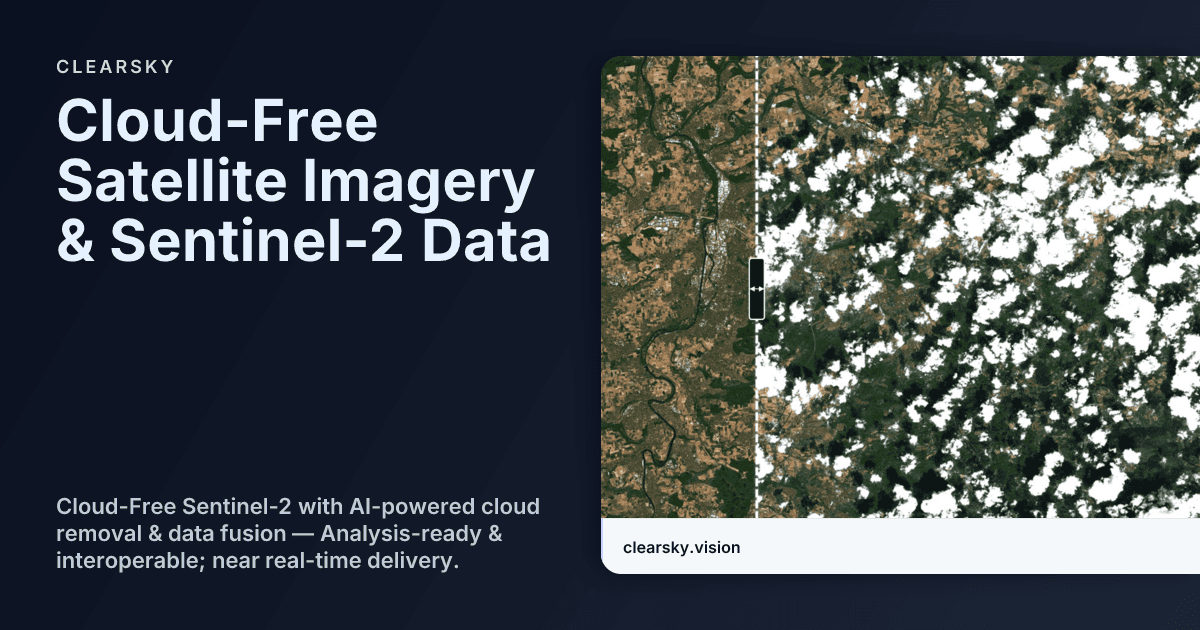
ClearSKY Vision offers cloudless Sentinel-2 satellite imagery, leveraging AI for cloud removal and data fusion. It integrates optical and SAR data from Sentinel-1 and Sentinel-2 satellites to reconstruct cloud-covered areas, clean optical pixels, and provide harmonized, analysis-ready images. This tool delivers frequent, consistent data at 10m resolution, available in Cloud Optimized GeoTIFF (COG) format, with options for TOA or BOA products. It supports flexible ordering via GeoJSON, WKT, or tiles, catering to agriculture, forestry, and environmental monitoring, ensuring uninterrupted insights even under persistent cloud cover.
TFC-pretraining
TFC-pretraining is a specialized tool designed for self-supervised contrastive learning, specifically tailored for time series data. It leverages a novel approach called time-frequency consistency to significantly improve the learning process and the quality of representations derived from complex time series. The tool provides researchers and practitioners with not only the underlying methodology but also includes processed datasets and readily available code for implementing the technique. This makes it an invaluable resource for those working in time series analysis, enabling them to explore advanced predictive analytics and pattern recognition with greater efficiency and accuracy. Its focus on robust representation learning addresses key challenges in handling sequential data.

Lixo
Lixo is a pioneering AI-driven data analysis solution specifically designed for the waste management industry. It empowers waste collectors and municipalities to optimize their operations by providing unique data and fine-grained analysis of waste streams in real-time. The platform helps improve sorting quality, reduce refusal rates at disposal sites, and enhance overall collection efficiency. Key capabilities include real-time waste flow analysis, data transmission, and indicator monitoring. Lixo is compatible with various types of waste collection vehicles and can detect a wide range of contaminants using computer vision technology. It aims to provide actionable insights for better waste management and cost optimization.
Unity Catalog
Unity Catalog is the industry's only universal catalog for data and AI, offering built-in governance and security for tabular, non-tabular data, and AI assets. It transforms how data is managed and governed, ensuring compatibility and control across diverse platforms and tools. Key features include interoperability across any format and engine, open APIs, and an open-source server for maximum flexibility. It supports multi-format data like Delta, Iceberg, and Hudi, as well as unstructured data (Volumes) and AI assets (ML models, Gen AI tools). The platform also provides strong authentication, secure credential vending, and asset-level access control, making it a robust solution for data and AI governance.

LISUTO株式会社
LISUTO株式会社 offers an AI-driven solution, LISUTO AI, designed to significantly boost e-commerce sales and operational efficiency. The platform specializes in smart data structuring, making products easier to find for customers on various marketplaces. Its core features include AI Tagger, which automatically extracts and registers essential tags from product descriptions and CSV files, and Image Tagger, which identifies attributes like color, pattern, material, and brand from product images. This automation helps reduce manual workload for sellers while improving product visibility and conversion rates. LISUTO AI currently supports major Japanese e-commerce platforms such as Rakuten, Yahoo Shopping, and PayPay Mall, providing a seamless experience for businesses looking to optimize their online presence and maximize sales with minimal effort.
aiconix GmbH
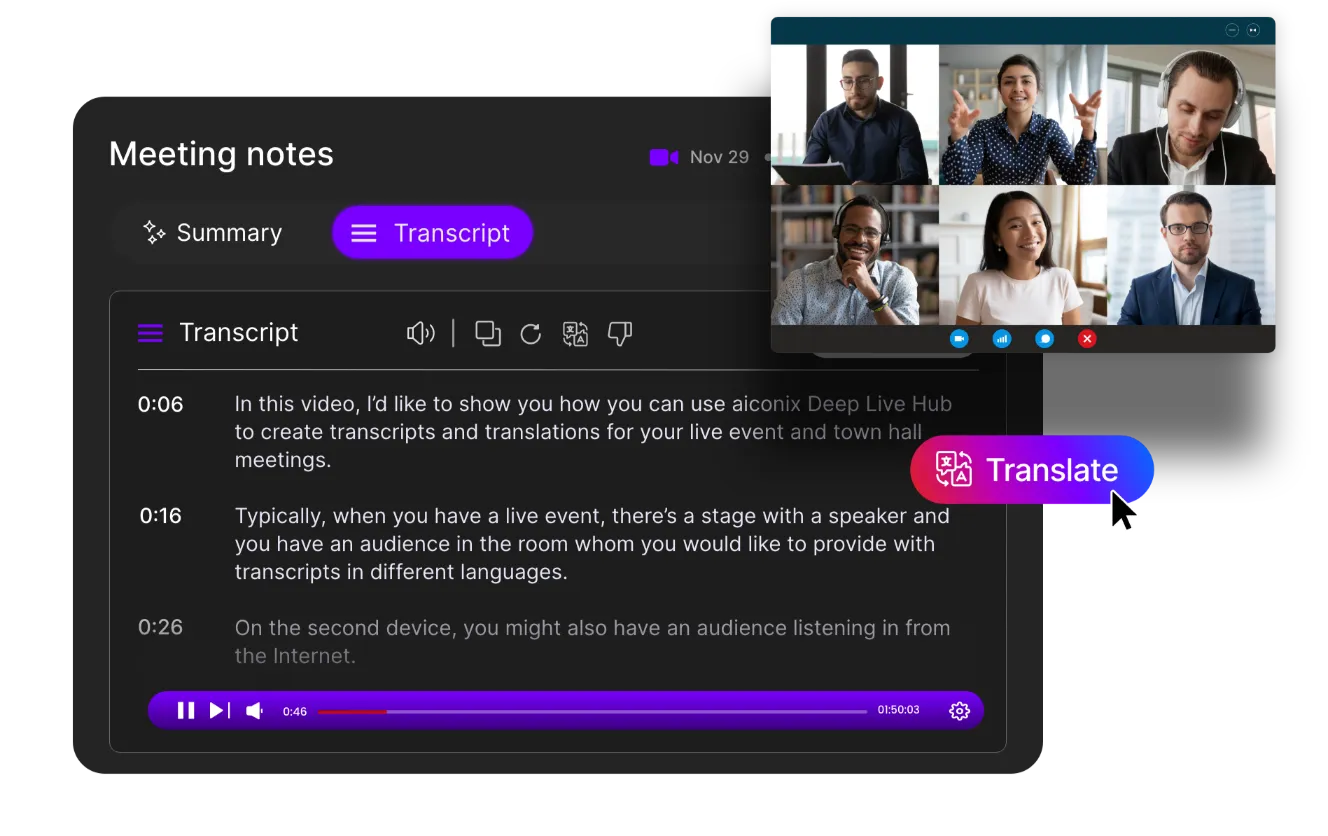
DeepVA is a composite AI platform designed for media companies to extract comprehensive information from images, videos, and live streams. It automates complex AI processes like tagging, indexing, and searching, significantly enhancing content management, accessibility, and workflow efficiency. The platform supports both cloud and on-premises deployments, ensuring data security and compliance with regulations like GDPR and the AI Act. Key features include Deep Media Analyzer for insights, Deep Model Customizer for creating custom AI models, and Deep Live Hub for AI-based live subtitling and translation. DeepVA integrates seamlessly with existing workflows via an API-centric approach, making it ideal for media asset management, workflow engines, OTT platforms, newsroom tools, and event platforms.
Medra
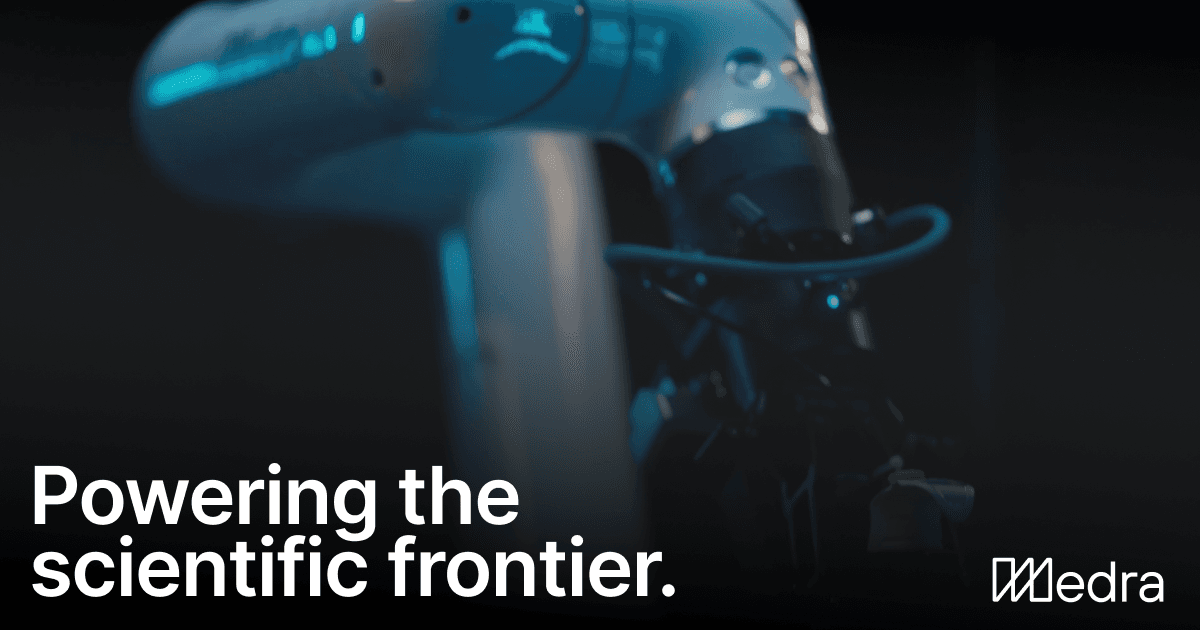
Medra is an advanced Scientific Computing tool designed to automate and accelerate laboratory work through its autonomous robotic system. The platform integrates Physical AI and Scientific AI to run and optimize protocols, allowing scientists to hand over lab work. Key capabilities include text-to-protocol conversion, instrument agent control, and closed-loop optimization. The Physical AI captures data at scale, logs videos and metadata, reduces errors with computer vision, and offers flexibility through modular, instrument-agnostic agents. The Scientific AI enables programming in natural language, multi-modal reasoning across various data types, and adaptive experiment design based on results. Medra aims to unlock breakthroughs at scale by enabling the creation and execution of multiple experiments in parallel, from gene editing to microbial discovery.
labelCloud
labelCloud is a lightweight, open-source tool designed for labeling 3D bounding boxes within point clouds. It supports two primary labeling modes: picking, for precise front-top edge selection, and spanning, for defining length, width, and height by selecting four vertices. The tool offers extensive correction options for translation, dimension, and rotation, including a 'z-Rotation Only Mode' that can be deactivated for 9 DoF-Bounding Boxes. Beyond bounding box labeling, labelCloud also facilitates semantic segmentation based on bounding boxes. It boasts broad compatibility with various point cloud file formats for import (e.g., .pcd, .ply, .xyz) and supports multiple label export formats like centroid_rel, centroid_abs, vertices, and KITTI. Users can easily configure the software via `config.ini` and `_classes.json` files, making it adaptable to diverse use cases in 3D object detection and computer vision.
VEIL.AI
VEIL.AI specializes in privacy-enhancing technologies, converting sensitive health data into safe, non-sensitive, and high-utility assets. Its BONSAI applications enable organizations to maximize data value for AI/ML training, internal reuse, sharing, and real-world evidence, while adhering to strict privacy regulations like GDPR, HIPAA, and the EU AI Act. BONSAI structured anonymizes or synthesizes structured data, preserving statistical properties and individual-level integrity. BONSAI text accurately redacts personal and confidential information from free-text documents, even in smaller languages. The technology operates within the user's own data environment, ensuring data security and compliance, and is available as cloud deployments or native applications for platforms like Microsoft Azure and Snowflake.
Awesome-AutoML-and-Lightweight-Models
Awesome-AutoML-and-Lightweight-Models is a comprehensive GitHub repository that curates high-quality and recent works in the field of Automated Machine Learning (AutoML) and lightweight models. It serves as a valuable resource for researchers and practitioners, categorizing information into key areas such as Neural Architecture Search, Lightweight Structures, Model Compression, Quantization and Acceleration, Hyperparameter Optimization, and Automated Feature Engineering. The repository includes links to papers and associated code repositories (often in PyTorch or TensorFlow), making it easy to explore and implement the discussed techniques. It is continuously updated, welcoming contributions to ensure it remains a current and relevant resource for the AutoML research community.
Dataset ReWriter
Dataset ReWriter is a versatile tool hosted on Hugging Face Spaces, designed to empower users to manipulate datasets with simple text instructions. It allows for various operations such as transforming, translating, or filtering data based on user-defined prompts. This capability makes it an accessible solution for individuals looking to quickly modify their datasets without extensive coding knowledge. Users can upload their dataset, provide a clear text instruction, and then preview the changes before saving the rewritten dataset. This intuitive approach streamlines the data preparation process, making it easier to adapt datasets for different analytical or machine learning tasks.
Dashbot
Dimension Labs is a Causal Intelligence platform designed for enterprises to bridge the 'causal gap' by analyzing customer conversations. It ingests data from diverse sources like live chat, phone calls, voice agents, surveys, and support tickets, then automatically builds a 'Meaning Layer' to structure this information. The platform offers business-native categorization, a Causal Correlation Engine to link customer feedback to business metrics, and on-demand intelligence reports. It helps predict churn, quantify risk, and prove why business numbers move, providing insights for sales, CX, product, and data & analytics teams. The tool is SOC2, ISO 27001, GDPR & CCPA compliant, with features like PII redaction and penetration testing.
Dataset Explore
Dataset Explore is a Data & Analytics tool hosted on Hugging Face Spaces, designed for efficient exploration and analysis of various datasets. Utilizing Streamlit for its user interface, it provides a platform for users to delve into the intricacies of their data. This tool is particularly useful for individuals involved in AI and machine learning tasks, offering capabilities to analyze and understand datasets, which is crucial for effective model development and research. While the current status indicates a runtime error, its intended purpose is to facilitate data exploration within the Hugging Face ecosystem.
DoclingConverter
DoclingConverter is a Hugging Face Space designed to streamline the process of converting PDF documents into more structured and editable formats like Markdown or JSON. Users can upload a PDF file and then select their desired output format. The tool not only extracts the textual content but also captures relevant metadata, making it highly useful for various applications. This simplifies document processing for tasks such as content management, data extraction, and archival. It is particularly beneficial for individuals and professionals who frequently work with PDFs and require an efficient way to transform them into machine-readable or easily editable formats.
EasyOCR
EasyOCR is a Hugging Face Space that allows users to upload an image and select a language to extract text from it. The application visually highlights the detected text directly on the image, making it easy to see what has been recognized. Alongside the highlighted image, it provides a list of all extracted text segments, each accompanied by a confidence score. This feature is particularly useful for quickly assessing the accuracy of the OCR process. The tool is designed for straightforward optical character recognition tasks, offering a simple interface for text extraction.
Embedding Converter
Embedding Converter is a specialized AI utility tool designed to facilitate the conversion of SD1.5 embedding files into a compatible SDXL format. This tool is particularly useful for developers and data scientists working with AI models, enabling them to seamlessly integrate older embedding files into newer SDXL-based projects. Hosted on Hugging Face Spaces and built with Gradio, it offers a straightforward process: users upload their SD1.5 embedding file, the application processes it, and then provides the converted version for download. This ensures compatibility and efficiency in AI development workflows, making it easier to leverage existing resources within updated frameworks.
Facial Feature Detector
Facial Feature Detector is an AI-powered tool available as a Hugging Face Space that analyzes facial features from uploaded images. Users can upload up to two photos to receive detailed insights into various facial attributes, including age, gender, symmetry, proportions, and texture. The tool provides both predictive analyses and visual representations of these features. A key aspect of its design is privacy, as it explicitly states that it does not store any uploaded images. This makes it suitable for quick, on-demand facial analysis without concerns about data retention.
![ZERO [ UNLICENSE ]](/_next/image?url=https%3A%2F%2Fzero.theneurocatalyst.com%2Fog_images%2Fzero_og.png&w=3840&q=75)
ZERO [ UNLICENSE ]
ZERO is a universal, high-performance data inspection engine designed for deep resource inspection. It operates 100% locally, ensuring privacy as no data leaves your machine. Built with Rust, it leverages zero-copy data processing for exceptional speed and efficiency, requiring less than 100MB RAM. The tool supports a wide range of universal readers including Parquet, CSV, JSON, S3, SQLITE, and KAFKA. It also offers strategic ingestion capabilities for databases like Qdrant, Neo4j, MongoDB, SQLite, and Postgres. For enhanced security, ZERO includes defensive protocols such as automated PII redaction and local AES-256 encryption, making it ideal for privacy-sensitive data analysis.
0 Shot NER
0 Shot NER is a named entity recognition (NER) tool hosted on Hugging Face that allows users to identify and classify named entities within text without requiring any pre-trained models or labeled data. This capability is particularly useful for quickly extracting specific information from unstructured text. The tool leverages the knowledgator/UTC-DeBERTa-small model for its underlying processing. It is licensed under Apache-2.0, making it accessible for both research and commercial applications. While the tool itself is hosted on Hugging Face Spaces, which offers various pricing tiers for compute resources, the core functionality of 0 Shot NER focuses on providing an efficient and flexible solution for data scientists and developers working with text data.