
Research & Education
Browsing page 12 of AI tools for Scientific Computing in Research & Education. Sorted by confidence score — our independent quality rating.

Ingram Technologies
Ingram Technologies is an EU-based AI R&D lab established in 2022, focusing on crafting compliant and open AI-based software solutions for startups and SMEs. They offer expertise in building advanced AI agents, ensuring enterprise-grade security with bank-grade encryption and compliance standards, and enabling rapid deployment of AI solutions. A key differentiator is their focus on ISO 42001 readiness and adherence to the EU AI Act, providing guidance and implementation support for compliant AI systems. Their solutions prioritize privacy-by-design principles and zero data retention, alongside high-performance optimized infrastructure and real-time analytics dashboards for monitoring. Ingram Technologies also conducts cutting-edge research, as evidenced by their blog posts on AI pentesting and AI ethics.

deeplearning4j
Deeplearning4j is a comprehensive ecosystem designed for deploying and training deep learning models within the Java Virtual Machine (JVM) environment. It offers a high-level API for building MultiLayerNetworks and ComputationGraphs, supporting various layers including custom ones. A key feature is its ability to import models from popular frameworks like Keras, TensorFlow, ONNX, and PyTorch. The suite includes ND4J, a general-purpose linear algebra library with over 500 operations, and SameDiff, an automatic differentiation/deep learning framework similar to TensorFlow's graph mode. DataVec provides ETL capabilities for machine learning data, handling diverse formats and sources. The underlying C++ library, LibND4J, ensures high performance with CPU and GPU acceleration. Deeplearning4j supports Windows, Linux, and macOS, with broad hardware compatibility.
LeFlow
LeFlow is an open-source tool-flow designed to bridge the gap between TensorFlow deep neural networks and synthesizable hardware, specifically FPGAs. It achieves this by integrating Google's XLA compiler with the LegUp high-level synthesis tool, enabling the automatic generation of Verilog code from TensorFlow specifications. This facilitates the deployment of deep neural networks on FPGAs, offering a flexible approach to hardware acceleration. The tool includes a testing framework with 15 building blocks to verify installation and functionality, ensuring that generated circuits match original TensorFlow results. It also provides examples ranging from simple tests to more complex applications, making it a comprehensive solution for hardware synthesis of AI models.
parrots
Parrots is an open-source toolkit designed for Automatic Speech Recognition (ASR) and Text-To-Speech (TTS) functionalities. It supports multiple languages, including Chinese, English, and Japanese, and provides multi-speaker voice synthesis with high accuracy. Key features include a Chinese ASR model based on distilwhisper, and TTS models like GPT-SoVITS and IndexTTS2. IndexTTS2 is particularly notable for its advanced capabilities, offering zero-shot speech synthesis with emotional expression and duration control, independent control over timbre and emotion, and support for various emotion control methods including audio reference, emotion vectors, and text descriptions. The tool also supports streaming TTS for low-latency real-time audio output and command-line interface (CLI) for both ASR and TTS tasks, making it suitable for developers and researchers.

jaide
jaide is an AI-powered platform designed to assist doctors, particularly in oncology, by automating clinical documentation and providing advanced prognostic models. The AI clinical assistant helps healthcare providers save up to 4 hours per week on documentation by automating note-taking and generating medical reports. This allows doctors to focus more on patient care. Additionally, jaide develops AI prognostic models to anticipate cancer evolution and improve therapeutic decisions, with current models for prostate and colorectal cancer, and lung cancer in development. The platform emphasizes quick setup, flexibility, secure HDS data storage (GDPR compliant), FHIR data export, EHR integration, and a user-friendly interface with 1-click launch for AI consultations and dictation.
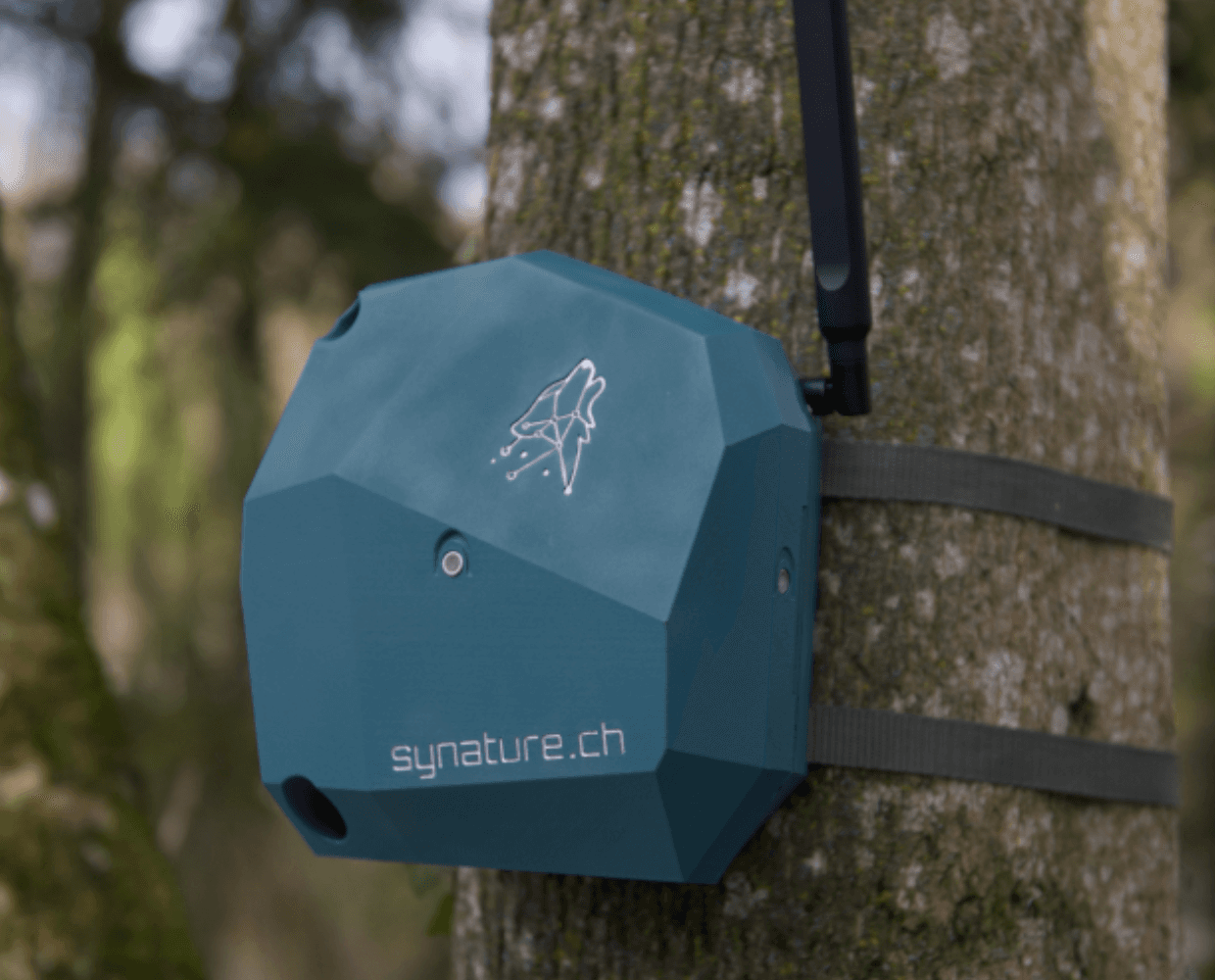
Synature
Synature is a deep-tech startup dedicated to making biodiversity measurable through advanced passive acoustic monitoring. The platform utilizes smart microphones and AI to continuously record and analyze animal sounds, offering actionable insights into ecosystem health. Its smart microphones are solar-powered, weatherproof, and maintenance-free, automating data collection that previously required complex fieldwork. The SynApp, a cloud-based dashboard, processes this sound data into verified biodiversity insights, capable of detecting over 15,000 species of birds, bats, frogs, insects, and mammals in real-time. Users can monitor species detections, acoustic trends, and ecosystem health indicators, listen to recordings, and verify results. This system supports applications in nature conservation, regenerative agriculture, and ecotourism, enabling users to generate reports, track restoration progress, and receive alerts for critical biodiversity changes.
qiskit-machine-learning
Qiskit Machine Learning is an open-source library built on Qiskit, designed for quantum machine learning tasks at scale. It introduces fundamental computational building blocks like Quantum Kernels and Quantum Neural Networks, which are essential for applications such as classification and regression. The library aims to be user-friendly, allowing quick prototyping without extensive quantum computing knowledge, while also being flexible for proofs-of-concept and innovative research. It is extensible, facilitating the integration of new features leveraging Qiskit's architecture. Key features include kernel-based methods using FidelityQuantumKernel, generic interfaces for neural networks (EstimatorQNN, SamplerQNN), and integration with PyTorch for automatic differentiation in hybrid quantum-classical neural networks.

Radical AI
Radical AI is at the forefront of materials innovation, leveraging artificial intelligence to accelerate the research and development of new materials. The platform employs a closed-loop discovery process, starting with screening billions of material compositions to predict structures and properties. It then optimizes chemical synthesis through computational adaptive experimentation, active learning, and self-guided literature review. For the most promising candidates, high-throughput experiments are conducted in a self-driving laboratory. This entire process generates valuable data that feeds back into the prediction engine, continuously refining and improving the discovery cycle. Radical AI aims to remove bottlenecks in scientific progress, enabling breakthroughs for mission-critical industries.
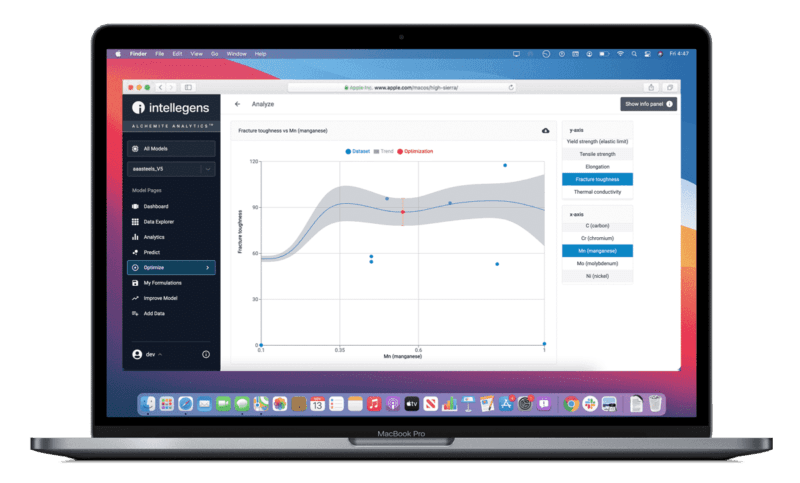
Intellegens
Intellegens offers the Alchemite™ Suite, a machine learning platform designed to accelerate research and development across various industries including chemicals, materials, FMCG, life sciences, and manufacturing. The suite includes specialized applications like Alchemite™ for DOE (Design of Experiments), Alchemite™ for Formulations, and Alchemite™ for R&D Insights, which help users cut experimental workloads by 50-80%, optimize formulations, and unlock hidden value in data. The platform is particularly effective with sparse or noisy data and provides high-quality uncertainty quantification for reliable predictions, enabling virtual experiments and informed decision-making.

SFI Visual Intelligence
SFI Visual Intelligence is a Norwegian Centre for Research-based Innovation at UiT The Arctic University of Norway, dedicated to unlocking the potential of deep learning and AI for extracting knowledge from complex image data. Through long-term research and collaboration with industry, public institutions, and research partners, the center drives innovation, technology transfer, and researcher training. It researches next-generation deep learning methodologies for visual data, producing solutions for consortium partners across key innovation areas including medicine and health, marine science, energy, and earth observation. The center addresses research challenges such as limited training data, context and dependencies, confidence and uncertainty, and explainability and reliability in AI systems.
RETFound
RETFound is an open-source vision foundation model project hosted on GitHub, dedicated to medical AI applications, particularly for retinal image analysis. It provides a series of foundation models, including its namesake RETFound, as well as integrations with DINOv2 and DINOv3 from Meta. The project emphasizes self-supervised learning, having been pre-trained on 1.6 million retinal images, and has demonstrated effectiveness in various disease detection tasks. Key features include its ability to be efficiently adapted to customized tasks and its generalizability for disease detection. The repository offers detailed instructions for environment setup, fine-tuning with pre-trained weights available on HuggingFace, and evaluation procedures, making it a valuable resource for researchers and developers in medical imaging AI.
skrl
skrl is an open-source, modular Reinforcement Learning (RL) library implemented in Python, supporting PyTorch, JAX, and NVIDIA Warp. It is designed with a focus on modularity, readability, simplicity, and transparency of algorithm implementation, making it suitable for both research and development. The library supports a wide range of environment interfaces, including OpenAI Gym, Farama Gymnasium, PettingZoo, and ManiSkill. Additionally, it allows for loading and configuring NVIDIA Isaac Lab and MuJoCo Playground environments, enabling simultaneous training of agents by scopes within the same run. skrl is under active continuous development, with the latest updates available on its develop branch.
torchtitan
Torchtitan is a PyTorch-native platform designed for rapid experimentation and large-scale training of generative AI models. It serves as a minimal clean-room implementation of PyTorch native scaling techniques, providing a flexible foundation for developers to build upon. The platform emphasizes ease of understanding, use, and extension for different training purposes, with a bias towards a clean, minimal codebase. Key features include multi-dimensional composable parallelisms like FSDP2, Tensor Parallel, and Pipeline Parallel, along with support for activation checkpointing, distributed checkpointing, and interoperable checkpoints. Torchtitan also integrates with `torch.compile`, supports Float8 and MXFP8 training, and offers Supervised Fine-Tuning (SFT) with chat-formatted datasets. It provides debugging tools, flexible learning rate schedulers, and helper scripts for tokenizer downloads and checkpoint conversions, making it a comprehensive solution for advanced generative AI model development.
Q-CTRL
Q-CTRL offers infrastructure software designed to make quantum technology useful, focusing on quantum computing and quantum sensing. The platform leverages AI to bridge the gap between the quantum and classical worlds, delivering performance enhancements in quantum computing and enabling new quantum sensing capabilities. Key products include Fire Opal for optimizing quantum algorithms and hardware performance, Boulder Opal for designing and scaling quantum hardware, and Black Opal for interactive quantum education. Q-CTRL has achieved significant milestones, including world records in quantum computing performance and a 94x quantum advantage in navigation, making it a leader in practical quantum applications. The tool serves a diverse audience from quantum learners and educators to defense and aerospace industries, providing solutions for GPS-free navigation, quantum computer calibration, and algorithm development.

Continuum Industries
Continuum Industries offers Optioneer, an AI-powered option assessment platform designed for utilities and developers in the energy and water industries. It automates the generation and evaluation of options for network upgrades and expansion, leveraging thousands of GIS layers to identify optimal routes. The platform helps estimate project costs earlier, identify risks quicker, and facilitates collaboration across multiple disciplines within a geospatial planning environment. Optioneer supports various linear infrastructure projects including electricity transmission, renewables, hydrogen, CO2 networks, and water networks. It offers two main products: Optioneer for Screening, for early-stage go/no-go decisions, and Optioneer for Development, for in-depth analysis from concept to permit application, significantly reducing project timelines and risks.
ORCOD Chemistry
ORCOD Chemistry offers ORCOD LabBook Pro, an advanced Electronic Lab Notebook (ELN) specifically designed for chemistry professionals. This software integrates Artificial Intelligence to enhance scientific workflows, allowing users to record experimental results, simulate chemical reactions, and predict molecular properties. It assists in designing and optimizing synthetic strategies, inspecting molecular properties, and analyzing experimental data. ORCOD LabBook Pro also helps in screening reaction conditions, predicting NMR and MS spectra, and estimating chromatographic behaviors. The tool is designed for ease of use, providing automated statistical analyses and robust project protection, making it suitable for academia, industry, and individual researchers in various sectors like Pharma, Biotech, and Petrochemistry.
xtuner
xtuner is a next-generation LLM training engine specifically designed for ultra-large-scale MoE models. Unlike traditional 3D parallel training architectures, XTuner V1 is optimized for mainstream MoE training scenarios, enabling scalable training of 200B-scale MoE models without expert parallelism and 600B models with only intra-node expert parallelism. It features memory-efficient design for long sequence support, allowing 200B MoE models to train on 64k sequence lengths. The engine boasts superior efficiency, supporting MoE training up to 1T parameters and achieving breakthrough FSDP training throughput. It also integrates with leading inference frameworks like LMDeploy, vLLM, and SGLang.
zhusuan
ZhuSuan is a Python probabilistic programming library designed for Bayesian deep learning, combining the strengths of Bayesian methods and deep learning. Built upon TensorFlow, it offers a unique approach compared to traditional deep learning libraries that primarily focus on deterministic neural networks and supervised tasks. ZhuSuan provides a suite of deep learning-style primitives and algorithms specifically tailored for constructing probabilistic models and performing Bayesian inference. It supports various inference algorithms including Variational Inference (VI) with programmable posteriors and advanced gradient estimators, Importance Sampling (IS) for model learning and evaluation, Hamiltonian Monte Carlo (HMC) with parallel chains, and Stochastic Gradient Markov Chain Monte Carlo (SGMCMC) methods like SGLD, PSGLD, SGHMC, and SGNHT. The library is still under active development, with installation typically involving cloning the repository and using pip.

Nextmol
Nextmol develops computational chemistry and artificial intelligence solutions specifically for chemical R&D. The platform, trusted by companies like L'Oreal and Repsol, allows users to virtually test molecules and accelerate product development. It leverages physics-based atomistic models, data-driven science, and high-performance computing in the cloud to improve R&D processes. Key benefits include speeding up research by 80%, reducing R&D costs by 90%, and enabling 100% sustainability. Nextmol Lab is an enterprise platform designed for computational chemistry, facilitating faster innovation in areas like surface & interface phenomena, high-throughput screening, large & complex formulations, and bio-based chemistry.
SciML
SciML is an open-source software ecosystem dedicated to scientific machine learning, physics-informed AI, and differentiable programming. It offers a unified and composable set of tools for solving complex scientific problems, including differential equations (ODEs, SDEs, DDEs, DAEs), large-scale nonlinear systems, and inverse problems. The platform facilitates automated model discovery and integrates with machine learning frameworks through differentiability. Built primarily with Julia, SciML emphasizes robust and performant algorithms, achieving state-of-the-art results. It also provides bridges to Python and R, ensuring broad accessibility for the scientific community. Key features include advanced equation solvers, physics-informed model discovery, and ML-assisted tooling for model acceleration, all supported by a large and active developer community.
Huma.ai
Huma.ai provides AI-driven solutions specifically designed for life science professionals, particularly within Medical Affairs. The platform enables users to quickly, accurately, and securely extract evidence and insights from various data sources using generative AI. Key functionalities include insight surfacing to identify trends and takeaways, automated literature reviews for accurate and timely results, and custom report generation with traceability to evidence sources. It supports analysis of diverse data types such as literature, congress materials, CRM data, market research, research studies, ad board discussions, and internal documents, transforming complex findings into valuable insights to enhance expertise and accelerate decision-making.

metaphi
Metaphi AI is an applied AI research lab that develops sophisticated Reinforcement Learning (RL) environments for frontier AI companies. Their core mission is to acquire proprietary environments and rigorously measure where and why advanced AI models fall short of expert performance benchmarks. They specialize in creating interactive simulation environments, moving beyond static evaluations to dynamic worlds for agent training and assessment. Metaphi offers benchmarks such as COBOLBench for evaluating coding agents on enterprise COBOL systems, VideoBench for source-grounded video generation, and FigmaBench for production Figma-to-code conversion. This platform is designed to help scale training environments across unexplored domains, including Physical AI, and is actively hiring for RL engineers and ex-founders.
Kashikoi
Kashikoi is a comprehensive simulation platform designed for building, evaluating, and rigorously testing AI agents. It enables users to identify and fix bugs in their AI models before they reach customers, ensuring a more robust and reliable product. The platform simulates real-world interactions to autonomously assess agent performance, offering features like AI agent benchmarking with a single prompt and no-code evaluation. Kashikoi supports custom integrations for various AI stacks, allowing users to connect their agents and run realistic simulations against customizable scenarios. It provides actionable insights and synthetic data to optimize prompts, fine-tune models, and enhance overall agent performance, helping users ship better AI agents faster.

PredictiveIQ
PredictiveIQ develops advanced Physics Informed AI solutions, leveraging novel neural concepts and Physics Informed Machine Learning (PIML) approaches. Their algorithms offer higher predictive accuracy, require significantly less data for training, converge faster to optimal solutions, and provide extrapolating insights for unseen scenarios. The platform offers solutions for Accelerated Engineering through its Continuum platform, transforming simulation data into fast, predictive AI models for design optimization. It also optimizes asset performance by converting data-intensive analytics into predictive AI models, reducing data management burdens and improving real-time insights for applications like predictive maintenance digital twins.