
Research & Education
Browsing page 15 of AI tools for Scientific Computing in Research & Education. Sorted by confidence score — our independent quality rating.

Albert Invent
Albert Invent offers an AI-powered operating system specifically designed for chemists and R&D. It centralizes project, material, and experiment data, capturing information at a molecular level for structured, consistent records. The platform's AI models are trained on a foundation of 15 million molecular structures and further refined with a user's proprietary experimental data, enabling accurate property predictions and formulation optimization. Albert Invent aims to reduce development times, accelerate speed to market, and provide compliance features with built-in regulatory rules for over 400,000 chemical substances. It also includes lab notebooks with Excel-like worksheets, chemical drawing, and project management functionalities.
Augura Space
Augura Space delivers next-generation AI solutions for comprehensive space weather intelligence. Leveraging 3TB of daily space weather data, cutting-edge AI models, and advanced sensor fusion techniques, the platform provides historical analysis, real-time monitoring, and predictive forecasts. This intelligence is crucial for the aerospace, energy, and telecommunications sectors to enhance resilience, optimize operations, and secure critical infrastructure against space weather phenomena. Augura Space also offers custom expert consulting services and will feature sector-specific dashboards and seamless API integration.
Hands-On-Machine-Learning-with-CPP
Hands-On-Machine-Learning-with-CPP is a comprehensive code repository accompanying a Packt publication, designed to guide users through implementing various machine learning and deep learning algorithms using C++. It covers fundamental to advanced concepts, offering practical, easy-to-follow examples. Users will learn to preprocess diverse data types, employ key machine learning algorithms with C++ libraries, and optimize models using grid-search. The repository also includes methods for anomaly detection, improving collaborative filtering, and managing model structures. It provides a C++ program for image classification tasks with LeNet architecture, making it suitable for data analysts, data scientists, and machine learning developers looking to implement models in production.
Particle Accelerator Simulation
Particle Accelerator Simulation is an AI-powered tool available on Hugging Face, developed by the AI Coding Autonomous Agent MOUSE-I. This application provides a 3D environment where users can generate and interact with particles, set against a matrix rain background. Key functionalities include adjusting particle speed, energy, and power, as well as introducing additional particles or dark matter into the simulation. While the tool offers an engaging way to visualize and experiment with particle dynamics, it is currently paused on Hugging Face Spaces, requiring users to request a restart from the author to access its features.
improved-diffusion
Improved-diffusion is an open-source codebase developed by OpenAI for working with Improved Denoising Diffusion Probabilistic Models. This repository provides the necessary tools and scripts for researchers and developers to train and sample from these powerful generative AI models. Users can prepare their own image datasets, including options for class-conditional training by naming files with labels. The codebase supports various hyperparameters for model architecture, diffusion processes, and training flags, allowing for flexible experimentation. It also facilitates distributed training across multiple GPUs and offers different sampling strategies, including DDIM. Pre-trained model checkpoints and their corresponding hyperparameters are provided for several common tasks, such as unconditional ImageNet-64 and CIFAR-10 generation, class-conditional ImageNet-64, and LSUN bedroom models.
CT Read
CT Read is an AI-powered tool designed to revolutionize medical imaging analysis, making complex interpretations accessible to non-medical users. It accurately interprets X-rays, CT scans, MRI, and ultrasound images, supporting both DICOM files and common formats like JPG and PNG. Users receive instant, accurate, and clear reports powered by AI, which include key findings, recommendations, and easy-to-understand summaries. The platform offers multi-modality analysis, advanced anomaly detection, and a user-friendly interface, allowing for comprehensive body analysis across various parts like the brain, chest, abdomen, and bones. It's ideal for individuals seeking to understand their medical images without medical jargon.
Physics Playground
Physics Playground is an AI simulation tool created by an AI Coding Autonomous Agent named MOUSE. This Hugging Face Space allows users to explore and experiment with fundamental physics principles in a virtual environment. Users can set parameters such as mass and initial speed for various objects, then add these objects with a simple click to observe their motion. The app features adjustable gravity, air resistance, and elasticity, providing a dynamic platform for understanding how these forces influence object behavior. It is suitable for educational purposes, allowing students and enthusiasts to visualize physics concepts, and for AI coding experiments, offering a sandbox for testing simulations.
IsaacLab
Isaac Lab is a GPU-accelerated, open-source framework designed to unify and simplify robotics research workflows, including reinforcement learning, imitation learning, and motion planning. Built on NVIDIA Isaac Sim, it combines fast and accurate physics and sensor simulation, making it an ideal choice for sim-to-real transfer in robotics. The framework provides developers with essential features for accurate sensor simulation, such as RTX-based cameras, LIDAR, and contact sensors. Its GPU acceleration enables faster complex simulations and computations, crucial for iterative processes like reinforcement learning. Isaac Lab supports over 16 robot models and more than 30 ready-to-train environments, compatible with popular reinforcement learning frameworks like RSL RL, SKRL, RL Games, and Stable Baselines. It can run locally or be distributed across the cloud, offering flexibility for large-scale deployments.
mario-ai
Mario-AI is an open-source project available on GitHub that focuses on training an AI model to autonomously play the first level of Super Mario World. The system employs deep reinforcement learning, specifically deep Q-learning, and processes raw pixel input without relying on hand-engineered features. A key component is the integration of a Spatial Transformer, which helps the model make in-depth decisions based on the current game state. The methodology includes a replay memory for training, a unique reward function that accounts for movement and level progression, and an epsilon-greedy policy for action selection. The project details the model architecture, including branches for action history, screenshot history, and the last screenshot, and outlines the specific hardware and software requirements for installation and training, such as an NVIDIA GPU with CUDA and CUDNN, and Lua 5.1.
node
Node provides a supplementary code for Neural Oblivious Decision Ensembles, designed for deep learning on tabular data. This tool specializes in learning deep ensembles of oblivious differentiable decision trees, offering a robust approach to data analysis. While it can run on CPU, optimal performance is achieved with a GPU, which significantly reduces processing time. The implementation is noted to be memory inefficient, potentially requiring substantial GPU memory. It is compatible with popular Linux x64 distributions and MacOS, with Docker recommended for other systems. Users need Python (Anaconda recommended) and specific Torch versions to run the provided notebooks, which showcase classification and regression scenarios.
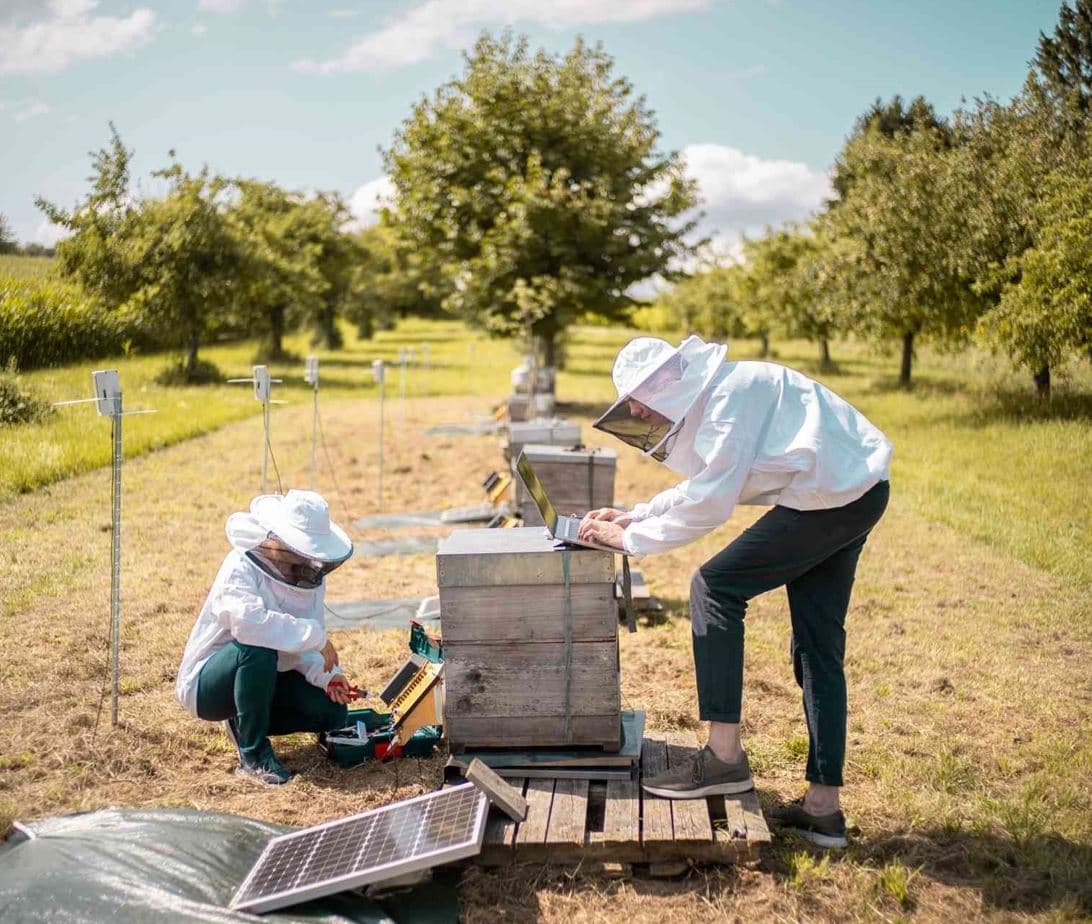
apic.ai
apic.ai is a leading specialist in automated pollinator monitoring, leveraging artificial intelligence and edge computing to provide reliable and fully automated behavioral assessments of bees and bumblebees. Their minimal-invasive camera system, installed at hive entrances, visually detects all movement in and out of the colony. The collected video footage is analyzed using AI algorithms, providing real-time data on activity, foraging behavior, pollen diversity, mortality, and individual size. This technology helps manufacturers and testers of plant protection products improve risk assessment, enables seed producers to develop practices that enhance crop pollination, and supports companies in designing pollinator-friendly habitats. The scientific approach ensures validated methods and verifiable results, making even subtle effects of substances and environmental factors visible.
awesome-neural-geometry
awesome-neural-geometry is a comprehensive, curated collection of resources and research focused on the geometry of representations within the brain, deep neural networks, and related fields. This open-source repository, collaboratively generated on the Symmetry and Geometry in Neural Representations Slack Workspace, includes educational materials like textbooks, notes, courses, and videos covering topics such as Abstract Algebra, Differential Geometry, Information Geometry, Dynamics, Topology, and Geometric Machine Learning. It also lists computational neuroscience resources, datasets, software libraries like Geomstats and E3NN, and relevant conferences and workshops. The project is a work-in-progress and actively encourages contributions via pull requests.
smolGPT
smolGPT offers a minimal PyTorch implementation for training small Large Language Models (LLMs) from scratch, designed primarily for educational purposes and simplicity. It boasts a pure PyTorch codebase with no abstraction overhead, incorporating modern architectural elements like Flash Attention (when available), RMSNorm, SwiGLU, and optional Rotary embeddings (RoPE). The tool supports efficient training features including mixed precision (bfloat16/float16), gradient accumulation, learning rate decay with warmup, weight decay, and gradient clipping. It also includes built-in TinyStories dataset processing and SentencePiece tokenizer training integration, making it a comprehensive yet accessible platform for learning LLM development.
Dalton
DaltonTx redefines drug discovery by providing an AI-enabled platform that serves as an intelligence backbone for modern R&D. It offers an adaptive intelligent system that evolves with scientific advancements, integrates seamlessly into existing workflows, and empowers users with lasting capabilities. The platform learns from every scientist, model, and experiment, continuously improving and guiding better decisions. DaltonTx's technology covers the full discovery lifecycle, including data ingestion, model training, molecule generation, and experiment prioritization. It is built by scientists for scientists, combining software engineering, machine learning, and deep drug discovery expertise to tackle complex problems in both small molecules and biologics.
Farmdar
Farmdar is an agritech company that leverages AI and satellite technology to provide comprehensive crop insights to agribusinesses globally. The platform offers solutions like CropScan for crop classification, YieldPro for yield analytics, eSurvey for land surveying, and DeveloPro for development insights. By covering over 500 million acres, Farmdar empowers businesses in sectors like sugar mills, seed and fertilizer companies, and lending institutions to make data-driven decisions, enhance productivity, and promote sustainable agricultural practices. Its technology helps identify crop location, acreage, variety, yield, harvesting time, and potential disease or pest attacks, alongside health, stress, nitrogen, soil organic matter, and moisture levels.
SwinIR
SwinIR is an official PyTorch implementation of the Swin Transformer model for image restoration. It excels in tasks such as classical, lightweight, and real-world image super-resolution, grayscale and color image denoising, and JPEG compression artifact reduction. The tool's deep feature extraction module, composed of residual Swin Transformer blocks, allows it to outperform state-of-the-art methods while potentially reducing the number of parameters. SwinIR provides interactive online demos, including a Colab demo for real-world image SR and a PlayTorch demo for mobile applications, making it accessible for both research and practical applications.
swe-rl
SWE-RL is an official codebase for "Advancing LLM Reasoning via Reinforcement Learning on Open Software Evolution," designed to scale reinforcement learning-based LLM reasoning for real-world software engineering tasks. It leverages open-source software evolution data and rule-based rewards to improve LLM performance. The codebase includes prompt templates and a flexible reward function API that supports various editing formats, including sequence similarity for search/replace changes and unified diffs. Additionally, SWE-RL features an Agentless Mini component for fast asynchronous inference, code refactoring, file-level localization, and repair, supporting OpenAI-compatible endpoints and Hugging Face models like Llama-3.3-70B-Instruct.
Deix S.r.l.
Deix S.r.l. specializes in developing innovative algorithms and applications by leveraging expertise in mathematical modeling, artificial intelligence, and optimization. They provide solutions that enable companies to make informed decisions and identify new business opportunities. Deix offers both ready-to-use products and tailor-made solutions designed to meet specific business needs. Their approach integrates internal knowledge and data to deliver high-quality, efficient results, as evidenced by client testimonials highlighting speed, technical expertise, and proactivity in solving complex challenges.
Falcondale
Falcondale specializes in developing applied quantum machine learning and optimization solutions designed to deliver real-world impact. The company focuses on leveraging quantum intelligence to solve complex problems across various industries. Falcondale aims to provide a competitive edge through its advanced quantum technologies, offering solutions that go beyond traditional computational methods. Their expertise lies in translating cutting-edge quantum research into practical, deployable applications for businesses and organizations seeking innovative data analysis and optimization capabilities.
textgenrnn
textgenrnn is a Python 3 module built on Keras/TensorFlow designed for creating character-level recurrent neural networks (char-RNNs). It enables users to easily train text-generating neural networks of any size and complexity on any text dataset. The tool incorporates modern neural network architectures, including attention-weighting and skip-embedding, to accelerate training and enhance model quality. Users can train and generate text at either the character or word level, configure RNN size, layer count, and use bidirectional RNNs. It supports training on generic input text files, including large ones, and allows for GPU-trained models to generate text on a CPU. Additionally, textgenrnn offers a powerful CuDNN implementation for faster GPU training and supports contextual labels for improved learning and results.
tokenizers
tokenizers is an open-source library developed by Hugging Face, offering highly optimized and versatile tokenizers for natural language processing tasks. Implemented primarily in Rust, it boasts exceptional performance, capable of tokenizing a gigabyte of text on a server's CPU in less than 20 seconds. The library supports training new vocabularies and tokenizing text using popular models like Byte-Pair Encoding, WordPiece, and Unigram. It includes features such as alignment tracking during normalization, ensuring that the original sentence segments corresponding to tokens can always be retrieved. Additionally, it handles pre-processing steps like truncation, padding, and adding special tokens required by various models, making it suitable for both research and production environments.
deepmath
deepmath is a deep-tech company specializing in advanced mathematical modeling, engineering simulations, and AI-enhanced engineering. It provides industry-grade services and next-gen engineering tools by combining advanced mathematical modeling, physics-based simulation, statistics, and AI. The company focuses on solving complex physical and operational challenges in industries such as renewable energy, offshore engineering, and marine engineering, particularly when standard tools or workflows are insufficient. deepmath offers solutions like Finite Element Methods (FEM), Computational Fluid Dynamics (CFD), Discrete Event Simulations (DES), and various forms of Artificial Intelligence (AI) to provide high-fidelity descriptions and predictions for optimizing design and operations. They also offer custom in-house tool development and support for startups and R&D teams.
trajectory-transformer
Trajectory Transformer is an open-source code release that implements offline reinforcement learning as a sequence modeling problem. Based on the paper "Offline Reinforcement Learning as One Big Sequence Modeling Problem," this tool provides a framework for training models to predict trajectories. It includes scripts for training transformers on various datasets and for planning with these models. The project also offers pretrained models for multiple datasets, allowing users to quickly experiment and reproduce results. It supports installation via conda or Docker, and provides utilities for running jobs on Azure, making it suitable for researchers and engineers in reinforcement learning and robotics.
TASO
TASO, the Tensor Algebra SuperOptimizer for Deep Learning, significantly enhances the performance of deep neural network models. It achieves this by automatically generating and verifying graph transformations to build a vast search space of computation graphs equivalent to the original DNN model. Employing a cost-based search algorithm, TASO discovers highly optimized computation graphs, leading to up to a 3x performance improvement over graph optimizers in current deep learning frameworks. It supports optimizing pre-trained models in ONNX, TensorFlow, and PyTorch formats, and offers a Python interface for arbitrary DNN architectures. Optimized graphs can be exported to ONNX for use in existing deep learning frameworks, maintaining original model accuracy.