
Research & Education
Browsing page 19 of AI tools for Scientific Computing in Research & Education. Sorted by confidence score — our independent quality rating.

self-critical.pytorch
self-critical.pytorch provides a comprehensive codebase for image captioning research, offering an unofficial PyTorch implementation for Self-critical Sequence Training. Key features include support for bottom-up features, test-time ensemble, and multi-GPU training, with DistributedDataParallel now supported via pytorch-lightning. The codebase also integrates Transformer captioning models and offers a simple demo via a Colab notebook. Researchers can train networks on datasets like COCO and Flickr30k, with options for scheduled sampling and evaluation using metrics like BLEU, METEOR, and CIDEr. Pretrained models are available, and the tool facilitates generating image captions and evaluating them on various splits.
Hellbender Inc.
Hellbender Inc. specializes in crafting cutting-edge Computer Vision solutions, offering advanced AI vision systems and industrial AI cameras. They provide mission-critical hardware and software infrastructure for AI-driven perception systems, engineered for the edge in autonomy, robotics, and industrial applications. Their services include design, development, and turn-key manufacturing, with a focus on producing high-quality hardware in America. Hellbender also offers Computer Vision as a Service (CVaaS) for bespoke systems, addressing complex problems. They are a Raspberry Pi Design Partner and emphasize their commitment to employees, community, and the environment.
ViTDet
ViTDet offers an unofficial PyTorch implementation for object detection, leveraging plain Vision Transformer backbones. Based on the ECCV'22 paper "Exploring Plain Vision Transformer Backbones for Object Detection," this tool provides researchers and developers with a robust framework to experiment with advanced object detection models. It includes pre-trained weights and logs for various ViT-Base and ViTAE-Base models on MS COCO, supporting both detection and segmentation tasks. The implementation is designed for PyTorch and integrates with mmcv, timm, and einops, making it suitable for those working with modern deep learning architectures in computer vision.
transformers-interpret
transformers-interpret is a model explainability tool specifically designed to integrate seamlessly with the Hugging Face Transformers package. It enables developers to understand the predictions of their transformer models with minimal effort, requiring only two lines of code to generate explanations. The tool supports explainers for both text and computer vision models, offering insights into how different parts of the input contribute to the model's output. It also provides visualization capabilities, allowing users to view attributions directly in notebooks or save them as PNG and HTML files for easier analysis and sharing. This functionality is crucial for debugging, improving model performance, and ensuring transparency in AI applications.
model
The Clay Foundation Model is an open-source AI model and interface specifically designed for Earth observation and environmental modeling. It offers a comprehensive toolkit for developers and researchers to work with Earth-related data, including digital elevation models, Sentinel-1, and Sentinel-2 satellite imagery. The model and its source code are licensed under the Apache-2.0 license, ensuring broad usability and modification, while its documentation is licensed under CC-BY-4.0. The project provides clear installation instructions via pip or mamba, and detailed guidance on running and training the neural network model using LightningCLI v2. It supports development and deployment in JupyterLab environments, making it accessible for scientific computing tasks.
NABLA-SciML
NABLA-SciML is a comprehensive collection of ongoing work in Scientific Machine Learning (SciML), developed by Juan Diego Toscano under the mentorship of Prof. George Karniadakis. This repository serves as a unified framework for efficient and reproducible implementations of various Physics-Informed Neural Networks (PINNs), DeepONets, and newer architectures like KANs. It includes tutorials for both PyTorch and JAX, along with specific modules for Residual-Based Attention (RBA), comprehensive KANs (cKANs), Kurkova-Kolmogorov-Arnold Networks (KKANs), and a Variational Framework for Residual-Based Adaptivity (vRBA). The project also features a custom, highly accurate implementation of the Self-Scaling Broyden (SSBroyden) optimizer, making it a valuable resource for researchers and students in the field.
Godela
Godela is an AI Physics Engine designed to revolutionize engineering and research by applying AI to understand the physical world. It learns the governing behavior of systems from existing simulation data, allowing users to train physics-constrained models. With Godela, users can explore 'what-if' scenarios by changing parameters like airflow, geometry, or materials, and receive physics-accurate answers in seconds, significantly faster than traditional simulations. The tool then helps converge on optimal configurations, turning months of R&D into minutes. Godela's applications span various physical domains, including data center thermal optimization, electronics cooling, aerodynamics, electromagnetics, and structural analysis, enabling faster problem-solving and design iteration.
CL EVA02 LoRA ONNX Tagger
CL EVA02 LoRA ONNX Tagger is an AI tool designed for image tagging, specifically for anime images and illustrations. Users can upload an image or provide an image URL to receive predicted tags that describe its content. The tags are categorized into types such as rating, general, and character. The tool also offers a visualization of the generated tags, providing a comprehensive overview of the image's characteristics. It utilizes ONNX models for efficient image classification, making it suitable for tasks like organizing image datasets and supporting computer vision research.
HKUST(GZ) Information Hub, 港科大(广州)信息枢纽
The HKUST(GZ) Information Hub, part of The Hong Kong University of Science and Technology (Guangzhou), is dedicated to advancing information science and technology through innovative education and research. It emphasizes a cross-disciplinary approach, integrating various fields to address complex challenges. The hub focuses on key areas such as Artificial Intelligence, Data Science, Internet of Things (IoT), and Computational Media, aiming to cultivate forward-looking talents with a global vision. Through its academic structure, which includes various Hubs and Thrust Areas, HKUST(GZ) seeks to promote higher education reform and accelerate collaboration between Hong Kong and Mainland China, contributing significantly to the development of the Greater Bay Area.
Saama
Saama provides AI-powered analytics solutions specifically for the life sciences industry, focusing on accelerating clinical development and improving patient outcomes. The platform offers a suite of tools including a Clinical Data Foundation, Data Hub, Smart Data Quality (SDQ), Operational Insights, Patient Insights, and an AI-Powered Document Generator. Saama also specializes in Biometrics Research and Analysis Information Network (BRAIN) solutions. With over a decade of experience in developing and training AI models for life sciences, Saama differentiates itself through its dedicated in-house AI research lab, which has produced numerous publications, citations, and patents. The company offers both SaaS solutions and product-based industry services, aiming to reduce time to data discovery, save manual work hours, and accelerate patient data review and content drafting.
Reach Industries
Reach Industries focuses on building frontier technologies and designing systems that prioritize human collaboration. Their initial venture is in the science sector, where they've developed Lumi, the first Visual AI Copilot for science. Lumi aims to upgrade scientific processes by addressing the complexities and heavy regulations within laboratories, which often rely on manual record-keeping and human observation for critical tasks. By integrating AI, Lumi seeks to improve efficiency and accuracy in scientific research, allowing scientists to concentrate on higher-level work. The company's vision is to foster a future where humans and machines work together seamlessly, enhancing industries and unlocking human potential.
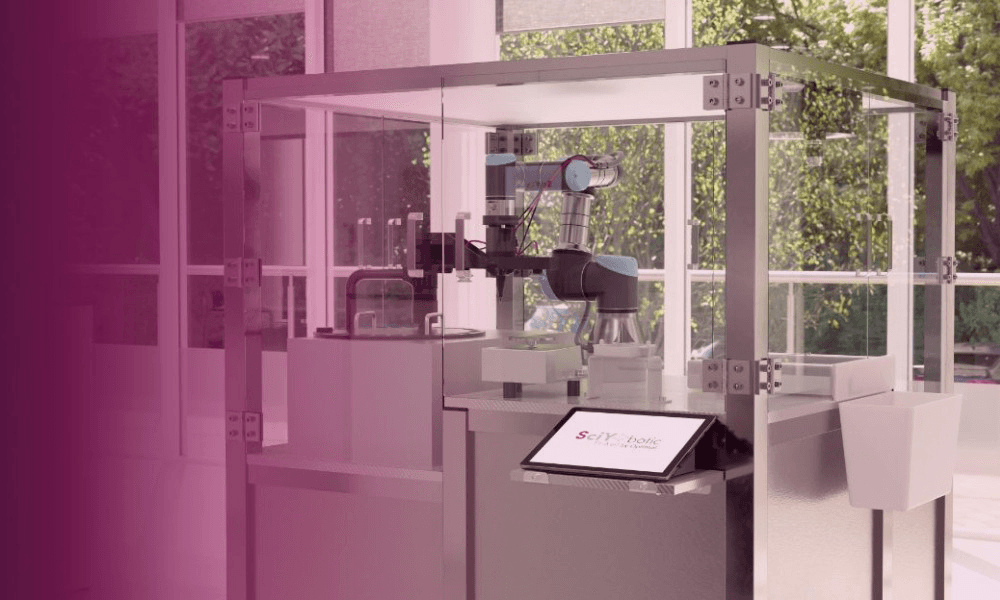
SciY
SciY is a vendor-agnostic digitalization platform designed to integrate scientific instruments and automation hardware with scientific data, ensuring AI-readiness and automation-readiness. It offers a comprehensive suite of software solutions that span research, development, and manufacturing workflows. The platform focuses on ingesting, standardizing, re-using, and preserving data according to FAIR data principles, enhancing efficiency, precision, and innovation across various fields such as biopharmaceuticals, medical devices, materials science, food, and clinical. SciY aims to accelerate digital transformation by facilitating the capture and standardization of data, which is crucial for training intelligent engines and models in 'dry labs'.
Berlin Science Lab
The GFaI (Gesellschaft zur Förderung angewandter Informatik e. V.) is a non-profit research and development institution specializing in applied informatics. With over 150 employees, GFaI undertakes scientific research projects and development contracts, focusing on areas such as signal processing, acoustic camera technology, energy systems engineering, production technology, image processing, 3D data processing, and AI/machine learning. The institution emphasizes technology transfer, providing innovative IT solutions across various application fields for over 30 years. GFaI also plays a significant role in education, offering opportunities for students and trainees, and collaborating with educational institutions.
molecule.one
Molecule.one leverages frontier AI chemistry to accelerate drug discovery and development. The platform, Maria™, is a high-throughput robotic synthesis system that has mapped chemical reactivity through over 300,000 microliter experiments, enabling superhuman AI to achieve high synthesis success rates with diverse building blocks. Users can order unique molecules and hits on-demand, with the fastest tier shipped in 7 working days, or license Maria's AI for in-house chemistry to design better synthesis plans and conditions. The tool also offers end-to-end discovery services for highly novel hits within 4 weeks and custom AI model development for specific chemistry challenges.
zero-to-mastery-ml
The Zero to Mastery Machine Learning repository offers a complete set of course materials for the Zero to Mastery Machine Learning and Data Science course. Hosted on GitHub, it provides code, Jupyter notebooks, images, and other resources designed to guide learners through various machine learning concepts and projects. The course covers fundamental libraries like NumPy, pandas, and Matplotlib, introduces Scikit-Learn, and delves into deep learning with TensorFlow/Keras. It features milestone projects such as heart disease classification and bulldozer price prediction, allowing students to apply their knowledge in practical, end-to-end scenarios. The materials are structured to support a 6-step machine learning modeling framework, making it an invaluable resource for students and aspiring data scientists.
Grand-Challenge.org
Grand-Challenge.org offers a comprehensive platform for the development, evaluation, and deployment of machine learning solutions specifically tailored for biomedical imaging. It enables users to manage and upload medical imaging data securely, control access, and view data using browser-based workstations. The platform facilitates the training of expert annotators by allowing the creation of question sets for datasets and providing immediate feedback. Users can also gather annotations, customize hanging protocols, and benchmark algorithms for fair assessment. Furthermore, it supports the deployment of algorithms by allowing users to upload container images and manage access for researchers, making it a robust environment for collaborative AI development in the medical field.
Atomwise
Atomwise leverages an advanced AI superplatform to revolutionize drug discovery by exploring the vast universe of chemical space. This platform is designed to identify novel, drug-like molecules that might otherwise remain undiscovered. By applying machine learning techniques, Atomwise aims to enhance the drug discovery process, particularly in the development of small-molecule drugs. The company focuses on creating programs that deliver first- and best-in-class potential, especially within immune and inflammatory diseases. Their approach is driven by a world-class team of scientists and engineers dedicated to redefining how new medications are brought to light.
awesome-quantum-machine-learning
awesome-quantum-machine-learning is a comprehensive, curated list designed to provide a deep dive into the world of quantum machine learning. It covers fundamental concepts such as quantum mechanics and quantum computing, alongside advanced topics like quantum algorithms, quantum neural networks, and quantum statistical data analysis. The resource includes detailed descriptions of various quantum machine learning algorithms, study materials, and a collection of relevant libraries and software. It also features sections on quantum programming languages, tools, and hot topics in the field, making it an invaluable resource for anyone looking to explore or advance their knowledge in quantum machine learning, from basic principles to cutting-edge research.
dgl-lifesci
DGL-LifeSci is an open-source Python package built on DGL (Deep Graph Library) specifically designed for deep learning applications in life sciences using graph neural networks. It provides a comprehensive suite of tools for researchers and developers, including methods for constructing and featurizing molecular graphs and biological networks, evaluating models, and offering various model architectures. The package also includes training scripts and pre-trained models to accelerate research and development. DGL-LifeSci supports applications such as molecular property prediction and reaction prediction, making it a valuable resource for advancing drug discovery and bioinformatics.
neuronika
Neuronika is a machine learning framework built entirely in Rust, emphasizing ease of use, rapid prototyping, and performance. At its core, Neuronika utilizes reverse-mode automatic differentiation, enabling the creation of dynamically changing neural networks with minimal effort and overhead through a lean, imperative, and define-by-run API. The framework leverages the power of the Rust language to offer an intuitive and efficient interface without the need for Foreign Function Interfaces (FFI). It supports GPU-accelerated primitives via CUDA, serialization with Serde, and transparent BLAS support for optimized matrix multiplication. Neuronika is currently in active development, with breaking changes expected as it evolves.
NATSpeech
NATSpeech is a comprehensive open-source framework for Non-Autoregressive Text-to-Speech (NAR-TTS) research and development. It offers official PyTorch implementations of advanced models like PortaSpeech (NeurIPS 2021) and DiffSpeech (AAAI 2022), facilitating high-quality and portable speech generation. The framework includes robust features such as data processing for NAR-TTS using Montreal Forced Aligner, a scalable training and inference system, and an efficient random-access dataset implementation. It's designed for technical users who want to explore and build upon state-of-the-art speech synthesis technologies, providing the necessary tools and code for experimentation and deployment.
Python
This GitHub repository, Tanu-N-Prabhu/Python, serves as a comprehensive Open Source resource for learning Python and Machine Learning. It caters to individuals ranging from novices to seasoned developers, offering a structured path to mastery. The repository includes materials on basic Python concepts, built-in functions, popular libraries like NumPy and Pandas, and various APIs such as Google Translate and Wikipedia. It also delves into Machine Learning foundations, supervised and unsupervised learning, neural networks, and MLOps. Additionally, it provides extensive Data Science materials, including EDA techniques and real-world data analysis questions with Python answers. The resource emphasizes practical application through hands-on exercises and real-world examples, making it ideal for those looking to enhance their coding journey.
Physics-Informed-Neural-Networks
Physics-Informed-Neural-Networks (PINNs) is a research repository dedicated to investigating and implementing PINNs for solving Partial Differential Equations (PDEs). It integrates the physics of the PDE and boundary conditions directly into the neural network's loss function, utilizing the Mean-Squared Error of the PDE and boundary residual measured on 'collocation points'. The repository currently offers implementations for Burgers' and Helmholtz PDEs in both TensorFlow 2 and PyTorch. It also explores various aspects of PINNs, including the effectiveness of the L-BFGS optimizer for stiff PDEs, bottom-up learning mechanisms, and the impact of transfer learning on solution error, providing valuable insights for researchers and practitioners in scientific computing.
Practical-Deep-Learning-for-Coders-2.0
Practical-Deep-Learning-for-Coders-2.0 offers a comprehensive collection of notebooks designed for the "A walk with fastai2" Study Group and Lecture Series. This resource is ideal for individuals looking to delve into practical deep learning, covering key areas such as computer vision, tabular neural networks, and natural language processing. The course, which includes live-streamed lectures and project work, provides a structured learning path for undergraduates and others interested in the fastai framework. While the notebooks are now hosted on a new GitHub repository, this original repository serves as a valuable archive of the course material, offering insights into various deep learning applications and techniques.