
Research & Education
Browsing page 9 of AI tools for Scientific Computing in Research & Education. Sorted by confidence score — our independent quality rating.
Synteny
Synteny leverages frontier AI, specifically its MANIFOLD™ intelligence, to address the grand challenge of molecular recognition in biology. By unifying sequence, structure, and physics, the platform learns the hidden logic of life, enabling the decoding of biological cognition. This advanced AI approach aims to transform molecular interactions from an intractable problem into programmable biology. Synteny focuses on designing precision TCR bispecific therapies, utilizing high-throughput data and generative AI to achieve this goal. The company's mission is to translate biology to end disease through innovative engineering and programming.
Bluware
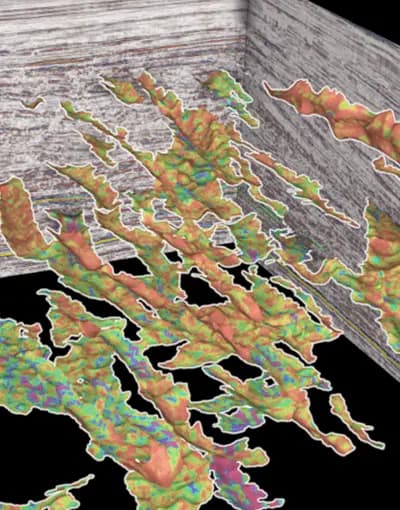
Bluware offers cloud-based solutions and deep learning to enhance E&P workflow productivity, enabling geoscientists to make faster and smarter decisions about the subsurface. Key offerings include the Volume Data Store (VDS) for cost-effective storage and rapid access to seismic data, and FAST for visualizing large data volumes from the cloud or on-premise. INTERACTIVAI provides a faster, more comprehensive, and higher-confidence interpretation experience. Bluware also offers consulting services for custom software development and automated workflows, leveraging expertise in deep learning to solve complex subsurface challenges.

Nabat
Nabat.ai is a UAE climate tech venture that leverages AI and autonomous robotics for large-scale ecological restoration and conservation. Developed at Abu Dhabi’s Technology Innovation Institute, their solution enables data-driven strategies tailored to unique habitats. Nabat provides science-backed technology for managing, restoring, and monitoring coastal, marine, and arid ecosystems, including mangroves, coral reefs, forests, desert areas, and farmland. Their methodology involves assessment using high-resolution satellite and drone imagery, AI-powered planning for optimal restoration sites, autonomous drone seeding for precise seed dispersal, and real-time monitoring of restored areas. Nabat is actively involved in the UAE's national mangrove restoration program.

Raycaster
Raycaster is an AI-native workspace specifically designed for the biopharmaceutical industry, aiming to accelerate drug development by streamlining document management. It ensures that protocols, reports, Module 2/3, and quality documents remain consistent and synchronized with the underlying scientific data. The platform offers features like regulatory research across various documents, AI-powered drafting of protocols and reports, and impact analysis to trace changes across the entire dossier. Raycaster helps teams spend less time on document reconciliation and more on scientific interpretation, ultimately leading to stronger submissions with significantly reduced rework for clinical, CMC, regulatory, quality, and nonclinical teams.

Q.ANT
Q.ANT is at the forefront of photonic computing, offering solutions for more energy-efficient AI and High-Performance Computing (HPC). Their flagship product, the Native Processing Server (NPS), is the first commercial photonic processor designed to integrate seamlessly into existing computing ecosystems. This technology promises up to 30 times higher energy efficiency compared to conventional CMOS technologies, significantly reducing operational costs and environmental impact for data centers. Q.ANT's approach addresses the limitations of traditional computing by providing a scalable and sustainable alternative for complex AI training, inference, machine learning, physics simulations, and time-series analysis.

CogDL
CogDL is a comprehensive, open-source library designed for graph deep learning, enabling researchers and developers to efficiently train and compare models. It supports key tasks such as node classification, graph classification, and other important graph domain applications. The library emphasizes efficiency through optimized operators for faster training and reduced GPU memory usage, ease of use with intuitive APIs for hyper-parameter search, and extensibility for applying GNN models to new scenarios. CogDL also incorporates features like fast sparse matrix-matrix multiplication (SpMM) for accelerated GNN training and supports mixed-precision training. It has been accepted by WWW 2023 and offers resources like a free GNN course and a discussion forum.

Stream Ocean
Stream Ocean is an environmental technology company launched in 2022, dedicated to making the invisible visible in our oceans. It offers an AI-powered solution for real-time marine life monitoring, utilizing easy-to-deploy underwater camera systems and advanced AI-driven data analytics. This innovative approach delivers continuous high-definition video and daily data points, transforming how we understand and engage with marine environments. The system supports various sectors including coastal hospitality, marine industries, coral restoration, and scientific research, empowering users with tools to effectively monitor the underwater world. By providing unique monitoring and engagement opportunities, Stream Ocean aims to accelerate ocean health and science.
cnn-text-classification-tf
cnn-text-classification-tf is an open-source project offering a simplified implementation of a Convolutional Neural Network (CNN) for text classification using TensorFlow. This tool is based on the principles outlined in Kim's "Convolutional Neural Networks for Sentence Classification" paper. It provides the necessary code and scripts for users to train and evaluate their own text classification models, making it accessible for those looking to implement CNNs in their natural language processing tasks. The repository includes Python scripts for data helpers, model evaluation, the CNN architecture itself, and training, along with configurable parameters for embedding dimensions, filter sizes, dropout, and more.
Alteia
Alteia is a visual intelligence platform designed to accelerate AI development by transforming visual data into actionable insights. It utilizes computer vision, machine learning, and artificial intelligence to analyze, filter, display, and distribute visual data at scale. The platform offers pre-built ML models and an intuitive interface for creating custom models. Alteia operates across industries such as energy, grid infrastructure, and environment, providing solutions for optimizing operations, managing assets, and ensuring compliance. It enables rapid deployment of visual intelligence projects, moving from briefing to production within months, and is used by public, private, and non-profit sectors to address complex challenges.
Asteria
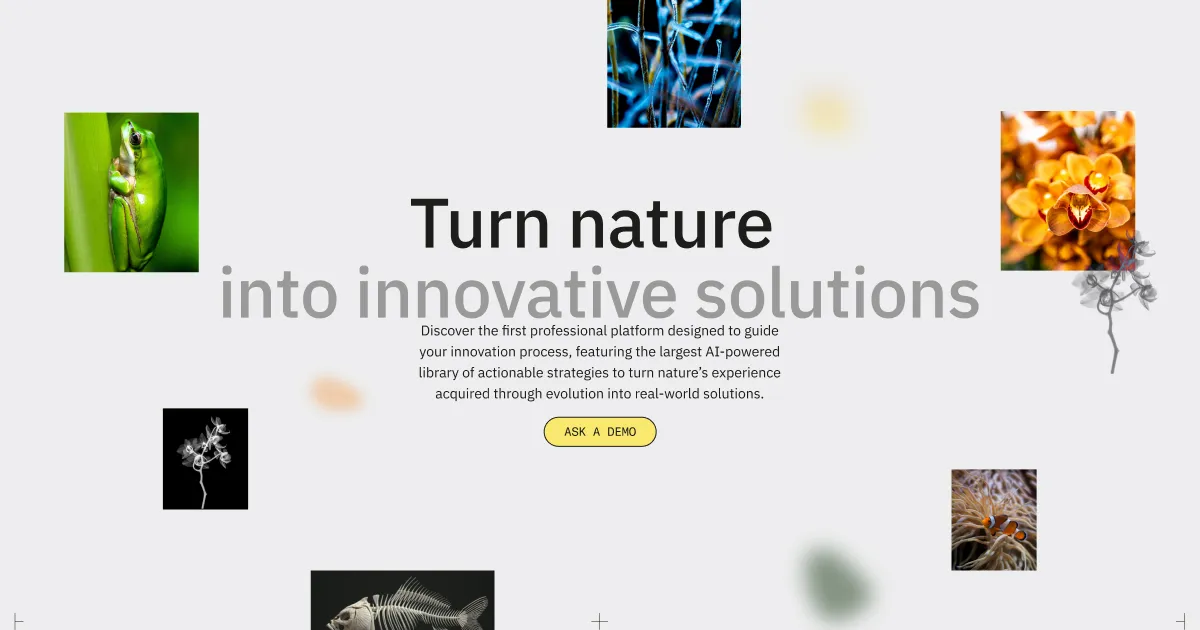
Asteria is a science-based, AI-powered platform designed to accelerate research and development by translating biological strategies into practical, real-world solutions. It offers a curated library of over 680,000 nature-inspired strategies and connects to more than 4,000,000 scientific articles relevant to biomimicry. The platform guides users through the biomimetic innovation process, ensuring scientific rigor and transparency with in-depth verification based on analyzed scientific literature. Asteria enables users to manage projects, frame challenges with a project map, and collaborate with teams by sharing, annotating, and co-building projects. It is ideal for R&I engineers, innovation managers, industrial designers, and project managers looking to embed sustainability into their innovation strategy across various industries like materials, transport, cosmetics, energy, recycling, and fashion.
physicsnemo
NVIDIA PhysicsNeMo is an open-source deep-learning framework designed for building, training, fine-tuning, and inferring Physics AI models using state-of-the-art SciML methods. It provides Python modules to compose scalable and optimized training and inference pipelines, enabling real-time predictions by combining physics knowledge with data. The framework supports various model architectures like neural operators, GNNs, and transformers, and is optimized for NVIDIA GPUs, offering efficient scaling from single to multi-node GPU clusters. PhysicsNeMo is built on PyTorch, ensuring a familiar experience for users, and is highly extensible for customization and integration into existing workflows. It includes modules for models, data pipelines, distributed computing, data curation, and symbolic geometry/PDEs.
PINA
PINA is an open-source Python library designed to streamline and accelerate the development of Scientific Machine Learning (SciML) solutions. Built upon PyTorch, PyTorch Lightning, and PyTorch Geometric, it offers a modular and flexible framework for defining, experimenting with, and solving complex problems using various neural network architectures, including Physics-Informed Neural Networks (PINNs) and Neural Operators. PINA supports multi-device training for scalable performance and provides both high-level abstractions for quick model definition and granular control for expert users to fine-tune training and inference processes. It enables users to solve both data-driven and physics-informed problems efficiently.
runx
runx is an open-source deep learning experiment management tool designed to automate common tasks in AI research. It facilitates hyperparameter sweeps, logging (including TensorBoard integration), and robust checkpoint management. The tool also provides experiment summarization capabilities with `sumx` and ensures code checkpointing for reproducibility. It automatically creates unique, per-run directories to prevent data overwrites and allows for easy submission of batch jobs to a farm. While the project is no longer maintained and contains security vulnerabilities, it offers a foundational approach to managing complex deep learning experiments.

Basecamp Research
Basecamp Research is an AI company dedicated to solving complex challenges in the life sciences sector. The platform leverages artificial intelligence to explore and expand beyond current biological understanding, focusing on the discovery and design of novel proteins. By training its AI models on a proprietary knowledge graph derived from natural biological data, Basecamp Research enables the creation of highly tailored proteins. These custom-designed proteins are intended for specific applications across various industries, including pharmaceuticals, food, and industrial sectors, offering innovative solutions where traditional biological approaches may fall short.
SynapseML
SynapseML (previously known as MMLSpark) is an open-source library designed to simplify the creation of massively scalable machine learning (ML) pipelines. It offers simple, composable, and distributed APIs for a wide variety of ML tasks, including text analytics, computer vision, anomaly detection, and deep learning. Built on the Apache Spark distributed computing framework, SynapseML shares the same API as the SparkML/MLLib library, allowing seamless integration into existing Apache Spark workflows. It supports training and evaluating models on single-node, multi-node, and elastically resizable clusters, and is usable across Python, R, Scala, Java, and .NET. Its API abstracts over various databases, file systems, and cloud data stores, simplifying experiments regardless of data location.

Grayscale AI (NATO DIANA)
Grayscale AI specializes in advanced AI solutions for fully autonomous drones and robots, leveraging neuromorphic computing and AI. The company's technology is designed to mimic human neural networks, offering significant advantages in efficiency, safety, and speed. By circumventing traditional computing architecture, Grayscale AI's systems can achieve up to 500x less energy consumption, enabling complex AI operations without requiring a cloud connection. Their VUES methodology allows for strategy-focused optimization and human-like precision in responding to unforeseen events, analyzing edge cases in less than 100 ms. This approach results in safer, greener, and faster AI solutions for mobility and transport/logistics.

Icybit
Icybit is a scientific research, experimental development, and innovation company with expertise in artificial intelligence, distributed computing, and big data analytics. They are dedicated to creating advanced solutions in these fields, leveraging their deep knowledge to drive innovation. While the website provides a high-level overview of their capabilities, it emphasizes their role as experts in cutting-edge technologies. Their focus on research and development suggests they provide sophisticated, data-driven solutions for various industries, likely catering to complex analytical needs and large-scale data processing challenges.
trlx
trlx is a distributed training framework specifically designed for fine-tuning large language models using Reinforcement Learning via Human Feedback (RLHF). It supports training with either a provided reward function or a reward-labeled dataset. The framework offers compatibility with Hugging Face models, enabling fine-tuning of causal and T5-based language models up to 20B parameters, such as facebook/opt-6.7b and EleutherAI/gpt-neox-20b. For models exceeding 20B parameters, trlx integrates with NVIDIA NeMo-backed trainers, leveraging efficient parallelism techniques for scalability. It currently implements Proximal Policy Optimization (PPO) and Implicit Language Q-Learning (ILQL) algorithms, with support for both Accelerate and NeMo trainers.
PreFab Photonics
PreFab Photonics offers an AI-powered virtual nanofabrication platform that simulates photonic chip fabrication with foundry-accurate process models. It predicts lithographic effects and process variation before tape-out, helping to eliminate design-manufacturing iteration loops. The platform allows users to integrate PreFab into existing Python workflows for manufacturing predictions in seconds, or design visually using Rosette, a browser-based photonic layout editor with built-in virtual nanofabrication. Beyond prediction, PreFab enables fabrication-aware optimization through differentiable models, allowing for inverse design that accounts for manufacturing constraints and optimizes for post-fab outcomes. It also helps in pre-compensating designs to match target specifications and provides insights into potential yield and robustness by highlighting uncertainty in predictions.
Elix, Inc.
Elix, Inc. is an AI drug discovery company dedicated to "Rethinking Drug Discovery" by applying artificial intelligence to accelerate the process and maximize successful outcomes. The platform provides advanced predictive and generative models specifically designed for medicinal chemistry, offering an intuitive user interface. These AI models are trained on proprietary data from 16 pharmaceutical partners, covering critical aspects such as activity, ADME (absorption, distribution, metabolism, and excretion), and toxicity. Elix specializes in designing novel, non-obvious structures that have been proven effective across multiple drug discovery programs. The company also offers expert consulting and support from experienced PhD scientists, ensuring hands-on onboarding, seamless workflow integration, and ongoing assistance for its clients.

Rezlytix
Rezlytix is an AI-native reservoir intelligence company specializing in transforming seismic and production data into actionable insights for the energy sector. Utilizing its proprietary Deep Information Maximization Engine (DIME), Rezlytix employs super-resolution technology to generate sharper datasets, revealing thin beds and finer stratigraphic details that might otherwise be missed. This bias and assumption-free deep learning approach integrates simultaneous seismic and property modeling with multiband information injection, optimizing accuracy. The platform offers products like Enhance.AI for structural continuity, Storm 3.0 for super-resolution seismic, Strike for super-resolution inversions, and Prolytix for production analytics and forecasting. Rezlytix aims to reduce drilling risk, uncover hidden reserves, and optimize well planning for oil and gas exploration companies.

Solvesall d.o.o.
Solvesall d.o.o. is a Slovenian IT consulting company that provides advanced AI-driven hardware and software solutions for industrial process optimization, IoT platforms, and manufacturing automation. Their expertise spans designing, developing, and operating complete connected products, as well as delivering individual components across hardware, firmware, software, and AI. Key offerings include the AllConnect product line for smart RV optimization, custom development services, and AllBattery for optimizing battery performance and lifespan through real-time monitoring. They also specialize in developing optimization algorithms for logistics and mobility industries, such as route and supply chain optimization, and integrate AI solutions for process automation and intelligent decision support.
ScaDS.AI Dresden/Leipzig
ScaDS.AI Dresden/Leipzig is a leading German competence center dedicated to research in Artificial Intelligence, Big Data, and Data Science. Funded by the federal government's AI strategy, it operates as a permanent research facility with strong ties to TUD Dresden University of Technology and Leipzig University. The center expands upon the former ScaDS Dresden/Leipzig, combining expertise to bridge the gap between efficient mass data utilization, knowledge management, and advanced AI. It engages an international team of over 60 Principal Investigators and more than 180 employees, fostering interdisciplinary research across various domains including AI algorithms, applied AI, Big Data analytics, and responsible AI architectures. ScaDS.AI also provides extensive educational programs, training, software services, and consulting for professionals, students, and the general public through its Living Lab.
GENAIZ
GENAIZ is an intelligent automation platform specifically designed for the life sciences and healthcare industries. It empowers pharmaceutical and life sciences organizations to unlock the value of their data by connecting diverse systems and applying AI. The platform helps teams act with clarity, confidence, and speed, accelerating the path from lab to market. GENAIZ harmonizes complex data landscapes, providing actionable insights and offering a suite of intelligent tools like ConformityCheck.AI, RiskRelief.AI, FileSub.AI, DueDil.AI, and LitReview.AI. These solutions are built for GxP compliance, ensuring processes meet rigorous regulatory expectations while improving accuracy, speed, and depth of insights from structured and unstructured data. The platform is intuitive, reliable, universally compatible with various data formats, and built for scale, processing up to 100,000 words per second.