
Coding & Development
Browsing page 89 of AI tools for Code Assistants in Coding & Development. Sorted by confidence score — our independent quality rating.

pwa-asset-generator
pwa-asset-generator automates the creation and declaration of assets for Progressive Web Apps (PWAs). It generates various image types including icons, splash screens, favicons, and mstile images, ensuring they comply with Web App Manifest specifications and Apple Human Interface guidelines. The tool automatically updates `manifest.json` and `index.html` files with the generated assets. A key feature is its ability to scrape the latest Apple Human Interface guidelines via Puppeteer to ensure compatibility with current iOS devices. It supports multiple source formats like local images, HTML files, or remote assets, and offers extensive customization options for output, including dark mode splash screens and maskable icons. The tool can be used via its command-line interface or as a JavaScript module.

Angular.dev
Angular.dev is the official website for the Angular framework, designed to empower developers in building scalable and modern web applications with confidence. It integrates cutting-edge features such as Signals for reactive state updates, Control Flow for efficient template logic, Deferrable Views for improved performance, and Hydration for faster initial page loads. The platform emphasizes productivity and offers AI-forward resources and integrations to enhance development workflows. Angular.dev is built on opinionated yet versatile principles, leveraging Angular components and dependency injection for modular organization. It provides a fully featured platform with first-party modules for forms, routing, and more, ensuring everything works together seamlessly. Trusted by millions, Angular focuses on performance, enabling the creation of fast, reliable applications that scale with team size.
sniffly
Sniffly is an open-source Claude Code analytics dashboard designed to help developers better understand and optimize their use of Claude Code. It offers detailed usage statistics, error analysis to pinpoint common mistakes, and a comprehensive message history analysis for reviewing past interactions. The tool runs entirely on your local machine, ensuring privacy with no telemetry and all data processing occurring locally. Users can easily share project statistics and instructions with colleagues through sharable dashboards, with options for private or public visibility. Sniffly is straightforward to set up with Python and offers configurable settings for port, host, and browser behavior, making it a flexible solution for individual developers and teams.
qpc
QP/C is a real-time event framework (RTEF) and RTOS designed for embedded systems, particularly microcontrollers like ARM Cortex-M MCUs. It implements an asynchronous, event-driven Active Object (Actor) model and supports Hierarchical State Machines (UML statecharts) for specifying behavior. Developers can manually code state machines in C or use the free graphical QM model-based design (MBD) tool for automatic code generation. QP/C is part of the larger QP framework family, offering both open-source (GPLv3) and commercial licensing options. It provides a robust software infrastructure and runtime environment for deterministic, real-time execution of Active Objects, making it suitable for developing complex embedded applications.
seq2seq-signal-prediction
seq2seq-signal-prediction is an open-source project designed to teach users how to implement Sequence-to-Sequence (seq2seq) Recurrent Neural Networks (RNNs) for time series forecasting using TensorFlow. The project includes a series of four exercises of increasing difficulty, starting with deterministic signal prediction and progressing to more complex tasks like denoising and Bitcoin price forecasting. It provides a Jupyter notebook and a Python script version, with instructions for running the code locally or on Google Colab with GPU support. The exercises guide users through adjusting hyperparameters and modifying network architectures to achieve accurate predictions, making it a practical learning resource for those with some prior knowledge of RNNs.
GitStatus
GitStatus is a unique Coding & Development tool designed to gamify the development process by turning GitHub repositories into competitive leaderboards and tournaments. It enables development teams to engage in friendly competition based on their commits and streaks, fostering motivation and productivity. The tool provides comprehensive leaderboards to track individual and team performance, visual heatmaps for activity overview, streak badges to reward consistent effort, and gap analysis to identify areas for improvement. GitStatus tracks commit metadata across any repository or branch, offering a detailed insight into development contributions. It boasts a free, 30-second setup, making it easily accessible for teams looking to integrate a gamified approach to their GitHub workflow.
VVTerm
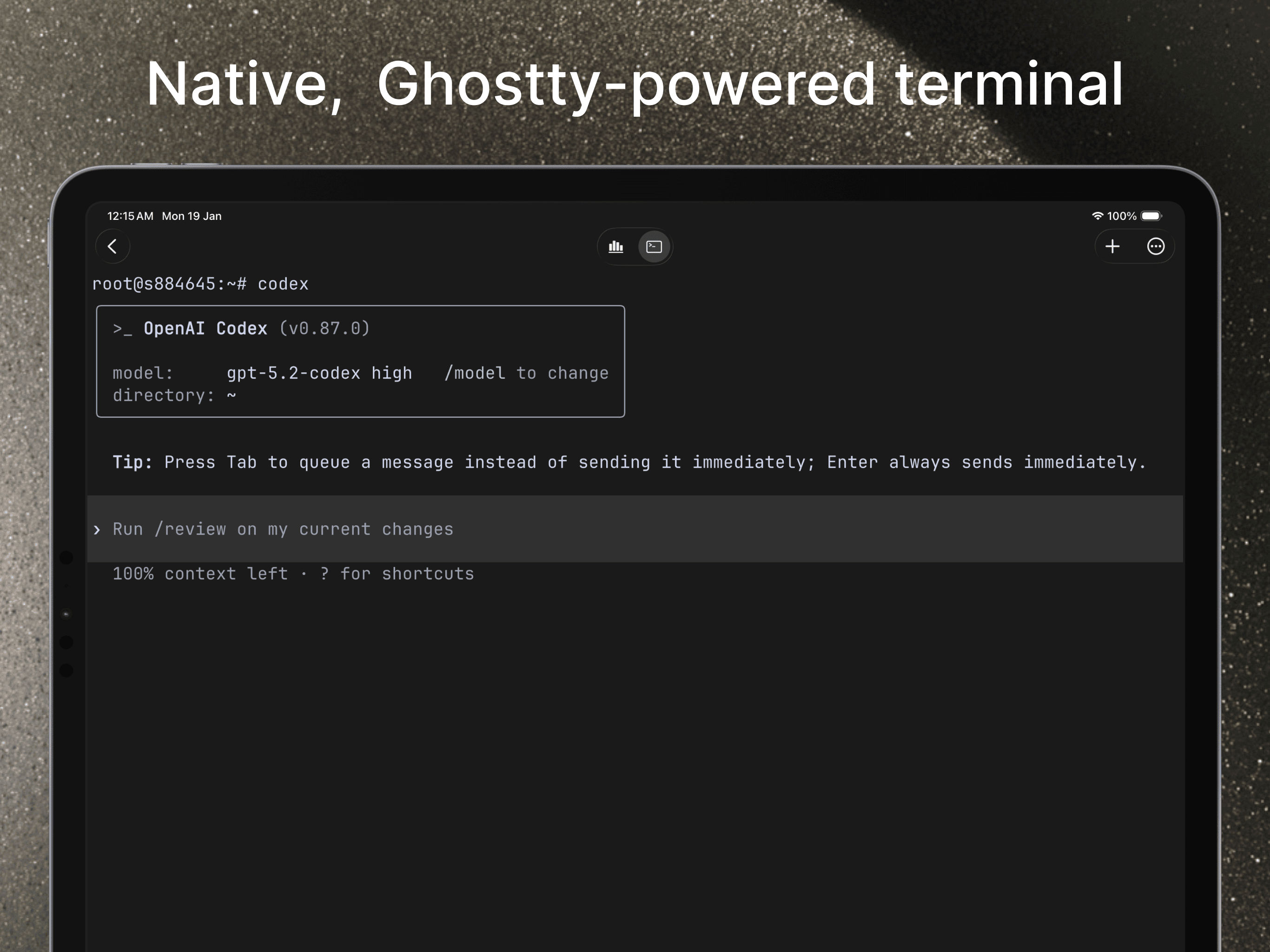
VVTerm is a native SSH terminal and SFTP client designed for iPhone, iPad, and Mac users, enabling seamless server management across Apple devices. It supports various connection methods including standard SSH, Mosh, Tailscale SSH, and Cloudflare Tunnel SSH. The tool integrates iCloud sync for server configurations and leverages Apple Keychain for secure password and SSH key management. Beyond terminal access, VVTerm includes a built-in SFTP remote file browser, allowing users to preview text, image, and video files, perform uploads and downloads, rename, move, delete items, create folders, and edit POSIX permissions on supported servers. It also features a GPU terminal (libghostty), multiple workspaces, environment filters, voice-to-command functionality, and multiple connection tabs, making it a comprehensive solution for developers and system administrators on the go.
TensorFlowASR
TensorFlowASR is an open-source toolkit for automatic speech recognition (ASR) built on TensorFlow 2. It provides implementations of various advanced ASR architectures, including DeepSpeech2, Jasper, RNN Transducer, ContextNet, and Conformer. A key feature is the ability to convert these models to TFLite, which significantly reduces memory and computation requirements, making them suitable for deployment on devices with limited resources. The framework supports multiple languages, including English and Vietnamese, and offers functionalities for feature extraction and augmentations. It's designed for developers and researchers looking to build, train, and deploy high-performance speech recognition systems.

Arondite
Arondite is a British defense technology company specializing in software platforms for accelerated decision-making in autonomous systems. The company brings together a unique blend of operational and technical expertise to build technology with immediate, real-world impact on a global scale. Their flagship product, Cobalt, is described as a defense software platform. Arondite's team comprises individuals with backgrounds in the British Army, Ministry of Defence, and leading tech companies like Palantir, Helsing, and Betfair, indicating a strong foundation in both defense and advanced software engineering. They aim to address evolving global threats by developing innovative solutions.
LocAgent
LocAgent is an innovative framework designed to address the challenging task of code localization by leveraging graph-guided LLM agents. It transforms complex codebases into lightweight, directed heterogeneous graphs, effectively capturing code structures and their intricate dependencies. This graph-based representation allows LLM agents to perform powerful multi-hop reasoning, significantly enhancing their ability to search for and locate relevant code entities. The framework has demonstrated substantial improvements in accuracy for code localization on real-world benchmarks, achieving up to 92.7% accuracy on file-level localization. Furthermore, it has shown to improve downstream GitHub issue resolution success rates by 12% for multiple attempts, offering a cost-effective solution compared to state-of-the-art proprietary models.
mmpose
MMPose is an open-source toolbox for pose estimation built on PyTorch, developed as part of the OpenMMLab project. It provides a comprehensive suite of tools and benchmarks for a wide range of pose analysis tasks, including 2D multi-person human pose estimation, 2D hand pose estimation, 2D face landmark detection, 133 keypoint whole-body human pose estimation, 3D human mesh recovery, fashion landmark detection, and animal pose estimation. The toolbox implements multiple state-of-the-art deep learning models, achieving high efficiency and accuracy. It supports various popular datasets like COCO, AIC, and MPII, and offers a modular design for easy customization and integration. Recent updates include real-time models for 3D whole-body and multi-person pose estimation, and support for new datasets and algorithms like PoseAnything.
MLfromscratch
MLfromscratch is an open-source project offering machine learning algorithm implementations developed from scratch. It serves as an educational resource for those looking to understand the underlying mathematics and code of various ML algorithms. The repository includes implementations for popular algorithms such as K-Nearest Neighbors (KNN), Linear Regression, Logistic Regression, Naive Bayes, Perceptron, Support Vector Machine (SVM), Decision Tree, Random Forest, Principal Component Analysis (PCA), K-Means, AdaBoost, and Linear Discriminant Analysis (LDA). The project primarily uses NumPy for the core algorithm implementations, with Scikit-learn, Matplotlib, and Pandas used for data generation, testing, and plotting. This setup allows users to focus on the 'from scratch' aspect of the algorithms while still having access to tools for practical application and visualization.
mlhelper
mlhelper is an open-source JavaScript library designed for machine learning tasks, built upon Node.js. It offers a comprehensive suite of algorithms and utilities, including core functionalities like matrix and vector operations essential for numerical computations in ML. Beyond basic math, mlhelper supports practical aspects such as file parsing, enabling easy data ingestion, and feature engineering for preparing data for models. It also incorporates data visualization tools, particularly for graphs like Decision Trees and logistic regression, aiding in understanding model behavior. The project aims to foster a richer ecosystem for machine learning development within the JavaScript environment.
multi_agent_path_planning
multi_agent_path_planning is a Python-based open-source project offering implementations of various multi-robot path-planning algorithms. It includes both centralized solutions, such as Prioritized Safe-Interval Path Planning (SIPP) and Conflict Based Search (CBS), and decentralized approaches like Velocity Obstacles and Nonlinear Model-Predictive Control (NMPC). The repository provides code for execution, visualization, and post-processing of generated plans, making it a valuable resource for researchers and developers working on multi-agent systems and robotics. Users can install dependencies and run algorithms to simulate and analyze multi-robot navigation scenarios.
Neural-Network-Experiments
Neural-Network-Experiments is an open-source project offering a foundational neural network implementation using C# within the Unity engine. This tool is specifically created for visualizing and experimenting with neural networks, making it an excellent resource for learning and understanding core concepts. The project includes four image recognition experiments: MNIST, Fashion MNIST, Doodles, and CIFAR10. While the current performance is noted as relatively poor, the developer plans to enhance it by building a convolutional neural network and potentially offloading calculations to the GPU for speed improvements. It serves as a practical learning platform for developers interested in the mechanics of neural networks.
neural-network-genetic-algorithm
neural-network-genetic-algorithm is an open-source project designed to evolve neural networks using a genetic algorithm. This tool focuses on identifying optimal network parameters for various classification tasks. It is currently limited to Multi-Layer Perceptrons (MLPs) and leverages the Keras library for building, training, and validating networks. The project demonstrates its effectiveness by quickly achieving over 98% accuracy on the MNIST dataset and 56% on the CIFAR10 dataset after 10 generations. The repository includes Python scripts for both brute-force and genetic algorithm approaches, allowing users to customize network parameters and choose between MNIST or CIFAR10 datasets. It serves as a practical example for those interested in applying genetic algorithms to neural network optimization.
Ambeego
Ambeego offers an agency-as-a-service model, providing a dedicated UX-driven team to build and launch digital products. This service covers UX/UI design, development, growth strategies, and AI integration, all available at a fixed monthly rate without contracts. It aims to replace unreliable freelancers and expensive agencies by offering a high-performing 'A-team' that delivers fast, reliable, and conversion-focused results. The service operates asynchronously, allowing clients to manage requests through Notion and pause subscriptions as needed. Ambeego emphasizes a streamlined process where requests are completed one-by-one, with clients approving or revising until satisfied.
NNfSiX
NNfSiX is a GitHub repository dedicated to providing neural network implementations from scratch across a variety of programming languages. This open-source project aims to serve as a valuable educational resource for developers interested in understanding the foundational concepts of neural networks by seeing them implemented in different linguistic contexts beyond just Python. Users are encouraged to contribute their own implementations or improvements via pull requests, fostering a collaborative learning environment. The repository allows for easy comparison of how neural network components are built and function in languages such as C++, C, Assembly, Swift, Java, and C#, among others, making it a comprehensive reference for multi-language development.
onnxruntime-inference-examples
onnxruntime-inference-examples is a GitHub repository offering a collection of practical examples for leveraging ONNX Runtime (ORT) in machine learning inferencing. It serves as a valuable resource for developers and data scientists looking to integrate and optimize machine learning models across different environments. The repository includes examples for C/C++, mobile applications, JavaScript APIs, and quantization techniques for CPU and TensorRT Execution Providers. These examples demonstrate how to effectively utilize ORT's capabilities, making it easier to implement efficient inference solutions. The project welcomes contributions and adheres to Microsoft's Open Source Code of Conduct.
picoGPT
picoGPT offers an exceptionally small and minimal implementation of the GPT-2 model, built entirely in plain NumPy. Designed primarily for educational purposes, it distills the core functionality of GPT-2 into a highly concise codebase, with the entire forward pass implemented in approximately 40 lines of code. While it prioritizes readability and minimalism over performance, it serves as an excellent resource for developers and students looking to understand the fundamental architecture of GPT-2 without the complexity of larger frameworks. It includes OpenAI's BPE Tokenizer and utilities to download and load GPT-2 model weights, allowing users to experiment with different model sizes.
asm-dude
asm-dude is a Visual Studio extension designed to enhance the assembly programming experience by offering syntax highlighting and code completion. The latest iteration, AsmDude2, is built around a Language Server Protocol (LSP) and a lightweight Visual Studio extension specifically for VS2022. It supports a wide range of architectures including x86, x64, SSE, AVX, AVX2, Xeon-Phi (Knights Corner), and AVX-512 instructions, along with Masm and Nasm directives. Key features include code descriptions on hover, signature help, and syntax highlighting within the disassembly window. While some features from the older AsmDude are still being ported, it aims to provide a robust environment for assembly developers.
pykeen
PyKEEN (Python Knowledge Graph Embeddings) is a comprehensive Python library designed for training and evaluating knowledge graph embedding models. It facilitates research and development in knowledge representation by offering a wide array of built-in datasets, including both general and inductive types, and an extensive collection of 40 different models. The library is highly extensible, allowing users to easily integrate their own datasets, models, and training loops. PyKEEN supports various representations and interaction functions, making it a versatile tool for diverse knowledge graph analysis tasks. Its pipeline function provides a high-level entry point for quick setup and evaluation, making it accessible for both beginners and advanced users.
PyCNN
PyCNN is an open-source Python library designed for image processing using Cellular Neural Networks (CNN). Unlike traditional neural networks, CNNs allow communication only between neighboring units, making them particularly efficient for real-time image processing tasks. This library provides a framework for implementing and experimenting with CNN-based image processing algorithms, including edge detection, grayscale edge detection, corner detection, diagonal line detection, inversion, and optimal edge detection. It supports Python 2.7 and 3.3+ and relies on common scientific computing libraries like Pillow, Scipy, and Numpy. PyCNN is a valuable resource for researchers and developers interested in exploring the application of Cellular Neural Networks in image processing.
PyGame-Learning-Environment
PyGame Learning Environment (PLE) is an open-source Python-based reinforcement learning environment designed to simplify the process of setting up and experimenting with reinforcement learning algorithms. It mimics the Arcade Learning Environment (ALE) interface, enabling a quick start for developers and researchers. The primary goal of PLE is to allow users to concentrate on designing models and experiments rather than spending time on environment creation. It aims to build an expansive library of games, accepting pull requests for new game implementations. The environment provides methods for game interaction, action picking, and reward tracking, making it a flexible tool for AI and deep reinforcement learning research.