
Coding & Development
Browsing page 5 of AI tools for Coding Agents in Coding & Development. Sorted by confidence score — our independent quality rating.
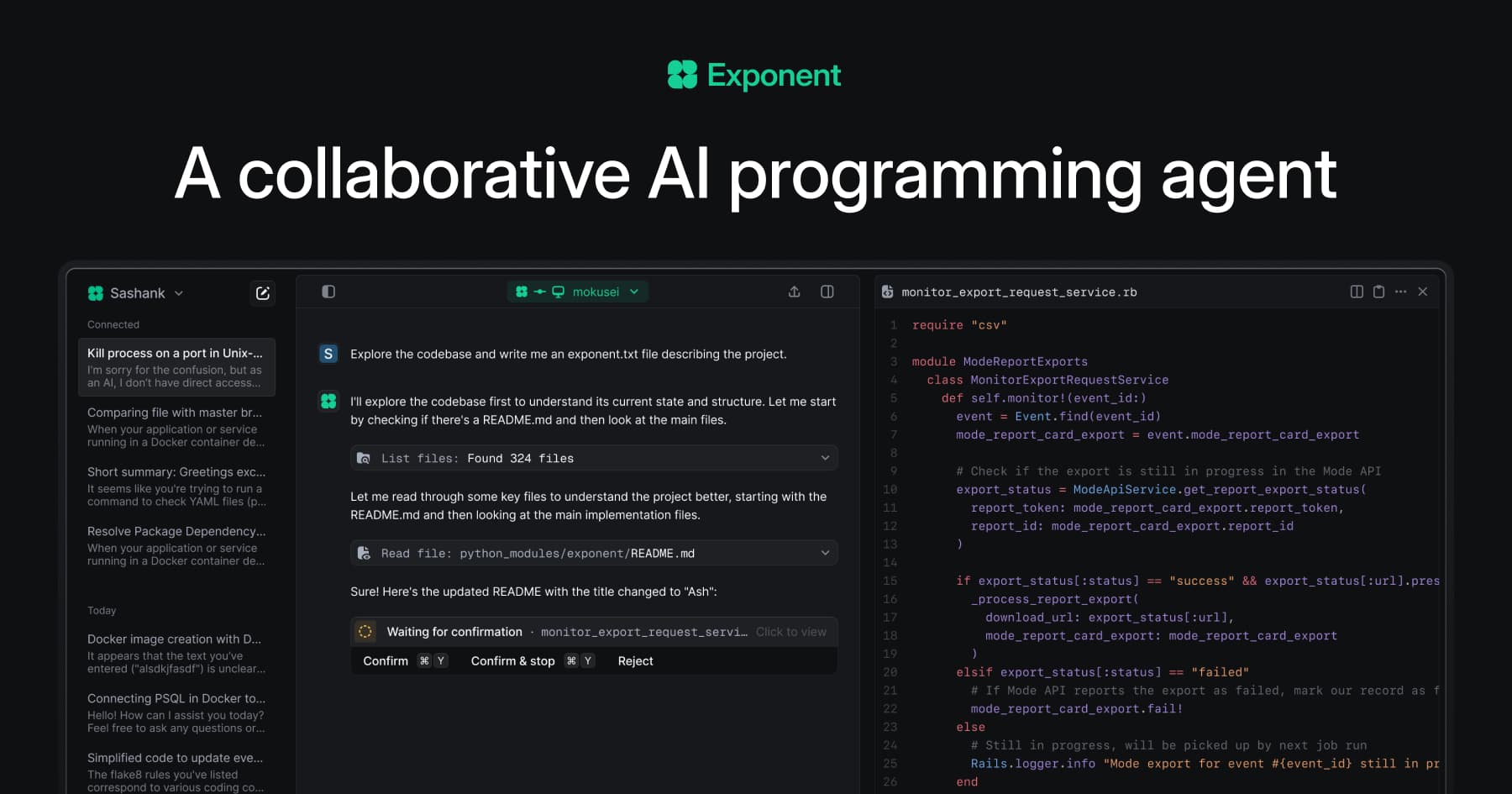
Exponent
Exponent is an AI agent specifically designed to enhance collaborative software engineering workflows. It acts as a programming assistant, helping developers with various tasks throughout the software development lifecycle, from initial exploration and design to final deployment. The tool aims to improve efficiency and quality in software development by providing AI-powered assistance. While specific features are not detailed on the current website, its core function revolves around supporting software engineers in their daily coding and development activities, making it a valuable asset for teams looking to streamline their processes.

Tonkotsu
Tonkotsu is a powerful GUI designed to manage autonomous AI coding agents, specifically Claude Code, through a structured document-based workflow. It allows developers to control an entire team of coding agents, streamlining the development process from planning to verification. Users can align on a plan, delegate dozens of coding tasks in parallel, and then verify and approve changes, including running test plans and reviewing code, all within a single interface. Tonkotsu supports complex work across multiple repositories, manages task dependencies, and facilitates seamless collaboration. It operates by coding in isolated repo clones on the user's dev machine, ensuring security and control. The tool is currently available for macOS and Windows, offering a free early access program.
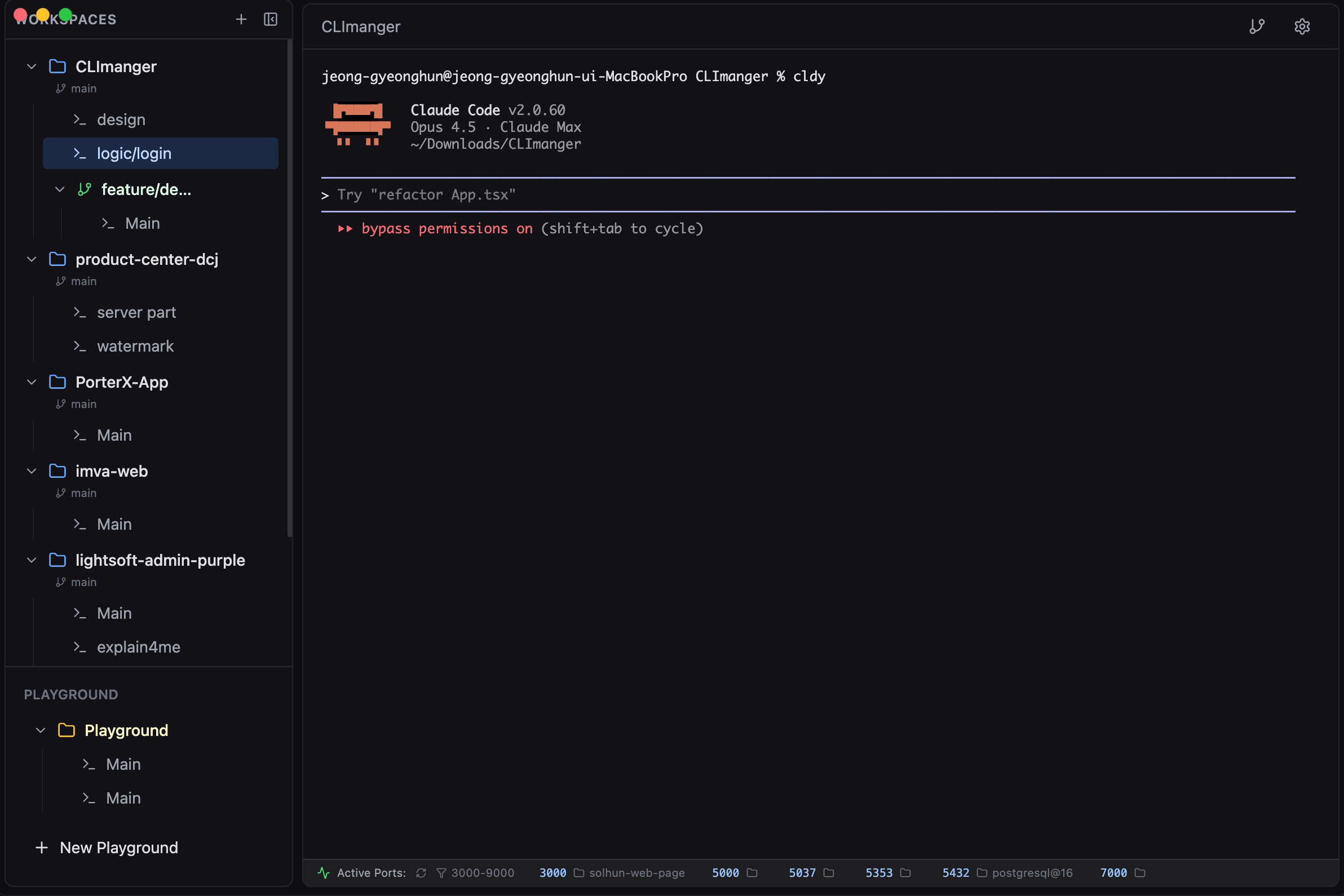
CLI Manager
CLI Manager is a desktop application designed for developers to streamline their workflow when using multiple AI command-line interface (CLI) agents. It provides a unified dashboard to manage tools such as Claude Code, Codex CLI, and Gemini CLI, enabling users to activate agents, categorize them with nicknames, and organize projects efficiently. The tool facilitates instant switching between various code editors like Cursor and VS Code, reducing context-switching friction. It also supports advanced features like managing Git worktrees for parallel development and tracking ports across projects, all while ensuring data privacy by processing everything locally. Currently available for macOS, with Windows support planned.

Figma-Context-MCP
Figma-Context-MCP is a Model Context Protocol (MCP) server designed to bridge the gap between Figma designs and AI coding agents, specifically Cursor. It allows AI-powered coding tools to access detailed Figma layout and styling information, which significantly enhances their ability to implement designs accurately in a single attempt. Instead of relying on screenshots, this server processes Figma API responses, simplifying and translating the data to provide only the most relevant context to the AI model. This reduction in context helps improve the AI's accuracy and the relevance of its code generation, making it a powerful tool for developers looking to streamline their design-to-code workflow.
superpowers
Superpowers is a comprehensive software development methodology designed for coding agents, built upon a foundation of composable skills and initial instructions. It enables agents to approach software development systematically, starting with clarifying user intent and refining specifications before writing any code. The framework emphasizes true red/green Test-Driven Development (TDD), YAGNI (You Aren't Gonna Need It), and DRY principles. It supports subagent-driven development, where agents work through engineering tasks, review their own work, and progress autonomously. Superpowers integrates with various coding agents like Claude, OpenAI Codex, Cursor, OpenCode, GitHub Copilot, and Gemini, offering a structured approach to agent-assisted software creation.

OnSpace.AI - No Code App Builder v1.2.0
Cursor is an advanced AI-powered code editor designed to significantly boost developer productivity. It integrates AI directly into the software development workflow, offering features such as AI agents that can autonomously build, test, and demo features, and AI-driven code review. The tool provides context-aware completions, intelligent code navigation, and the ability to understand entire codebases, regardless of scale. Developers can choose from various cutting-edge models like OpenAI, Anthropic, Gemini, xAI, and Cursor's own Composer 2 and Opus 4.7. Cursor aims to streamline development by allowing users to hand off tasks to AI, enabling them to focus on decision-making. It supports integration across terminals, Slack, and GitHub for a comprehensive AI-assisted development experience.
AI For Developers
AI for Developers is a comprehensive platform dedicated to showcasing the best AI-powered tools for software development. It provides a curated list of AI agents, SDKs, coding copilots, and other developer-first tools designed to save hours of work. The platform features alternatives for popular IDE assistants like Cursor, Windsurf, and GitHub Copilot, alongside app builders, coding agents, and open-source projects. It also highlights top AI models and offers resources such as news, articles, and implementation guides, making it a valuable hub for developers looking to integrate AI into their coding practices.
FixMyApp
FixMyApp helps developers finish AI-generated applications by providing production-ready fixes. Users connect their GitHub repository, describe the issues or desired features to an AI assistant, and receive a fixed-price quote. Expert engineers then deliver solutions, ensuring the application runs smoothly in production. The service includes deep analysis of the codebase, AI-guided conversation for requirements, and a 48-hour average turnaround time. It aims to bridge the gap between rapidly generated AI code and the demands of a production environment, offering a reliable path from broken code to a fully functional product.
AiPy
AiPy is a super AI assistant that leverages large language models (LLMs) and the Python ecosystem to provide intelligent automation and control capabilities. It is designed for local deployment and is open-source, allowing users to automate tasks, analyze local data, and control local applications and devices. AiPy can understand user needs, generate precise execution plans, and utilize Python programs to interact with various systems. Use cases include mobile phone control, game development, contract review, local network printer control, and speech extraction from video files. It aims to eliminate repetitive work and act as a digital employee that thinks, executes, and delivers.
DGi
DGi, powered by Datagran, is presented as the world's first data platform that is both built by and entirely built by AI. It functions as an AI data agent for developers, offering a secure, reliable, and accurate solution for automating various data-related tasks. Key capabilities include simple API integration for clients to ask data questions, enterprise-grade security with double-envelope encryption and zero-knowledge architecture, and connectivity to diverse data sources like PostgreSQL, AWS S3, MySQL, and Snowflake. DGi also features easy code scheduling and orchestration with natural language workflows, a visual builder for interactive app deployment, and web automation APIs for programmatic website navigation and data extraction. The platform boasts proven performance and reliability, benchmarked against major competitors for superior accuracy and uptime.
PydanticAI
PydanticAI is a Python agent framework designed to facilitate the rapid and reliable development of production-grade AI applications and workflows using Generative AI. Inspired by FastAPI's ergonomic design, it aims to bring a similar development experience to GenAI. The framework is model-agnostic, supporting a wide array of LLMs and providers including OpenAI, Anthropic, and Google Gemini, among others. Key features include seamless observability with Pydantic Logfire for real-time debugging and performance monitoring, full type-safety for enhanced auto-completion and error detection, and powerful evaluation capabilities. PydanticAI is extensible by design, allowing agents to be built from composable capabilities and defined entirely in YAML/JSON, with support for human-in-the-loop tool approval and durable execution for reliable, long-running workflows.
Radiant Labs
Radiant Labs is an applied AI research lab dedicated to advancing the frontier of multi-agent software. They provide tools and frameworks, such as Polaris Docs, to help developers build and manage agentic AI systems. The platform supports core concepts like systems, resources, graphs, plugins, and agents, and offers examples for building ReAct CLI agents. Developers can leverage features like tool calling, tracing, sessions, persistence, and an HTTP API. Radiant Labs also guides building custom tools and plugins, testing agents, and handling advanced topics like APIs, hooks, middleware, context hierarchies, error handling, and retries, making it a comprehensive resource for multi-agent AI development.
Upkoi, Inc
Upkoi, Inc specializes in developing high-performance machine learning systems and providing comprehensive software development services. Their core expertise lies in deep learning, which they leverage to create powerful tools capable of transforming business operations. The company's engineers are proficient in Python and C#, among other languages, ensuring they use the best tools for each project. Upkoi offers full-stack application development, capable of taking an idea from concept to a fully marketed product without external resources. They emphasize understanding the problem domain, rapid prototyping, and iterative development cycles to deliver reliable and scalable solutions, including recommendation engines, classifiers, and sentiment analysis.
.png&w=3840&q=75)
E2B
E2B offers an enterprise AI agent cloud that provides secure, sandboxed computers with real-world tools for AI agents. It is designed for frontier agentic workflows and is used by many Fortune 100 companies. Key capabilities include AI sandboxes for open-source, secure environments, deep research agents for conducting time-consuming research on large datasets, and AI data analysis & visualization tools to securely explore data and generate charts. E2B also supports coding agents for secure code execution, I/O access, internet access, and terminal commands, as well as reinforcement learning with tens of thousands of concurrent sandboxes. It provides a Desktop Sandbox for secure virtual computers for LLMs, supporting any language and framework.
PocketFlow
PocketFlow offers a lightweight and expressive LLM framework, distinguished by its minimalist design of only 100 lines of code. It boasts zero dependencies and zero vendor lock-in, making it highly flexible. The framework supports essential LLM patterns such as Multi-Agents, Workflow, and Retrieval-Augmented Generation (RAG). Developers can leverage agentic coding to build agents, significantly boosting productivity. PocketFlow provides various tutorials ranging from basic chatbots and structured output extraction to complex multi-agent systems, parallel execution, and advanced coding agents. It also offers versions in Typescript, Java, C++, Go, Rust, and PHP, catering to a wide range of development environments.
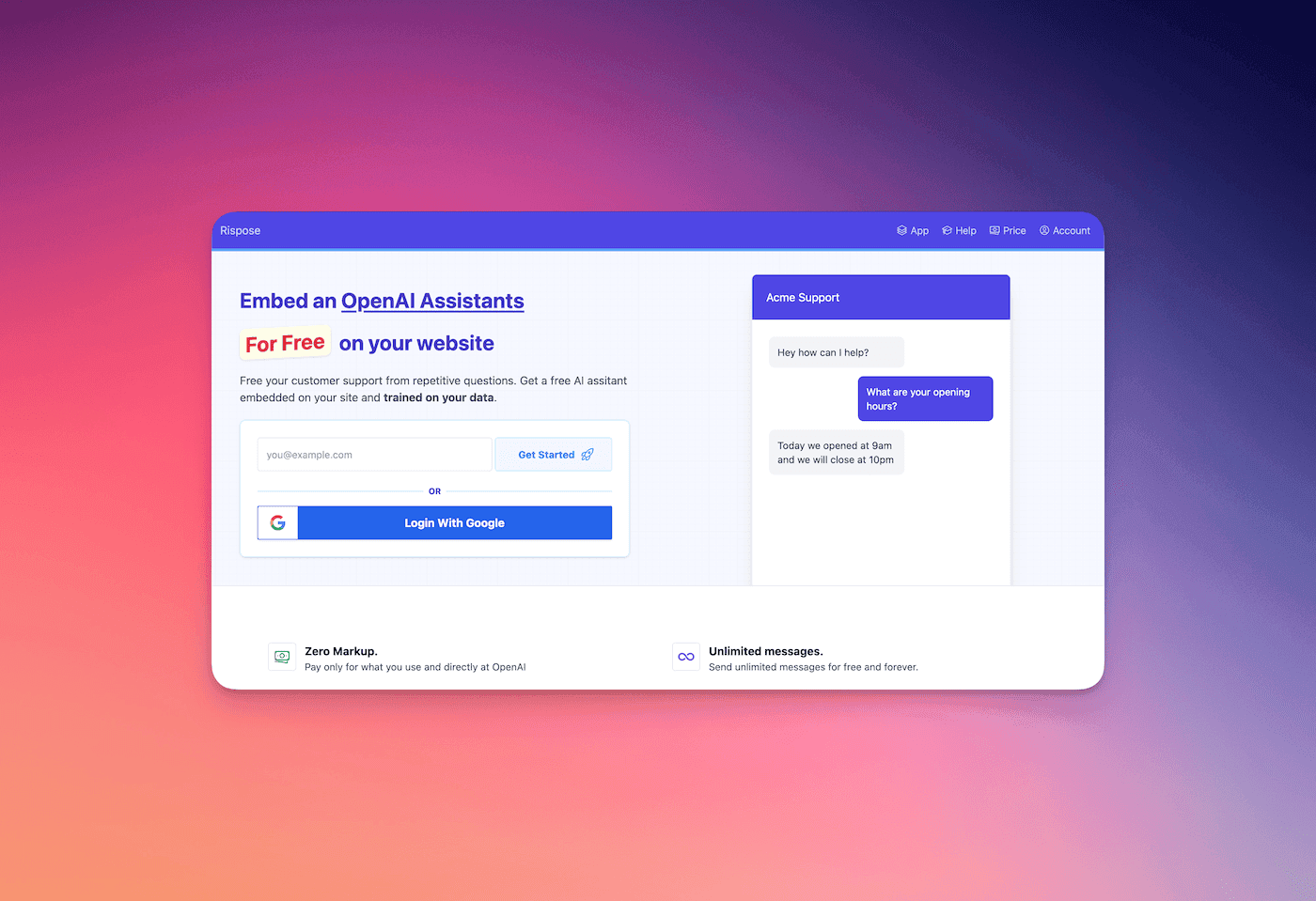
Unfetch
Rispose, formerly Unfetch, is an AI Agents & Automation tool designed to help businesses build and embed custom AI agents directly onto their websites or platforms. It enables automation of support, sales, and customer engagement through AI-powered assistants. Users can train their agents with up to 1,000 files, including PDFs, documents, and text files, and customize their behavior with specific instructions to match brand voice. The platform integrates with popular services like Shopify, WordPress, Notion, Wix, and Webflow. Rispose offers detailed history and metrics to track agent performance, understand user interactions, and facilitate continuous improvement. It provides a seamless and budget-friendly solution for integrating LLMs into existing web applications.
loki-mode
loki-mode is an open-source, multi-agent autonomous system designed to transform product requirements into production-ready code. It operates by classifying complexity, assembling agent teams from 41 specialized types across 8 swarms, and running autonomous RARV (Reason - Act - Reflect - Verify) cycles with 9 quality gates. The system ensures code quality through blind 3-reviewer code review and anti-sycophancy checks, only delivering code that passes automated verification. It supports 5 AI providers (Claude, Codex, Gemini, Cline, Aider) with automatic failover and outputs full-stack solutions including source code, tests, Docker configs, CI/CD pipelines, and audit logs. The tool is self-hosted and private, ensuring data privacy and no vendor lock-in.
OpenAlpha_Evolve
OpenAlpha_Evolve is an open-source Python framework designed for autonomous code generation and improvement, drawing inspiration from DeepMind's AlphaEvolve. It leverages Large Language Models (LLMs) via LiteLLM to iteratively write, test, and refine code, guided by evolutionary principles. The framework features a modular, agent-based architecture, including agents for prompt engineering, code generation, evaluation, and selection. It supports LLM-powered code generation, an evolutionary algorithm core for iterative improvement, and automated program evaluation with sandboxed execution using Docker. Researchers, developers, and enthusiasts can use it to explore AI, code generation, and automated problem-solving.
PRPs-agentic-eng
PRPs-agentic-eng offers a comprehensive collection of prompts, workflows, and resources for agentic engineering, specifically designed for AI-assisted development using Claude Code. It introduces the Product Requirement Prompt (PRP) methodology, which combines traditional PRD elements with AI-critical layers like context, patterns, and validation. The tool provides core workflow commands for interactive PRD generation, implementation planning, and execution with validation loops. It also includes commands for issue investigation, debugging, smart commits, and PR creation/review. A standout feature is the 'Ralph Loop' for autonomous execution, allowing Claude to iterate and self-correct until all validations pass, aiming for one-pass implementation success.
CydexCode Technologies Pvt Ltd
CydexCode Technologies Pvt Ltd specializes in delivering cutting-edge AI-powered software solutions, machine learning, and software development services. They focus on revolutionizing the digital landscape by offering tailored solutions that include advanced predictive analytics, custom ML solutions, secure cloud infrastructure, and DevOps automation. The company also provides full-stack development, enterprise-grade solutions, and data-driven marketing strategies covering paid media, SEO, and conversion optimization. CydexCode aims to solve business problems and achieve outcomes through state-of-the-art AI, advanced software engineering, and transformative innovations.

Kubiya.ai
Kubiya.ai is an AI-powered agentic engineering organization designed to translate business KPIs into actionable engineering outcomes. It offers an on-demand system that plans, builds, operates, and measures ROI, aiming to increase engineering velocity through AI-driven automation. Key features include a virtual team manager, goal setting, planning with a meta-agent, human control points for approval, durable cloud runtime, secure knowledge index, and real-time engineering boards. Kubiya.ai emphasizes deterministic execution, context awareness, and enterprise-grade security, allowing teams to operationalize AI ROI by deploying outcomes rather than experiments. It integrates with existing agent frameworks and offers flexible deployment options, including on-premise infrastructure.
ProxyAI
ProxyAI is an open-source AI copilot specifically designed for JetBrains IDEs, offering a comprehensive suite of features to enhance developer productivity. It allows users to connect to a wide range of language models, including OpenAI, Anthropic, Azure, and Mistral, or even self-host models for offline use. Key functionalities include streaming AI-suggested code changes directly into the editor with diff view approval, multi-line code edits based on recent activity, and single-line or whole-function autocomplete suggestions. Developers can also edit code using natural language, get context-aware naming suggestions, and generate concise commit messages. The tool supports referencing project files, folders, web documentation, and Git history for context-aware assistance, and even allows chatting with images and web searching through connected LLMs. ProxyAI prioritizes user privacy, stating it does not collect or store sensitive information, while offering anonymous usage data collection with consent.

Anything - AI app builder
Anything is an innovative AI agent designed to transform ideas into fully functional mobile and web applications. It streamlines the app development process by allowing users to simply describe their desired application, and the AI then constructs it. This platform is ideal for individuals and businesses looking to quickly build sites, apps, tools, and products without needing extensive coding knowledge. Key features include the ability to build mobile apps for iOS and Android, web apps, and even create applications via text-based prompts. The platform also offers advanced capabilities like autonomous testing and fixing with 'Max', and tools for previewing mobile apps with Expo Go, making it a comprehensive solution for no-code app creation.
Rosetic (Formerly Byggr)
Rosetic, formerly Byggr, is a hybrid AI platform designed to generate production-ready software with deterministic accuracy. It leverages LLM agents to understand natural language requirements and visual documents, then uses its proprietary Deterministic Language Model (DLM) to convert these into structured models and secure, production-ready applications. This approach aims to eliminate hallucinations and ensure predictable, reproducible code. Rosetic supports various programming languages and database technologies, including C#, Python, Flutter, .NET, Java, SQL, MySQL, and PostgreSQL. It emphasizes engineer control, allowing for refinement, iteration, and customization of the generated output while preserving changes across regenerations. The platform is built for enterprise standards, focusing on consistency, security, compliance, and maintainability.