
Coding & Development
Browsing page 10 of AI tools for Documentation in Coding & Development. Sorted by confidence score — our independent quality rating.

awesome-ai-coding-tools
Awesome-ai-coding-tools is a comprehensive, curated list of AI-powered coding tools designed for developers, teams, and tech enthusiasts. This resource categorizes tools across various functionalities, including AI-first code editors, advanced code completion engines, intelligent coding agents, and tools for UI generation and app building. It also covers solutions for code review, refactoring, testing, and documentation. The list aims to help users discover and utilize AI in software engineering, offering insights into tools that enhance productivity, automate tasks, and streamline development workflows. Contributions are welcome, making it a community-driven and evolving resource.
Modelcard Creator
Modelcard Creator is a specialized AI tool developed by Hugging Face, designed to streamline the process of creating comprehensive model cards for machine learning models. This application assists users in documenting crucial information about their models, including performance metrics, characteristics, and intended use cases. The generated model cards can then be seamlessly uploaded to the Hugging Face Hub, facilitating better model transparency, reproducibility, and responsible AI practices. It serves as an essential resource for AI researchers, developers, and anyone involved in the lifecycle of machine learning models, ensuring proper documentation and understanding of their AI assets.
Code to Flow
Code to Flow is an AI-powered tool designed to simplify complex code logic by transforming it into interactive visual diagrams. It supports a wide range of programming languages, including Python, JavaScript, Java, C++, and more. Users can generate flowcharts, sequence diagrams, and class diagrams to visualize code structure, identify code paths, and understand logic flows. The platform offers features like customizable color schemes, export options (SVG, PNG, PDF), and a code debugging option. It caters to personal use for learning and debugging, note-taking, project management, and team collaboration, allowing for easier explanation of code to both technical and non-technical members. The tool emphasizes privacy, stating that user code is not saved.
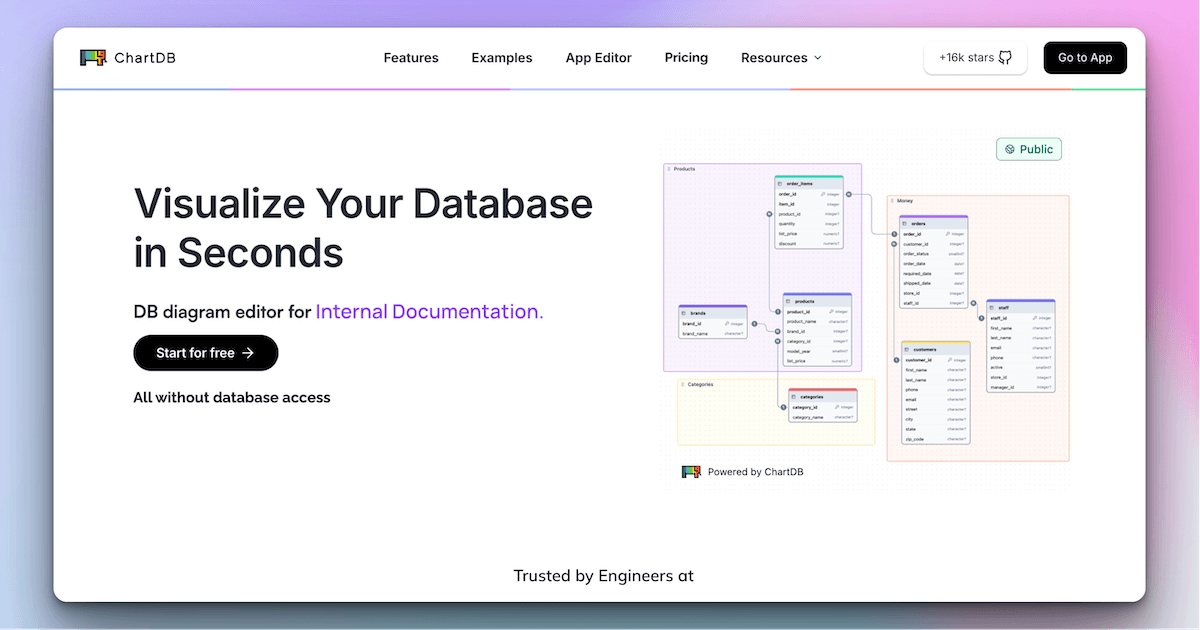
ChartDB
ChartDB is a comprehensive database diagram and data modeling tool designed to visualize and design schemas efficiently. It allows users to generate ER diagrams and DDL scripts with a single query, supporting popular relational database management systems like MySQL, PostgreSQL, SQL Server, and SQLite. The tool offers both a cloud-based solution for instant browser-based visualization and a self-hosted open-source option for greater control. Key features include instant schema import, simple SQL export, automatic database synchronization, real-time collaboration, and an AI agent for generating optimized ER diagrams from prompts. It also provides advanced editing capabilities, version tracking, and sharable documentation.
book-text-to-speech
book-text-to-speech is an open-source resource hosted on GitHub, offering an in-depth book focused on Text-to-Speech (TTS) technology, with a primary emphasis on Chinese. This documentation serves as a valuable reference, briefly introducing the historical development and current advancements in speech synthesis. It covers fundamental concepts of speech signals, feature extraction, acoustic models like Tacotron, FastSpeech, and VITS, and practical aspects such as corpus creation and text front-end processing. The resource is ideal for researchers, developers, and students interested in the technical intricacies of TTS.
Translate Gemma
Translate Gemma is an AI tool designed for text translation, leveraging the Gemma 4B IT model. This tool allows users to convert text from one language to another, making it suitable for various applications. While the current live website indicates the Space is paused, its intended functionality points towards supporting language research and testing translation models. It provides a platform for exploring the capabilities of the Gemma 4B IT model in a translation context, offering insights into AI-powered language conversion. The tool's focus on a specific model suggests it could be valuable for developers, researchers, or individuals interested in evaluating the performance of particular AI translation technologies.
APIAuto
APIAuto is an open-source HTTP API tool designed for agile development, offering powerful and easy-to-use functionalities. It features machine learning-based no-code testing, AI assistance for Q&A, code generation with static analysis, and automatic documentation with cursor hover comments. This tool integrates documentation, testing, mocking, debugging, and management into a single platform, surpassing many open-source and commercial API tools like Postman, Swagger, and YApi in common functionalities. It supports various HTTP methods and content types, and is recommended as the official documentation and testing tool for Tencent APIJSON. APIAuto is utilized by major companies including Tencent, Huawei, SHEIN, TRANSSION, and ICBC.
patchley | BPMN AI Generator
patchley is an AI-powered BPMN generator and editor that transforms spoken or written process descriptions into clean, BPMN 2.0 compliant diagrams. It supports various working modes, including workshops, interviews, virtual meetings, and individual analysis, allowing teams to capture conversations as they happen and convert them into structured process maps. The tool offers AI-guided process discovery, instant visualization of flow diagrams, and structured process map output ready for automation tools. patchley aims to significantly reduce the time spent on initial process documentation and accelerate stakeholder alignment cycles, providing governance-ready and automation-ready outputs without extensive manual modeling.
PDFParsersPlayground
PDFParsersPlayground is a tool hosted on Hugging Face that facilitates the conversion of PDF documents into Markdown format. It leverages various open-source parsers to perform this conversion, offering a platform for users to experiment with different parsing techniques. Designed for developers and researchers, this tool provides a straightforward way to process PDFs and extract their content into a more structured, editable format. While the Space is currently paused, its intent is to offer a free and accessible environment for exploring PDF parsing capabilities, making it valuable for those working with document analysis and data extraction.
Auto notebook creator
Auto notebook creator is an AI-powered application designed to simplify the process of generating Jupyter notebooks. Users can provide a dataset ID from the Hugging Face Hub and select the desired notebook type, and the tool will automatically create a tailored notebook. This functionality is particularly useful for data scientists, developers, and researchers who frequently work with new datasets and need to quickly set up an environment for analysis or experimentation. The tool aims to reduce the manual effort involved in initial data exploration and setup, allowing users to focus more on insights and model development. Built as a Hugging Face Space, it offers an accessible and free solution for automating notebook creation.

Penify.dev
Penify.dev offers automated documentation generation, creating human-like docstrings and documentation for various programming languages. It supports Python, Java, TypeScript, JavaScript, and Kotlin, making it a versatile tool for developers working across different tech stacks. The platform seamlessly integrates with popular version control systems like GitHub, GitLab, and Bitbucket, streamlining the documentation process directly within existing development workflows. Penify.dev focuses on intelligent tracking and smart generation to ensure real-time and privacy-focused documentation, enhancing code maintainability and collaboration without compromising data security.

AI Software Cost Estimator
The AI Software Cost Estimator by Idea Link offers a free, AI-powered solution for generating comprehensive software project estimates in just 3 minutes. Users input their project idea through a quick 7-question multiple-choice form, and the tool's AI algorithm analyzes the data to provide a detailed report. This report includes a problem statement, solution definition, a breakdown of features by user roles and user stories, hidden back-end logic, and potential project risks. Crucially, it also provides a cost and time estimate broken down by development stages, drawing on Idea Link's experience with over 100 projects. The tool is designed for non-technical users, eliminating the need for prior software development knowledge, and offers a comprehensive project plan rather than just a price.
spacecake
Spacecake is an open-source desktop application designed to enhance the Claude Code experience, offering a powerful interface for developers. It features a beautiful markdown WYSIWYG editor that supports mermaid diagrams and checklists, making documentation and planning intuitive. The integrated terminal allows users to run Claude Code with real-time context tracking, while Git integration simplifies version control with capabilities to commit, push, pull, manage branches, and track changes. Spacecake also includes a task panel to monitor pending, in-progress, and completed agent tasks, helping developers ship faster by writing markdown plans and explaining code with diagrams. It emphasizes defining your stack and owning conventions, supporting a structured development workflow.
shell_gpt
shell_gpt is a powerful command-line productivity tool that leverages AI large language models like GPT-4 to help users accomplish tasks faster and more efficiently. It eliminates the need for external resources by generating shell commands, code snippets, and documentation directly from the terminal. The tool supports various operating systems including Linux, macOS, and Windows, and is compatible with major shells such as PowerShell, CMD, Bash, and Zsh. Users can interact with shell_gpt through direct prompts, stdin, or even integrate it into their shell for quick completions. It also features a chat mode for conversational interactions and a REPL mode for interactive sessions, allowing for iterative improvements and context preservation.
codmate
CodMate is a macOS SwiftUI application designed to streamline the management of command-line interface (CLI) AI sessions. It enables users to efficiently browse, search, organize, resume, and review work generated by popular AI coding assistants like Codex, Claude Code, and Gemini CLI. The tool prioritizes speed through incremental indexing and caching, offering a compact three-column user interface. Key workflows include Project Review for Git changes, with optional AI commit message generation, and one-click Resume/New functionalities. Although the project is being archived, it provided valuable insights into integrating and managing AI agent interactions within a desktop environment, focusing on human usability interfaces (HUI) for AI systems.

ChatPRD
ChatPRD is the #1 AI platform designed specifically for product managers, transforming ideas into clear requirements and coaching teams to ship better products. It enables users to write great product documents like PRDs, user stories, and technical specs in minutes, not days, by leveraging AI to generate content from prompts, meeting notes, or rough ideas. The platform offers CPO-level reviews with actionable feedback, identifying strategic gaps and coaching users to think deeply about product problems. ChatPRD integrates seamlessly with tools like Linear, Notion, Slack, and GitHub, allowing for one-click exports and prototype generation. It also provides agentic capabilities for engineers and designers, shared project spaces, and custom AI personas, making it a comprehensive solution for product teams of all sizes.

Medical Record Ai
AIBIZ Medical is a comprehensive platform designed for healthcare professionals, including doctors, clinic owners, nurses, and midwives, to streamline their operations and enhance clinical decision-making. It integrates a WhatsApp assistant with a robust digital medical record (RME) system, offering features like AI Auto SOAP for faster clinical note-taking, AI Clinical Decision Assist for initial assessments, and AI Scan ID for quick patient identity input. The platform supports various healthcare settings, from individual practices to clinics, and is SATUSEHAT-ready for higher service standards. Beyond AI-powered clinical tools, it manages patient queues, billing, inventory, medical letters, and provides analytics. The WhatsApp assistant acts as an additional layer for quick access, medical references, booking, and daily work assistance, connecting seamlessly with the RME data based on access rights. AIBIZ Medical aims to not just digitize but accelerate clinic workflows.
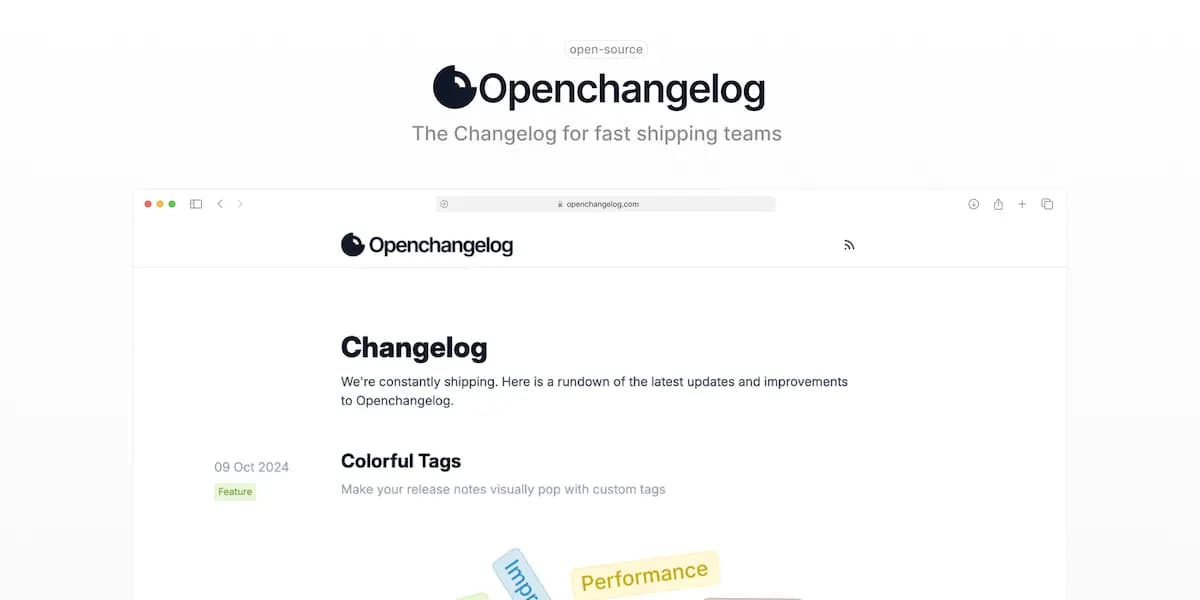
Openchangelog
Openchangelog allows development teams to easily integrate release notes into their workflow, ensuring users are always updated on product changes. It offers a customizable changelog with light and dark themes, custom domain support, and password protection for sensitive communications. Key features include an automatic RSS feed for updates, full-text search for release notes, and direct synchronization with GitHub repositories. The platform supports self-hosting and provides SDKs for easy integration, such as with Next.js. Openchangelog aims to simplify the process of publishing and managing product updates, making it an essential tool for maintaining transparent communication with users.
AutonomousDrivingCookbook
The AutonomousDrivingCookbook, developed by Microsoft Garage, offers a collection of scenarios, tutorials, and demos for autonomous driving. It aims to lower the barrier to entry for individuals interested in this rapidly evolving field. The cookbook provides resources for beginners, researchers, and industry experts, with tutorials presented as Jupyter notebooks for easy access and minimal setup. These tutorials leverage popular open-source tools like Keras and TensorFlow, alongside Microsoft technologies such as AirSim and Azure, focusing on content and learning rather than specific tool dependencies. It's a work in progress, with ongoing additions based on user feedback and collaborator availability.
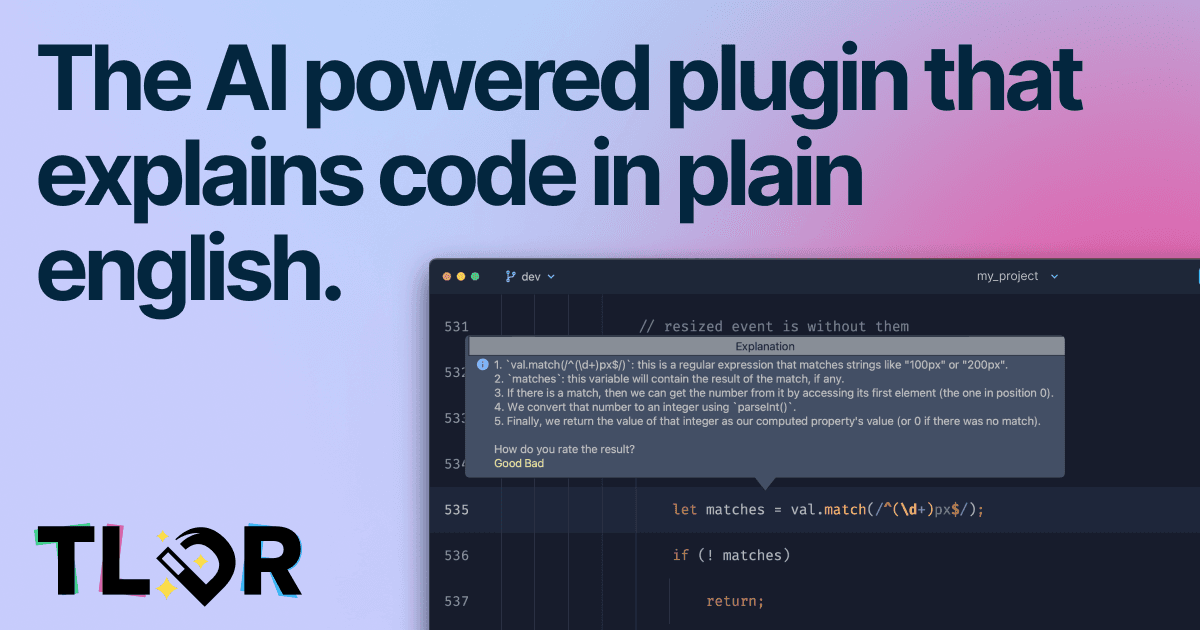
TLDR
TLDR is an AI-powered IDE plugin designed to help developers quickly understand code by explaining it in plain English. It supports nearly all programming languages, making it a versatile tool for various development environments. The plugin is particularly useful for deciphering complex elements like regular expressions and SQL queries, as well as for gaining a rapid understanding of new codebases. TLDR aims to save developers time by providing instant summaries of code, allowing them to build mental context efficiently. It offers a free version with limited credits and paid tiers for individual and organizational use, all accessible via the JetBrains plugin marketplace.
Dosu
Dosu reimagines knowledge management for the AI era by offering automatic knowledge capture that provides teams and agents with up-to-date information. It integrates seamlessly into existing workflows, documenting insights from coding agent sessions and updating documentation whenever source code changes. This self-documenting approach reduces token usage, increases agent speed, and maintains consistent implementations. Dosu supports various platforms like GitHub, GitLab, Slack, MS Teams, Notion, Confluence, and Coda, allowing users to sync existing documentation and maintain it in-place. It's designed for individual developers, engineering teams, and OSS maintainers, offering solutions for efficient coding, knowledge transfer, and community guidance.
Doczilla
Doczilla offers a high-performance API designed for efficient PDF and screenshot creation, ensuring scalable and reliable document delivery for developers and businesses. The platform simplifies document generation by allowing users to create, save, and manage templates using a robust HTML editor and a Handlebars-based templating system. This streamlines workflows, enabling the definition of templates once and rendering them repeatedly. Doczilla supports various image formats like PNG, JPEG, and WebP for screenshots and can convert password-protected web pages to PDFs using basic authentication. It prioritizes security, never storing data longer than necessary, and offers flexible API responses, including immediate direct responses or structured webhook callbacks. The service is designed to scale effortlessly, handling everything from hundreds to millions of documents.
novel
Novel is an open-source, Notion-style WYSIWYG editor designed to streamline the writing process with AI-powered autocompletion. It allows users to create and edit content within a familiar and intuitive interface, similar to Notion. The tool integrates OpenAI for AI completions and is built on a modern tech stack including Next.js, Tiptap, and Vercel AI SDK. Novel is suitable for developers looking to integrate a powerful editor into their applications, as well as writers and content creators seeking an enhanced writing experience with intelligent suggestions.
PlotNeuralNet
PlotNeuralNet is an open-source library that provides Latex code for generating neural network diagrams. This tool is designed to help researchers, students, and professionals create high-quality visualizations of deep neural network architectures for academic papers, presentations, and reports. It supports various network representations, including FCN-8, FCN-32, and Holistically-Nested Edge Detection, with examples provided for easy understanding. Users can install necessary packages on Ubuntu or Windows (via MikTeX and Git Bash/Cygwin) and utilize either Latex or Python interfaces to define and generate their network diagrams. The project encourages community contributions for improvements and bug fixes, making it a collaborative effort for better visualization tools.