
Coding & Development
Browsing page 11 of AI tools for Documentation in Coding & Development. Sorted by confidence score — our independent quality rating.

Bloop
Bloop is building tools designed to empower engineers to plan, orchestrate, and review the work of autonomous AI agents. The platform aims to provide the necessary infrastructure to significantly multiply output, especially as the industry transitions from simple auto-complete functionalities to more complex, long-running tasks. Its core mission is to transform every engineer into a high-velocity engineering manager by streamlining the management of AI agent workflows. This focus on agent orchestration and review positions Bloop as a critical tool for developers working with advanced AI systems, enabling more efficient and effective project execution.

OmarCMS
OmarCMS is an AI-native blogging platform designed for agents and developers who prefer a git-based workflow for content management. It enables users to write blog posts in markdown files, commit them to GitHub, and auto-deploy them to their site. The platform emphasizes simplicity and efficiency, operating without an admin panel, database, or visual editors. Key features include static site generation with Astro for blazing-fast performance, WCAG AA compliance for accessibility, and robust SEO optimization with JSON-LD, Open Graph tags, RSS feed, and sitemap. OmarCMS is open-source, MIT licensed, and built to be completely free to host, making it an ideal solution for those seeking full control and a streamlined publishing process.

prompt-layer-library
PromptLayer is a robust AI development tool designed for prompt engineers and developers working with large language models. It functions as middleware, seamlessly integrating with the OpenAI Python library to log and manage all API requests and prompts. Users can track, debug, and replay past completions, offering a comprehensive solution for prompt versioning, testing, and monitoring. The library provides convenient access to the PromptLayer API, allowing for prompt template retrieval, listing, publishing, and cache invalidation. It also includes features for manual request logging, request annotation with metadata, prompt linkage, scores, and groups, and even a decorator for tracing custom functions. With support for both synchronous and asynchronous operations, PromptLayer streamlines the development workflow for AI applications.
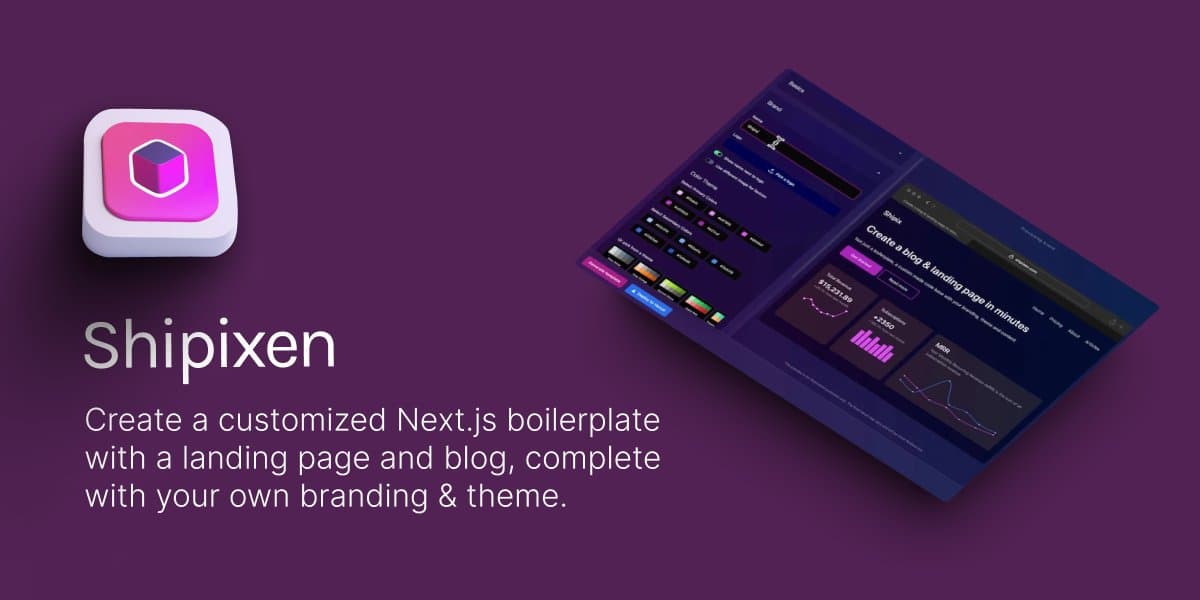
Shipixen
Shipixen is an application designed to streamline the development and deployment of Next.js 15 applications. It allows users to generate custom codebases, including an MDX blog, with features like TypeScript, Shadcn UI, and pre-built components. The tool focuses on providing SEO-optimized, responsive, and performant code, saving developers hundreds of hours on setup. Users can choose from various templates and components inspired by high-converting SaaS landing pages. Shipixen offers a one-time purchase model, providing unlimited codebases and free updates, ensuring users own their code without subscriptions or lock-in. It also includes AI content generation capabilities and 1-click deployment to platforms like Vercel.
SolidGPT
SolidGPT is an AI searching assistant specifically designed for developers, facilitating efficient code and workspace semantic search. It helps developers quickly find relevant information within their codebase and Notion documents, eliminating the need for constant context switching. The tool is available as a VSCode Extension, offering a seamless integration into the development workflow. Users can onboard their codebase and Notion pages, then ask questions to get instant answers, saving time on hunting for code or documentation. SolidGPT emphasizes data safety, stating it does not collect user data and uses OpenAI series models, requiring users to agree to OpenAI's terms of use.
AI Coder Buddy
AI Coder Buddy is an AI-powered coding assistant designed to significantly enhance developer productivity. While specific features are not detailed on the current landing page, the tool aims to provide developers with efficient access to code examples and solutions. It is expected to support a wide array of programming languages and frameworks, helping developers to streamline their workflow, solve coding problems more efficiently, and focus on higher-level tasks. The platform is currently in a 'Launching Soon' phase, indicating future availability for users seeking to leverage AI in their coding endeavors.
Released
Released is a comprehensive platform designed for product teams to streamline feedback management and release communication, deeply integrated with Jira. It enables the creation of tailored product roadmaps for different audiences, syncing live from Jira data without manual exports. The tool facilitates capturing customer ideas and feedback directly from various sources like Slack, portals, and embedded forms, linking them to relevant Jira work. A standout feature is its AI-powered release note generation, which drafts release notes directly from completed Jira tickets, significantly reducing the time and effort involved in communicating product updates. Released also offers a branded changelog hub with email subscriptions, ensuring customers and stakeholders are always informed.

Ghostwriter
Ghostwriter, powered by Replit AI, is an advanced coding assistant designed to transform natural language prompts into fully functional applications and websites. It aims to automate the repetitive aspects of coding, enabling users to concentrate on innovation. The tool acts like an on-demand team of software engineers, capable of building a wide range of software from business apps and AI chatbots to games and online shops, all through a simple chat interface. Ghostwriter can quickly generate working prototypes, fix bugs, and even build apps from screenshots, making it accessible for both technical and non-technical creators. It offers a comprehensive environment for building, deploying, and sharing software without the need for extensive coding knowledge.

Wizardshot
Wizardshot is a free web application and Chrome extension designed to simplify the creation of step-by-step tutorials. By capturing screen recordings, the tool automatically generates comprehensive guides complete with text and screenshots, significantly reducing the need for manual writing and editing. It integrates seamlessly into existing workflows, allowing users to export tutorials to PDF and DOC, and share them across social media. Wizardshot also offers features like knowledge base integration, privacy controls such as blurring sensitive information, and team collaboration. Its analytics provide insights into tutorial impact, while an easy-to-use editor allows for embedding videos and transforming steps into GIFs, making it a versatile solution for knowledge sharing.
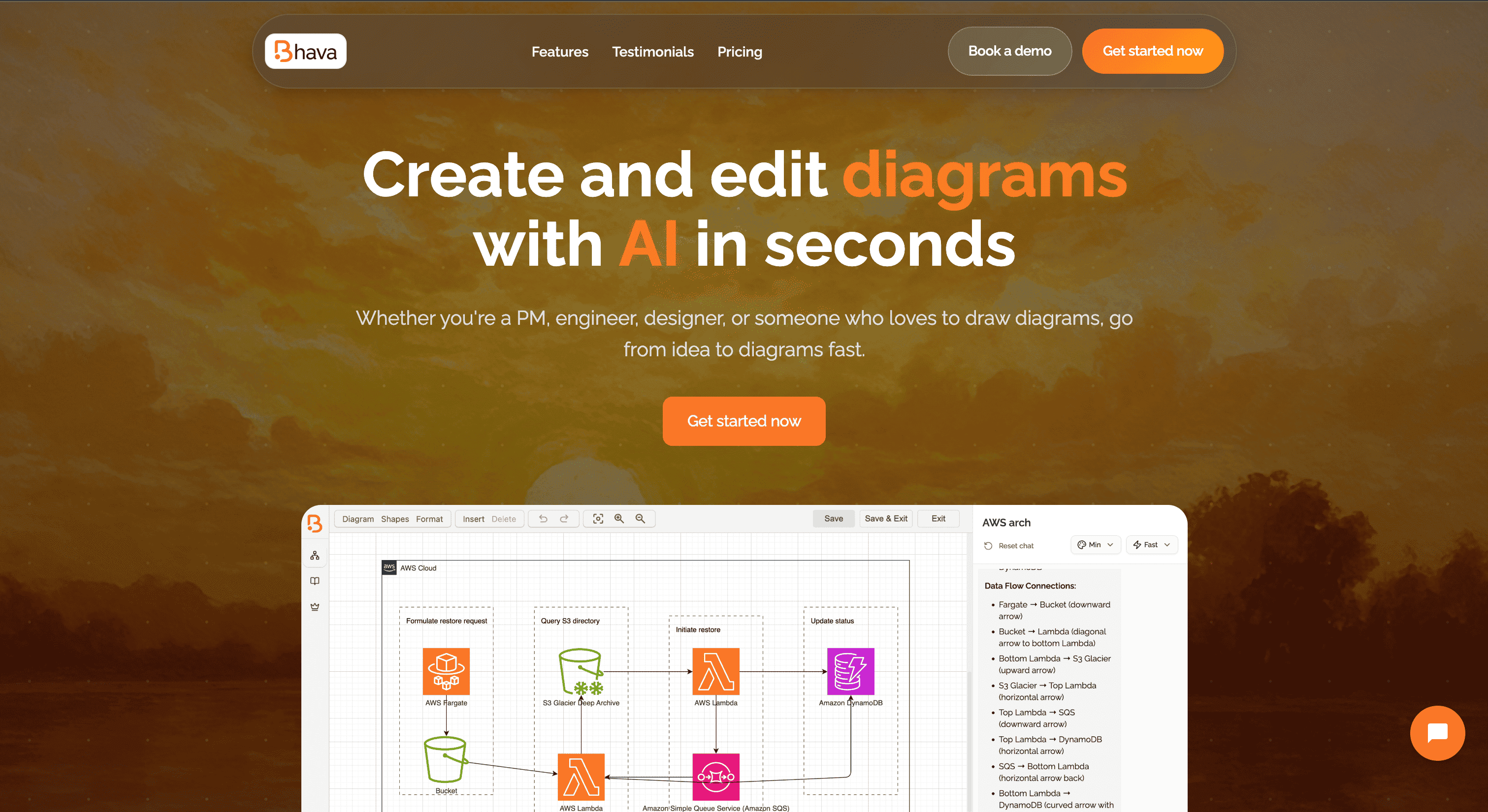
Bhava
Bhava is an AI-powered diagram editor designed to transform ideas into professional diagrams instantly. It allows users to create and edit various diagram types, including flowcharts, architecture diagrams, UML, ERD, sequence diagrams, network maps, org charts, mind maps, and hardware schematics, all in seconds. The tool supports generating diagrams from text or by dropping images, sketches, or screenshots, automatically recognizing services and symbols like AWS, GCP, Azure, and Kubernetes icons. Diagrams remain fully editable, including styles, layers, and groups. Bhava also offers easy import from draw.io or Mermaid and export to formats like PNG and SVG, ensuring no vendor lock-in. It is trusted by product managers, developers, and engineers for faster and smarter diagramming.
Document To Markdown
Document To Markdown is an AI-powered tool developed by Mozilla.ai that simplifies the process of converting diverse document types into Markdown format. Users can upload various files, including PDFs, Word documents, and images, to extract their content. The tool leverages the power of Docling to accurately process and convert the information, making it highly useful for content creators, developers, and anyone needing to quickly format text for web, documentation, or other purposes. It offers different processing options to cater to specific user needs, ensuring flexibility and efficiency in document conversion.
screenclip.fast
screenclip.fast is a browser extension designed for retroactive screen capture, allowing users to instantly save the last 2 minutes of their screen activity. It runs silently in the background, continuously buffering your screen, so you never miss a moment worth sharing. The tool prioritizes privacy by keeping all recordings and processing local to your device, with no account required for core features. Clips are automatically saved as WebM files to your downloads folder, ready for immediate sharing. It offers features like speed control, frame-by-frame scrubbing, and is built to be lightweight, ensuring minimal impact on browser performance. The extension is currently available for Chrome, with Edge support in progress.

Ornata
Ornata is a lightweight desktop Markdown editor specifically designed for technical writing, emphasizing speed and clarity. It provides a friction-free writing experience without requiring accounts or cloud dependencies, ensuring privacy and offline functionality. The editor boasts instant startup times and smooth performance, even when handling large files. It integrates with Git for robust version control, allowing users to track changes and collaborate effectively. Ornata aims to be a focused tool that stays out of the user's way, enabling writers to concentrate solely on their content.
adrenaline
Adrenaline is an AI-powered tool designed to serve as an expert on technical matters, particularly focusing on codebases. It enables users to interact with their code through chat, providing answers to a wide range of technical questions. The tool can also visualize the codebase, helping users understand complex structures. Adrenaline's capabilities extend to general programming concepts, GitHub repositories, documentation websites, and code snippets. It can search the internet to ground its answers in relevant sources, employ multi-step reasoning for complex queries, and generate diagrams to explain technical concepts, making it a comprehensive assistant for developers.

Translation-API.com
Translation-API.com serves as a comprehensive guide and comparison platform for top translation APIs, including Google Translate API, DeepL API, and other cloud translation services. It offers resources and insights for developers looking to implement website translation, integrate REST APIs, and build multilingual solutions. The platform aims to simplify the process of choosing and utilizing the most suitable translation API for various applications, providing expert comparisons and detailed information to aid in development decisions. It covers aspects like API integration, multilingual support, and general guidance on leveraging these powerful tools for global reach.
kubernetes-for-ml-engineers
kubernetes-for-ml-engineers offers a comprehensive, step-by-step guide for Machine Learning engineers to understand and implement basic Kubernetes concepts. The repository details how to install essential tools like Docker, Kind, and kubectl, and then walks users through creating a local Kubernetes cluster. It covers writing business logic for a simple FastAPI application, containerizing it with Docker, and subsequently building, running, and pushing the Docker image to the local Kubernetes cluster. Finally, the guide explains how to deploy the application as a Kubernetes service and test its functionality, making it an invaluable resource for those looking to deploy ML applications in a containerized environment.
AICommit
AICommit is a powerful JetBrains plugin designed to streamline the commit message generation process for developers. Compatible with popular IDEs such as IntelliJ IDEA and WebStorm, it allows users to generate precise AI commit messages with a single click directly within their development workflow. The tool supports a range of AI providers including OpenAI, Azure OpenAI, Google Gemini, Anthropic Claude, and Ollama for local models, offering flexibility and privacy controls. Developers can utilize built-in templates or create custom ones for specific needs like Conventional Commits. AICommit emphasizes privacy by processing diffs locally before any API calls, ensuring no code is stored, logged, or shared, making it suitable for teams with strict data security requirements.
Reproducible-Deep-Compressive-Sensing
Reproducible-Deep-Compressive-Sensing is a comprehensive collection of source code dedicated to deep learning-based compressive sensing (DCS). This repository categorizes and provides access to numerous research works, offering links to their respective source code, PDF papers, and DOIs. The collection is organized based on key characteristics such as sampling matrix type (frame-based/block-based), sampling scale (single scale, multi-scale), and the deep learning platform used. It also includes code for image and video reconstruction, as well as other related applications. This resource is invaluable for researchers and developers looking to explore, reproduce, or build upon existing deep learning models in compressive sensing.
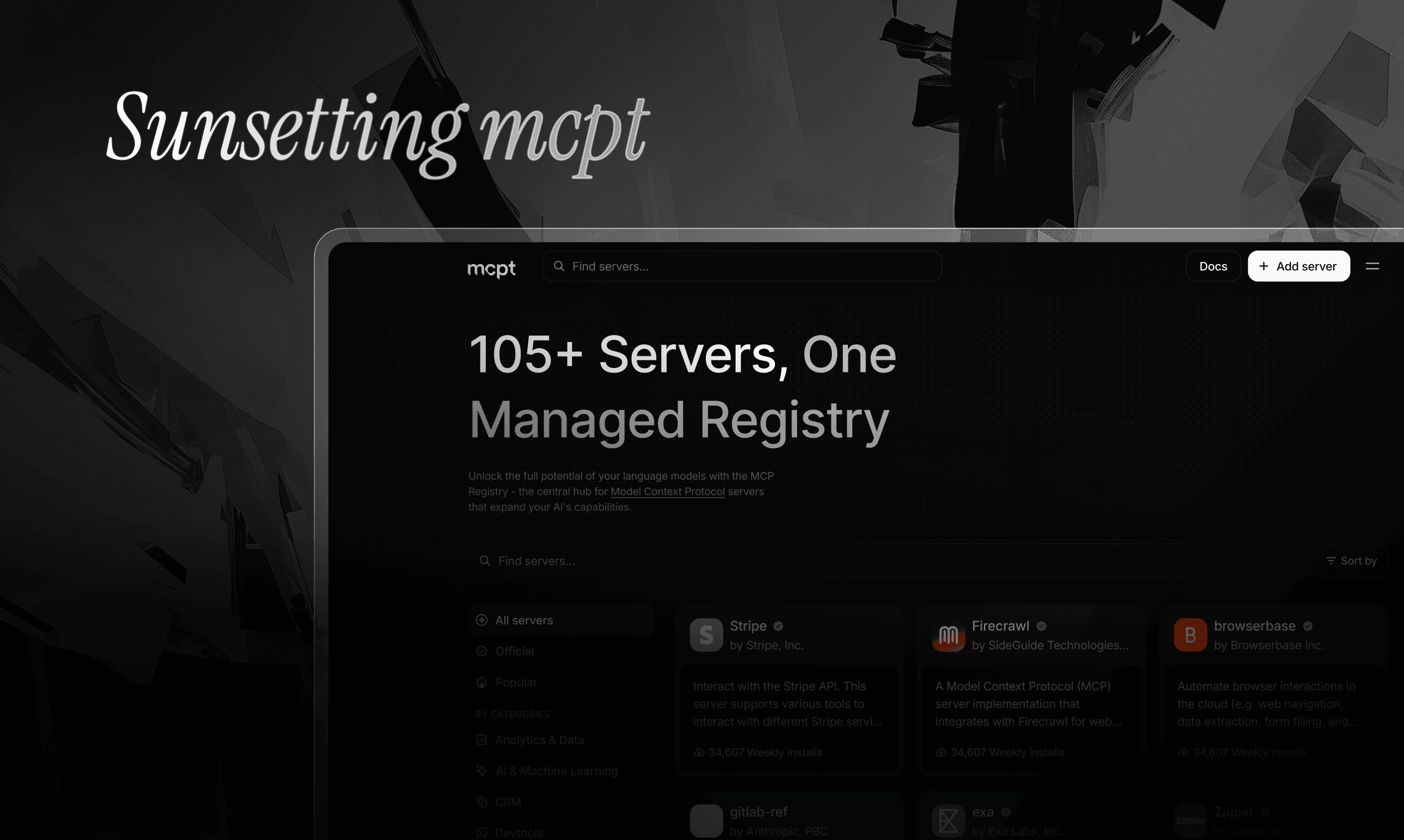
MCP Registry
MCP Registry was a server registry developed by Mintlify, intended to provide a central platform for discovering and showcasing MCP (Model Context Protocol) servers. Launched after the success of Mintlify's MCP server generator, the registry aimed to solve the discoverability problem within the MCP ecosystem. Despite attracting over 3,000 unique visitors within 24 hours of its launch and receiving significant interest from developers, the project was sunsetted just five days later. The decision was made because building and supporting a marketplace would have diverted critical operational resources from Mintlify's core developer tools product, and marketplace building was not considered their core strength. This case highlights the importance of strategic focus for companies, especially during periods of rapid growth.
Templa8
Templa8 is an AI-powered document creation tool designed to streamline documentation and enhance team collaboration. It allows users to instantly generate structured, easy-to-digest documents by selecting a template category and providing a description of the desired content. The platform supports a wide range of professionals, including developers, product managers, business analysts, and project managers, by offering tailored templates for API docs, PRDs, BRDs, progress reports, and more. Templa8 aims to accelerate team execution and improve outcomes through personalized and efficient document generation, with options to edit and download templates in Word and PDF formats.
awesome-rl-for-cybersecurity
awesome-rl-for-cybersecurity is a curated list of resources specifically focused on reinforcement learning (RL) applications in cyber security. This open-source repository gathers research papers, RL environments, books, blog posts, and talks, offering a valuable collection for researchers and practitioners. It explicitly excludes general machine learning methods, concentrating solely on work that leverages reinforcement learning. The list includes various RL environments like CyberBattleSim, CybORG++, and PenGym, designed for training autonomous cyber agents and simulating attack/defense scenarios. This makes it an essential resource for anyone looking to explore or implement RL techniques in cybersecurity.
eventcatalog
eventcatalog provides an architecture catalog for distributed systems, enabling users to document events, services, domains, and flows. It features AI-powered discovery, allowing natural language queries about architecture and business. The tool includes interactive node graphs for visualizing system connections, a schema explorer for various schema types (OpenAPI, AsyncAPI, Protobuf, JSON Schema, Avro), and the ability to filter schema fields. Users can attach architecture decision records and custom documentation, and define business flows by referencing existing services and messages. It supports semantic versioning for resources and offers over 15 generators for platforms like Kafka, EventBridge, and RabbitMQ, making it highly customizable and enterprise-ready with features like OAuth2 and schema governance.
RepoAgent
RepoAgent is an LLM-powered open-source framework designed to assist developers and teams in generating comprehensive documentation for their code repositories. It automates the process of creating and maintaining project documentation, providing detailed explanations for each Python file and making it easier for developers to understand, maintain, and enhance codebases. The tool automatically detects changes in Git repositories, analyzes code structure through AST to generate documents for individual objects, and identifies inter-object bidirectional invocation relationships to enrich documentation content. It seamlessly replaces Markdown content based on changes, ensuring consistency, and executes multi-threaded concurrent operations for efficient document generation. RepoAgent also supports automated documentation updates for team collaboration and offers a way to display code documentation, with future plans for multi-programming language support and local model integration.

MDN Plus
MDN Plus serves as a comprehensive web resource for developers, offering in-depth documentation on open web technologies such as HTML, CSS, and various Web APIs. It provides detailed references, guides, and tutorials for building both traditional websites and progressive web applications. The platform covers a wide array of topics including accessibility, performance, privacy, and security, alongside specific technologies like JavaScript, WebAssembly, HTTP, and SVG. MDN Plus also includes documentation for popular developer tools like Firefox Developer Tools, Chrome DevTools, Safari Web Inspector, and Edge DevTools, making it a central hub for web development knowledge.