
Coding & Development
Browsing page 12 of AI tools for Documentation in Coding & Development. Sorted by confidence score — our independent quality rating.
![[D] How do you document your ML system architecture?](/_next/image?url=%2Flogo-spin.webp&w=3840&q=75)
[D] How do you document your ML system architecture?
draw.io is a free online diagram software designed for creating a wide array of visual representations, including flowcharts, process diagrams, organizational charts, UML diagrams, ER diagrams, and network diagrams. It functions as a comprehensive tool for documenting complex systems, such as machine learning architectures, database schemas, and BPMN processes. Users can easily design and share diagrams for various technical and business needs, making it a versatile solution for visual communication. The platform also supports importing files from other popular diagramming tools like .vsdx, Gliffy, and Lucidchart, enhancing its utility and compatibility for a broad user base.
markdownify-mcp
Markdownify-MCP is a Model Context Protocol (MCP) server designed to convert a wide array of content into Markdown format. This open-source tool simplifies the transformation of documents like PDFs, DOCX, XLSX, and PPTX, as well as multimedia such as images and audio files (with transcription), into easily digestible Markdown text. It also supports converting web content, including YouTube video transcripts, Bing search results, and general web pages. Developers can integrate this server into desktop applications, customizing its behavior and extending its capabilities. Markdownify-MCP aims to streamline content processing and make information more accessible and shareable across different platforms.
Allyzio Copilot
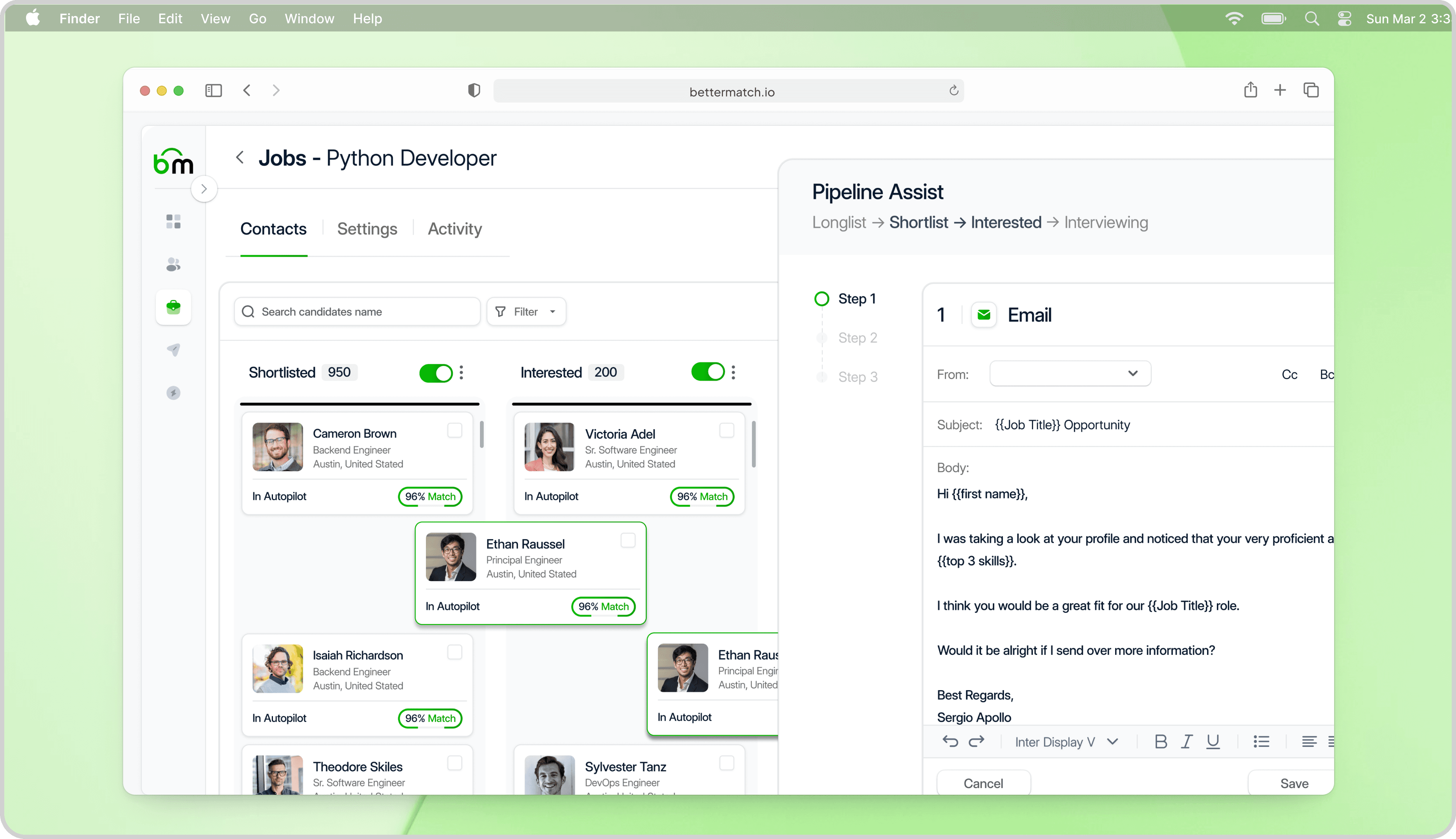
Better Match is an intelligent AI recruiting platform designed to revolutionize the hiring process for businesses of all sizes. It leverages AI to find, research, and match with candidates from a global talent pool of over 800 million people. Users can describe their ideal candidate in plain English, and the system will analyze and rank the best matches. The platform includes a Research Assistant for automated candidate research, inferring experiences, skills, and company fit, and an Outreach Engine to create intelligent engagement workflows, automated sequences, and meeting coordination. Better Match aims to cut costs and improve results by replacing traditional hiring stacks, making it ideal for recruiters, agencies, and startups looking to scale their hiring efforts.
OpenDeepWiki
OpenDeepWiki is an open-source project, inspired by DeepWiki, designed to help developers understand and utilize code repositories more effectively. Built on .NET 9 and Semantic Kernel, it offers features like code analysis, documentation generation, and knowledge graph construction. The platform supports various code repositories including GitHub, GitLab, and Gitee, and can analyze all programming languages. Key capabilities include automatically generating Mermaid diagrams for code structure, supporting custom AI models, and providing AI-driven code analysis for deep understanding. It also generates SEO-friendly documentation using Next.js and allows conversational interaction with AI to retrieve detailed code information. The modular design ensures easy expansion and customization, making it a powerful tool for knowledge management and collaboration.
reference
Reference is an open-source project offering a comprehensive collection of quick reference cheat sheets specifically designed for developers. It covers a wide array of topics, including numerous programming languages like Python, JavaScript, Go, and C++, as well as essential toolkits such as ChatGPT, VSCode, and Emmet. Additionally, it provides cheat sheets for Linux commands and keyboard shortcuts for popular applications like Adobe Photoshop, Figma, and GitHub. The platform encourages community contributions, allowing users to share their own cheat sheets or improve existing ones, making it a dynamic and continuously evolving resource. The primary and maintained domain for accessing these up-to-date cheat sheets is cheatsheets.zip.
generative-ai-docs
Generative-ai-docs is a GitHub repository that previously served as the source for guides and tutorials related to Google's Generative AI developer site, specifically for the Gemini API and Gemma. The repository is now deprecated and no longer maintained, but it provides essential links to the active Gemini Documentation, Gemini Cookbook, and Gemma Cookbook. These resources are crucial for developers and data scientists looking to work with Google's generative AI models, offering examples, demos, and documentation to facilitate integration and development. While the repository itself is archived, its historical context and redirection to current resources make it a relevant entry for understanding the evolution of Google's generative AI offerings.
TensorFlow-Lite-Object-Detection-on-Android-and-Raspberry-Pi
This GitHub repository offers a comprehensive tutorial for training, converting, and running TensorFlow Lite object detection models on various edge devices, including Android phones and the Raspberry Pi. It guides users through the process of creating custom TensorFlow Object Detection models, optimizing them for TensorFlow Lite, and deploying them for real-time applications. The tutorial provides Python code for performing object detection on images, videos, web streams, or webcam feeds. It also highlights the benefits of using Google Colab for training, offering a free GPU-enabled virtual machine, and includes step-by-step setup guides for different devices. The resource emphasizes faster inference times and reduced processing power requirements compared to standard TensorFlow models.
Towards AI, Inc.
Towards AI, Inc. offers comprehensive AI education, training, and custom AI system development for both individuals and organizations. Their platform is designed to guide users from initial AI curiosity to achieving tangible AI capabilities. They provide a range of resources including courses, community engagement, enterprise training programs, and bespoke AI development services. Since 2019, Towards AI has educated over 400,000 individuals, focusing on practical AI engineering courses and corporate AI bootcamps. The company aims to empower users to effectively utilize and build with AI tools and models, bridging the gap between theoretical knowledge and real-world application.
DigestDiff
DigestDiff is an AI-driven tool designed to help developers understand and communicate their codebase's evolution through its commit history. It offers three core functionalities: generating detailed codebase overviews, summarizing recent work for standups and reports, and creating streamlined release notes. The tool emphasizes privacy, requesting only read-only access to GitHub repositories and never storing generated content or accessing actual code. Users can also manually input commit history, ensuring flexibility and security. DigestDiff aims to accelerate developer onboarding, improve team communication, and automate documentation processes.

Postlog
Postlog offers web traffic analysis tools designed to improve website rankings and click-through rates (CTR). Users can utilize a free Post Log diagnostics analyzer to instantly uncover factors hindering their traffic, rankings, or CTR. The tool provides quick triage, pointing users to the fastest free fixes like internal linking or CTR optimization. It helps operators identify bottlenecks and offers access to operational tools that drive measurable growth. Postlog focuses on providing organized intelligence and ROI-focused recommendations, ensuring that every featured tool contributes to business outcomes. It categorizes SAAS analytics tools to help users find the right solutions for specific use cases, emphasizing action-ready comparisons and direct links to save research time.
write-you-a-vector-db
write-you-a-vector-db is a comprehensive tutorial designed to guide users through the process of integrating vector capabilities into relational database systems. The tutorial is built upon modified versions of educational database systems, specifically CMU-DB's BusTub for the C++ variant and RisingLight for the upcoming Rust version. Users will learn to implement vector storage, vector expressions, and vector indexes. This resource is ideal for those looking to deepen their understanding of vector database implementation, offering practical, hands-on experience. The project is actively developed and encourages community participation through a dedicated Discord server.
WorkPing
WorkPing automates the creation of client-ready progress updates directly from GitHub activity. Designed for freelance developers, it analyzes merged pull requests and commits to generate professional summaries. Users can review and edit these AI-generated updates in a clean editor before copying and sending them via email, Slack, or other platforms. The tool offers secure, read-only access to GitHub repositories, including private ones, and allows for the addition of manual notes for non-code work like meetings or blockers, ensuring comprehensive reporting. WorkPing aims to streamline client communication, allowing developers to focus more on their work and less on administrative tasks.
n8n-docs
n8n-docs serves as the official documentation repository for n8n, a fair-code licensed automation tool. It offers comprehensive resources for both the free community edition and powerful enterprise options, guiding users on how to effectively connect various applications and build automated workflows. The documentation specifically highlights how to integrate and build AI functionality into these workflows, making it a valuable resource for developers and technical users looking to leverage n8n's capabilities. It includes detailed guides on setting up local previews, troubleshooting common issues, and contributing to the documentation itself, ensuring a smooth experience for both new and experienced users.
Notebooks On The Hub
Notebooks On The Hub is an AI application hosted on Hugging Face, designed to provide users with a platform for accessing and exploring AI notebooks. It enables users to create and customize static web pages by directly editing HTML files within the platform. This functionality is accessible through the Files and versions tab, allowing for immediate viewing of changes on the web page. The tool is part of the Hugging Face Spaces ecosystem, indicating its focus on community and collaborative development within the AI domain. It is particularly useful for individuals looking to experiment with or share AI-related code and demonstrations in an easily accessible web environment.
spark-py-notebooks
spark-py-notebooks is a comprehensive collection of IPython/Jupyter notebooks designed to educate users on various Apache Spark concepts using Python (pySpark). The tutorials range from fundamental to advanced topics, focusing on Big Data Analysis and Machine Learning. Users can learn about RDD creation, basic RDD operations like map, filter, and collect, sampling, set operations, and data aggregations. The collection also delves into working with key/value pair RDDs and introduces MLlib for basic statistics, exploratory data analysis, logistic regression, and decision trees. Additionally, it covers Spark SQL for structured processing with DataFrames and includes applications like building a movie recommendation web service.
Setup-NVIDIA-GPU-for-Deep-Learning
Setup-NVIDIA-GPU-for-Deep-Learning is a comprehensive, open-source guide designed to assist users in setting up their NVIDIA GPUs for deep learning tasks. It outlines a clear, step-by-step process, starting with the installation of the latest NVIDIA GPU drivers. The guide then proceeds to cover essential software components such as Visual Studio with C++ support, Anaconda/Miniconda for package management, the CUDA Toolkit, and cuDNN. Finally, it provides instructions for installing PyTorch and includes a script to test the GPU setup, ensuring all components are correctly configured for optimal deep learning performance. This resource is invaluable for deep learning practitioners and AI researchers looking to streamline their development environment setup.

Apives
Apives is designed to be a next-generation API ecosystem, enabling developers to easily discover, understand, and evaluate APIs. The platform aims to provide clarity and trust in the API landscape, helping builders avoid guesswork when integrating with different services. While specific features like pricing models, stability metrics, access types, and endpoint examples are mentioned in the stored description, the live website content focuses on the overarching goal of API discovery and understanding. Apives positions itself as a crucial resource for developers looking to streamline their API integration processes.
d2l-tvm
d2l-tvm is an open-source project dedicated to deep learning compilers, offering comprehensive resources for those looking to understand and optimize deep learning models. Hosted on GitHub, it provides a platform for learning about the TVM deep learning compiler stack. The project includes detailed documentation, practical examples, and guides on how to contribute, making it a valuable resource for developers and researchers. It covers various aspects of deep learning compilation, from common operators and CPU/GPU schedules to deployment strategies, enabling users to dive deep into the technical intricacies of optimizing AI models.
generative-ai-roadmap
generative-ai-roadmap offers a comprehensive overview of generative AI, detailing its use cases and applications through a structured roadmap. This resource, available on GitHub, includes both original Chinese content and English translations of its diagrams and text. It covers the evolution of controllability in generative AI, its application directions, key application areas with typical examples, and the evolution of multimodal AI application capabilities. The project is licensed under a Creative Commons Attribution 4.0 International License, making it a valuable educational resource for anyone interested in understanding the landscape of generative AI.
feature-engineering-book
feature-engineering-book is the official GitHub code repository accompanying the book "Feature Engineering for Machine Learning" by Alice Zheng and Amanda Casari, published by O'Reilly in 2018. This resource is invaluable for students, researchers, and practitioners looking to implement the feature engineering techniques discussed in the book. The repository contains various Jupyter Notebooks covering topics such as binning, count features, log and Box-Cox transformations, interaction features, text processing (TF-IDF, chunking), regression on categorical variables, feature hashing, PCA, K-means clustering for featurization, and HOG image features. It also includes end-to-end recommender system examples, providing practical code for a deeper understanding of machine learning concepts.
sig-mlops
sig-mlops is a Special Interest Group (SIG) within the Continuous Delivery Foundation (CDF) dedicated to Machine Learning Operations (MLOps). This open-source initiative aims to foster collaboration and drive standardization within the MLOps community. The group focuses on sharing best practices, developing documentation, and providing resources for professionals involved in the deployment, monitoring, and management of machine learning models. It serves as a hub for discussions, knowledge exchange, and contributions to the evolving field of MLOps, helping to streamline processes and improve efficiency in AI/ML development workflows.
resources
resources is an open-source repository dedicated to curating and organizing Go-based data science resources. It serves as a central hub for developers and data scientists working with the Go programming language, offering a comprehensive collection of links to various community resources such as events, conferences, and blogs. Additionally, it provides an extensive list of tooling resources, including essential packages, libraries, and development tools specifically designed for data analysis, visualization, and machine learning tasks within the Go ecosystem. This makes it an invaluable asset for anyone looking to explore or deepen their work in data science using Go.
theMLbook
theMLbook is an open-source GitHub repository offering Python code designed to replicate the illustrations found in 'The Hundred-Page Machine Learning Book'. This resource is invaluable for students and professionals seeking to deepen their understanding of machine learning concepts through practical, visual examples. By providing the exact code used for the book's figures, theMLbook allows users to interact directly with the algorithms and models discussed, facilitating a hands-on learning experience. It covers a range of machine learning topics, from fundamental algorithms like linear regression and K-means to more advanced concepts such as autoencoders and UMAP, making it a comprehensive companion for the book's readers.
Theo-Docs
Theo-Docs is an open-source GitHub repository offering comprehensive guides for unlocking and utilizing various streaming services and AI tools. It provides detailed documentation for popular platforms such as Netflix, Disney+, Spotify, YouTube Premium, ChatGPT, and Gemini. Beyond streaming and AI, the repository also delves into practical topics like daily records, ESXI virtualization, OpenWrt router firmware, VPS guides, and information on various cloud service providers. This resource is ideal for users looking to optimize their digital experience across entertainment, AI applications, and personal server management.