
Coding & Development
Browsing page 4 of AI tools for Documentation in Coding & Development. Sorted by confidence score — our independent quality rating.

DocScribl
DocScribl is an AI documentation tool designed to automate workflow documentation through a Chrome extension. It captures browser processes, creating detailed visual timelines and offering AI-powered explanations for each step. This smart workflow scribe tool aims to simplify and accelerate the creation of process documentation, making it easier for teams to collaborate and maintain accurate records. Key features include AI-powered documentation, time-travel screenshots, multi-format export options, live AI explanations, and a privacy-first design, all contributing to efficient process capture and workflow automation.
awesome-spring-ai
awesome-spring-ai is a comprehensive, curated list of resources, tools, tutorials, and projects designed to help developers build generative AI applications using Spring AI. This GitHub repository simplifies the integration of Large Language Models (LLMs) and other AI capabilities into Spring applications by offering consistent abstractions across different AI providers, robust prompt engineering, built-in caching, retry mechanisms, and vectorized storage integration. It includes official documentation, blogs, learning resources like books and online courses, code examples, and community information. The project aims to provide a familiar and consistent Spring-style developer experience for AI development, supporting popular LLM providers and native Spring Boot integration.
transformer-explainer
Transformer Explainer is an interactive visualization tool designed to demystify the workings of Transformer-based models, such as GPT. It provides a unique learning experience by running a live GPT-2 model directly in your browser. Users can input their own text and observe in real time how the internal components and operations of the Transformer architecture collaborate to predict subsequent tokens. This hands-on approach makes complex concepts accessible, allowing for a deeper understanding of large language models. The tool is accompanied by a research paper and a demo video, making it a comprehensive resource for anyone looking to learn about LLM mechanics.
aicodeguide
AI Code Guide is a comprehensive resource designed to help both new and experienced coders navigate the rapidly evolving landscape of AI-assisted coding. It serves as a roadmap, bringing together scattered information on LLM models, tools, editors, and coding practices into one accessible guide. The guide explains various approaches like "AI coding," "vibe coding," and "agentic coding," detailing how to leverage AI as a copilot or pilot for code generation. It offers practical advice on prompting, project planning, and selecting appropriate AI models for different tasks, emphasizing best practices for software development in an AI-augmented environment.
llm-engineer-toolkit
The llm-engineer-toolkit is an open-source repository offering a meticulously curated list of over 120 Large Language Model (LLM) libraries, organized by category. This toolkit is designed to assist AI engineers and developers in efficiently discovering relevant libraries for various LLM-related tasks, including training, application development, RAG, inference, serving, data extraction, data generation, agents, evaluation, monitoring, and prompt management. It acts as a central hub for exploring tools for fine-tuning LLMs, building LLM applications, implementing Retrieval-Augmented Generation (RAG) systems, and managing LLM operations. The repository also includes related resources like LLM interview questions, prompt engineering techniques, and survey papers, making it a valuable resource for staying updated in the rapidly evolving Generative AI landscape.
Rosetic (Formerly Byggr)
Rosetic, formerly Byggr, is a hybrid AI platform designed to generate production-ready software with deterministic accuracy. It leverages LLM agents to understand natural language requirements and visual documents, then uses its proprietary Deterministic Language Model (DLM) to convert these into structured models and secure, production-ready applications. This approach aims to eliminate hallucinations and ensure predictable, reproducible code. Rosetic supports various programming languages and database technologies, including C#, Python, Flutter, .NET, Java, SQL, MySQL, and PostgreSQL. It emphasizes engineer control, allowing for refinement, iteration, and customization of the generated output while preserving changes across regenerations. The platform is built for enterprise standards, focusing on consistency, security, compliance, and maintainability.
Awesome-Context-Engineering
Awesome-Context-Engineering offers a comprehensive survey and collection of resources for Context Engineering, evolving from static prompting to dynamic, context-aware AI systems and agent runtimes. This repository provides hundreds of papers, frameworks, and implementation guides for Large Language Models (LLMs) and AI agents. It addresses the limitations of static prompting by encompassing the complete information payload provided to LLMs at inference time, including structured informational components necessary for plausible task completion. The resource also covers the shift to the 'Agent Era,' focusing on how agent systems manage runtime state, memory, tools, protocols, and long-horizon execution, making it invaluable for researchers and practitioners in developing and optimizing AI systems.
ProdRescueAI
ProdRescueAI is an AI-powered tool designed for backend engineers and SRE teams to streamline incident debugging and root cause analysis. It allows users to paste production logs or Slack threads and instantly receive a structured, cited RCA report. The tool integrates with platforms like Datadog, AWS CloudWatch, New Relic, and Slack, and can connect to GitHub for commit import and deploy scans. ProdRescueAI focuses on providing evidence-backed conclusions, linking claims directly to specific log lines, and offering actionable fix guidance. It aims to reduce the time spent on manual log correlation and report writing, enabling teams to move from incident detection to resolution more efficiently.
awesome-agent-skills
awesome-agent-skills is a community-curated, open-source directory offering a comprehensive collection of tutorials, guides, and agent skills for various AI assistants. It allows developers to easily extend the capabilities of AI agents such as Claude, Copilot, and Codex by providing simple text files (SKILL.md) that teach them new tasks on demand. Unlike bulk-generated repositories, this collection focuses on real-world skills created and used by engineering teams. The platform emphasizes ease of use, requiring no installation, configuration, or coding. Skills are loaded only when needed, making the process faster and lighter, and are compatible across multiple AI tools. The directory can be browsed live at agent-skill.co and is maintained by Hailey Cheng.

Zentrik
Zentrik is the product orchestration layer for AI-native teams, designed to bridge the gap between customer signal and executable code. It ingests data from various sources like Gong calls, Zoom recordings, Zendesk tickets, and Jira history, creating a compounding context graph. AI extracts insights, clusters opportunities, generates PRDs, specifications, and delivers context packs to AI builders like Cursor, Lovable, and v0. Every decision is traceable back to the original customer evidence, ensuring product intent is maintained. Zentrik aims to reduce the time product teams spend translating strategy into tickets, enabling faster execution of AI-generated code with full product context.

Trace.Space
Trace.Space is an AI-Native Requirements & Traceability Platform designed for complex manufacturing R&D, particularly in automotive, aerospace, medical devices, and other engineering sectors. It provides an AI-enhanced requirements management tool with robust traceability, time-based and custom versioning, and item-level attributes. The platform helps unify, connect, and align engineering teams by ingesting data from various sources like PDFs, DOCs, JIRA, and Git, then generating structure by mapping trace links and detecting inconsistencies. Trace.Space uses AI to suggest, not dictate, helping engineers structure requirements and generate trace links while maintaining full control. It also offers enterprise-grade security, private cloud deployment options, and compliance support for standards like ISO 26262, ASPICE, and DO-178C.
agent-toolkit
agent-toolkit offers a comprehensive collection of skills designed to enhance the capabilities of AI coding agents like Claude Code. These skills are packaged instructions and scripts that streamline various workflows, including development, documentation, planning, and professional tasks. The toolkit provides specialized agents and commands for tasks such as advanced code analysis, diagram generation, API documentation, and dependency management. It supports quick installation via `npx skills add` and offers various methods for integrating skills, agents, and commands into AI coding environments, making it a versatile resource for developers looking to extend their AI agent's functionality.
autodoc
Autodoc is an experimental toolkit designed for developers to automatically generate codebase documentation for git repositories using Large Language Models such as GPT-4 or Alpaca. It works by indexing repository contents through a depth-first traversal and then calling an LLM to create documentation for individual files and folders. These generated documents can be combined to describe system components and their interactions. The documentation resides within the codebase, ensuring it travels with the code. Developers can use a CLI tool to query the codebase and receive specific answers with reference links to code files. Future plans include re-indexing documentation as part of CI pipelines for up-to-date content and supporting self-hosted models like Llama. The tool is currently in early development and functional, but not yet production-ready.
The Code Registry
The Code Registry is the world's first code intelligence and analysis platform designed for non-developers, leveraging the latest AI technologies. It offers a comprehensive suite of features including secure code vaults, code replication, code complexity scoring, and open-source component analysis. The platform provides critical insights into code security, technical due diligence, and developer productivity, enabling business owners, CTOs, and investors to understand and manage their software assets without deep technical expertise. It helps identify risks, vulnerabilities, and overall code quality, making it easier to explain to boards and investors. The Code Registry integrates with existing code repositories to provide automated analysis and reporting, ensuring code health, security, and delivery quality.
WriteDocs
WriteDocs is an AI-powered tool designed to streamline the creation of documentation content. It allows users to generate the initial version of their documentation in under a minute, significantly accelerating the development process. Users can choose from predefined starting points, such as API documentation for payment gateways or user guides for mobile apps, or write their own prompts from scratch to generate detailed content. The tool can create various types of documentation, including API specifications, user guides, FAQs, and even legal documents like Terms of Service and Privacy Policies. It aims to make shipping products with comprehensive documentation easier and faster, leveraging AI to produce content that can then be refined and deployed.
GitCase
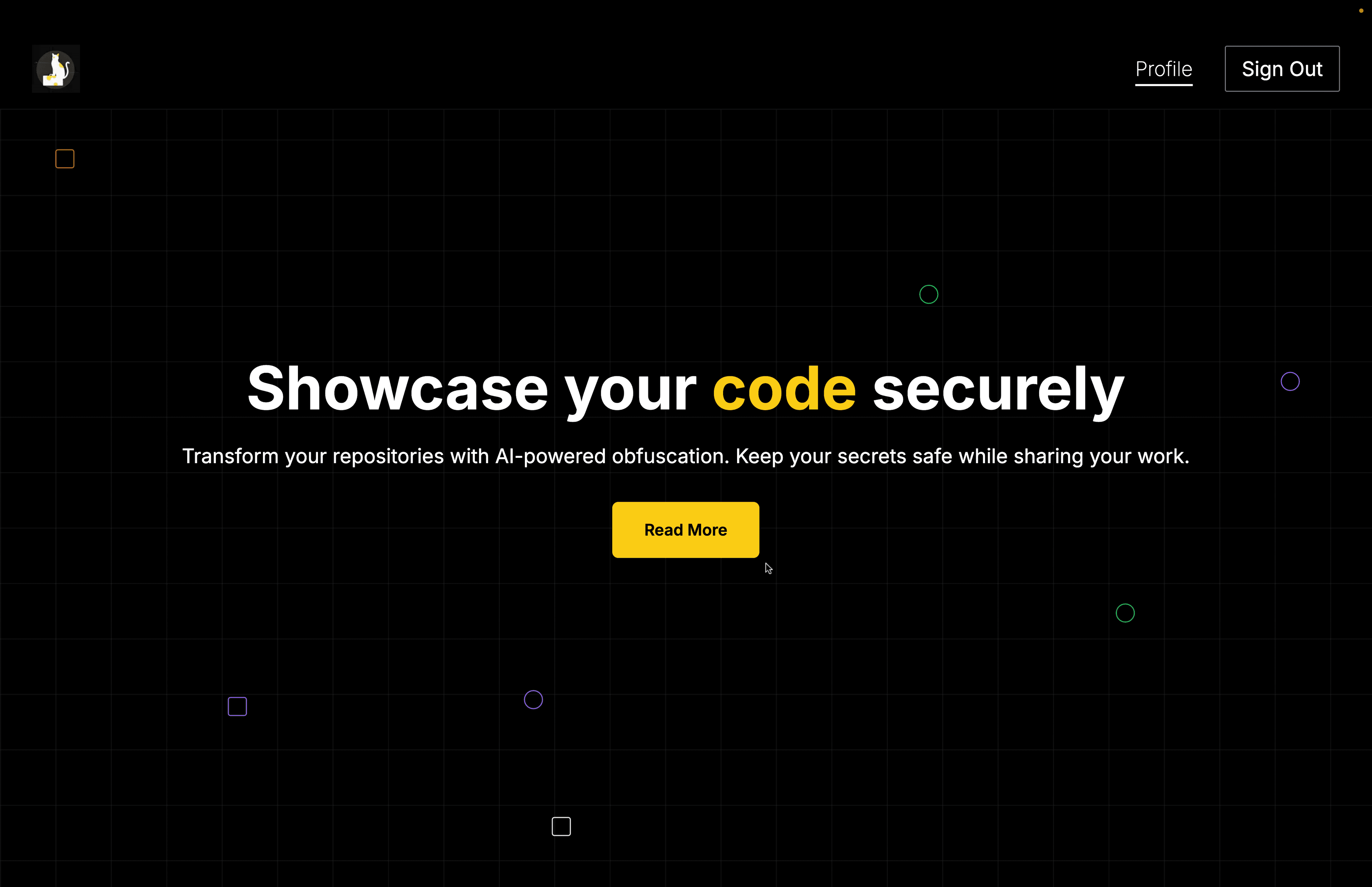
GitCase is an innovative platform designed for developers to securely showcase their code. It leverages AI-powered transformations to adapt and protect sensitive parts of your code, ensuring that intellectual property remains confidential while still allowing potential employers or clients to review your work. The tool supports importing GitHub repositories, enabling users to select specific files for transformation. GitCase operates on a flexible, usage-based pricing model, meaning you only pay for the credits you use, with no subscriptions required. It also offers complimentary credits to new users to explore its features, making it an accessible solution for building a secure developer portfolio.

Oh One Pro
Oh One Pro is a free macOS utility designed to bridge the gap between document analysis and advanced ChatGPT models like o1-pro and o3-mini. Since these OpenAI models don't natively support direct document uploads, Oh One Pro converts PDFs, source code, and other files into XML or image formats. Users can simply drag and drop files into the app, then copy the converted content as text or images to paste directly into the ChatGPT application. This native Mac app is optimized for Apple M1/M2 performance, offers a familiar UI, and operates entirely locally on the device, ensuring user privacy by not storing or transferring documents. It's a straightforward solution for leveraging powerful AI for document understanding.
BoWatt GmbH
BoWatt GmbH provides an AI-powered Requirements and System Engineering Platform designed for the manufacturing industry. The core product, BoReq, leverages artificial intelligence to streamline and accelerate the requirements analysis process. This enables technical sales teams to evaluate customer requirements more quickly and with greater accuracy, reducing manual workload and improving collaboration. The platform is built with enterprise-grade security, is GDPR-compliant, and offers flexible hosting options. It supports various manufacturing sectors including industrial automation, plant manufacturing, and machinery for automotive, pharma, and aerospace. BoWatt aims to build the next era of intelligent Requirements Management software, emphasizing ease of use and cutting-edge AI.
TopDeepLearning
TopDeepLearning is a comprehensive, curated list of popular GitHub projects focused on deep learning, organized and ranked by their star count. This resource serves as an excellent starting point for developers, researchers, and enthusiasts looking to explore trending tools and libraries in the deep learning ecosystem. The list includes prominent frameworks such as TensorFlow, Keras, OpenCV, and PyTorch, alongside specialized projects for tasks like facial recognition, natural language processing, and deepfake generation. It's particularly useful for identifying popular and actively maintained projects, offering insights into the current landscape of deep learning development. The repository is regularly updated, ensuring relevance and providing a valuable reference for anyone seeking inspiration or specific libraries for their deep learning applications.
vibe-coding-prompt-template
vibe-coding-prompt-template offers a structured AI workflow for rapidly developing Minimum Viable Products (MVPs). It provides templates and a five-stage process, starting from idea validation and deep research, moving through Product Requirements Document (PRD) and Technical Design creation, to agent-assisted code generation. The workflow is designed to be used with AI IDEs like Cursor or VS Code with Copilot, enabling users to leverage large language models for tasks such as market analysis, stack selection, and iterative code building. It emphasizes upfront thinking and clean context handoffs to AI tools, aiming to streamline the development process for shipping projects efficiently.
Vectice
Vectice is a comprehensive platform designed to streamline the documentation, governance, and collaborative review of AI/ML models. It automatically builds robust AI/ML documentation continuously from various environments, helping to accelerate development and validation while minimizing financial and reputational risks. The platform ensures audit readiness by pinpointing every decision in the AI model lifecycle, creating evidence that meets standards and regulations, and reproducing AI models through lineage. Vectice integrates seamlessly with existing tools and frameworks, offering features like a Documentation Copilot for automated draft creation, a Flex Connector for tech stack integration, and Project Governance for compliance and oversight. It aims to reduce documentation time by 90% and accelerate time-to-production by 25%.
tensorflow-tutorial
tensorflow-tutorial is an open-source GitHub repository offering a comprehensive collection of tutorials for TensorFlow and deep learning. It covers fundamental concepts from machine learning introductions and basic operations to advanced topics like convolutional neural networks, recurrent neural networks (LSTM), autoencoders, and deep reinforcement learning. The tutorials include practical examples for various applications such as computer vision (e.g., image classification with VGG, InceptionV3), natural language processing (e.g., word embedding, text generation), and adversarial learning (e.g., DCGAN, CycleGAN). It also provides guidance on utilities like model saving/restoring, Tensorboard visualization, and multi-GPU operations, making it a valuable resource for both beginners and experienced practitioners in the field.
tensorflow-without-a-phd
tensorflow-without-a-phd is an open-source educational resource designed as a crash course for software developers aspiring to become machine learning practitioners. The repository features a series of six episodes that delve into various aspects of TensorFlow and deep learning, including neural weights and biases, activation functions, supervised learning, and gradient descent. It covers practical topics like efficient training techniques, batch normalization, recurrent neural networks (RNNs), and convolutional neural networks (ConvNets). The resource also explores advanced concepts such as word embeddings, attention mechanisms, and reinforcement learning, with code samples from Google Cloud NEXT sessions. It aims to make complex machine learning concepts accessible without requiring a PhD, providing theoretical concepts, engineering tips, and best practices.
nlp_overview
nlp_overview is an open-source project dedicated to providing an up-to-date learning resource on modern deep learning techniques in natural language processing (NLP). It delves into the theoretical foundations and implementation specifics of deep learning models such as recurrent neural networks (RNNs), convolutional neural networks (CNNs), and reinforcement learning. The resource covers a wide array of NLP tasks and applications, including machine translation, question answering, and dialogue systems, and summarizes state-of-the-art results. The project aims to be a collaborative and open resource, guiding researchers and enthusiasts through emerging concepts, benchmark datasets, and code releases in the NLP field.