
Coding & Development
Browsing page 172 of AI tools for Coding & Development. Sorted by confidence score — our independent quality rating.

emacs-copilot
emacs-copilot is an open-source AI code completion tool designed for Emacs users, facilitating pair programming with a locally running large language model (LLM). It generates code completions directly within Emacs buffers, streaming tokens without delay, and allows users to interrupt the LLM at any time. The tool is language-agnostic, determining the programming language by file extension. It supports various LLMs like WizardCoder and Phi-2, with recommendations based on hardware capabilities. A key feature is its ability to remember local editing history on a file-by-file basis, allowing the LLM to recall previous code written in the same session. It also offers control over the LLM's context, enabling users to delete history and memory when code is removed from the buffer. The tool emphasizes generating concise code implementations, avoiding verbose explanations or test code.
ERNIE
ERNIE is an official repository for ERNIE 4.5 and ERNIEKit, an industrial-grade development toolkit based on PaddlePaddle. It offers comprehensive support for developing with the latest ERNIE models, including high-performance pre-training, supervised fine-tuning (SFT), Direct Preference Optimization (DPO), and parameter-efficient fine-tuning (LoRA). The toolkit facilitates resource-efficient training and inference workflows, with multi-hardware compatibility. ERNIE 4.5 models are a family of large-scale multimodal models, including Mixture-of-Experts (MoE) and dense models, optimized for text and multimodal benchmarks. It also includes FastDeploy for high-performance inference and deployment of LLMs and VLMs.
The LLM Data Company
The LLM Data Company specializes in training frontier models for critical domains, with a current emphasis on medical applications. Their approach addresses the limitations of generalist models by developing specific intelligence for areas where ambiguity, resistance to sycophancy, and robust verification are paramount. They are currently developing the Kos series of medical models, with Kos-1 Lite achieving SOTA (State-Of-The-Art) performance on HealthBench Hard. The company focuses on post-training curricula to ensure models handle complex, sensitive data effectively, distinguishing itself from models optimized for coding or general tool-use.

The Uncommon Business
The Uncommon Business offers a unique approach to scaling businesses, emphasizing strategy and AI integration over traditional hustle. It provides frameworks and training to help founders and leaders develop an "AI-first mindset," build custom AI solutions, and scale these solutions across their organizations. The platform aims to empower teams to solve problems independently, automate workflows, and leverage AI for amplified connection and growth. Offerings include the SuperHuman Work AI Productivity System for self-study and the Automate To Accelerate 12-week signature experience, designed to revolutionize business operations through AI.
Activepieces
Activepieces is an open-source automation platform designed to empower organizations to build a self-driven AI culture. It allows IT departments to deploy automation infrastructure with enterprise-grade control and security, while enabling teams across HR, finance, marketing, and sales to adopt AI agents. The platform offers a no-code workflow builder, making it accessible for non-technical users to create intelligent agents and automate tasks. Key features include an AI Adoption Stack, AI Agents, Control & Governance, and flexible deployment options (cloud or self-host). Activepieces aims to provide a cost-effective alternative to traditional automation tools like Zapier and Make, offering predictable pricing and extensive integrations.
Github Copilot
GitHub Copilot is an AI-powered coding assistant that integrates directly into your development environment, offering real-time suggestions for code lines and entire functions. It supports leading IDEs like Visual Studio Code, JetBrains, and Neovim, enhancing developer productivity by automating boilerplate and mundane coding tasks. Copilot is trained on a vast dataset of public code, allowing it to adapt to various languages and coding styles. It also offers chat functionality within the IDE and GitHub.com, providing explanations and answers to documentation. With different plans available, including options for individuals and enterprises, GitHub Copilot aims to elevate the developer workflow, leading to increased satisfaction and faster software delivery.
fragments
fragments is an open-source Next.js template designed for developers to build applications that are fully generated by AI. It is built on Next.js 14, utilizing the App Router and Server Actions, along with shadcn/ui and TailwindCSS for a modern and responsive interface. A key feature is its integration with the E2B SDK, which enables secure execution of AI-generated code within a sandbox environment. The template supports streaming in the UI and allows for the installation and use of any package from npm or pip. It offers support for various stacks like Python interpreter, Next.js, Vue.js, Streamlit, and Gradio, and integrates with multiple LLM providers including OpenAI, Anthropic, Google AI, Mistral, Groq, Fireworks, Together AI, and Ollama. Additionally, it integrates with Morph Apply for token-efficient and accurate code editing.
Formi
Formi is an AgentOps platform designed for enterprises to deploy and manage agentic AI workflows. Unlike tools that merely automate text responses, Formi focuses on automating execution and achieving specific outcomes for teams. The platform supports advanced features such as persistent memory, allowing AI agents to retain information across interactions, and reinforcement-based optimization, which continuously improves agent performance. It also offers multi-modal orchestration, enabling agents to handle diverse data types and interact with various systems. Formi aims to streamline complex operational tasks by leveraging intelligent AI agents, making it a powerful solution for businesses looking to enhance efficiency and automate sophisticated processes.
FireRedTTS
FireRedTTS is an open-sourced, LLM-empowered foundation Text-to-Speech (TTS) system designed for generative speech applications. It provides tools for developing and researching advanced TTS technologies, including an upgraded streamable foundation TTS system (FireRedTTS-1S). Key features include acoustic LLM and flow-matching decoders, enabling high-quality speech synthesis. The system also incorporates zero-shot voice cloning functionality, intended strictly for academic research purposes. Developers can clone the repository, set up a Conda environment, and install necessary dependencies to utilize the system. Pre-trained checkpoints and inference code are available, making it a robust platform for speech technology innovation.
gateway
Gateway is an open-source AI Gateway designed for fast, reliable, and secure routing to over 1600 language, vision, audio, and image models. It offers a lightweight, enterprise-ready solution that integrates with any language model in under 2 minutes, boasting blazing fast latency (<1ms) and a tiny footprint (122kb). The tool is battle-tested, having processed over 10 billion tokens daily, and provides enterprise-grade security, scalability, and custom deployments. Key functionalities include automatic retries and fallbacks to prevent downtimes, load balancing for high availability, and conditional routing for scaling AI applications. It also features robust guardrails to protect AI deployments, multi-modal capabilities, and integrations for agentic workflows. The enterprise version offers advanced capabilities like org management, governance, and enhanced security.
Cirrascale Cloud Services
Cirrascale Cloud Services offers a robust private AI cloud infrastructure designed to accelerate AI training and inference workloads. The platform supports a wide range of leading accelerators, including NVIDIA (B200, H200, H100, A100, RTX series), AMD Instinct, and Cerebras. Key benefits include high throughput, multi-tiered storage, professional and managed services to reduce DevOps overhead, and the absence of egress or ingress data transfer fees. With high-bandwidth, low-latency networking and tailored multi-GPU server solutions, Cirrascale aims to maximize the speed and efficiency of AI projects, remove bottlenecks, and optimize workflows for seamless, secure, and efficient private AI operations. They also offer specialized services like Private Gemini on Google Distributed Cloud and Google GPAR Services.
genkit
Genkit is an open-source framework designed for building full-stack AI-powered applications, actively used in production by Google's Firebase. It offers SDKs for JavaScript/TypeScript, Go, and Python, providing a consistent API across these languages. The framework simplifies AI development by offering a unified interface for integrating models from providers like Google, OpenAI, Anthropic, and Ollama. Developers can rapidly build and deploy chatbots, automations, and recommendation systems using streamlined APIs for multimodal content, structured outputs, tool calling, and agentic workflows. Genkit also includes a local CLI and Developer UI to accelerate development, allowing for prompt testing, debugging with execution traces, and production monitoring.
hazm
Hazm is a comprehensive Python library specifically designed for natural language processing (NLP) tasks on Persian text. It enables developers and researchers to perform a wide array of text processing functions, including normalizing text by correcting diacritics and ZWNJ, tokenizing sentences and words, and lemmatizing words to their base forms. The library also supports advanced NLP capabilities such as part-of-speech (POS) tagging, dependency parsing to identify syntactic relations, and creating both word and sentence embeddings. Hazm integrates with Hugging Face, allowing for automatic downloading and caching of pretrained models, making it a powerful tool for anyone working with Persian language data.
graphbit
GraphBit is the world’s first enterprise-grade Agentic AI framework, built on a Rust core with a Python wrapper for unmatched speed, security, and scalability. It enables reliable multi-agent workflows with minimal CPU and memory usage, making it production-ready for real-world enterprise environments. GraphBit is designed for developers who need deterministic, concurrent, and ultra-efficient AI execution without the overhead. It powers multi-agent workflows that run in parallel, persist memory across steps, self-recover from failures, and ensure 100% task reliability. Key features include tool selection, type safety, multi-LLM support, resource management, and observability.
GraphGen
GraphGen is a comprehensive framework designed to enhance supervised fine-tuning (SFT) for Large Language Models (LLMs) through knowledge-driven synthetic data generation. It operates by first constructing detailed knowledge graphs from source texts, then identifying knowledge gaps in LLMs using calibration error metrics. This process prioritizes the generation of high-value, long-tail knowledge QA pairs. GraphGen further incorporates multi-hop neighborhood sampling to capture complex relational information and employs style-controlled generation to diversify the resulting QA data. After data generation, users can leverage tools like LLaMA-Factory and xtuner for LLM fine-tuning. The framework supports various LLM inference servers, API servers, inference clients, and input/output data formats, including PDF, JSON, and CSV, as well as databases like UniProt and NCBI.

World Simulator AI
World Simulator AI offers an engaging platform for users to dive into immersive, AI-powered virtual worlds. Players experience stories in first person, with their choices directly influencing the narrative's progression. The tool supports a wide array of genres, from historical conquests like Alexander's Conquest and Pharaoh's World to fantasy adventures such as The Last Sorceress and Beast-Tamer’s Trial, and even horror scenarios like Teddy Bear Chase. Users can explore pre-made worlds or create their own, offering endless possibilities for interactive storytelling and roleplay. This platform is ideal for those who enjoy 'choose your own adventure' style narratives and want to experience dynamic, AI-driven stories.
gpt-cli
gpt-cli is a command-line interface (CLI) tool designed for seamless interaction with large language models (LLMs) such as ChatGPT, Claude, and Bard directly from your terminal. It offers extensive model customization, allowing users to override default settings for parameters like model, temperature, and top_p. The tool supports multiple providers including OpenAI, Anthropic, Google Gemini, and Cohere, as well as other OpenAI-compatible APIs and local models via LM Studio. Key features include usage tracking, keyboard shortcuts for conversation management, multi-line input, and markdown support. Users can define multiple assistants with predefined messages and flexible YAML configuration, enabling role-play scenarios and easy switching between different AI personalities.
gpt-oss
gpt-oss is a series of open-weight language models developed by OpenAI, designed for advanced reasoning, agentic tasks, and diverse developer use cases. It includes two primary models: gpt-oss-120b, suitable for production and general-purpose high-reasoning tasks on a single 80GB GPU, and gpt-oss-20b, optimized for lower latency and specialized local applications within 16GB of memory. Both models are trained with a harmony response format, which is crucial for their correct operation. Key features include a permissive Apache 2.0 license, configurable reasoning effort, full chain-of-thought access for debugging, fine-tunability, and agentic capabilities like function calling and web browsing. The models also utilize MXFP4 quantization for efficient memory usage.
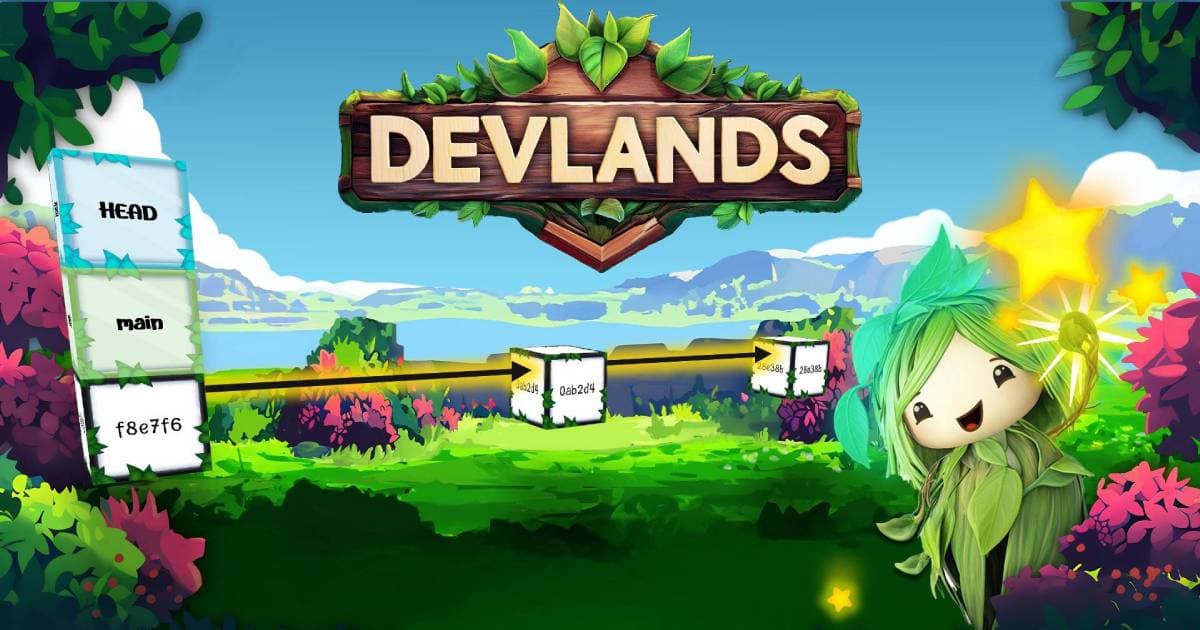
Devlands
Devlands offers a unique approach to learning Git by transforming abstract concepts into a tangible 3D world. Users can visualize Git commands in real-time within a voxel environment, making complex operations like 'detached HEAD' understandable. The platform includes 16 character-guided tutorial levels for mastering Git fundamentals and allows users to experiment safely with Git commands before applying them to actual projects. It's designed for a wide range of users, from new coders and students to experienced developers looking for a fresh perspective or a tool to mentor juniors. Devlands also features AI-powered code explanations and the ability to view, analyze, and edit code directly within the game.
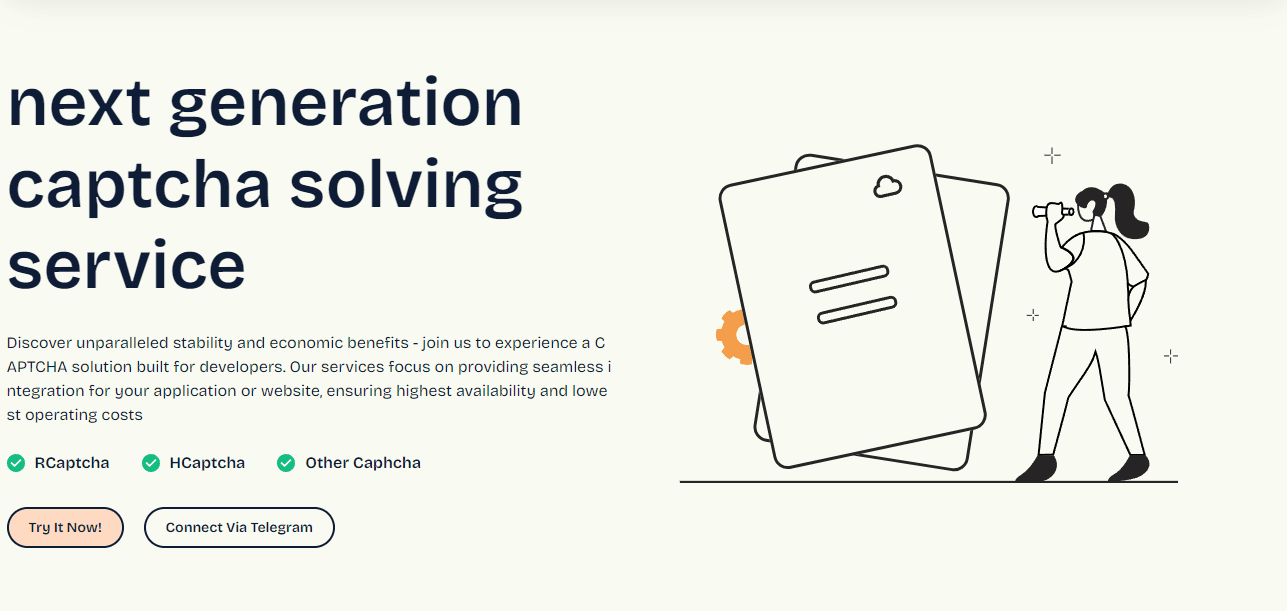
NextCaptcha
NextCaptcha is an AI-powered CAPTCHA solving service designed for developers, offering unparalleled stability and economic benefits. It provides seamless integration for applications and websites, including a Turnstile solving service for Cloudflare verification flows. The service supports various CAPTCHA types such as reCAPTCHA v2, reCAPTCHA v2 Enterprise, reCAPTCHA v3, reCAPTCHA Mobile, and Cloudflare Turnstile. NextCaptcha boasts a high success rate of 99% and an average solve speed of less than 3 seconds. It is built to handle complex scenarios where other similar services might fail, ensuring compatibility with over 99% of websites. The platform prioritizes user privacy by never retaining sensitive information and implements strict data security measures. NextCaptcha also offers competitive pricing and custom discount packages for high-volume users.
kan-gpt
kan-gpt is an open-source project offering a PyTorch implementation of Generative Pre-trained Transformers (GPTs) integrated with Kolmogorov-Arnold Networks (KANs) for language modeling. This tool provides a flexible framework for researchers and developers to explore and experiment with novel neural network architectures in the context of large language models. Key features include the ability to train and prompt models, with usage examples provided for easy adoption. It supports various datasets like Tiny Shakespeare, MNIST, and WebText, and allows for comparison between KAN-GPT and traditional MLP-GPT models. The project is actively developed with a clear roadmap for future enhancements, including integration with minGPT and pykan, improved dataset parsing, and comprehensive testing.
kandinsky-5
Kandinsky 5.0 is a comprehensive family of open-source diffusion models designed for advanced video and image generation. It enables users to create high-quality videos and images from textual prompts, image inputs, or a combination of both. The platform offers various models, including Kandinsky 5.0 Video Pro for HD video generation with controllable camera motion, Kandinsky 5.0 Video Lite as a lightweight alternative, and Kandinsky 5.0 Image Lite for high-resolution image generation. Additionally, it features Kandinsky 5.0 Image Editing for sophisticated image manipulation. The models support both English and Russian concepts, making it versatile for a broad user base. It is designed for researchers, enthusiasts, and developers looking to fine-tune and integrate advanced generative AI capabilities.
SageFlow
SageFlow is a no-code platform designed for building and deploying powerful AI agents using a drag-and-drop interface. Users can create custom agents with pre-built blocks, enabling rapid development and deployment. The platform also features an AI Marketplace where users can discover and rent expert-crafted AI agents for various tasks, or monetize their own creations. Key benefits include predictable income for creators, effortless scaling of agents, and flexible payout options. SageFlow aims to simplify agentic AI for everyone, offering solutions for tasks like SEO optimization and social media strategy, with future integrations planned for voice assistants, mobile devices, and a community platform.
iris.c
Iris.c is an inference pipeline designed for generating images from text prompts using open weights diffusion transformer models. It is implemented entirely in C, requiring zero external dependencies beyond the C standard library. The tool supports various model families, including FLUX.2 Klein (4B and 9B versions) and Z-Image-Turbo (6B), offering both distilled and base models for different quality and speed requirements. Key features include optional MPS and BLAS acceleration for significant speedups, memory-mapped weights for efficient memory usage, and integrated text encoders. It supports text-to-image, image-to-image transformations, multi-reference generation, and an interactive CLI mode, making it a versatile tool for developers and researchers working with image synthesis.