
Coding & Development
Browsing page 175 of AI tools for Coding & Development. Sorted by confidence score — our independent quality rating.

trackio
trackio is a lightweight, local-first, and free experiment tracking library built by Hugging Face, designed for both human users and AI agents. It stores logs in an SQLite database, supporting high throughput for parallel experiments, and allows for easy querying via a CLI interface. The library is API compatible with `wandb.init`, `wandb.log`, and `wandb.finish`, making it a drop-in replacement for existing logging code. It features a Gradio-inspired dashboard for viewing metrics, media, tables, and alerts, which can run locally or be deployed to Hugging Face Spaces. trackio is particularly useful for autonomous ML experiments, offering programmatic access and a Python API for run management, and supports embedding live dashboards on websites.
Deep Vision AI (acquired by DFW Capital)
Deep Vision AI, acquired by DFW Capital and now operating under EPIC iO, provides advanced AIoT solutions tailored for critical infrastructure. The platform, including DeepVision™ as a centralized VMS & Unified Command Center, offers real-time analytics, robust wireless connectivity, and AI-driven insights to significantly enhance safety, operational efficiency, and decision-making. It supports diverse applications such as physical site security with features like perimeter security and license plate recognition, and site safety with PPE validation and fire monitoring. The system also includes environmental and equipment monitoring, leveraging AI-powered sensor intelligence. EPIC iO's solutions are designed for rapid deployment and offer secure, fast, and unbreakable 4G/5G wireless connectivity, making them ideal for distributed, remote, and high-risk environments across numerous industries.

Grayscale AI (NATO DIANA)
Grayscale AI specializes in advanced AI solutions for fully autonomous drones and robots, leveraging neuromorphic computing and AI. The company's technology is designed to mimic human neural networks, offering significant advantages in efficiency, safety, and speed. By circumventing traditional computing architecture, Grayscale AI's systems can achieve up to 500x less energy consumption, enabling complex AI operations without requiring a cloud connection. Their VUES methodology allows for strategy-focused optimization and human-like precision in responding to unforeseen events, analyzing edge cases in less than 100 ms. This approach results in safer, greener, and faster AI solutions for mobility and transport/logistics.

ChatDB
ChatDB provides a comprehensive suite of data tools for viewing, converting, and editing a wide range of file formats, including CSV, JSON, Parquet, XML, YAML, SQL, and Markdown. Users can also work with images, audio, and video files. The platform emphasizes data privacy, with all processing occurring directly in the browser, meaning data never leaves the user's machine. Key functionalities include data formatting, conversion between formats (e.g., CSV to Parquet, JSON to Parquet), compression, and AI-powered querying for Parquet and CSV files. Additionally, ChatDB offers specialized tools like a Dataset README Generator, URL Encoder & Decoder, Regex Tester, and various image manipulation tools, making it a versatile solution for data professionals and developers.
Icybit
Icybit is a scientific research, experimental development, and innovation company with expertise in artificial intelligence, distributed computing, and big data analytics. They are dedicated to creating advanced solutions in these fields, leveraging their deep knowledge to drive innovation. While the website provides a high-level overview of their capabilities, it emphasizes their role as experts in cutting-edge technologies. Their focus on research and development suggests they provide sophisticated, data-driven solutions for various industries, likely catering to complex analytical needs and large-scale data processing challenges.
texar-pytorch
Texar-PyTorch is a comprehensive toolkit designed to support a wide array of machine learning tasks, with a particular focus on natural language processing and text generation. It uniquely integrates many of TensorFlow's most effective features into the PyTorch framework, providing highly usable and customizable modules that often surpass native PyTorch offerings. The toolkit offers a rich library of ML modules and functionalities, enabling both researchers and practitioners to rapidly prototype and experiment with various models and algorithms. Key features include consistent interfaces across Texar-PyTorch and Texar-TF, versatile support for data processing, model architectures, loss functions, and training algorithms, as well as full customizability at multiple abstraction levels. It also provides rich pre-trained models like BERT, GPT2, and XLNet, along with extensive documentation and examples.

Faros AI
Faros AI is a comprehensive platform designed to enhance engineering productivity and intelligence by integrating data from various engineering tools and AI agents. It provides a unified view of engineering operations, allowing organizations to measure AI's impact, optimize SDLC workflows, and improve developer experience. The platform helps turn engineering bottlenecks into breakthroughs by unifying organizational knowledge and providing context for AI agents to produce reliable code. Faros AI also enables predictable roadmap delivery through real-time progress views and forecasting, ensuring commitments are met and risks are mitigated. It offers solutions for CTOs, VPs, AI Officers, DevEx, Platform Engineering, and Technical Program Managers, focusing on driving strategic impact and accelerating AI transformation.
Vision-Agents
Vision-Agents is an open-source framework by Stream designed for building intelligent, low-latency voice and vision AI agents. It allows developers to integrate various models and video providers, leveraging Stream's edge network for ultra-low latency audio and video processing (under 30ms). The tool supports real-time video AI applications, combining models like YOLO and Roboflow with LLMs such as Gemini and OpenAI. Key features include pluggable processor pipelines for video, natural conversation flow with turn detection, tool calling, and integrations for phone calls via Twilio. It also offers RAG capabilities with TurboPuffer and Gemini FileSearch, memory across sessions, and production-ready features like HTTP server and Kubernetes deployment. SDKs are available for React, Android, iOS, Flutter, React Native, and Unity.
trlx
trlx is a distributed training framework specifically designed for fine-tuning large language models using Reinforcement Learning via Human Feedback (RLHF). It supports training with either a provided reward function or a reward-labeled dataset. The framework offers compatibility with Hugging Face models, enabling fine-tuning of causal and T5-based language models up to 20B parameters, such as facebook/opt-6.7b and EleutherAI/gpt-neox-20b. For models exceeding 20B parameters, trlx integrates with NVIDIA NeMo-backed trainers, leveraging efficient parallelism techniques for scalability. It currently implements Proximal Policy Optimization (PPO) and Implicit Language Q-Learning (ILQL) algorithms, with support for both Accelerate and NeMo trainers.

image to prompts
image to prompts is an AI-powered tool designed to convert images into a variety of actionable text formats. Users can upload an image, and the AI analyzes it to generate prompts, marketing plans, business ideas, copywriting, social media posts, or simply describe the photo in text. This tool is particularly useful for creators looking to monetize their visual content by selling generated prompts on platforms like promptbase.com. It offers both a basic plan with credits and a lifetime deal allowing users to integrate their own OpenAI API key for enhanced functionality. The platform emphasizes ease of use, with a quick 5-10 second processing time per image, and supports image uploads up to 20MB.
vibeproxy
VibeProxy is a native macOS menu bar application designed to integrate existing Claude Code, ChatGPT, Gemini, Kimi, Qwen, Antigravity, and Z.AI GLM subscriptions with powerful AI coding tools like Factory Droids. It operates without requiring API keys, instead managing OAuth authentication and token routing automatically. The app offers a clean, native SwiftUI interface, one-click server management, and multi-account support with automatic round-robin distribution and failover. A key feature is its Vercel AI Gateway integration for Claude requests, enhancing security and reducing account risks. VibeProxy also provides real-time status updates, automatic app updates, and supports the latest models including Gemini 3 Pro and GPT-5.1.
Vchitect-2.0
Vchitect-2.0 is an open-source parallel transformer designed to scale up video diffusion models, facilitating advanced video generation techniques. This tool allows users to generate videos with resolutions up to 720x480 at 8 frames per second. It also includes VEnhancer, which can upscale resolutions to 2K and interpolate frame rates to 24fps. The project provides inference code and checkpoints, making it accessible for researchers and developers. It supports custom configurations for denoising steps, guidance scale, and output video dimensions (width, height, frames). Vchitect-2.0 is released under an Apache-2.0 license, permitting both academic research and free commercial usage, with a strong disclaimer regarding responsible use and prohibited content generation.
tunix
Tunix (Tune-in-JAX) is a JAX-based library developed by Google, specifically engineered to optimize the post-training phase of Large Language Models (LLMs). It offers efficient and scalable support for various advanced training methodologies, including Supervised Fine-Tuning (SFT), Reinforcement Learning (RL), and Agentic RL. Leveraging the power of JAX, Tunix ensures accelerated computation and seamless integration with JAX-based modeling frameworks like Flax NNX. It also integrates with high-performance inference engines such as vLLM and SGLang-JAX for efficient rollout. Tunix is designed to work within the JAX training stack, utilizing foundational tools like Flax and Optax, and streamlining tuning workflows on XLA and JAX infrastructure. It supports a growing list of models including Gemma, Llama, and Qwen families.
vLLM
vLLM is a fast and easy-to-use library designed for LLM inference and serving, originating from the Sky Computing Lab at UC Berkeley. It boasts state-of-the-art serving throughput and efficient memory management through PagedAttention. Key features include continuous batching, chunked prefill, prefix caching, and fast model execution with CUDA/HIP graphs. vLLM supports various quantization methods like FP8 and INT4, optimized attention kernels such as FlashAttention, and speculative decoding. It offers seamless integration with Hugging Face models, high-throughput serving with diverse decoding algorithms, and distributed inference capabilities. The tool also provides an OpenAI-compatible API server, multi-LoRA support, and broad hardware compatibility, including NVIDIA, AMD, and x86/ARM/PowerPC CPUs, along with plugins for TPUs and other accelerators. It supports over 200 model architectures, including decoder-only, Mixture-of-Expert, hybrid attention, multi-modal, embedding, and reward models.
LMCache
LMCache is an open-source library designed to accelerate Large Language Model (LLM) performance by acting as a high-speed Key-Value (KV) cache layer. It significantly reduces Time To First Token (TTFT) and boosts throughput, particularly beneficial in scenarios involving long contexts. LMCache achieves this by storing and reusing KV caches of texts across various storage tiers like GPU, CPU, Disk, and even S3, utilizing advanced acceleration techniques such as zero CPU copy and GDS. It integrates seamlessly with popular LLM serving engines like vLLM and SGLang, offering features like high-performance CPU KVCache offloading and disaggregated prefill. This allows developers to achieve substantial delay savings and GPU cycle reductions in diverse LLM use cases, including multi-round QA and RAG.
uptrain
UpTrain is an open-source unified platform designed to evaluate and improve Generative AI applications. It offers over 20 preconfigured evaluations covering language, code, and embedding use cases, helping developers assess aspects like response completeness, factual accuracy, and context conciseness. The platform includes a web-based dashboard that runs locally, ensuring data privacy by keeping evaluations on your system. UpTrain also performs root cause analysis on failure cases, providing insights to resolve issues. It supports various LLM providers and embedding models, allowing for extensive customization of evaluations and the creation of custom evaluators. Developers can integrate UpTrain evaluations programmatically using its Python package.
WordLlama
WordLlama is a fast, lightweight NLP toolkit designed for various tasks including fuzzy deduplication, similarity computation, ranking, clustering, and semantic text splitting. It operates with minimal inference-time dependencies and is optimized for CPU hardware, making it suitable for deployment in resource-constrained environments. The tool recycles components from large language models (LLMs) to create efficient and compact word representations, improving on MTEB benchmarks over traditional word models while being substantially smaller in size. Key features include Matryoshka Representations for flexible embedding dimensions, low resource requirements, and Numpy-only inference for easy deployment.
X-VLA
X-VLA is the official implementation of "Soft-Prompted Transformer as Scalable Cross-Embodiment Vision-Language-Action Model," accepted to ICLR 2026. This open-source project introduces a soft prompt mechanism using embodiment-specific learnable embeddings to guide a unified Transformer backbone. This approach facilitates effective multi-domain policy learning across heterogeneous large-scale robot datasets. The resulting X-VLA-0.9B architecture demonstrates state-of-the-art generalization across six simulation platforms and three real-world robots, outperforming previous VLA methods in dexterity, adaptability, and efficiency. It supports a Server–Client architecture for distributed inference and offers various pre-trained models fine-tuned for specific robotic embodiments and benchmarks like AgiBot World Challenge, CALVIN, Google Robot, and LIBERO.
WindowsAgentArena
WindowsAgentArena (WAA) is a scalable Windows AI agent platform designed for testing and benchmarking multi-modal, desktop AI agents. It provides researchers and developers with a reproducible and realistic Windows OS environment, enabling the testing of agentic AI workflows across a diverse range of tasks. WAA supports the deployment of agents at scale using Azure ML cloud infrastructure, allowing for parallel execution of multiple agents and delivering quick benchmark results for hundreds of tasks in minutes. The platform includes features like a new difficulty mode for tasks, the Navi agent with Omniparser, and the open-sourced Omniparser screen understanding model. Users can deploy locally using Docker and WSL 2, or leverage Azure for parallel benchmarking.
WizardLM
WizardLM is a suite of large language models (LLMs) built upon the Evol-Instruct method, designed to enhance their ability to follow complex instructions. This project includes several specialized models: WizardLM focuses on general instruction following, WizardCoder excels in code generation, and WizardMath is optimized for mathematical reasoning. The models demonstrate strong performance against established benchmarks and even surpass some closed-source alternatives like ChatGPT 3.5 and Gemini Pro in specific tasks. WizardLM provides various model sizes, from 7B to 70B parameters, with different licensing options. It is a valuable resource for researchers and developers looking to leverage advanced open-source LLMs for a range of applications.

Noteworthy AI
Noteworthy AI provides an intelligence platform for the AI era, utilizing AI-powered smart cameras mounted on existing fleet vehicles to automatically identify pole defects, inventory components, and more. This solution, Noteworthy Inspect, helps electric utilities evaluate the condition of the distribution grid at-scale by collecting data passively during routine operations. The platform monitors, processes, and notifies users of equipment defects in real-time, offering an intuitive web-based UI for custom annotations and asset control. It significantly increases visibility into assets, reduces operating costs by up to 75%, and improves grid reliability, resiliency, and safety through proactive prevention. Key applications include asset inventory, asset inspection, lighting audits, storm intelligence, 3rd party/joint use management, and vegetation condition assessment.
Keywords AI (YC W24)
Respan, formerly Keywords AI, is an LLM engineering platform designed to streamline the development and deployment of reliable AI applications. It offers a comprehensive suite of features including LLM observability, automated evaluations (evals), prompt optimization, and a unified LLM gateway. The platform allows developers to trace, log, and evaluate agent behavior, identify failures, and understand the impact of prompt or model changes. Respan supports over 500 models and integrates with popular frameworks like OpenAI, Anthropic, LangChain, and LlamaIndex, enabling teams to monitor, debug, and improve their AI systems efficiently. It is built to add observability without becoming a performance bottleneck, making it suitable for production use.
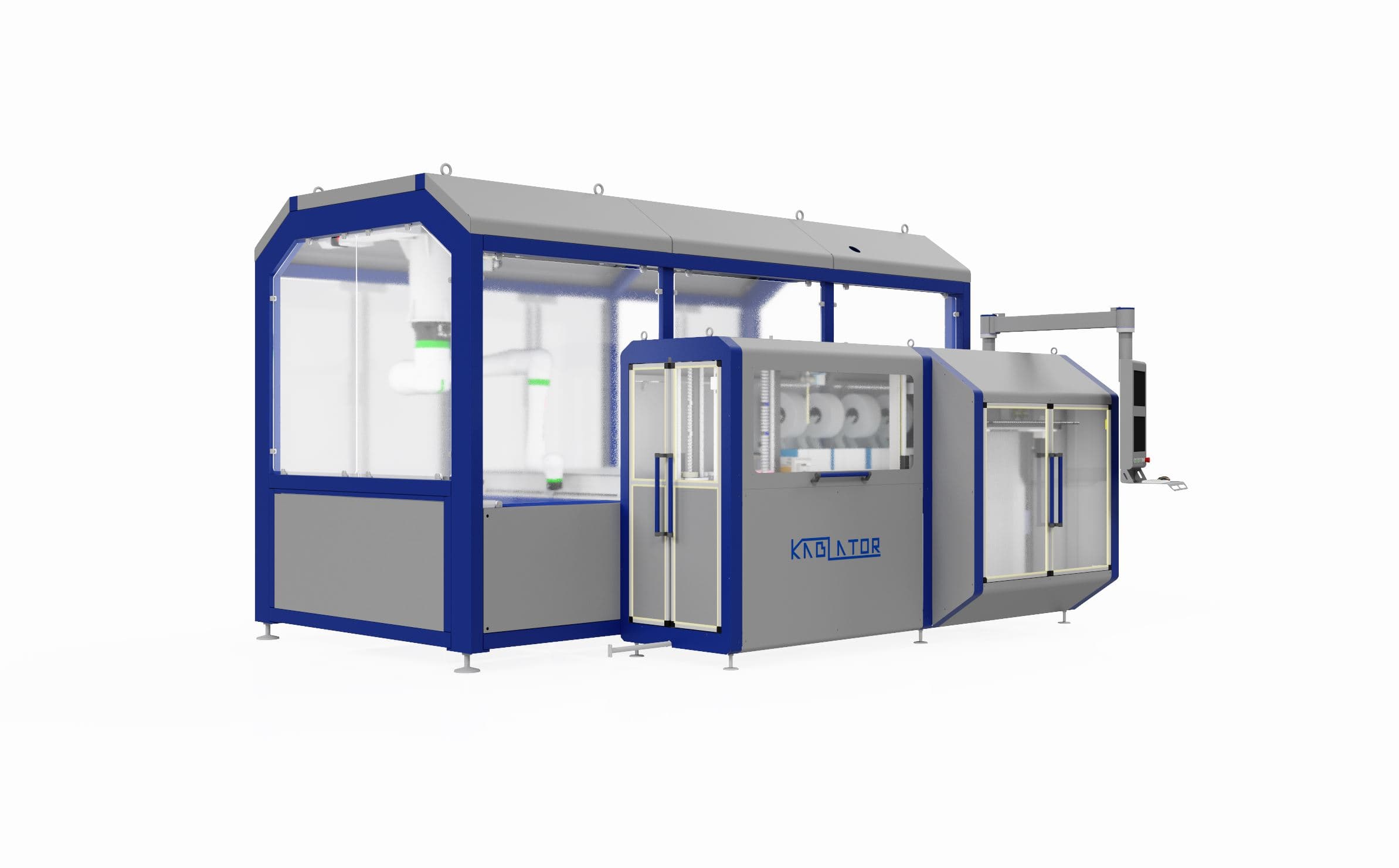
Kablator
Kablator specializes in providing automated solutions for industrial processes, focusing on automated wiring, artificial vision, and robotics. The company designs and develops custom machines and robotic systems to enhance production efficiency and quality control. Utilizing deep learning for its KabVision artificial vision systems, Kablator offers advanced solutions for various industrial sectors including manufacturing, electrical panels, food, packaging, and agro-food. Based in Italy, Kablator aims to improve and empower production processes through state-of-the-art systems, machinery, and solutions, helping businesses become more competitive in the global market and elevate the value of human capital within the industrial world.
PVML
PVML offers secure, AI-ready virtual databases designed for enterprise IT, allowing organizations to operationalize GenAI on their existing infrastructure. The platform eliminates the need for data movement or duplication, providing unlimited virtual databases with built-in security and AI readiness. Key features include infrastructure-layer security with dynamic user-level permissions, deterministic guardrails to prevent unauthorized data access, and resource cost control to manage unpredictable loads. PVML also provides unified visibility and auditability for consistent governance and operational simplicity. It connects live to any database, applies differential privacy security, and auto-generates AI-ready protocols for integration with tools like ChatGPT and Claude.