
Coding & Development
Browsing page 355 of AI tools for Coding & Development. Sorted by confidence score — our independent quality rating.

mlrun
MLRun is an open-source MLOps platform designed to streamline the entire lifecycle of continuous machine learning applications. It seamlessly integrates into existing development and CI/CD environments, automating the delivery of production data, ML pipelines, and online applications. The platform significantly reduces engineering efforts, accelerates time to production, and optimizes computation resources. MLRun supports various gen AI tasks, including data management, development, deployment, and live operations, with features like data lineage, versioning, and real-time serving. For MLOps, it offers project management, CI/CD automation, data ingestion and processing with a Feature Store, scalable model training, and robust model monitoring capabilities to detect drift and anomalies.
Senna
Senna is an open-source project designed to integrate large vision-language models (LVLMs) with end-to-end autonomous driving systems. Developed by researchers from Huazhong University of Science and Technology and Horizon Robotics, Senna aims to enhance planning safety, robustness, and generalization in autonomous vehicles. The project provides comprehensive resources including code, model weights for Senna-VLM, and scripts for training and evaluation. It supports data preparation by generating QA data using models like LLaVA-v1.6-34b for scene descriptions and planning explanations. Senna offers both full-parameter and LoRA fine-tuning options, with full-parameter fine-tuning recommended for optimal performance. Researchers and developers can utilize Senna to build and evaluate advanced AI-driven vehicle control systems, demonstrating strong cross-scenario generalization and transferability.
Mapji
Mapji is a no-code interactive map builder that empowers users to create and share dynamic maps without any programming knowledge. It provides 8 distinct map types, including Draw, Cluster, Heatmap, Choropleth, Isochrone, Store Locator, Time Slider, and Story Map, catering to diverse visualization needs. Users can publish their maps to custom subdomains or connect their own domains for a branded experience. The platform supports various data import formats like GeoJSON, KML, CSV, and Excel, and offers advanced features such as 3D terrain, building extrusions, and full UI customization. Mapji is ideal for professionals in real estate, urban planning, logistics, research, and journalism, enabling them to visualize data and tell compelling stories through interactive maps.

magier
Magier is a creative subscription service offering graphic design and Webflow development. Trusted by over 100 brands, it provides fast, reliable, and scalable design solutions with a 48-hour delivery time for most tasks. Users can submit unlimited design requests, which are handled one at a time, with revisions and drafts delivered quickly. Magier caters to various clients and industries, including SaaS, Fintech, Ecommerce, and Agencies, offering services from brand design and ad creatives to Webflow migrations and maintenance. The service also supports one-time projects for larger needs like branding or web design, and allows multiple team members to collaborate.
sig-mlops
sig-mlops is a Special Interest Group (SIG) within the Continuous Delivery Foundation (CDF) dedicated to Machine Learning Operations (MLOps). This open-source initiative aims to foster collaboration and drive standardization within the MLOps community. The group focuses on sharing best practices, developing documentation, and providing resources for professionals involved in the deployment, monitoring, and management of machine learning models. It serves as a hub for discussions, knowledge exchange, and contributions to the evolving field of MLOps, helping to streamline processes and improve efficiency in AI/ML development workflows.
pyRiemann
pyRiemann is an open-source Python machine learning package designed for processing and classifying real or complex-valued multivariate data. It leverages the Riemannian geometry of symmetric or Hermitian positive definite matrices, offering a high-level interface that mimics the scikit-learn API. While generic for multivariate data analysis, it's specifically tailored for biosignals like EEG, MEG, or EMG in brain-computer interface (BCI) applications, including motor imagery, event-related potentials, and steady-state visually evoked potentials. It also supports multisource transfer learning and remote sensing applications, such as processing radar images. The package provides functionalities for estimating covariance matrices and classifying them, making it a powerful tool for researchers and developers in these fields. It can be easily integrated into scikit-learn pipelines for comprehensive data analysis workflows.

World Labs
World Labs is a spatial intelligence company focused on developing advanced AI models capable of perceiving, generating, reasoning, and interacting with the 3D world. Their primary product, Marble, allows users to create spatially consistent, high-fidelity, and persistent 3D environments from multimodal inputs like text, images, videos, or 360 panoramas. Users can precisely control 3D layouts, interactively edit specific elements, and expand or combine worlds to build larger, more immersive experiences. The platform supports versatile outputs, enabling downloads and exports in various 2D and 3D formats for seamless integration into existing workflows in fields such as art, film, gaming, AR/VR, robotics, and architecture.
SegFormer (ADE20k) in TensorFlow
SegFormer (ADE20k) in TensorFlow is an AI tool specifically designed for semantic image segmentation. Built with TensorFlow, it enables detailed image analysis and object recognition, making it suitable for tasks that require precise pixel-level classification. This tool is particularly useful for researchers and developers working in computer vision who need to accurately identify and delineate different objects or regions within an image. Its implementation within the TensorFlow framework ensures compatibility with a wide range of machine learning workflows and environments, facilitating integration into existing projects.
resources
resources is an open-source repository dedicated to curating and organizing Go-based data science resources. It serves as a central hub for developers and data scientists working with the Go programming language, offering a comprehensive collection of links to various community resources such as events, conferences, and blogs. Additionally, it provides an extensive list of tooling resources, including essential packages, libraries, and development tools specifically designed for data analysis, visualization, and machine learning tasks within the Go ecosystem. This makes it an invaluable asset for anyone looking to explore or deepen their work in data science using Go.
RealMirror
RealMirror is a comprehensive, open-source embodied AI VLA (Vision-Language-Action) platform designed to address fundamental challenges in humanoid robotics, such as high data acquisition costs, lack of standardized benchmarks, and the simulation-to-real-world gap. It offers an efficient, low-cost system for data collection, model training, and inference, allowing researchers to conduct VLA studies without needing a physical robot. The platform includes a dedicated VLA benchmark with multiple scenarios and extensive trajectories to facilitate model evolution and fair comparison. RealMirror also integrates generative models and 3D Gaussian Splatting for realistic environment and robot model reconstruction, enabling zero-shot Sim2Real transfer where models trained in simulation can perform tasks on real robots seamlessly. Recent updates include the Seed2Scale scheme for automatic large-scale upper limb trajectory generation and MirrorLimb with gesture teleoperation functionality.
MCP Blockly
MCP Blockly is an AI tool hosted on Hugging Face Spaces that enables users to develop and test AI projects using a visual block-coding interface. This platform simplifies the process of creating AI applications, particularly for MCP servers, by allowing users to drag and drop blocks to build their logic. Users can download their completed projects or generated code, providing flexibility for further development or deployment. The tool also offers examples like Weather API or Fact Checker projects to help new users get started quickly, making it accessible for those looking to explore AI development without extensive coding knowledge.
awesome-chatgpt-api
awesome-chatgpt-api is a comprehensive, curated list of applications and tools that leverage the new ChatGPT API. This resource is particularly valuable as it highlights tools that enable users to configure and use their own API keys, facilitating free and on-demand access to their personal quota. Beyond just a list of tools, it includes a dedicated development section, offering a collection of projects and articles designed to assist developers in building better applications. The list covers a wide range of categories, including plugins, extensions, web apps, desktop and mobile applications, and command-line interface (CLI) tools, making it a versatile resource for anyone looking to integrate or develop with the ChatGPT API.
DeepSeek-Prover-V2
DeepSeek-Prover-V2 is an advanced open-source large language model specifically engineered for formal theorem proving within the Lean 4 environment. It employs a sophisticated recursive theorem proving pipeline, initialized with data from DeepSeek-V3, to decompose complex mathematical problems into manageable subgoals. The model then utilizes reinforcement learning to enhance its ability to bridge informal reasoning with formal proof construction. DeepSeek-Prover-V2 is available in two model sizes, 7B and 671B parameters, with the larger model built upon DeepSeek-V3-Base and the smaller on DeepSeek-Prover-V1.5-Base, featuring an extended context length of up to 32K tokens. It has demonstrated state-of-the-art performance, achieving an 88.9% pass ratio on the MiniF2F-test and solving numerous problems from PutnamBench. The project also introduces ProverBench, a benchmark dataset comprising 325 formalized problems from AIME competitions and textbook examples, designed for comprehensive evaluation across high-school and undergraduate-level mathematics.
Visometry GmbH
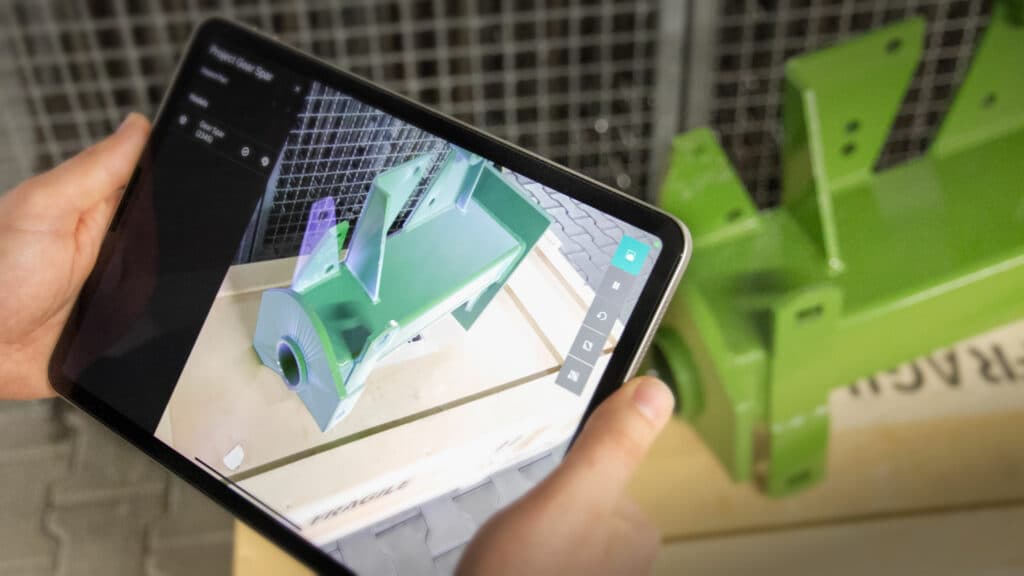
Visometry GmbH specializes in industrial augmented reality (AR) solutions, providing advanced computer vision technologies for manufacturing. Their flagship products include VisionLib, an object tracking SDK for enterprise AR applications, and Twyn, a software platform designed for visual quality control using AR and digital twins. These solutions help businesses achieve digital transformation, optimize processes, and reduce costs by enabling precise augmentation of physical objects with digital information. Visometry's technology is globally recognized, assisting companies in enhancing efficiency and accuracy in industrial settings.
deepwiki-rs
Litho (deepwiki-rs) is an AI-powered documentation generation engine that transforms raw code into beautifully structured, professional architecture documentation. It automatically analyzes your source code to generate comprehensive documentation in the C4 model format, including context, container, component, and code diagrams. This eliminates the burden of manual documentation, ensuring that your architectural information remains perfectly in sync with code changes. Litho supports multiple programming languages such as Rust, Python, Java, Go, C#, and JavaScript, and can integrate with CI/CD pipelines for automated documentation generation on every commit. Its core capabilities include AI-driven architecture documentation, automatic C4 model diagram creation, intelligent extraction of code comments and relationships, and a customizable template system. Advanced features extend to external knowledge integration, database schema documentation with ERD diagrams, Git history analysis, and interactive documentation with embedded diagrams.
executorch
ExecuTorch is PyTorch's unified solution for deploying AI models directly on-device, spanning from smartphones to microcontrollers. It's engineered for privacy, performance, and portability, powering Meta's on-device AI across various products. The tool allows developers to deploy LLMs, vision, speech, and multimodal models using familiar PyTorch APIs, accelerating research to production without manual C++ rewrites, format conversions, or vendor lock-in. Key features include native PyTorch export, a production-proven architecture, a minimal 50KB base runtime footprint, and support for over 12 hardware backends like Apple, Qualcomm, and ARM. It uses ahead-of-time (AOT) compilation to optimize models for edge deployment, offering a seamless workflow from export to execution.
skylark
Skylark Editor is a high-performance, customizable text and hex editor written in C, designed for speed and efficiency, boasting startup times under a second. It includes a built-in file manager and SFTP remote manager, making file handling and remote access seamless. The editor supports binary/hex viewing for files of unlimited size and offers encryption/decryption for common key algorithms. It features Perl Compatible Regular Expression support, AI-Powered Chat Integration, and syntax highlighting for numerous languages. Skylark also supports SumatraPDF and clang-format plugins, code snippets, and a dark mode for enhanced user experience. With embedded Database-client, Redis-client, and Lua-engine, users can directly run Lua scripts and SQL files, making it a versatile tool for developers.
smartcore
smartcore is a comprehensive, fast, and ergonomic open-source library designed for machine learning and numerical computing in Rust. It enables developers to apply machine learning algorithms leveraging first principles, covering a broad range of methods including linear models, tree-based methods, ensembles, SVMs, neighbors, clustering, decomposition, and preprocessing. The library emphasizes production-friendly APIs, strong typing, and good defaults, while remaining flexible for research and experimentation. It features strong linear algebra traits with optional ndarray integration, WASM-first defaults for portability, and practical utilities for model selection, evaluation, and data access. smartcore is ideal for developers building AI applications in Rust who need robust and efficient ML capabilities.
audio-super-res
audio-super-res is an open-source project that implements an audio super-resolution model using neural networks. Based on research from NeurIPS 2019 and ICLR 2017, this Python-based tool allows users to enhance the quality of audio files by generating high-resolution versions from low-resolution inputs. It supports training models on datasets like VCTK for single or multi-speaker scenarios and provides scripts for data preparation and model evaluation. The tool is suitable for researchers and developers interested in audio upscaling, time series tasks, and exploring the effects of different low-pass filters on super-resolution performance.
equinox
Equinox is a comprehensive JAX library designed for building neural networks and performing scientific computing. It provides a PyTorch-like syntax for defining models, making it accessible for users familiar with that framework. Beyond neural networks, Equinox offers filtered APIs for transformations, useful PyTree manipulation routines, and advanced features like runtime errors. A key differentiator is that Equinox is not a restrictive framework; everything written within it remains compatible with core JAX and its broader ecosystem. This allows for seamless integration and flexibility in development. It's particularly useful for those coming from Flax or Haiku, offering more advanced features and a simpler model-building approach where models are treated as PyTrees.
faceID_beta
faceID_beta is an open-source project available on GitHub that provides an implementation of iPhone X's FaceID technology. It leverages face embeddings and siamese networks, processing RGBD images for facial recognition. The project is primarily presented as a Jupyter Notebook file, with an automatically generated Python file also available. This makes it particularly suitable for developers and researchers interested in understanding and experimenting with advanced facial recognition techniques. The repository includes details on the implementation and encourages users to explore the notebook version for a clearer understanding of the code's structure and functionality.
mergekit-config-generator
mergekit-config-generator is a Hugging Face Space designed to simplify the creation of YAML configuration files for mergekit. Users can interactively select various models, define specific layers, and set parameters to generate a custom configuration tailored to their needs. Once generated, the configuration can be easily copied for direct use within mergekit-gui. This tool is particularly useful for developers and machine learning practitioners who work with merging AI models, providing a straightforward interface to manage complex configurations without manual YAML editing. It streamlines the setup process for model merging experiments and deployments.
VECTOR Labs - From AI to Value
VECTOR Labs provides comprehensive AI consulting and development services, focusing on delivering measurable business outcomes. They offer expertise in AI advisory and innovation, next-gen AI solutions, AI customer experience, and internal & business efficiency. The company works with clients to assess their AI maturity and implement tailored AI services, including custom AI development. VECTOR Labs serves a diverse range of industries such as Healthcare, Pharma, Banking and Fintech, Manufacturing, Media and Publishing, and Education, providing specialized analytics models and solutions. Their approach emphasizes turning data into practical, working AI solutions quickly, helping businesses innovate and achieve their strategic goals.
MMORPG AI NPC MCP CLIENT SERVER
MMORPG AI NPC MCP CLIENT SERVER is a platform designed for developing and interacting with AI NPCs within multiplayer online role-playing games. This tool enables users to experience and engage with a game environment directly through their web browser, eliminating the need for downloads. It serves as a meeting place for humans, AI agents, and non-player characters, fostering dynamic interactions. The platform supports the creation of interactive game environments and multiplayer game servers, making it suitable for those looking to build or participate in browser-based MMORPGs with intelligent NPC behavior.