
Coding & Development
Browsing page 359 of AI tools for Coding & Development. Sorted by confidence score — our independent quality rating.

dlbook_notation
dlbook_notation offers a collection of LaTeX files specifically designed for the Deep Learning textbook's notation and style. This resource includes the core .tex file for the notation page, along with other essential components like `math_commands.tex`, `natbib.bst`, and `notation.bib`. The project aims to provide a consistent and professional presentation for academic work in deep learning. Users can leverage these files to maintain the same aesthetic and notational conventions as the widely recognized Deep Learning book, making it an invaluable asset for researchers, students, and educators in the field. All files are freely available, promoting open access and reusability.
UiMagic
UiMagic is an AI-powered full-stack app builder designed to streamline the creation of web applications. It enables users to build, edit, and deploy production-ready apps simply by providing text prompts, eliminating the need for traditional coding. The platform leverages AI to generate the necessary components, offering a no-code solution for rapid development. While specific features are noted as "coming soon," the core promise is to provide everything needed to build full-stack applications with AI, including capabilities for landing pages, SaaS apps, and portfolios. This tool aims to empower users to bring their web application ideas to life quickly and efficiently.
Black Forest Labs FLUX.1 Dev
Black Forest Labs FLUX.1 Dev is an AI tool designed for generating detailed images based on textual descriptions. Users can input their ideas as descriptive text, and the application will produce corresponding high-quality visual content. This tool is hosted on Hugging Face Spaces, indicating its accessibility within that platform's ecosystem. While the tool aims to provide robust image generation capabilities, the current live website indicates a runtime error, suggesting potential issues with model loading or availability. Despite this, its core functionality is centered around transforming text prompts into visual outputs, making it suitable for various creative and developmental tasks in AI art.

Normal Computing
Normal Computing specializes in AI-accelerated co-design for silicon engineering teams, offering solutions for both EDA (Electronic Design Automation) and ASICs (Application-Specific Integrated Circuits). Their Normal EDA platform helps structure chip representations, intelligently plan verification, and generate stimulus for simulations, continuously learning from team feedback to optimize engineering artifacts. For hardware, Normal ASICs explores physics-based designs that relax traditional computing assumptions, enabling stochastic, stateful, and asynchronous computing for orders-of-magnitude more efficient compute. The company aims to converge software and silicon physics, transforming hardware development and enabling ultra-efficient ASICs for various workloads. Founded by former Google Brain and Google X members, Normal Computing focuses on solving the scale, complexity, and energy demands of modern AI models.
HTTPie AI
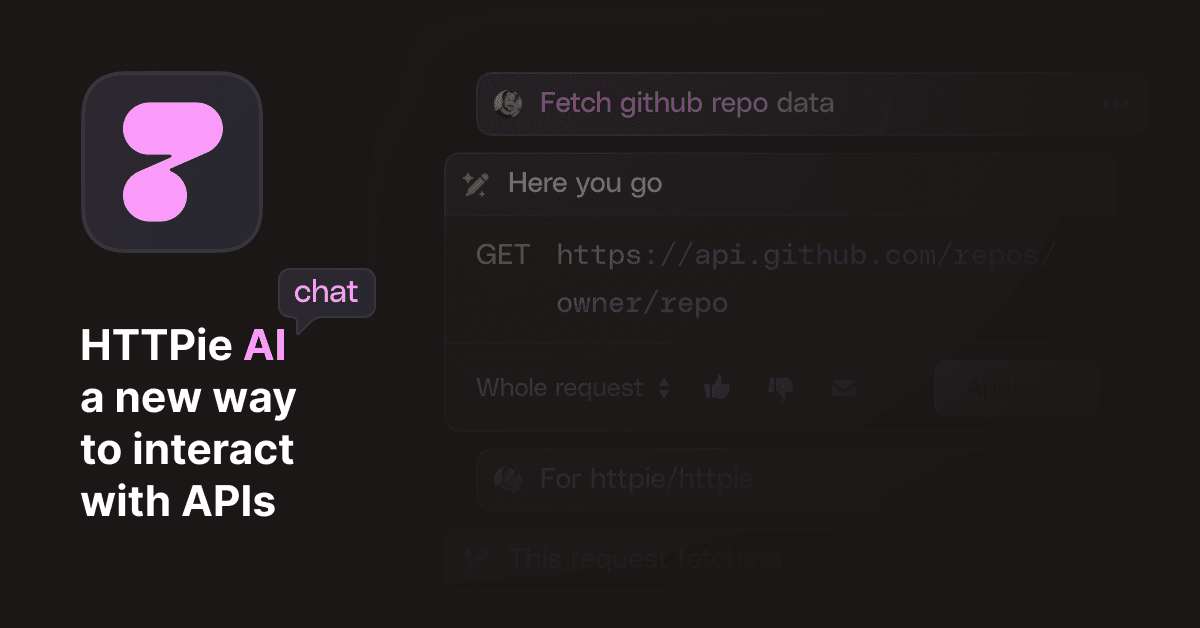
HTTPie AI is designed to make interacting with APIs simple and intuitive, particularly for developers building modern tools. The platform aims to streamline the API workflow, reducing complexity and enhancing productivity. While specific features of the current version are not detailed, the upcoming HTTPie AI 2.0 is announced to include a chat interface, suggesting a more conversational and user-friendly approach to API management and interaction. This evolution indicates a focus on leveraging AI to further abstract the technicalities of API usage, making it accessible to a broader range of technical users. The tool is positioned to assist in various stages of API interaction, from initial exploration to ongoing management.
stable-diffusion-webui-model-toolkit
stable-diffusion-webui-model-toolkit is a comprehensive toolkit designed for managing, editing, and creating models within the Stable Diffusion WebUI environment. It offers essential features such as cleaning and pruning models to reduce bloat, converting models to and from safetensors format, and extracting or replacing individual model components like VAE, UNET, and CLIP. The toolkit also assists in identifying and debugging model architectures, providing detailed reports on matched and rejected architectures. A unique metric system helps identify model weights, even for renamed components. This tool is invaluable for developers looking to optimize, customize, and troubleshoot their Stable Diffusion models.
Devon
Devon is an open-source AI pair programmer designed to enhance developer productivity through AI assistance. It supports multi-file editing, allowing developers to make changes across their codebase efficiently. Key features include codebase exploration, configuration file writing, test writing, and bug fixing. Devon also aids in architecture exploration and offers experimental local model support. It integrates with popular AI models like Anthropic, OpenAI, and Groq, with ongoing development for additional models such as Google Gemini 1.5 Pro. The tool provides both a main UI and a terminal UI, making it versatile for different developer preferences. Devon is community-driven, welcoming contributions to its core functionality, research, and testing, and aims to set new benchmarks in AI-powered software engineering.
pointnet.pytorch
pointnet.pytorch offers a PyTorch implementation of the PointNet deep learning model, specifically designed for 3D classification and segmentation using point sets. This open-source tool facilitates research and development in 3D data processing, providing a robust and tested framework compatible with PyTorch 1.0. It includes functionalities for downloading and preparing datasets, training classification and segmentation models, and visualizing results. The repository details performance metrics on datasets like ModelNet40 and ShapeNet, allowing users to compare against original implementations. It's a valuable resource for developers and researchers working with 3D point cloud data.
AI Questions Generator
AI Questions Generator, part of the OpExams suite, is designed to streamline the exam creation process for educators. This tool leverages artificial intelligence to generate diverse question types, including multiple-choice, true/false, fill-in-the-blanks, and open-ended questions. Teachers can input text or topics to quickly create questions, which can then be saved and used in both paper and online exams. Beyond question generation, OpExams offers comprehensive features for administering, grading, and analyzing exams, making it a valuable asset for modern classrooms. It aims to reduce the time and effort traditionally associated with exam design and assessment.
dataspan.ai
dataspan.ai offers a Visual Agentic AI platform designed for 24/7 real-time monitoring of production and packaging lines. It utilizes novel vision technology and low-touch Visual AI Agents to identify issues that traditional systems often miss. The platform enables expert-guided Root Cause Analysis (RCA), significantly reducing downtime and improving Overall Equipment Effectiveness (OEE). Shopfloor experts can define monitoring parameters using plain language, allowing the system to instantly create Visual Agents, backfill historical data, and refine accuracy. dataspan.ai aims to provide continuous vision without requiring new physical sensors, offering quick setup and high impact through fast root cause insights. It serves industries like automotive, medical devices, aerospace, and food & beverage, helping to prevent micro-stoppages and process drifts.

Raion
Raion is an exclusive private forum designed for the tech and business elite involved in building AI companies across the US, UK, and Europe. It offers reliable access to global compute and GPU capacity, addressing critical infrastructure needs for high-performance AI workloads. The platform connects members with decision-makers at hardware giants and cloud providers, facilitating strategic integration and global scaling. Raion emphasizes a rigorous selection process, admitting only well-capitalized enterprise companies and elite startups to ensure a community of proven visionaries. It supports ambitious plans for sustainable data centers and next-gen compute architectures, requiring deep expertise in areas like AI chip design, edge computing, and cybersecurity.
kaolin
Kaolin is a PyTorch library developed by NVIDIA GameWorks, designed to accelerate 3D deep learning research. It offers a comprehensive PyTorch API for handling diverse 3D representations, including meshes, point clouds, and voxel grids. The library features a growing collection of GPU-optimized operations such as modular differentiable rendering, efficient conversions between 3D formats, and advanced data loading capabilities. Key functionalities also include a differentiable camera API, lighting with spherical harmonics and Gaussians, and a powerful quadtree acceleration structure called Structured Point Clouds. Kaolin provides an interactive 3D visualizer for Jupyter notebooks and a convenient batched mesh container, making it a versatile tool for researchers and developers in 3D AI.
sqlchat
sqlchat is an innovative chat-based SQL client designed to simplify database interactions through natural language. This tool enables users to perform a wide range of SQL operations, including querying, modifying, adding, and deleting data, all within an intuitive chat interface. By leveraging natural language processing, sqlchat aims to make database management more accessible and efficient, moving away from traditional SQL client complexities. It's particularly useful for those who prefer a conversational approach to data manipulation, streamlining workflows and reducing the need for extensive SQL syntax knowledge.
deep-learning-model-convertor
deep-learning-model-convertor is an open-source project offering a comprehensive collection of tools for converting deep learning models across different frameworks. It acts as a central hub for various converters, including official and user-implemented solutions, supporting popular frameworks such as MXNet, Caffe, PyTorch, Keras, TensorFlow, and ONNX. The project aims to consolidate efforts from the open-source community to simplify the often complex process of model interoperability. While it doesn't provide a single universal converter, it curates and organizes existing solutions like MMdnn and specific framework-to-framework converters. This resource is invaluable for developers and researchers who need to port models between different deep learning environments, fostering collaboration and reducing compatibility hurdles.

BellaVista
BellaVista is a self-hosted booking platform designed for hosts, property managers, agencies, and developers. It allows users to build scalable, multilingual websites with a direct booking system, offering full ownership and control without platform lock-in or high commissions. The platform features a modular website architecture, native multi-language support for international SEO, and a powerful admin panel for managing properties, content, bookings, and SEO. BellaVista is white-label and developer-friendly, built with a clean and scalable database architecture, supporting multi-property, multi-site, and multi-language configurations. It emphasizes reliability, maintainable code, and long-term extensibility for various hospitality workflows and custom SaaS projects.
Gigasheet
Gigasheet is an AI-powered healthcare market intelligence platform designed to transform complex price transparency data into actionable insights for various stakeholders in the healthcare industry. It enables providers, payers, self-insured employers, and MedTech companies to analyze, pivot, and compare rates with the ease of a spreadsheet, even with massive datasets. The platform offers features like AI data analysis, MRF viewing, provider network mapping, and JSON to CSV conversion. Gigasheet helps users strengthen contract negotiations, support network development, control healthcare costs, and inform market access strategies by providing clear benchmarks, trends, and outliers derived from real-world reimbursement data. It ensures full access to original machine-readable files for complete transparency and integrates seamlessly with existing enterprise infrastructures.
W2NER
W2NER offers the source code for a novel approach to Unified Named Entity Recognition (NER), as presented in an AAAI 2022 paper. Unlike traditional methods that study flat, overlapped, and discontinuous NER individually, W2NER unifies these tasks by modeling them as word-word relation classification. The architecture effectively captures neighboring relations between entity words using Next-Neighboring-Word (NNW) and Tail-Head-Word-* (THW-*) relations. It employs a neural framework that treats unified NER as a 2D grid of word pairs, enhanced by multi-granularity 2D convolutions for refining grid representations. A co-predictor then reasons about word-word relations. The model has demonstrated state-of-the-art performance across 14 benchmark datasets, including both English and Chinese, for all three types of NER.
StateSmith
StateSmith is a cross-platform, free/open-source tool designed for generating state machines in various programming languages. It creates human-readable code with zero dependencies, making it highly suitable for diverse applications ranging from tiny bare metal microcontrollers to video games, apps, and web platforms. A key differentiator is its avoidance of dynamic memory allocations, which is crucial for safety and performance-critical embedded systems. StateSmith ensures the diagram is always accurate by generating fully working code directly from the documentation, eliminating the common problem of manual synchronization between code and diagrams. The tool boasts a strong suite of over 730 integration tests that verify behavior across all supported languages, providing confidence in its reliability and allowing for refactoring without breaking specified behavior.

AutoTask
AutoTask is a comprehensive platform designed to streamline business operations through Robotic Process Automation (RPA) and data acquisition solutions. It enables businesses to automate repetitive digital tasks and processes, freeing up human resources to focus on more strategic work. The platform offers advanced features such as AI & Data Science Automation, a visual drag & drop interface for easy process creation, and over 300 actions to connect with various data sources. AutoTask emphasizes a 'pay by the outcome' model, where users only pay for the processes they automate, rather than the number of bots deployed. It also provides real-time RPA analytics through Bot Insight and advanced analytics for data-driven decision-making, with integrations for Google Cloud Platform and Power BI.
tinn
Tinn (Tiny Neural Network) is a minimalist, dependency-free neural network library implemented in C99. Comprising fewer than 200 lines of code, it offers a highly portable solution for integrating AI capabilities into various systems, including embedded devices. Tinn supports sigmoidal activation and a single hidden layer, making it suitable for tasks like hand-written digit recognition, where it can achieve over 99% accuracy. Developers can train models on powerful machines and deploy them to microcontrollers for real-time event prediction. The library emphasizes minimalism, providing core neural network functionality without extensive features found in larger libraries, and includes tips for optimizing training and usage.
Tango2
Tango2 is an AI tool developed by declare-lab that allows users to convert text descriptions into audio recordings. It functions by taking text prompts, which can describe various sounds or scenes, and then generating the corresponding audio. This application is hosted on Hugging Face Spaces, making it accessible for users to experiment with text-to-audio generation. The generated audio outputs are versatile, as they can be downloaded in either WAV or MP3 format, catering to different user needs for quality and file size. Tango2 provides a straightforward interface for exploring the capabilities of AI in sound synthesis from textual input.
Sherlock
Sherlock is an open-source JavaScript library designed to parse natural language event descriptions into structured data. It excels at interpreting plain English phrases like "The party is tomorrow from 3pm to 5pm" and returning an object with properties such as `eventTitle`, `startDate`, `endDate`, and `isAllDay`. This tool supports a wide variety of input formats common in US English, handling times, days, date ranges, and event titles. For enhanced customization, Sherlock can be paired with Watson, which provides preprocessor and postprocessor layers to manipulate input strings or modify returned data, making it adaptable for specific application logic or data validation needs. Installation is straightforward via npm.
React Bits Pro
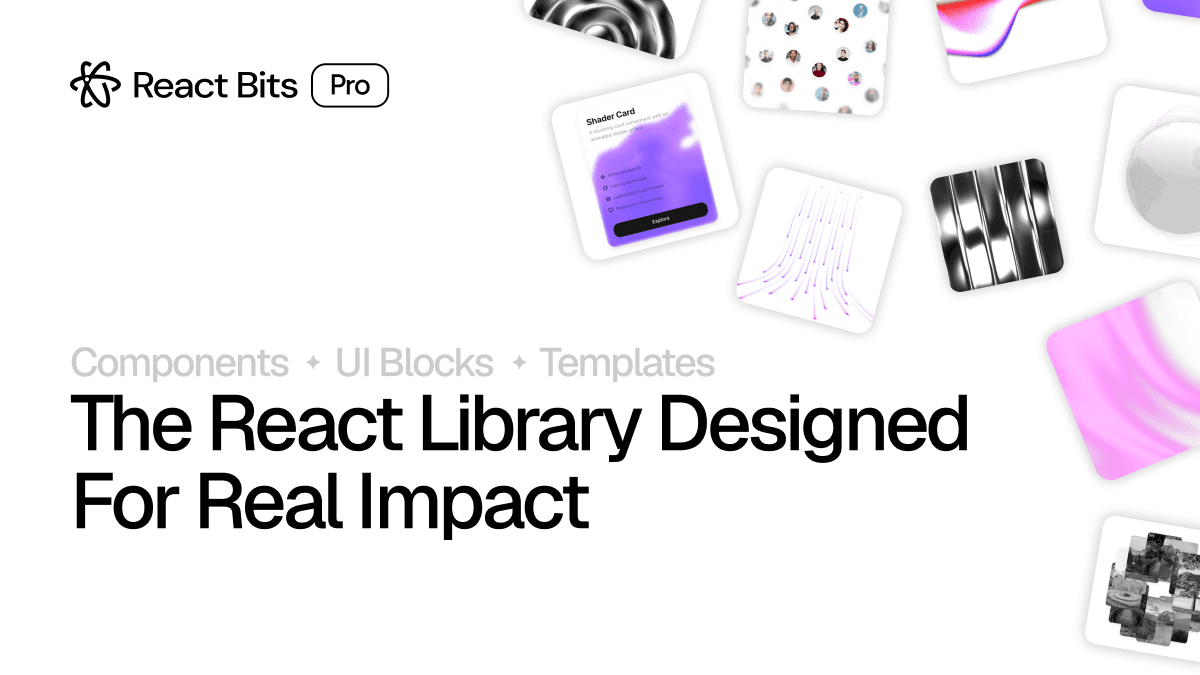
React Bits Pro offers a comprehensive library of professional React components, templates, and blocks designed to accelerate the development of modern web applications. It provides production-grade designs crafted with care, offering extensive customization props for total control over every pixel. Developers can ship faster by assembling UIs within minutes, not months, with over 88 components, 158 blocks, and 5 templates available. The components are built to be responsive, working flawlessly across all devices, and are optimized for performance. With a one-time purchase, users gain lifetime access and updates, ensuring their toolkit remains current. The library supports TypeScript and offers both Tailwind CSS and vanilla CSS variants, making it adaptable to various project setups. It integrates with the shadcn CLI for easy installation or direct code copying.
Angular.dev
Angular.dev is the official website for the Angular framework, designed to empower developers in building scalable and modern web applications with confidence. It integrates cutting-edge features such as Signals for reactive state updates, Control Flow for efficient template logic, Deferrable Views for improved performance, and Hydration for faster initial page loads. The platform emphasizes productivity and offers AI-forward resources and integrations to enhance development workflows. Angular.dev is built on opinionated yet versatile principles, leveraging Angular components and dependency injection for modular organization. It provides a fully featured platform with first-party modules for forms, routing, and more, ensuring everything works together seamlessly. Trusted by millions, Angular focuses on performance, enabling the creation of fast, reliable applications that scale with team size.