
Coding & Development
Browsing page 349 of AI tools for Coding & Development. Sorted by confidence score — our independent quality rating.

TransNetV2
TransNetV2 is an open-source neural network designed for fast and effective shot boundary detection in videos. This repository provides the code for TransNet V2, an advanced deep network architecture that significantly improves upon previous methods for identifying shot transitions. It is particularly useful for tasks like video editing and content analysis, enabling automated segmentation of video content. The project includes resources for both inference and training, with a PyTorch version available for inference. While training datasets can be large, users can leverage pre-trained models and instructions in the inference folder to detect shots in their own videos without needing to retrain the network.
Aeteos
Aeteos, recognized as Europe's 2025 Cognitive Computing Leader, offers Percipion, a sovereign and secured symbolic cognitive platform. Developed over eight years of research, Percipion faithfully reproduces human information processing mechanisms to turn sensitive textual data into actionable intelligence. It empowers organizations in critical sectors like law enforcement, defense, and forensics to achieve full autonomy, deploy their own platforms, and strengthen resilience against various threats. Percipion is trustworthy, knowledge-based, zero data capture, poison-proof, fully explainable, ethical, and EU AI Act compliant. It uncovers weak semantics, psychological inferences, transcribes algospeak and emojis, analyzes grammar, and foresees risks in real-time without hallucinations, all while operating offline with quantum-resistant encryption.
char-rnn
char-rnn is an open-source implementation of multi-layer Recurrent Neural Networks (RNN, LSTM, and GRU) designed for character-level language models. This Torch-based tool allows users to train a neural network on a text file, enabling it to learn to predict the next character in a sequence. Once trained, the RNN can generate new text that mimics the style and content of the original training data. It offers features like multi-layer support, model checkpointing, and GPU acceleration for efficiency. While this specific codebase is older, it laid the groundwork for more optimized versions like torch-rnn, making it a foundational resource for understanding character-level language modeling.
A1111-Web-UI-Installer
A1111-Web-UI-Installer is a comprehensive installer designed to streamline the setup process for Automatic1111's Stable Diffusion WebUI. This tool aims to make the powerful AI image generation interface accessible to a broader audience by simplifying the often complex installation steps. Users can quickly get the WebUI up and running, enabling them to leverage Stable Diffusion for various creative tasks without extensive technical knowledge. The project is hosted on GitHub, indicating its open-source nature and community-driven development. While the project notes that this specific launcher is obsolete and recommends Stability Matrix, it still serves as a historical reference for simplified WebUI deployment.
AI-Gist
AI-Gist is a privacy-focused, open-source AI prompt management tool designed to maximize the value of personal AI prompts. It offers core functionalities such as variable substitution, Jinja templating, and AI-powered generation and optimization of prompts. Users can efficiently create, organize, and refine their AI prompts with features like multi-view management, filtering by tags and categories, and historical version tracking for continuous improvement. The tool integrates with various AI models, including local options like Ollama and LM Studio, as well as online models like OpenAI, allowing for AI-generated prompts, prompt refinement, and automatic variable extraction. AI-Gist prioritizes privacy by storing all data locally by default, with optional cloud backup via WebDAV and iCloud for multi-device synchronization. It supports Windows, macOS, and Linux, and offers multi-language support.
md
md is a highly streamlined and elegant WeChat Markdown editor designed to simplify content creation for the platform. It supports a comprehensive range of Markdown syntax, including mathematical formulas, Mermaid charts, GFM warning blocks, and PlantUML diagrams. Users can customize themes and CSS styles, and the editor features built-in local content management with automatic draft saving. For advanced functionality, md offers integration with various image hosting services like GitHub, Alibaba Cloud OSS, Tencent Cloud COS, and more, making image management effortless. Additionally, it incorporates AI assistants from leading models such as DeepSeek, OpenAI, and Tongyi Qianwen to intelligently aid in content generation, making it an ideal tool for anyone looking to produce polished WeChat articles efficiently.

Ludo.ai
Ludo.ai is an AI-powered platform designed to assist game developers in every stage of game creation, from ideation to asset generation and market analysis. It offers a comprehensive suite of AI tools including a Sprite Generator, Image Generator, 3D Asset Generator, Audio Generator, Video Generator, and Playable Generator, enabling users to quickly create visual and audio assets, and even interactive prototypes. The platform also features tools like the Game Ideator, Ludo Score, Market Trends, and Idea Pathfinder to help validate concepts and discover market opportunities. With its Project tool and Ask Ludo AI companion, it facilitates collaborative game design and research, making it an all-in-one solution for indie developers and studios alike.
Wegic
Wegic is an AI website builder that acts as an intelligent website team, handling design, development, and growth automatically. Users can create visually stunning websites by simply describing their needs and ideas through a chat interface, eliminating the need for coding skills or experience. The platform allows for easy editing and one-click publishing, making it accessible for individuals and businesses without technical staff. Wegic has been used to build over 600,000 websites across 230 countries, with a high percentage of users starting from scratch and chatting in their native language. It aims to simplify the website creation process, saving users from hiring external agencies or programmers.
gptel
gptel is a versatile Large Language Model chat client designed for Emacs, offering seamless integration with various LLM providers and backends. It functions within any Emacs buffer, enabling users to interact with LLMs for tasks like code rewriting, content generation, and more. Key features include support for multiple independent conversations, tool-use for agentic capabilities, and multi-modal input. Users can save and resume chat sessions, inspect and modify queries before sending, and leverage Model Context Protocol (MCP) integration. gptel supports a wide array of LLM services, including OpenAI, Anthropic, Gemini, Ollama, and many others, making it a flexible solution for developers and technical users who prefer to stay within their Emacs environment.

CloudSoul
CloudSoul is a comprehensive full-stack platform designed to help European mid-market companies achieve NIS2 security and compliance without needing to build a dedicated security team. It integrates security operations and compliance automation into a single, turn-key solution. Key features include automated vulnerability management with prioritised risks and remediation tracking mapped to NIS2 Article 21, and SIEM with real-time alerting and built-in NIS2 incident reporting. The platform ensures EU-sovereign infrastructure, aligning with GDPR, Schrems II, and NIS2 data residency requirements. CloudSoul also offers continuous compliance evidence mapping to NIS2 and ISO 27001, providing audit-ready reports and dashboards for boards and regulators. It supports integrations with major cloud providers like Amazon, Google, and Microsoft.
paper2gui
Paper2GUI is an open-source project designed to democratize access to cutting-edge artificial intelligence technology by converting complex AI research papers into intuitive graphical user interface (GUI) applications. This tool allows users to easily leverage a wide array of AI models without the need for installation, offering immediate usability across Windows, Mac, and Linux operating systems. It currently supports over 50 AI models, covering diverse applications such as AI painting, advanced voice synthesis, video frame interpolation, video super-resolution, background music separation, subtitle translation, and OCR recognition. The project also offers a more comprehensive 'Xiaobaitu AI' aggregated version for professional users, which includes additional features like AI painting, video matting, and face animation, with some features permanently free.
ralphy
ralphy is an open-source autonomous bash script engineered to automate the completion of Product Requirements Documents (PRDs) by leveraging various AI agents. It integrates powerful AI models such as Claude Code, Codex, and Qwen, running them in a continuous loop to iteratively refine and generate code based on the PRD specifications. This tool aims to streamline the development workflow by automating significant portions of the coding process, reducing manual effort and accelerating project timelines. Developers can install ralphy via npm or by directly cloning its repository, making it accessible for integration into existing development environments. Its core functionality revolves around continuous AI iteration, ensuring that the generated code aligns closely with the evolving requirements outlined in the PRD.
PrivacyStack
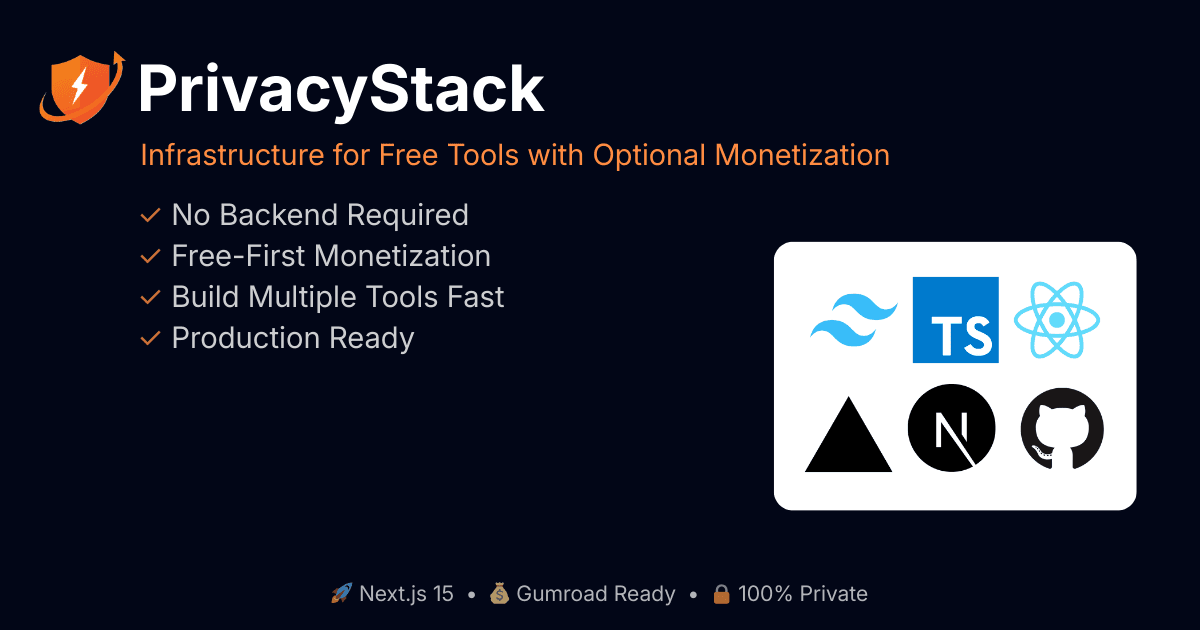
PrivacyStack offers a robust infrastructure for developers and entrepreneurs looking to build free, privacy-first tools with integrated monetization options. This platform is designed to be SEO-optimized and ads-ready, supporting one-time unlocks without incurring database costs or GDPR headaches. It leverages a modern tech stack including Next.js App Router, React, TypeScript, Tailwind CSS 4, and Shadcn/ui, ensuring a contemporary and efficient development experience. All processing occurs client-side, guaranteeing privacy by design and GDPR compliance. The boilerplate includes a pre-built, responsive landing page with Hero, Features, Pricing, FAQ, and CTA sections, along with Gumroad and LemonSqueezy integration for payments. It also features privacy-first analytics via Umami, allowing conversion tracking without cookie banners. PrivacyStack is offered as a one-time payment for lifetime access, enabling unlimited projects without subscriptions.
serverless-ml-course
The serverless-ml-course is an open-source educational resource designed to simplify the development and operation of AI-enabled prediction services. It teaches how to build batch and real-time prediction services using Python, focusing on serverless infrastructure. The course covers essential MLOps fundamentals such as versioning, testing, data validation, and operations, enabling users to deploy features and models, train models, and run inference pipelines. A key differentiator is its emphasis on building a prediction service around a model without needing extensive operations experience, making it accessible for those who can program in Python but are not cloud computing experts. It also guides users on building serverless UIs for their prediction services.
pyttsx3
pyttsx3 is a text-to-speech (TTS) conversion library specifically designed for Python, offering the unique advantage of offline operation. Unlike many other TTS solutions that require an internet connection, pyttsx3 enables developers to integrate speech synthesis directly into their Python applications, making it ideal for environments with limited or no connectivity. The library supports a variety of voices and languages, providing flexibility for different project requirements. Its offline capability makes it a robust choice for applications where real-time, independent speech generation is crucial, such as embedded systems, local desktop applications, or projects requiring enhanced privacy.
ai-cli
ai-cli is a command-line interface tool designed to enhance developer productivity by integrating ChatGPT directly into the terminal. Users can ask questions about CLI commands and receive instant answers, streamlining their workflow and reducing the need to switch contexts. The tool requires users to provide their own OpenAI API key, which can be easily configured using the `ai auth` command. It supports changing the default model preference, currently set to `gpt-3.5-turbo`, and offers an autocomplete feature for various shells. This makes it an efficient solution for developers seeking quick command assistance and explanations without leaving their terminal environment.
BashBuddy
BashBuddy is an AI assistant designed to simplify command-line interactions by allowing users to write commands in natural language. It translates plain text or half-baked commands into precise shell commands, handling complex syntax and arguments. The tool is context-aware, understanding the shell environment, current directory, and even Git repositories to provide relevant suggestions. BashBuddy is open-source, cross-platform (macOS, Linux, Windows, Bash, Zsh, PowerShell), and works seamlessly across different operating systems and shells. It runs completely locally, ensuring privacy and offline functionality, and leverages GPU acceleration for fast inference performance.
Review-Gate
Review-Gate is a specialized tool designed to integrate with the Cursor IDE, significantly enhancing the code review process. It provides interactive AI assistance, allowing developers to engage with the AI through various modalities including text, voice, and image uploads. This multi-modal interaction facilitates a more dynamic and efficient review cycle. The tool is particularly adept at supporting iterative work within a single request, which streamlines the coding process and helps developers refine their code more effectively. By offering these advanced AI-powered features, Review-Gate aims to improve the overall quality and speed of code development and review.
Kane AI
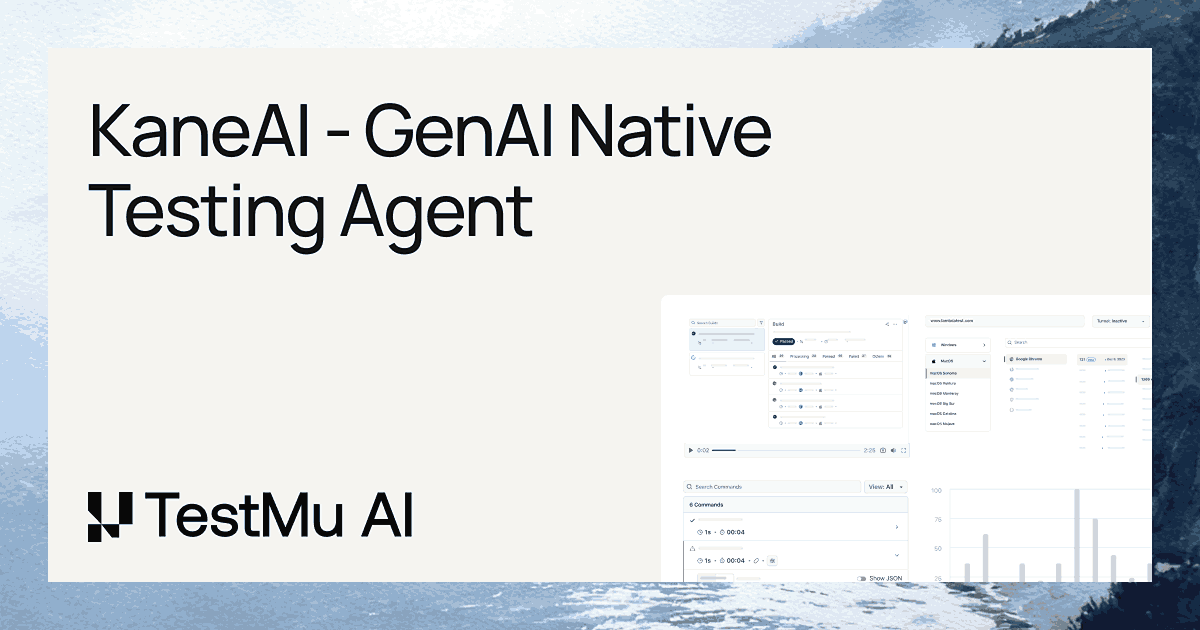
Kane AI, developed by TestMu AI (formerly LambdaTest), is a pioneering GenAI-native testing agent designed for high-speed Quality Engineering teams. It empowers users to plan, author, and evolve end-to-end tests using natural language, eliminating the need for complex coding. The tool supports testing across various layers including databases, APIs, and accessibility, and can generate structured test cases from diverse inputs like text, JIRA tickets, PRDs, PDFs, images, audio, and spreadsheets. Kane AI also features real-time network checks, pixel-perfect validation, and built-in accessibility testing. Its 'human in the loop' functionality allows for manual interaction recording and plan approval, ensuring AI-created tests align with user intent. It also offers intelligent and modular test building, adapting to different environments and real-world conditions.

Vault CMS
Vault CMS enables developers and content creators to leverage Obsidian as a powerful content management system for their Astro websites. It allows content to remain in plain Markdown within the project's repository, eliminating the need for a separate CMS server. The system comes with preconfigured settings, plugins, and a setup wizard for quick installation. It offers a plug-and-play Astro blogging experience, emphasizing customization and modularity, and aims for visual parity between the Obsidian backend and the frontend. Vault CMS is compatible with most Astro themes, automatically detecting content types, frontmatter properties, and folder structures, and supports both flat and nested YAML properties with appropriate plugins.
Cursor.sh
Cursor is an advanced AI-powered coding environment designed to significantly boost developer productivity. It offers real-time code suggestions, intelligent code generation, and debugging assistance, integrating seamlessly into the development workflow. Key features include autonomous agents that can build, test, and demo features, a specialized Tab model for accurate autocomplete, and comprehensive codebase understanding. Cursor supports various cutting-edge models from OpenAI, Anthropic, Gemini, xAI, and its own, allowing users to choose the best AI for each task. It runs across multiple platforms, including desktop, CLI, and integrates with tools like Slack and GitHub for collaborative development and PR reviews. Trusted by major enterprises, Cursor aims to accelerate software creation securely and at scale.
robustmq
RobustMQ is a unified messaging engine built with Rust, designed as a communication infrastructure for the AI era. It operates as a single binary, one broker, and one storage layer, eliminating external dependencies and allowing deployment from edge devices to cloud clusters. It natively supports MQTT, Kafka, NATS, AMQP, and its own mq9 protocol on a shared storage layer, meaning a message written once can be consumed by any protocol. The mq9 protocol is specifically designed for AI Agent asynchronous communication, offering features like agent mailboxes with persistent store-first delivery, priority levels, and public mailbox discovery. RobustMQ emphasizes minimal operations, multi-tenancy, and ultra-low-latency dispatch, making it suitable for diverse messaging needs from IoT to streaming data pipelines.
spacy-models
spacy-models offers a collection of pre-trained models specifically designed for use with the spaCy Natural Language Processing (NLP) library. These models are essential for data scientists and machine learning engineers who are building applications that require advanced text processing capabilities. The models support a wide range of NLP tasks, including efficient text analysis, named entity recognition, and dependency parsing. By leveraging these pre-trained models, users can significantly accelerate their NLP development workflows, reducing the need for extensive custom training. The integration with spaCy ensures high performance and ease of use for various linguistic tasks.
SlowFast
PySlowFast is an open-source video understanding codebase developed by FAIR, designed to provide high-performance, lightweight PyTorch implementations of state-of-the-art video backbones. It supports various video understanding research tasks, including classification and detection, and is built for rapid implementation and evaluation of novel video research ideas. The repository features implementations of methods like SlowFast Networks, Non-local Neural Networks, X3D, Multiscale Vision Transformers (MViTv1 and MViTv2), Reversible Vision Transformers (Rev-ViT and Rev-MViT), and supports advanced techniques such as Multigrid Training, MAE for Video, and MaskFeat. It also includes a comprehensive model zoo with pre-trained models and baselines, along with visualization tools for analysis and inference.